Is The Fire Dance At A Fiji Cultural Night Traditional?
The fire in a Fiji cultural evening comes from three separate traditions: Beqa fire walking, the Samoan siva afi knife dance, and shows that simply list a fire dance. Here is what each one is.
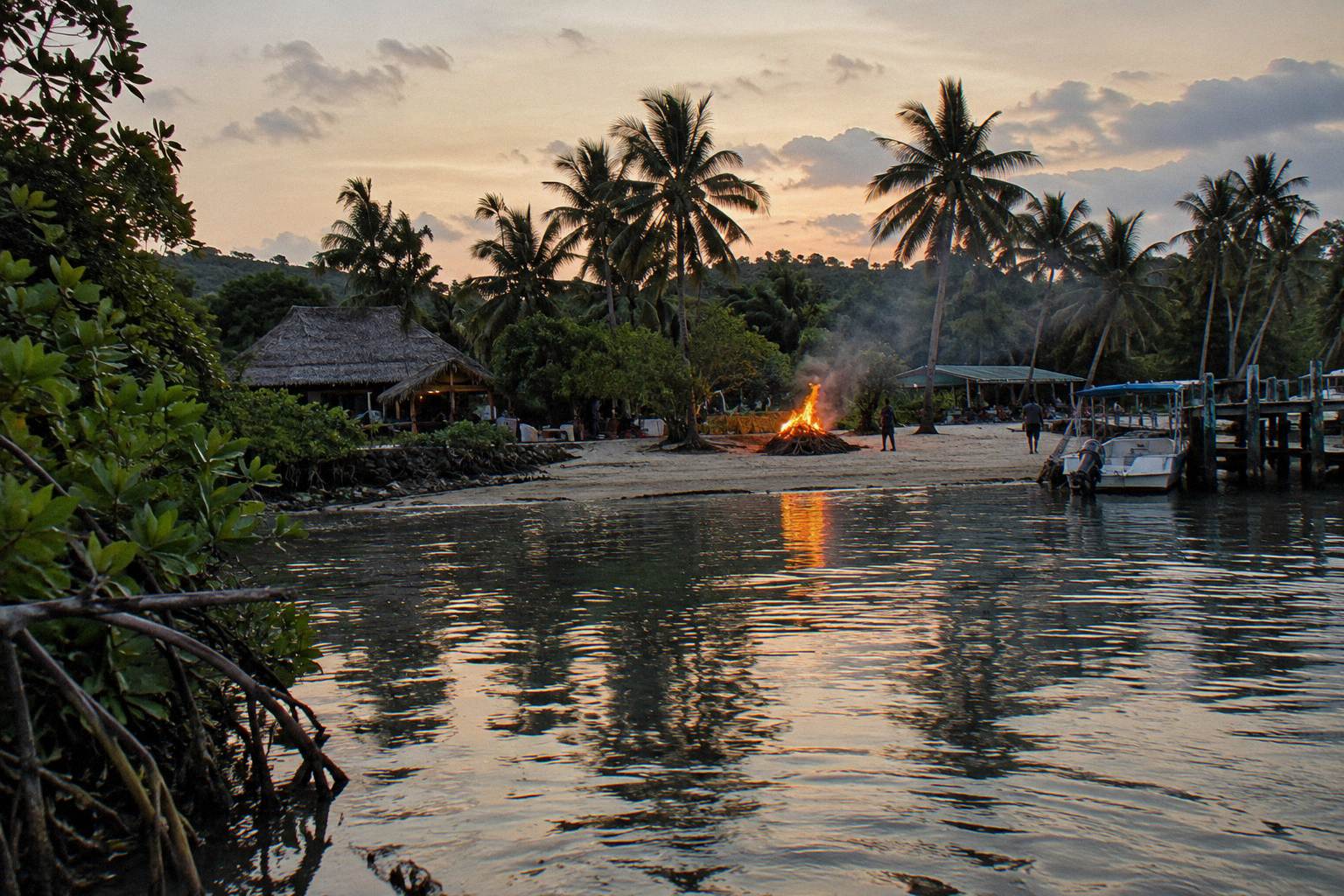
Fire appears on almost every Fiji cultural evening, but the word covers three different things. Fiji has its own fire tradition, fire walking on Beqa (pronounced Benga), traced by Tourism Fiji to the Sawau tribe. Samoa has another, the siva afi knife dance, which is staged in Fiji shows. And some operators simply list a fire dance and say nothing more about what it is.
Partly traditional, and it depends on which fire you are watching. Fire walking is a Fijian tradition Tourism Fiji attributes to Beqa's Sawau tribe, descended from Tuinaiviqalita. The fire knife dance, siva afi, is Samoan in origin and appears in Fiji shows as staged performance. Fiji Culture Village lists a fire dance at 7:50pm with no tradition stated, so the honest answer separates three performances rather than one verdict.
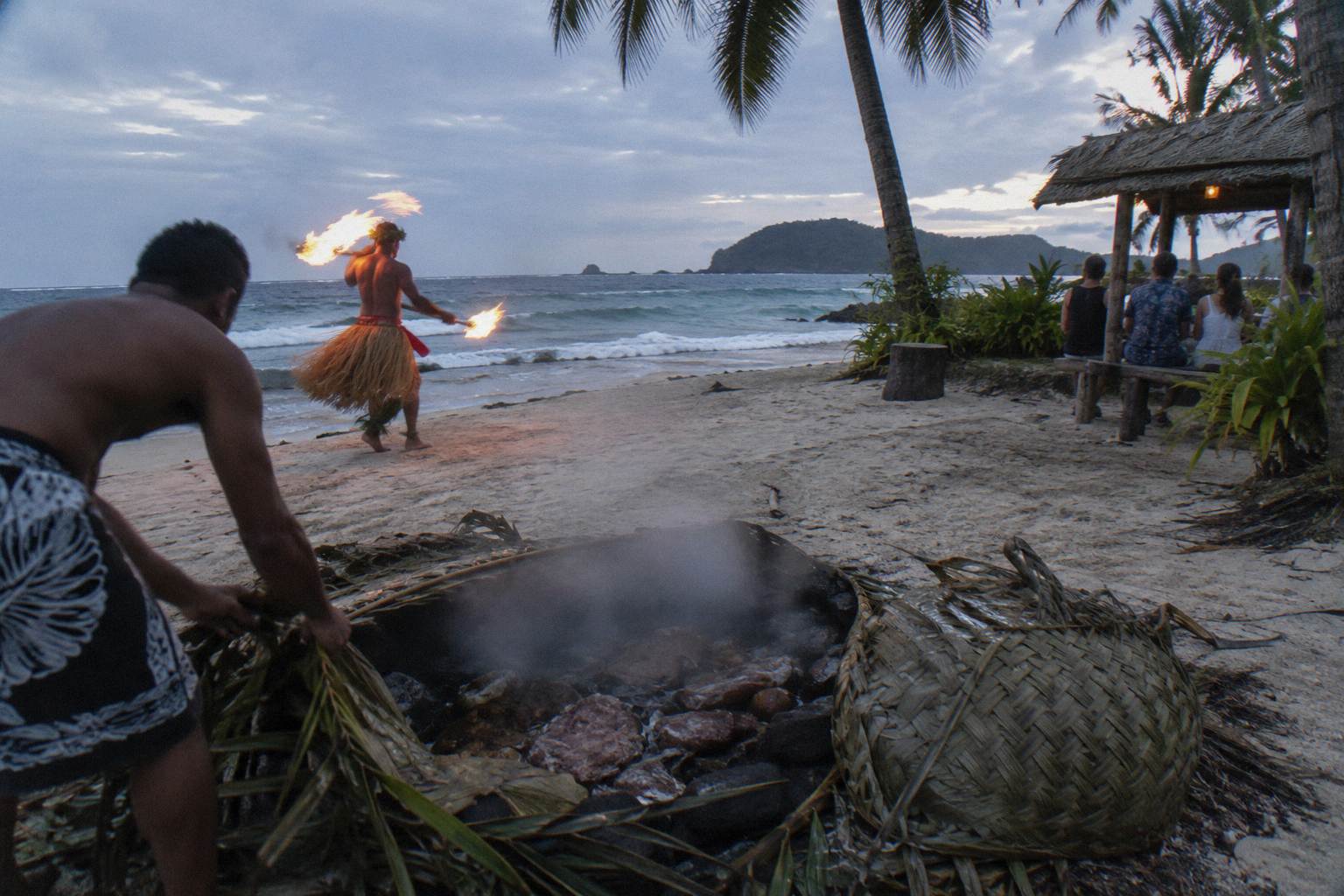
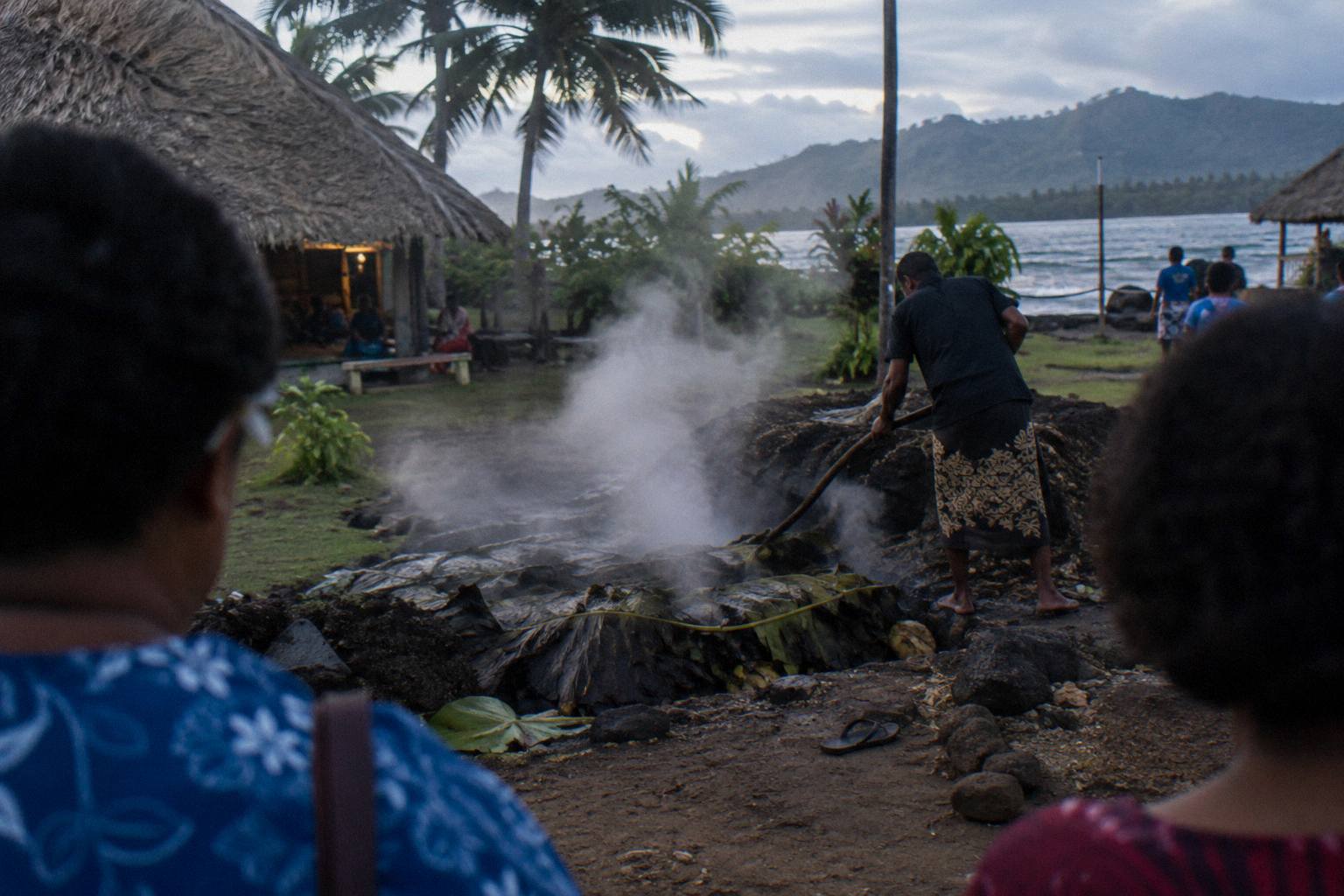
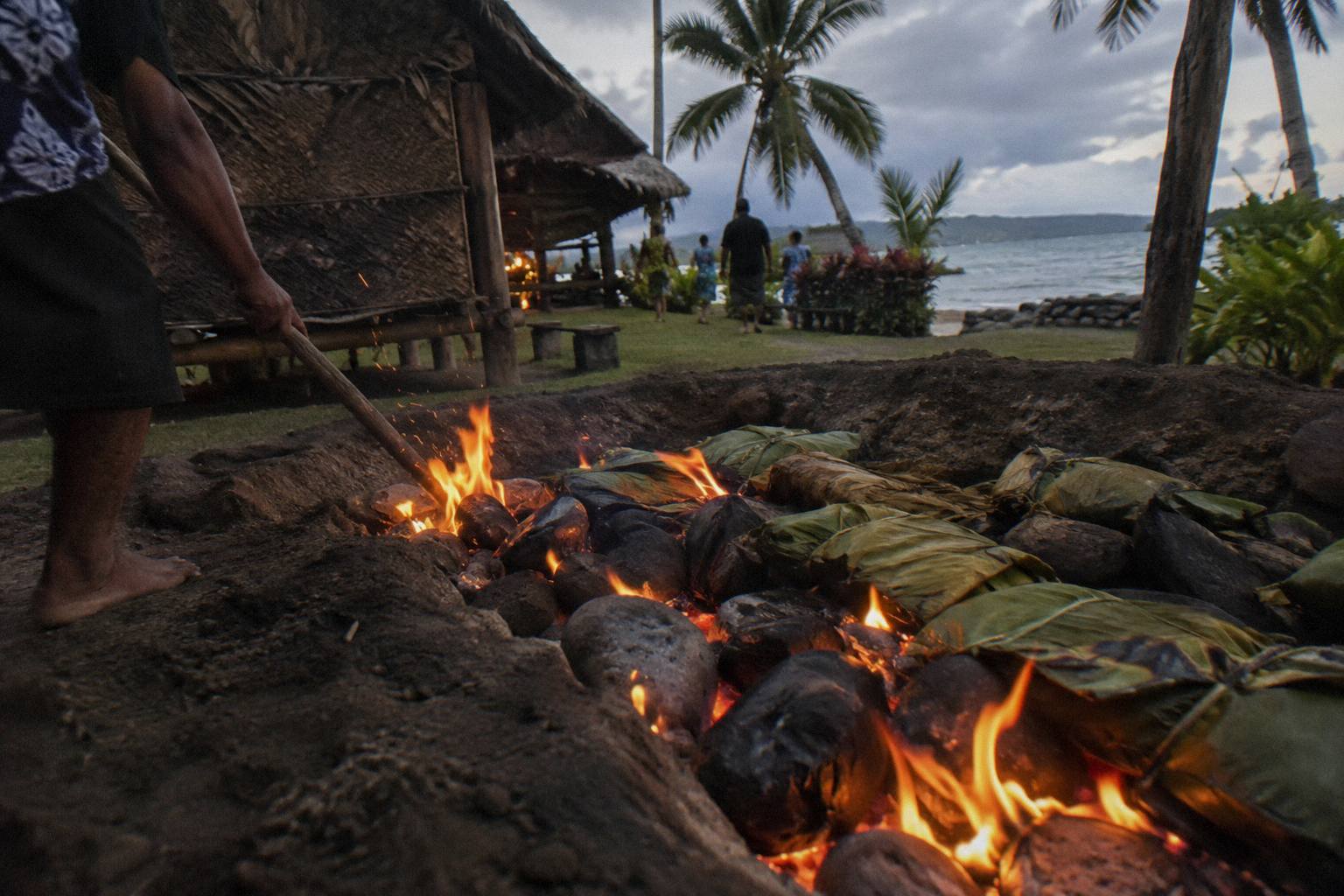
The confusion is understandable because the evening itineraries bundle everything together. A single night can include a lovo unearthed from an earth oven, a meke performed in the Fijian style Tourism Fiji describes, a fire walking demonstration, and then a show with fire and knife dancing. To a first-time visitor it all reads as one continuous tradition. It is not, and the distinction matters if the question you are actually asking is whether the evening shows you something rooted in Fiji.
The three-way split is worth holding in mind before booking anything, because different evenings lean on different fires. The Robinson Crusoe Sunset Dinner Show builds its night around a fire walking demonstration and a fire and knife dance show. The Culture Village evening lists a meke show followed by a fire dance, with no further detail published. Neither operator claims its fire performers come from Beqa, which is the detail that would tie a fire walking display to the tradition Tourism Fiji describes.
If the question behind the question is which evening to book, the short version is this: both of the main Nadi-area nights include fire, both frame it as part of a wider cultural evening, and neither makes a claim about lineage. The traditional anchor on either night is the meke and the lovo, both documented by Tourism Fiji as Fijian practices, with the fire elements layered on as spectacle.
What Fiji's Own Fire Tradition Actually Is
Fiji's own fire tradition is fire walking, which Tourism Fiji traces to the Sawau tribe of Beqa through a specific legend. In that telling, Tuinaiviqalita, seeking an eel as a gift, caught a spirit god known as a veli, who offered him power over fire for himself and his descendants and showed it by stepping on white-hot stones, and that power flows only through Tuinaiviqalita's bloodline to the Sawau.
Fire walking as Tourism Fiji describes it is a living practice tied to a specific place and a specific lineage, not a generic Polynesian stunt. The island it belongs to is covered on Tourism Fiji's Beqa page, which prints the name as Beqa (pronounced Benga). No tour on this site visits Beqa, and no evening show here claims its walkers are Sawau, so treat any claim you see elsewhere connecting a resort show to the bloodline with caution unless the operator itself makes it.
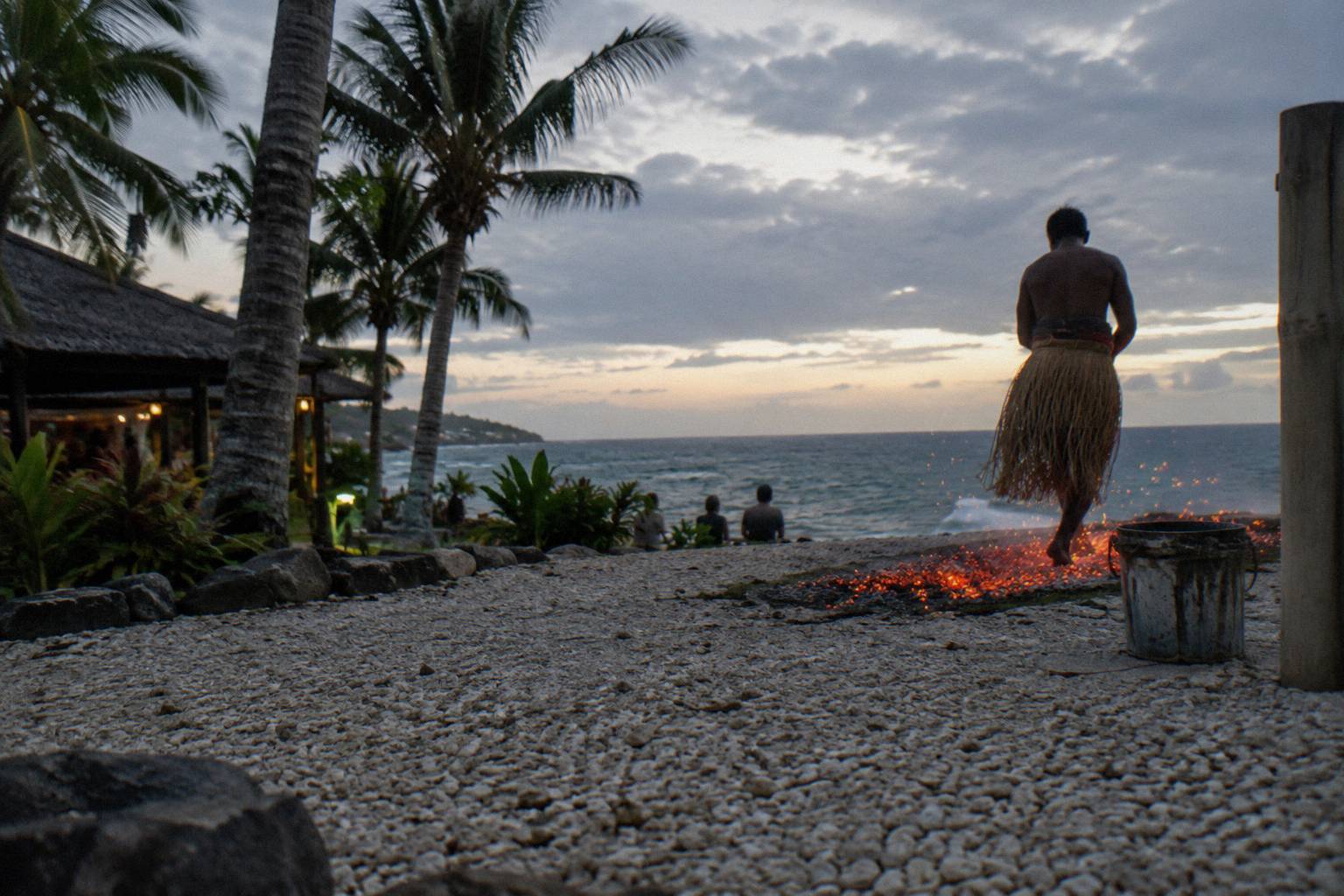
One venue does make that claim. Damodar Arts Village in Pacific Harbour says its firewalking ceremony is performed by the renowned firewalkers of Beqa, in the venue's own wording, following its reopening covered in the reopening story. Its first public cultural show was announced as a Saturday 11am performance, which makes it a daytime show rather than a dinner evening, and it is not a tour that can be booked through this site. For a traveller set on seeing the Beqa lineage specifically, that daytime announcement is the one printed attribution.
Tourism Fiji also notes that firewalking is performed on Viti Levu at major hotels in Pacific Harbour, the Coral Coast and Denarau as resort entertainment, and advises you to check with those resorts. No resort is named in the source material and none is priced here. The point for this question is simpler: fire walking exists in Fiji as a tradition with a named origin, and it also exists as resort and tour entertainment, and those are different categories even when the physical act looks the same.
The Robinson Crusoe Sunset Dinner And Fire Show places its fire walking demonstration at 6:30pm, paired with the unearthing of the lovo, before the buffet dinner at 7:00pm. The operator lists the demonstration plainly and says nothing about who performs it. The evening runs Monday, Wednesday and Saturday, 5pm to 9pm on the island, with the boat leaving the mainland jetty at 5:00pm, and it carries a 4.6 rating on its booking page. If you want the night that schedules fire walking at a stated time, that itinerary line is the one to look for.
Siva Afi, The Fire Knife Dance: Samoan In Origin
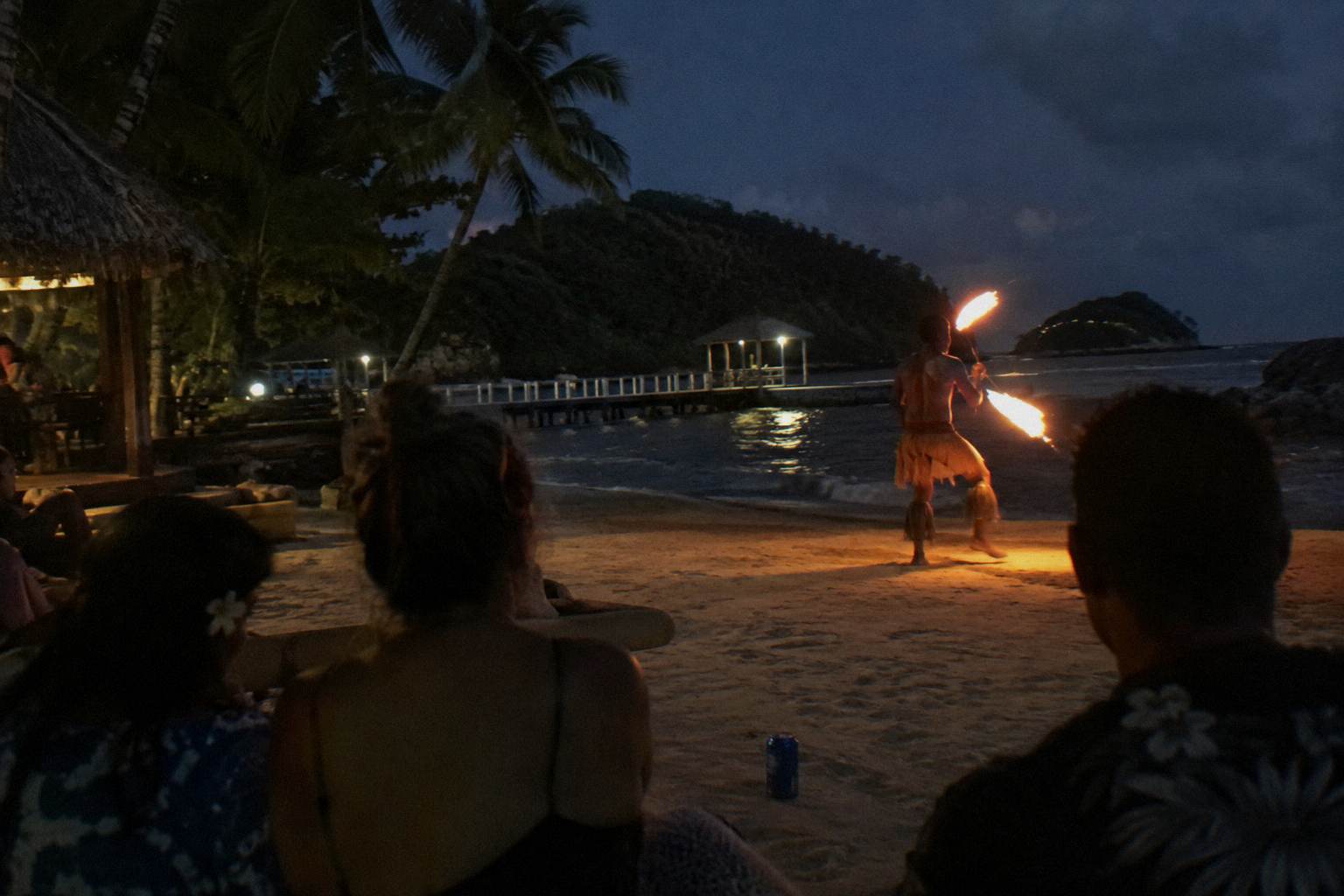
The fire knife dance, siva afi, is Samoan in origin and is staged in Fiji shows. It is not a Fijian tradition, and presenting it as one would be wrong. Robinson Crusoe's evening show, Legends Of The Pacific, includes fire and knife dancing after the lovo dinner at 7:00pm, and the operator's daytime tour includes a dance show with fire and knife dancing. Fiji Culture Village lists only a fire dance and does not say it is fire knife.
The fire knife dance page records the form's Samoan roots. Beyond its origin, the researched sources state little: no history of the dance's development, no details of its Samoan practice, nothing on who performs it in Fiji, on training or on safety. Those gaps are stated once and left there; anyone with specific questions can ask the operator directly.
The important practical reading is that Legends Of The Pacific is billed as a show, in the operator's own words, and the fire and knife dancing inside it is performance. That does not make it lesser entertainment. It means the tradition claim attached to it is Samoan in origin, not Fijian, and an evening that mixes meke, lovo and siva afi is mixing practices from more than one Pacific culture. Touring shows across the Pacific do exactly this, and the Fiji evenings that stage it are upfront that this segment is a show.
For a fuller treatment of the dance itself, the guide to the siva afi fire knife dance breaks down what the sources do and do not say, and the fijian war dance guide covers the Fijian performance forms that are homegrown. The comparison is the clearest way to see the difference: the meke is Fijian, defined by Tourism Fiji as a traditional dance performed by men and women of Fiji to tell stories through song and dance, while siva afi arrives from Samoa and is staged here.
What The Nadi Evening Shows Actually List
Two evening products in the Nadi area publish fire in their itineraries. Fiji Culture Village lists a meke show and fire dance at 7:50pm, with no detail on what the fire dance is. Robinson Crusoe lists a fire walking demonstration at 6:30pm and fire and knife dancing after the 7:00pm dinner. That is all either operator states, and it is the full basis for any traditional-or-not judgement.
The Culture Village timeline runs 4:20pm hotel pick-up from Denarau, Nadi and Wailoaloa, a 5:15pm warrior welcome, a 5:30pm guided village walking tour, the 6:45pm lovo unearthing, a 7:00pm kava ceremony, 7:20pm buffet dinner, the 7:50pm meke show and fire dance, and 8:30pm farewell. The operator's rate is F$175 adult, F$105 child aged 5 to 12, and F$500 for a family of 2 adults and 2 children, valid to 31 December 2026, then F$189, F$115 and F$550 for 2027. It runs Monday to Saturday, with an annual maintenance closure from 22 February 2027 to 10 March 2027 per the operator's notice. Other pages covering the same trip are gathered on Fiji Cultural Night Tours.
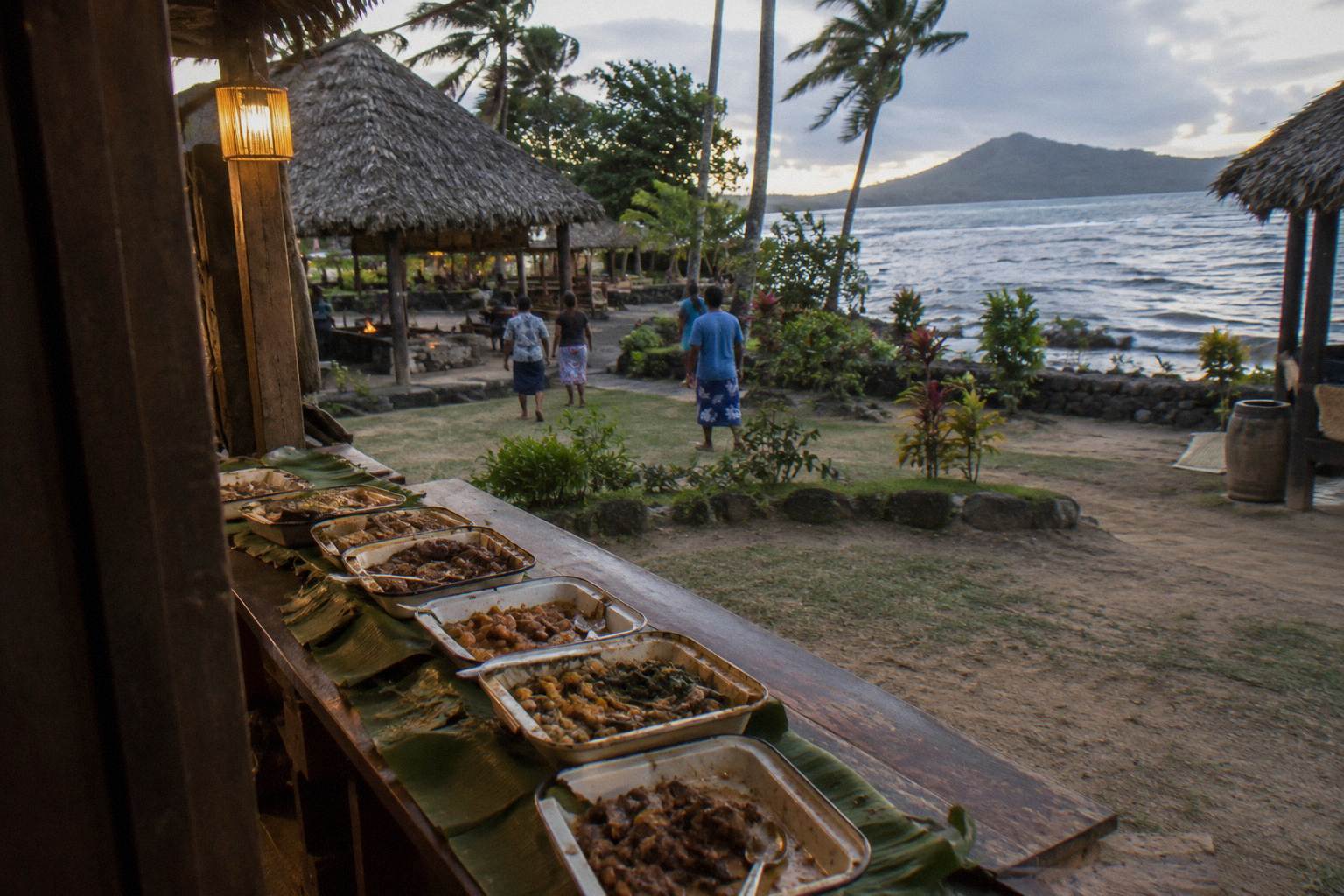
The Robinson Crusoe evening runs Monday, Wednesday and Saturday. The operator's itinerary puts the fire walking demonstration beside the lovo unearthing at 6:30pm, then the lovo buffet at 7:00pm, then the Legends Of The Pacific show with fire and knife dancing, then the 9:00pm Isa Lei farewell and a 9:15pm boat departure. Its tour pages print no price, so see the booking page for the rate. Transfers are included by coach from Nadi, Denarau and Coral Coast hotels as far as the Warwick, plus the launch crossings.
| What is listed | Fiji Culture Village evening | Robinson Crusoe Sunset Dinner Show |
|---|---|---|
| Fire element in the itinerary | Fire dance after the meke show, 7:50pm | Fire walking demonstration 6:30pm, then fire and knife dancing after dinner |
| Traditional claim printed by the operator | Not stated | Not stated |
| Fijian performance documented on the night | Meke show, kava ceremony, lovo | Sevusevu welcome with kava tasting, lovo buffet, meke segment |
| Nights it runs | Monday to Saturday | Monday, Wednesday and Saturday |
| Price | Operator rate in F$, adult, child and family bands | Not stated; see the booking page |
The honest column in that table is the traditional claim row. Neither operator prints a lineage claim for its fire element. What both evenings do document, through Tourism Fiji's own definitions, is the Fijian material around the fire: the meke, the lovo earth oven, the kava ceremony and the sevusevu welcome. If you are weighing authenticity, that surrounding material is where the sourced Fijian tradition sits, and it is present on both nights.
Where You Can See Fire Walking In Fiji
Fire walking can be seen in four kinds of place, according to the sources. Tourism Fiji points to the tradition itself on Beqa, names Damodar Arts Village's daytime show as performed by Beqa firewalkers in the venue's wording, and lists resort entertainment at major hotels in Pacific Harbour, the Coral Coast and Denarau. Tour itineraries, including the Robinson Crusoe evening, list fire walking demonstrations without stating who performs them.
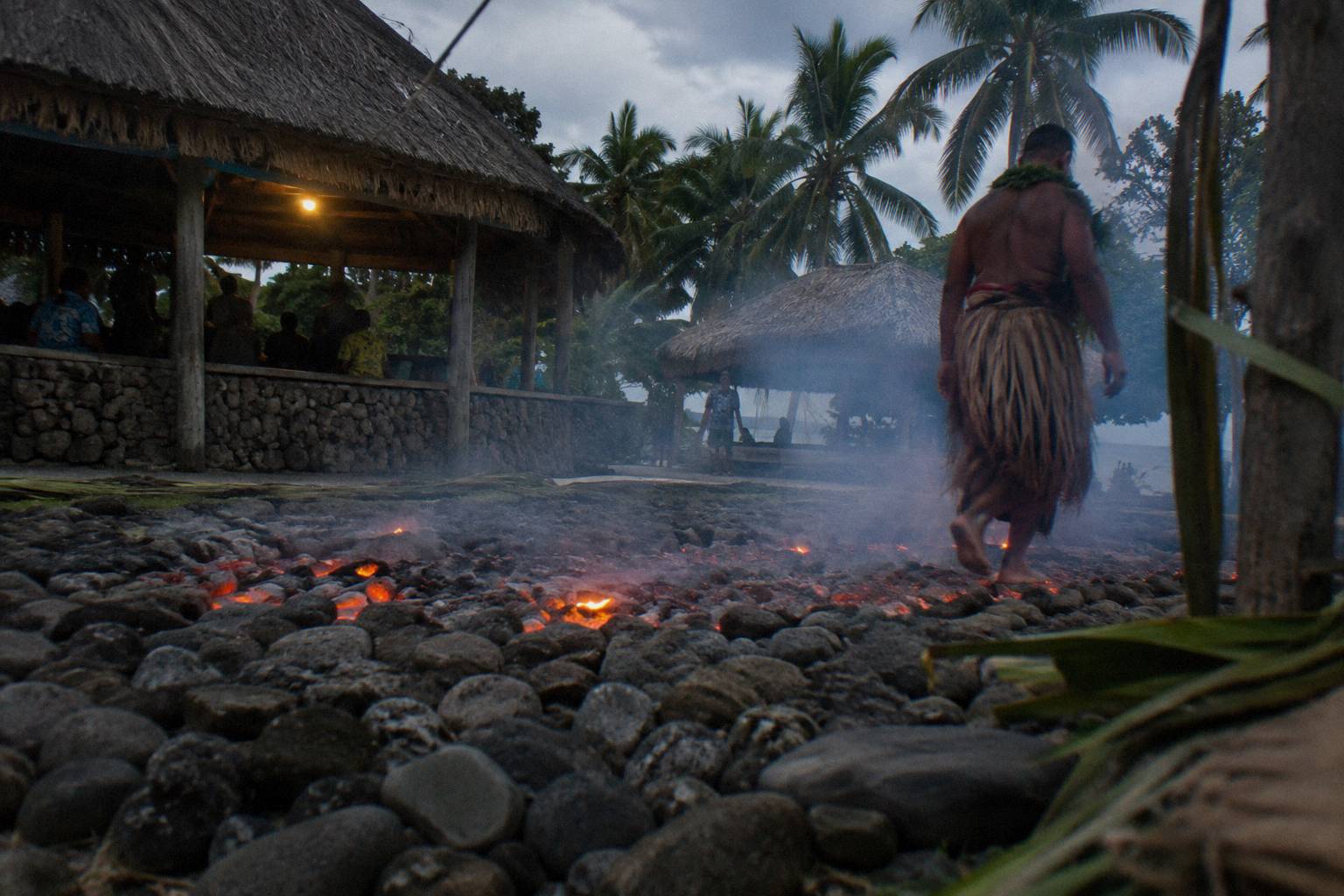
The distinction between the categories is the useful part. A tradition is a practice held by a community, a demonstration is a scheduled performance inside a tour itinerary, and resort entertainment is a booking made through a hotel. All three involve people walking on hot stones, and only the first carries a lineage claim in the sources. The deeper background is in where you can see fire walking in Fiji, which lists each venue and what its own pages say.
| Setting | What the source says | Time of day |
|---|---|---|
| Beqa, the Sawau tradition | Tourism Fiji traces the power through Tuinaiviqalita's bloodline to the Sawau tribe | Not stated as a show |
| Damodar Arts Village, Pacific Harbour | Firewalking performed by the renowned firewalkers of Beqa, venue's wording | Announced at 11am |
| Resort entertainment, Viti Levu | Major hotels in Pacific Harbour, the Coral Coast and Denarau, per Tourism Fiji | Check with the resorts |
| Robinson Crusoe evening and day tours | Fire walking demonstration in the itinerary | 6:30pm evening; daytime on the day tour |
For the Robinson Crusoe products specifically, the demonstration sits inside a scheduled itinerary rather than being advertised as the Beqa tradition. The evening puts it at 6:30pm with the lovo unearthing. The operator's Fiji Culture Day Tour, a 6-hour daytime product running Tuesday, Thursday and Sunday from 10am to 4pm, also includes a lovo uncovering with a fire walking demonstration plus a dance show with fire and knife dancing. It runs on exactly the days the evening show does not, which fills a week for a visitor staying several nights.
How To Tell Which Fire Performance You Are Booking
Read the itinerary line, not the show name. If a tour lists a fire walking demonstration, expect a walking performance in the Fiji context. If it lists fire and knife dancing, that is siva afi territory, Samoan in origin. If it lists only a fire dance with no detail, the operator has not said what it is, so ask before booking, using the operator's own contact details.
The two published phone numbers are the fastest route. Fiji Culture Village takes questions on +679 804 4800 or reservationfijiculturevillage@gmail.com. Robinson Crusoe answers +679 776 0999, and its operator's terms state the cancellation rule that shapes any booking: a cancellation received 24 hours or more before pick-up gets a full refund, inside 24 hours it is a 100 percent forfeit.
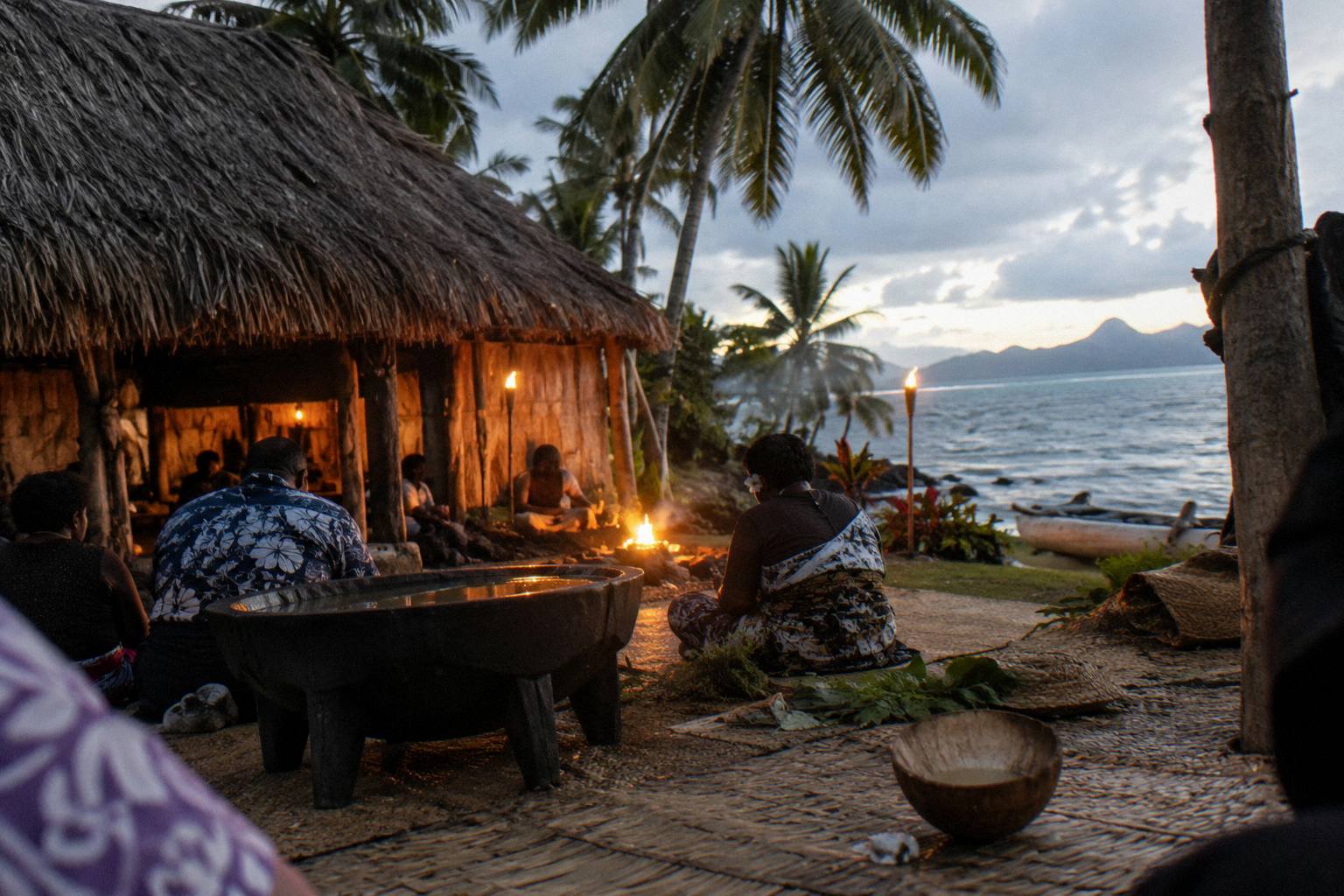
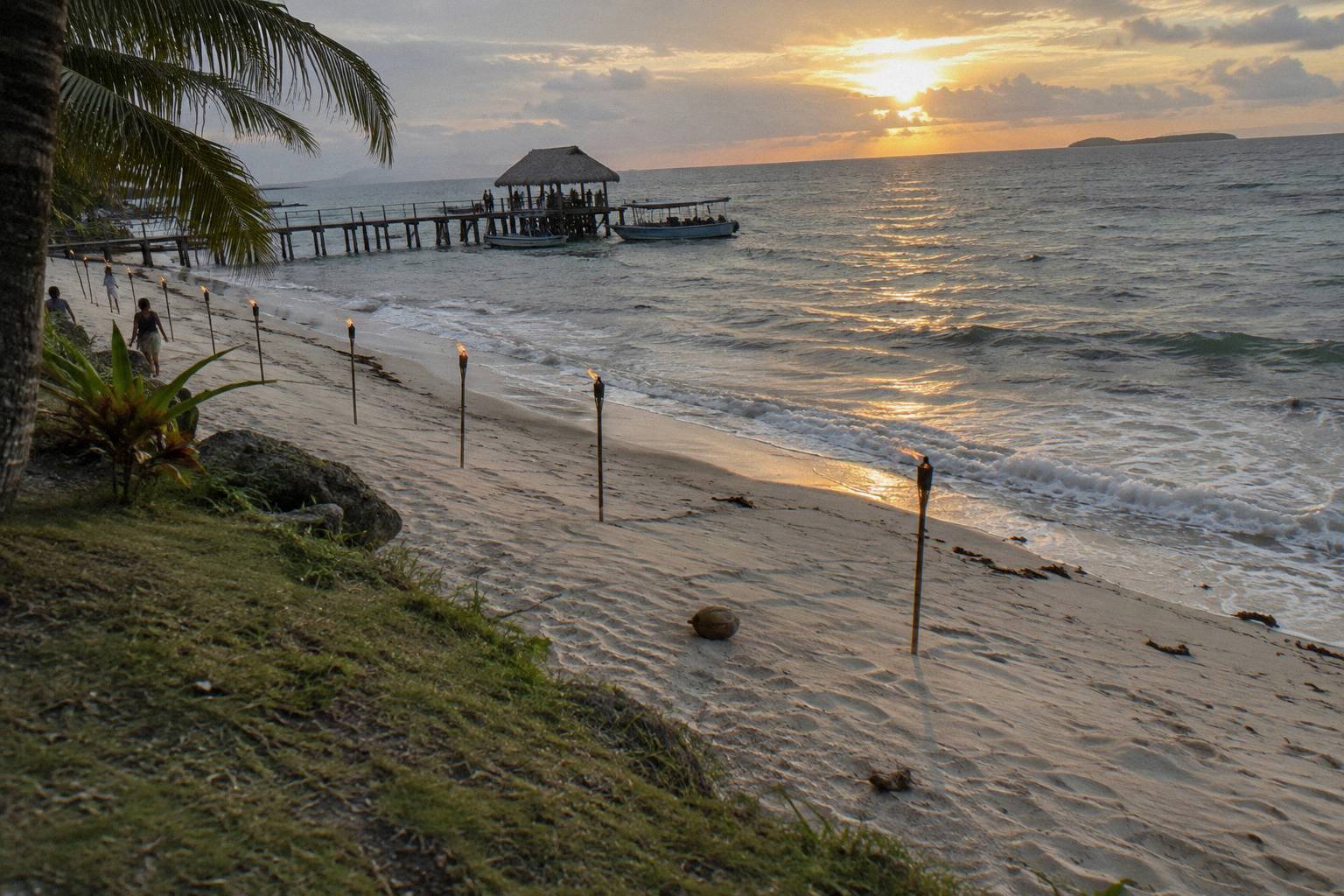
A worked example shows how the three-way split plays out in one week. A visitor staying in Denarau on a Monday could take the Culture Village evening, with its 4:20pm pick-up and 7:50pm meke show and fire dance. Wednesday could be the Robinson Crusoe evening, coach out to the jetty near Natadola Beach, 45 minutes from Nadi, then the 30-minute calm-water cruise down the Tuva River, the 6:30pm fire walking demonstration and the post-dinner knife dancing. Thursday, an evening-free night, could use the operator's daytime Culture Day Tour from 10am to 4pm. Every fire element in that week is sourced from a published itinerary line, and none of them carries a lineage claim.
The Day And Night Combo stacks the whole picture into one booking. It runs Monday, Wednesday and Saturday, 10am to 9pm, about 11 hours, and the operator tags it as suiting adventurers. The day half includes a guided Vusama Village visit, mud crab catching, snorkelling and sea kayaks, a BBQ buffet lunch, a bush medicine walk and coconut climbing. The night half is the full Sunset Dinner Show, fire walking demonstration and Legends Of The Pacific included. The operator asks visitors to cover shoulders and bring a sulu or sarong for the village visit, with spare sulus available. Its rate is not printed on the tour page, so check availability for the operator's price.
Common Mistakes When Choosing A Fire Show In Fiji
The recurring mistake is treating every fire performance as the same Fijian tradition. It is not: fire walking is the practice Tourism Fiji ties to Beqa's Sawau tribe, the fire knife dance is Samoan in origin, and an unlabelled fire dance is simply not described. The second mistake is assuming a bigger show means a more traditional one, when the sourced Fijian elements, the meke, lovo and kava ceremony, are listed separately from the fire acts.
A third mistake is expecting an operator to state a lineage it has not stated. Neither of the evening operators here says its fire walkers are Sawau, and no amount of show scale changes that. The venue that does print an attribution, Damodar Arts Village, is a daytime announcement rather than a dinner night, so a visitor who wants the named lineage has to plan around an 11am show, not an evening.
The fourth is ignoring the calendar. The Culture Village evening runs Monday to Saturday; the Robinson Crusoe evening runs only Monday, Wednesday and Saturday. A visitor who arrives on a Sunday, when Tourism Fiji notes most village tours do not run, has no evening fire show from these operators at all and needs the Tuesday, Thursday or Sunday daytime tour if the stay is short. Checking the night against the itinerary first prevents a wasted booking window.
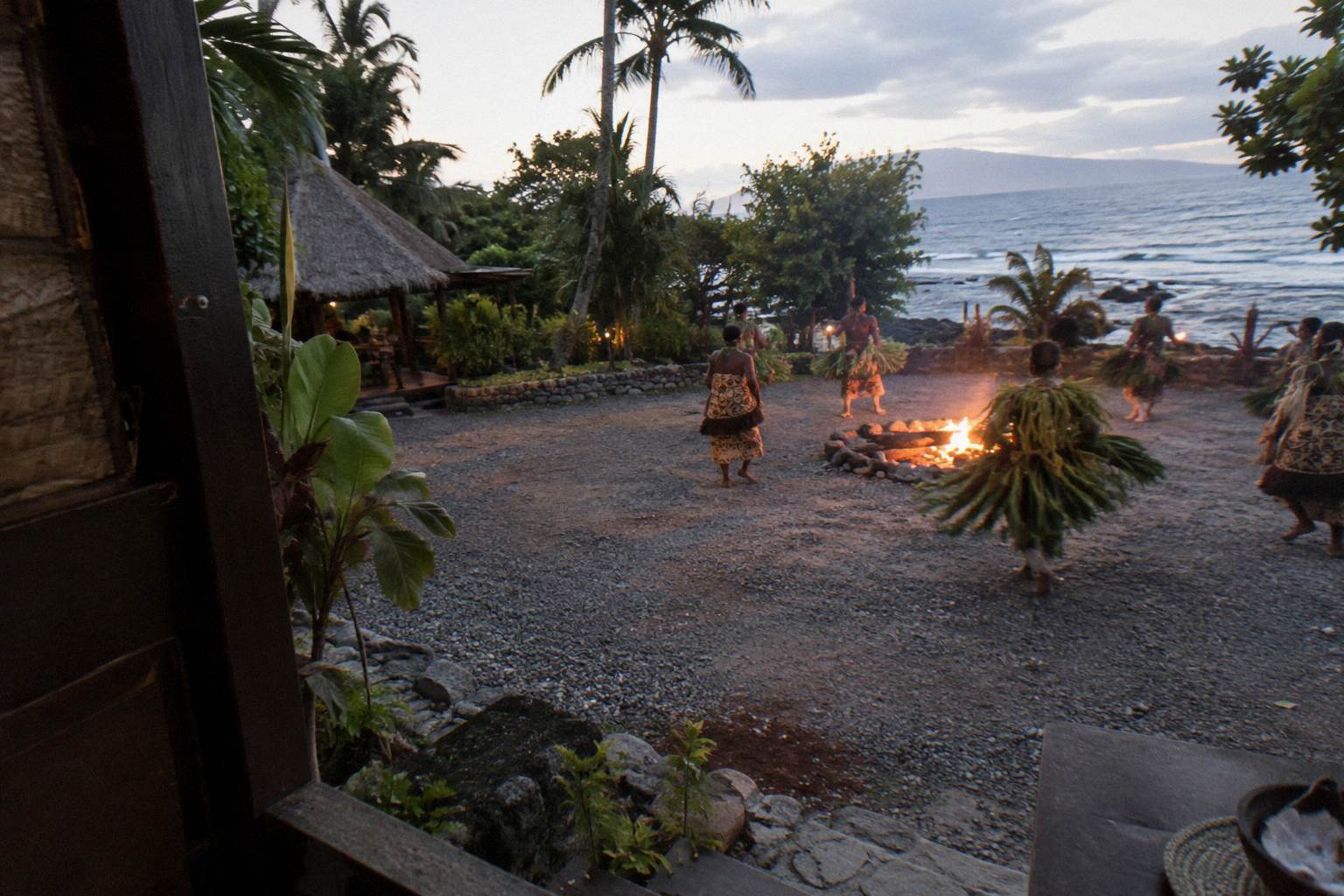
A final one: reading the fire act as the whole authenticity question. Both evenings document Fijian practices around the fire, from the sevusevu welcome ceremony Robinson Crusoe lists to the kava ceremony Culture Village schedules at 7:00pm. What happens at a Fiji kava ceremony covers that element in depth, and it is the part of the evening with the clearest traditional documentation of all.
Common Questions About Fire Dancing In Fiji
Is The Fire Dance At A Fiji Cultural Night Traditional?
It splits into three. Fire walking is the Fijian tradition Tourism Fiji traces to Beqa's Sawau tribe. Fire knife dancing, siva afi, is Samoan in origin and staged in Fiji shows. A listed fire dance with no detail, as at Fiji Culture Village, is not described by the operator, so no tradition can be claimed for it.
Is Siva Afi From Fiji?
No. The fire knife dance is Samoan in origin and is staged in Fiji shows, including the fire and knife dancing in Robinson Crusoe's Legends Of The Pacific show. It is not presented here as a Fijian tradition.
Are The Fire Walkers At Resort Shows From Beqa?
Not stated for the resort shows. Tourism Fiji says firewalking is performed at major hotels in Pacific Harbour, the Coral Coast and Denarau and advises checking with the resorts. The only named attribution in the sources is Damodar Arts Village, which says its daytime show is performed by the renowned firewalkers of Beqa, in the venue's wording.
Do Both Main Nadi Evenings Include Fire?
Yes. The Culture Village evening lists a meke show and fire dance at 7:50pm. The Robinson Crusoe evening lists a fire walking demonstration at 6:30pm and fire and knife dancing after the 7:00pm dinner.
Is Fire Walking Safe To Watch?
The sources do not cover safety, training or who performs the demonstrations. The operators list fire walking as part of their itineraries and state nothing further. Questions about safety are best directed to the operators on +679 804 4800 or +679 776 0999.