What Food Is Served At A Lovo Feast?
What actually comes out of a Fijian lovo earth oven at a cultural night: the foods Tourism Fiji names, what the tour operators serve, dietary advice and the BBQ substitution.
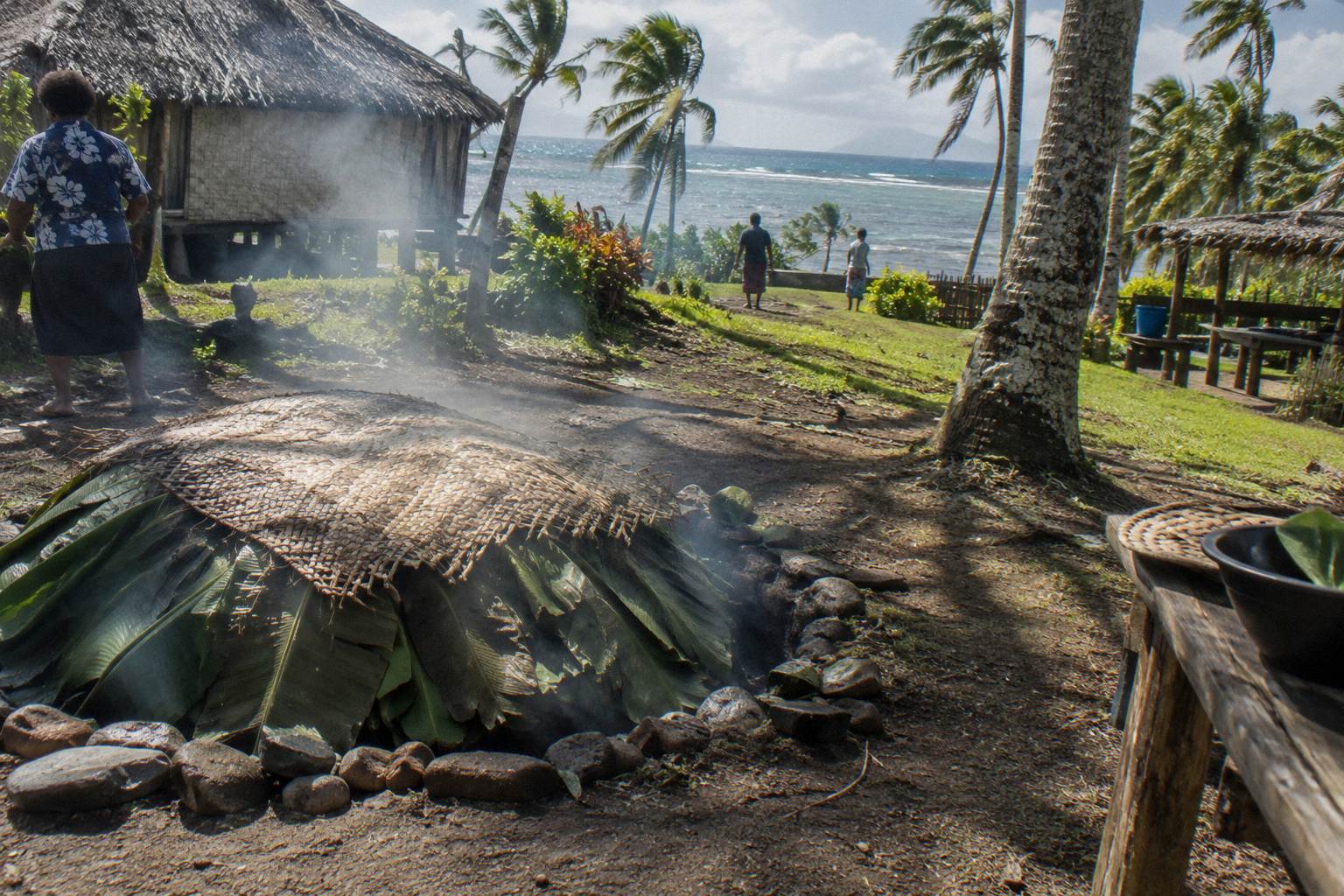
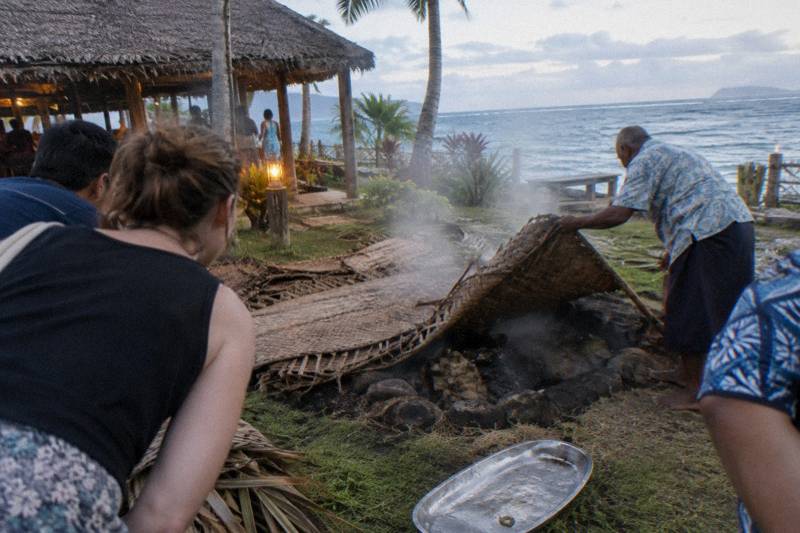
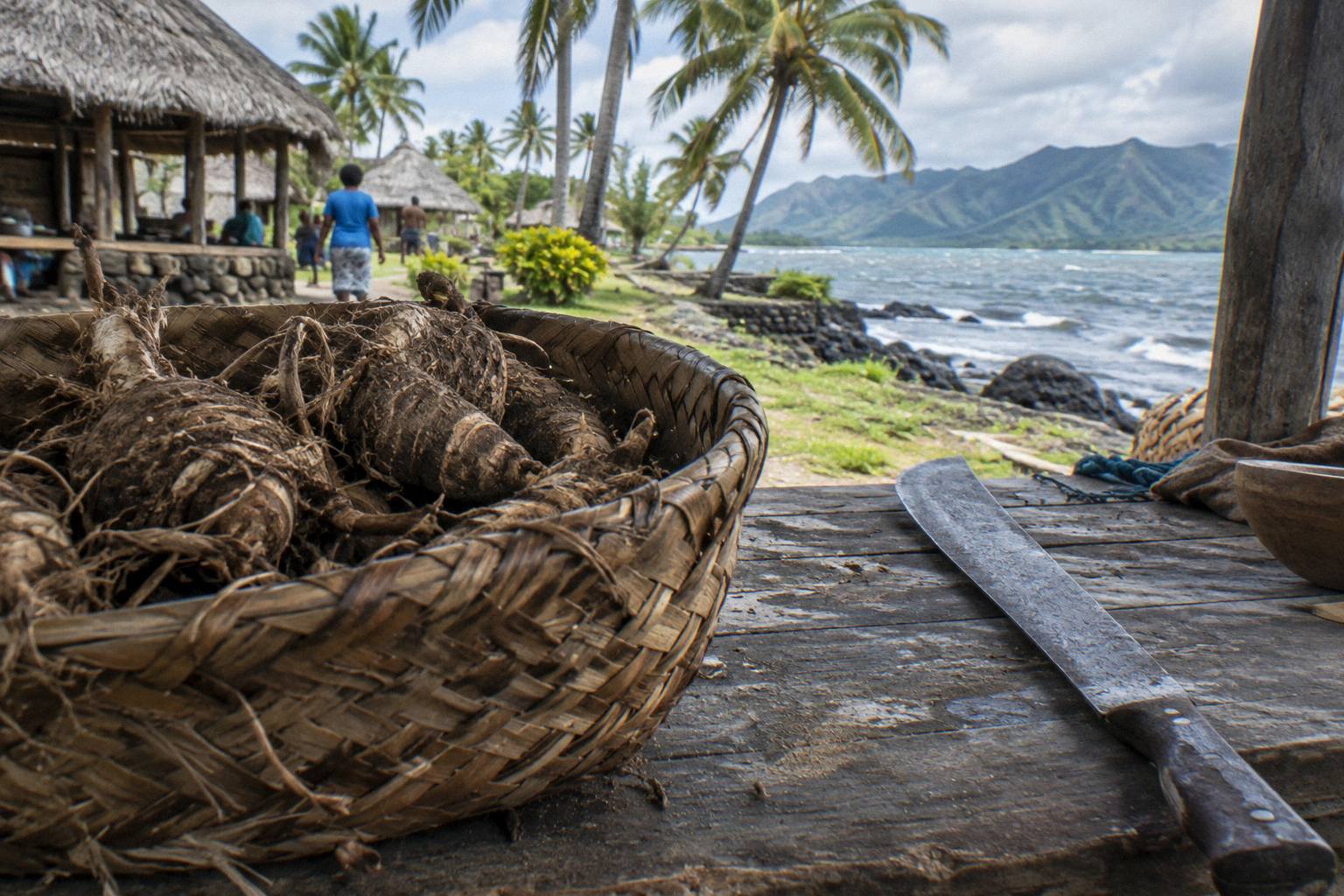
A lovo is not a menu item you order; it is the oven the whole meal is cooked in. Tourism Fiji describes it as a communal earth oven in which meat, fish and root crops such as taro are cooked on white-hot stones in a covered pit for a few hours. Everything else about a lovo feast flows from that one idea.
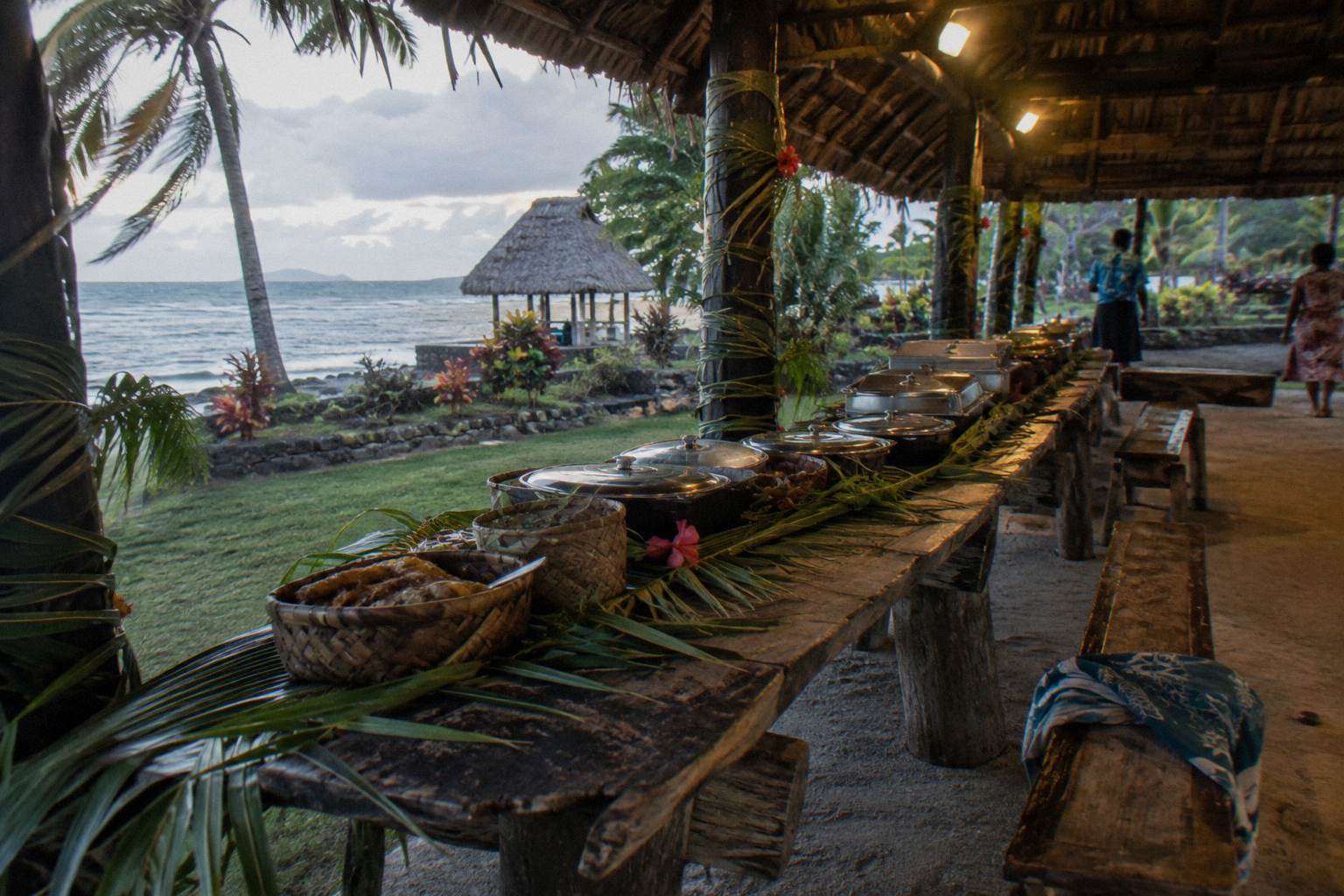
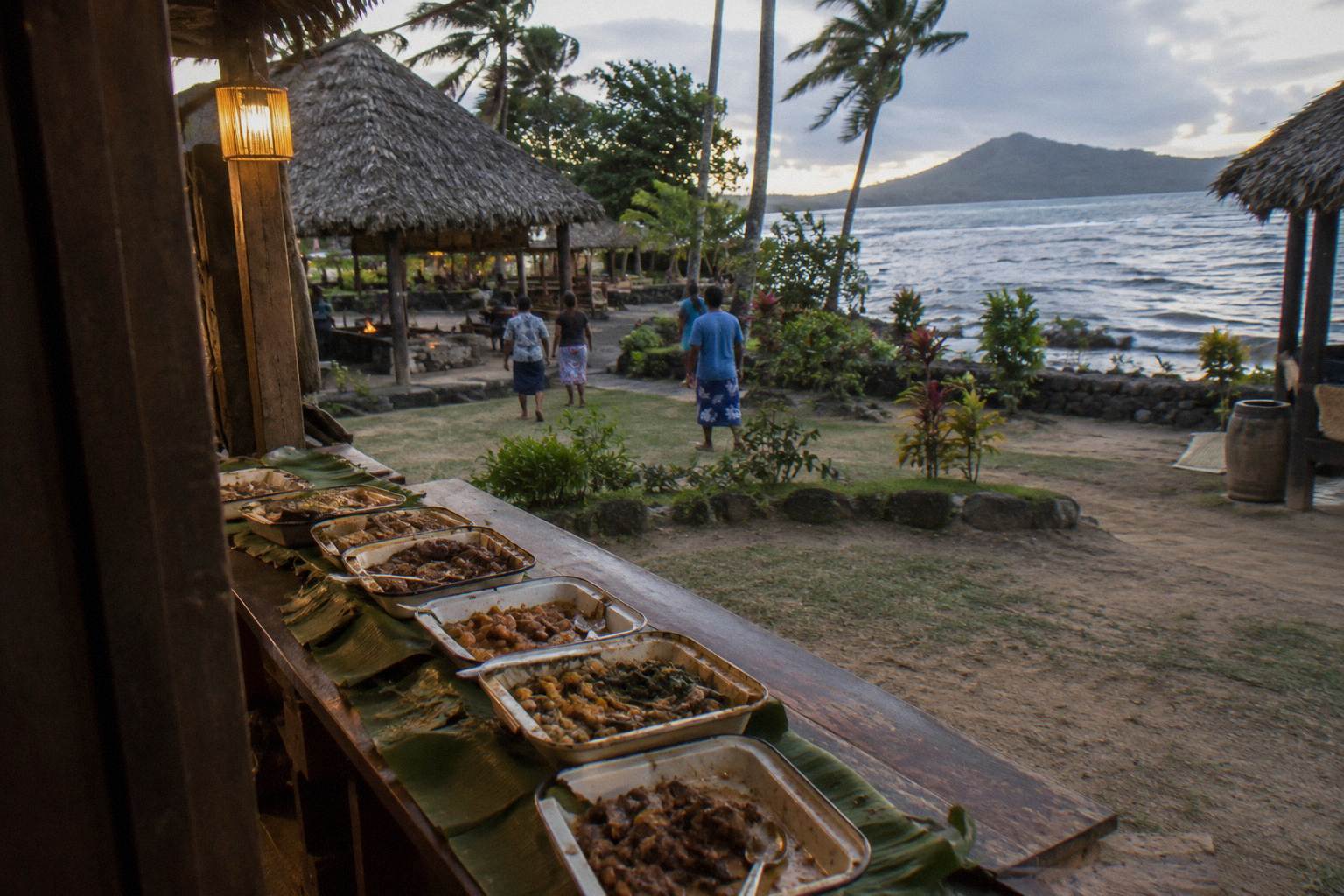
At a lovo feast you eat whatever the hosts cook in the earth oven itself: Tourism Fiji names meat, fish and root crops such as taro, all cooked on white-hot stones in a covered pit for a few hours. On the cultural evenings covered here, that food reaches your table as a buffet, and since neither operator publishes a dish-by-dish menu, expect the category and method rather than a list of named dishes.
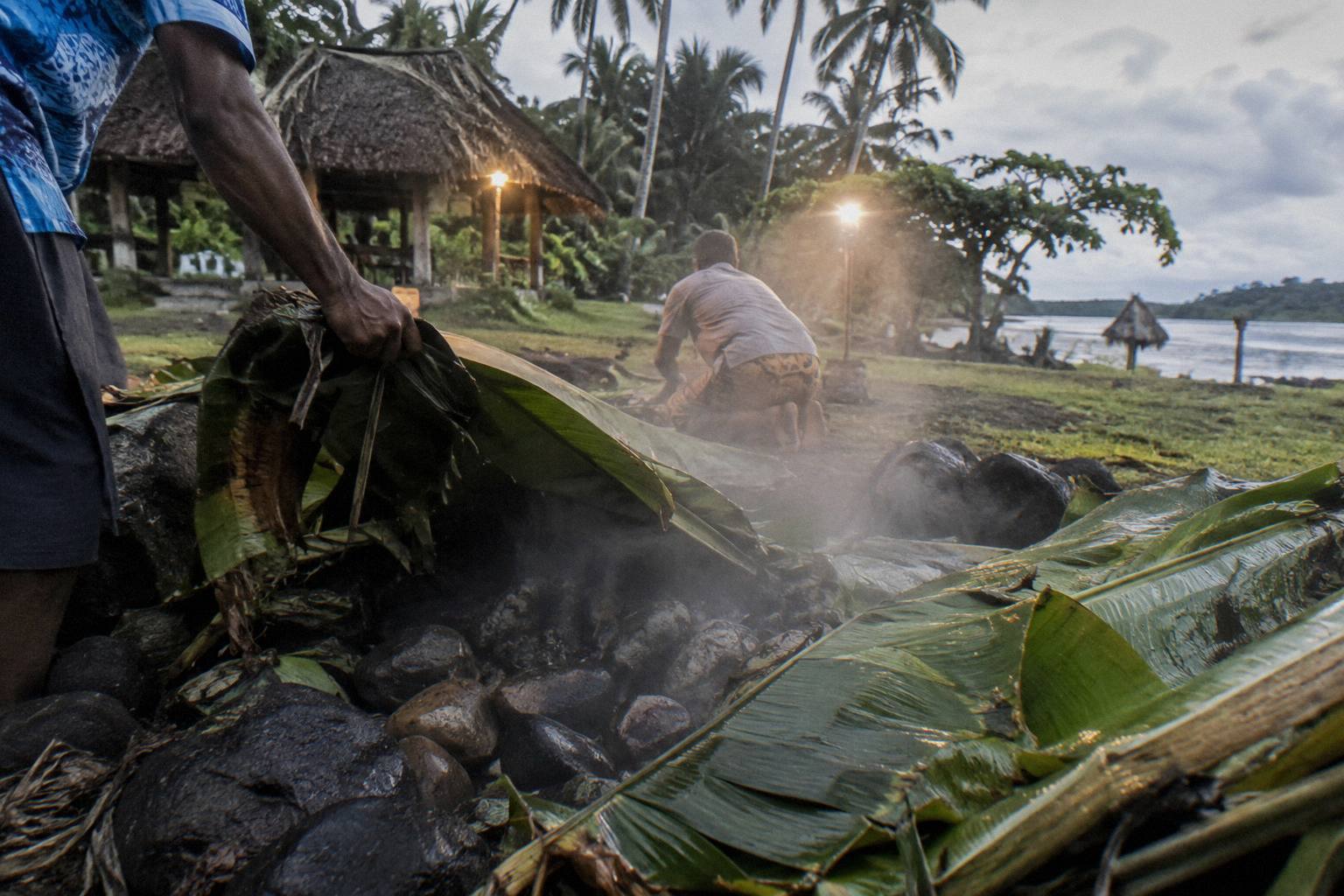
Tourism Fiji's cultural must-dos page is the primary source for what a lovo is: a communal earth oven where women prepare the food and men tend the fire, and where meat, fish and root crops such as taro cook on white-hot stones in a covered pit for a few hours. That is the full extent of the official food description. The page does not list dishes beyond those categories, and nothing in the operators' own material adds a single named dish either.
This is worth pausing on, because a reader deciding whether to book a lovo dinner usually wants to know what will actually be on the plate. The truthful position is that the two operators with published itineraries each promise a lovo buffet: Fiji Culture Village serves "a buffet dinner (lovo food)" at 7:20pm on its Cultural Night Tour, and Robinson Crusoe serves a "lovo buffet dinner" at 7:00pm on its Sunset Dinner Show. Neither says which cuts of meat, which fish, or which root crops appear on a given night. A buffet format means the spread is laid out and guests serve themselves, but the operators do not publish how many dishes that involves.
The point of the method is worth understanding before you decide. Because the pit is sealed and the food cooks slowly in its own steam over stones, a lovo is a one-shot cook: the oven is loaded, covered, and later unearthed in a single dramatic moment. That is why both operators place the unearthing on the public itinerary, Fiji Culture Village at 6:45pm and Robinson Crusoe at 6:30pm, before the buffet opens. The unearthing is part of the evening's theatre and also the kitchen's only service window.
For readers weighing a lovo dinner against an ordinary resort meal, the difference is method and setting rather than a documented menu. What the sources support saying is simple: a lovo feast at these evenings is a buffet of earth-oven-cooked food in the categories Tourism Fiji names, served as part of a cultural night that also includes welcome ceremonies, kava and performance. If a specific dish matters to you, the operators' contact details are published and asking ahead is the reliable route: Fiji Culture Village on +679 804 4800, Robinson Crusoe on +679 776 0999.
Readers deciding between the actual evenings can compare them directly: which Fiji cultural evening fits your night works through the Nadi options side by side.
How The Lovo Oven Cooks The Food
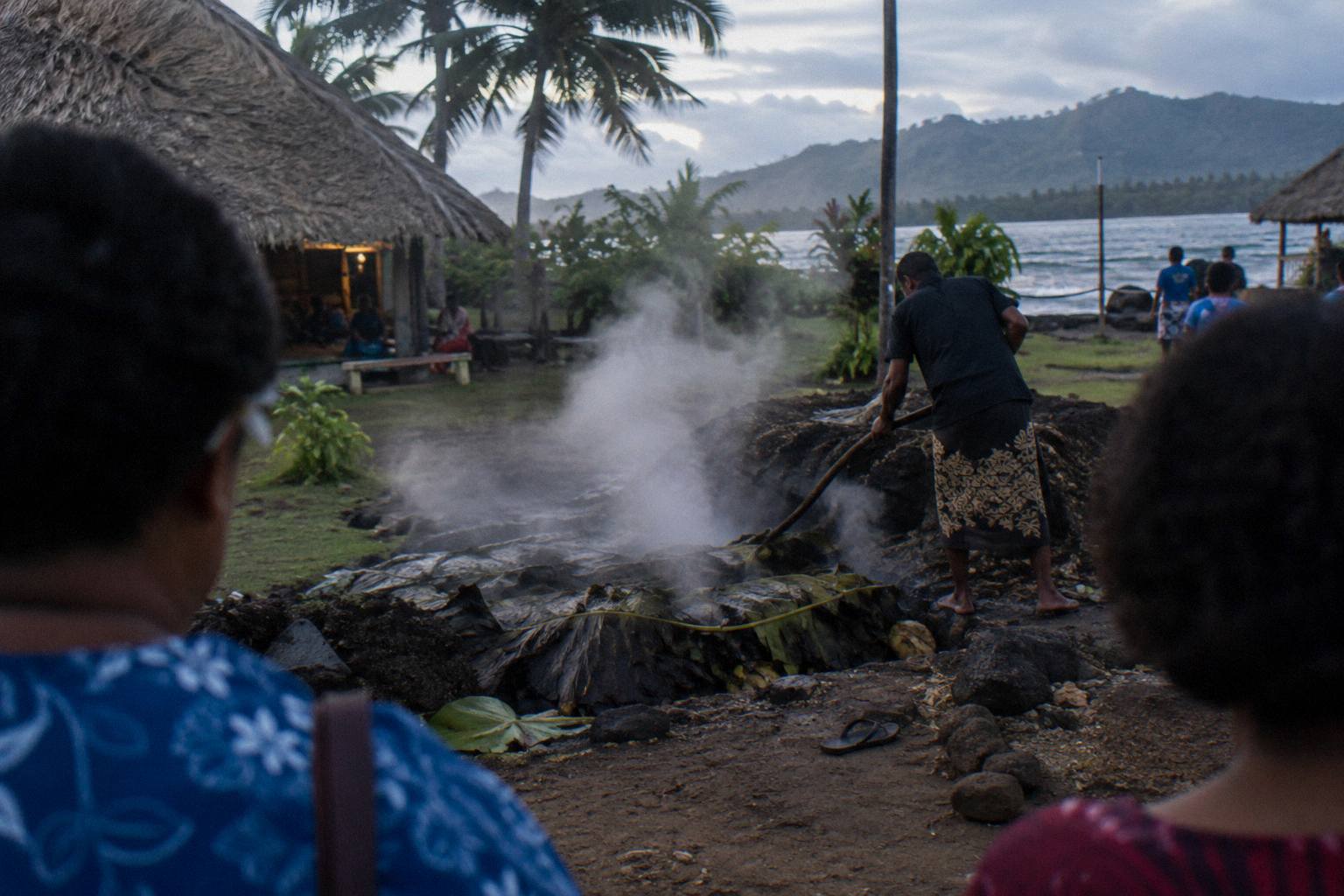
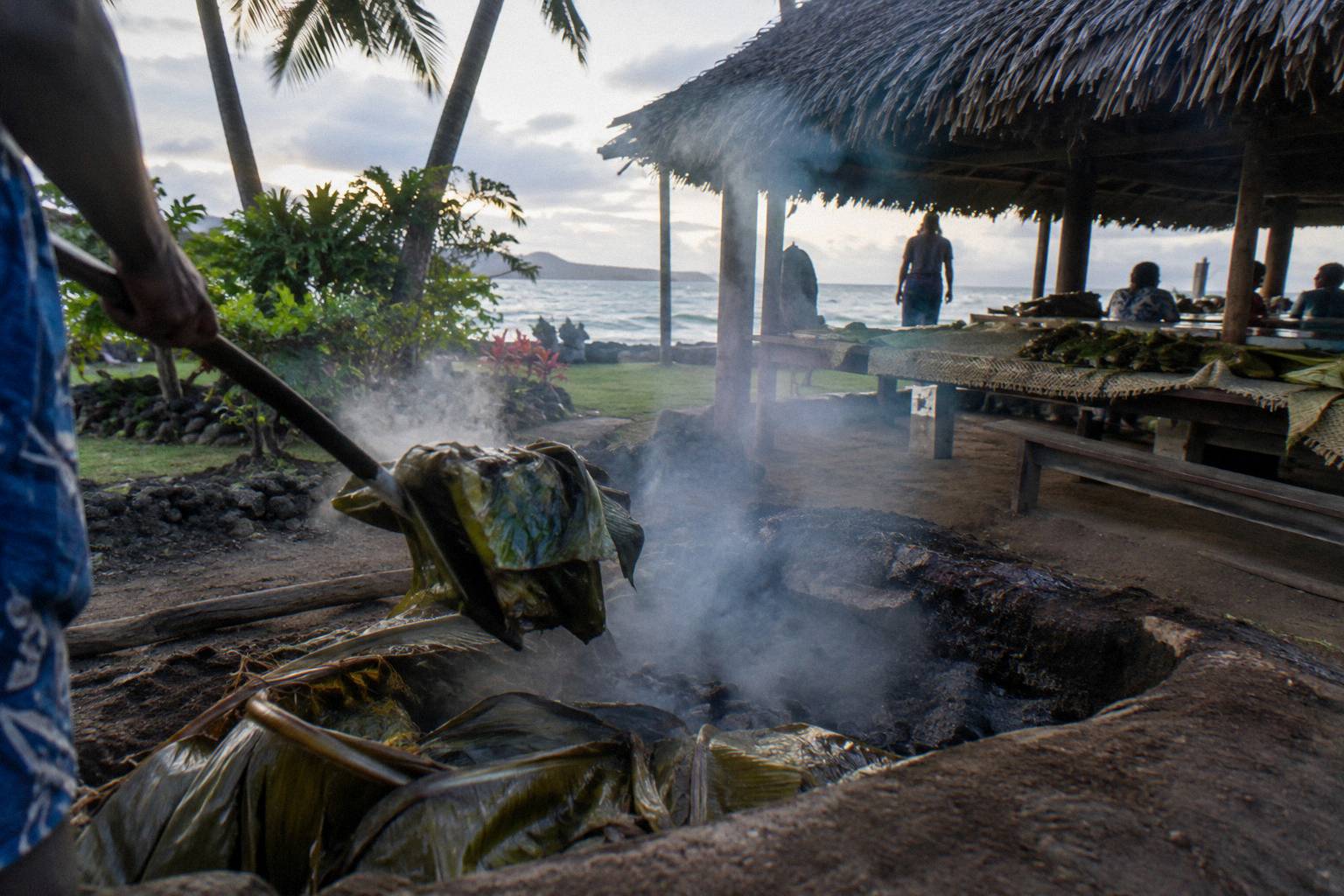
The lovo cooks by trapped steam and radiant stone heat: food is arranged on stones heated white-hot in a pit, then the pit is covered, and the food slow-cooks in a sealed environment for a few hours. Tourism Fiji says women prepare the food and men tend the fire. The unearthing, not the lighting of the fire, is the moment guests see on a cultural night.
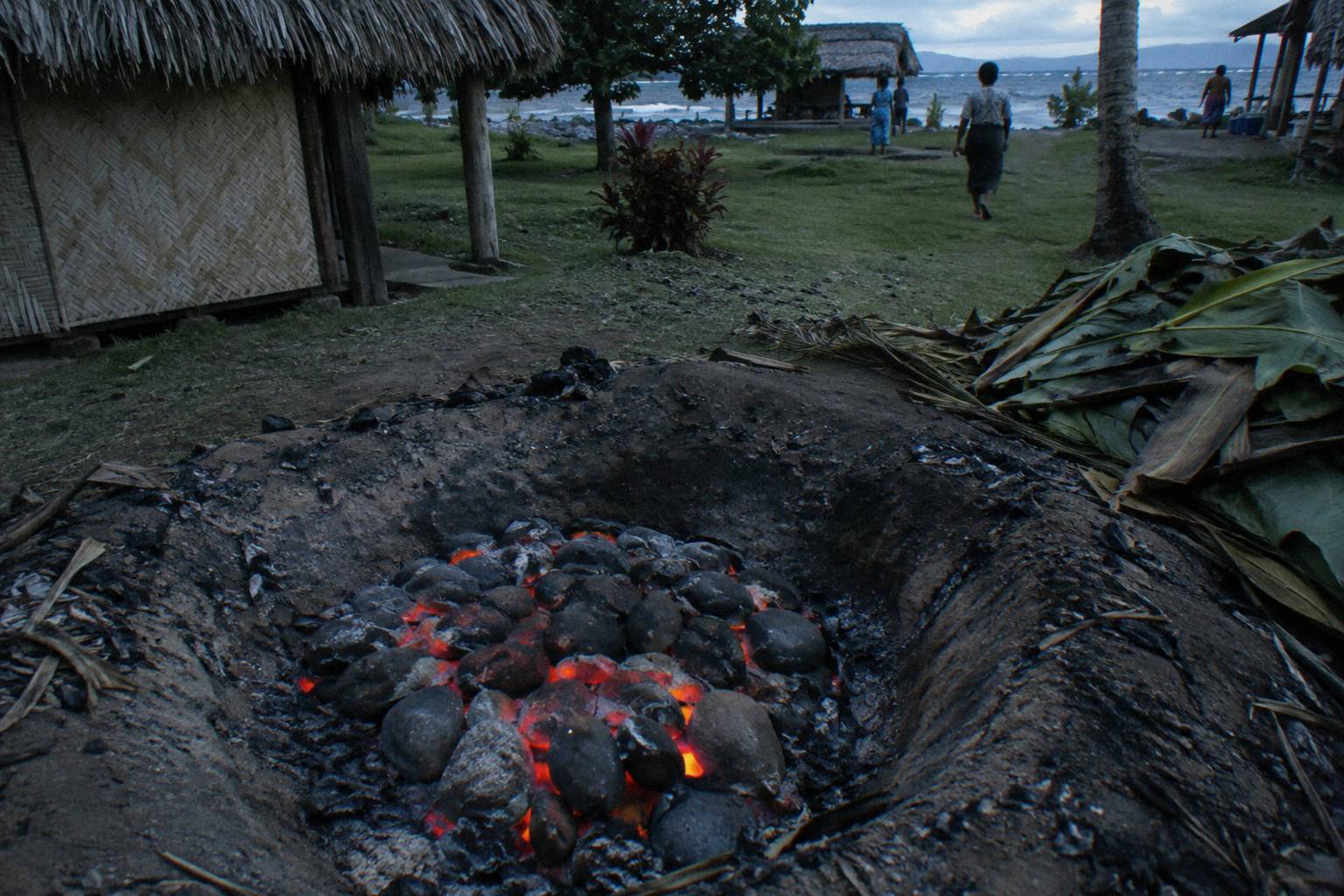
Tourism Fiji's description gives the mechanics in one line: meat, fish and root crops such as taro are cooked on white-hot stones in a covered pit for a few hours. The covering matters as much as the heat. Once the pit is sealed, the moisture in the food and the wrapping turns to steam, and that steam does much of the cooking, which is why the method is closer to steaming than to grilling even though fire starts it. Root crops such as taro hold up well to this treatment, and the slow hours in the sealed pit are what the method asks for.
The division of labour Tourism Fiji records, women preparing the food and men tending the fire, is a cultural statement, and it belongs to Tourism Fiji's own text rather than to any operator's marketing. Neither operator says who performs which role on its own evening. What the operators do publish is timing: Fiji Culture Village's timeline puts the unearthing of the lovo at 6:45pm, with the kava ceremony at 7:00pm and the buffet at 7:20pm, while Robinson Crusoe's itinerary pairs its 6:30pm lovo unearthing with a fire walking demonstration and serves the lovo buffet at 7:00pm.
The gap between unearthing and serving tells you something practical about the evening. The buffet does not open the moment the pit is opened; the ceremony, the welcome and the performance fill the space between. Guests who want to see the unearthing should be on the tour from the start rather than arriving late, and both evenings structure the whole night around that sequence. On Robinson Crusoe's evening the unearthing shares its slot with a fire walking demonstration, one of the operator's listed highlights.
No source states the exact cooking duration for a given evening, only that the method takes "a few hours" in Tourism Fiji's words. That phrasing is worth keeping intact rather than converting into a precise number, because the cooking time depends on the load, the stones and the fire, and no operator publishes its own figure. For a fuller treatment of the oven itself, what a lovo is and how it works covers the method in detail.
Deciding between the two lovo evenings comes down to format and location more than food: the Nadi cultural night options set the village evening beside the island evening.
What The Tour Operators Say About Their Lovo Dinners
Two operators publish lovo dinner details: Fiji Culture Village serves a buffet of lovo food at 7:20pm on its Cultural Night Tour, and Robinson Crusoe serves a lovo buffet at 7:00pm on its Sunset Dinner Show, with a lovo also unearthed before the buffet lunch on its daytime Culture Day Tour. That is the whole of the published food information: buffet format, lovo method, and a time. Neither operator names dishes.
What each operator commits to, in its own words, is worth laying side by side. Fiji Culture Village's includes list runs: return transfer from Nadi and Denarau hotels, warrior welcome, guided village walking tour, kava ceremony, buffet dinner (lovo food), meke show and fire dance. Robinson Crusoe's Sunset Dinner Show itinerary lists a lovo buffet dinner at 7:00pm followed by the "Legends of the Pacific" show with fire and knife dancing, and its highlights list names the lovo (earth oven) dinner alongside a sevusevu welcome ceremony with kava tasting, a sunset bonfire and string band, and a fire walking demonstration.
| Evening | Lovo moment on itinerary | Buffet served | Other food facts stated |
|---|---|---|---|
| Fiji Culture Village Cultural Night Tour | 6:45pm unearthing of the lovo | 7:20pm buffet dinner (lovo food) | No menu, dietary or drink details published |
| Robinson Crusoe Sunset Dinner Show | 6:30pm lovo unearthing with a fire walking demonstration | 7:00pm lovo buffet dinner | Lovo may be replaced by a BBQ if numbers are low; no outside alcohol, licensed bar |
| Robinson Crusoe Fiji Culture Day Tour (daytime) | Lovo uncovering before lunch | Buffet lunch | Drinks 11:30am to 3:30pm; RSA restrictions apply, no BYO |
The table shows the honest shape of the information. The evenings differ in rhythm more than in food promise: the village evening spaces the unearthing and the buffet further apart and fills the gap with a kava ceremony, while the island evening moves from unearthing to buffet inside half an hour and follows dinner with its show. If watching the unearthing is the draw, both evenings deliver it on the published itinerary; if the buffet is the draw, both promise the same format.
The siva afi, or fire-knife dance, that appears in Robinson Crusoe's post-dinner show is Samoan in origin and staged in Fiji shows, a distinction worth knowing when an evening markets itself as Fijian culture. Fiji's own fire tradition is firewalking: Tourism Fiji tells the legend of Tuinaiviqalita and the veli, with the power flowing through his bloodline to members of Beqa's Sawau tribe. Robinson Crusoe lists a fire walking demonstration but says nothing about who performs it, so no claim is made here about its performers.
One further venue belongs in the picture only as context. Damodar Arts Village in Pacific Harbour announces meke performances, storytelling and a firewalking ceremony described in the venue's own words as performed by the renowned firewalkers of Beqa, but it is an 11am daytime show with no dinner, not an evening product, and it cannot be booked through this site.
Dietary Needs, Vegan And Halal Questions
Robinson Crusoe's FAQ asks that dietary needs be advised at the time of booking, and states no vegan or halal options; Fiji Culture Village publishes no dietary information at all. Neither operator's lovo buffet can be guaranteed to suit any specific dietary requirement on the strength of the published material. The reliable move is to ask before booking, by phone or email, and to say what you need.
This is the section that matters most for a reader with a dietary constraint who is deciding whether a lovo dinner works. The factual base is thin, and it is better stated plainly than smoothed over. Tourism Fiji names meat, fish and root crops such as taro as the foods of the lovo, which tells you animal products are part of the traditional method as described, but it does not tell you whether a given buffet includes dishes without meat or fish, and no operator says so either. More of these guides are collected on Fiji Cultural Night Tours.
Robinson Crusoe's FAQ is the only published dietary instruction among these operators: dietary needs are to be advised at the time of booking. That phrasing is an instruction, not a promise. It means the operator wants to know in advance, and it does not commit to satisfying every request. The same FAQ states no vegan or halal options, so a reader needing either should ask the operator directly before relying on the buffet. The phone number is published: +679 776 0999.
Fiji Culture Village's position is a gap, not a refusal. Its page lists the buffet dinner (lovo food) among the inclusions and publishes nothing about dietary accommodation. The operator's contacts are +679 804 4800 and reservationfijiculturevillage@gmail.com. Asking is straightforward, and an answer from the operator carries more weight than any assumption a travel article could make.
| Question | Fiji Culture Village | Robinson Crusoe |
|---|---|---|
| Dietary needs advice | Not stated; ask the operator (+679 804 4800) | Advise at the time of booking (FAQ) |
| Vegan options | Not stated | Not stated |
| Halal options | Not stated | Not stated |
| Alcohol | Not stated | No outside alcohol; licensed bar |
| Drinks to bring | Not stated | Fijian dollars for drinks, per the FAQ |
Allergies deserve the same caution. A buffet that serves meat, fish and root crops cooked together in a covered pit, as Tourism Fiji describes the method, is not a controlled environment for severe allergies, and no operator publishes an allergen statement. Anyone with a serious allergy should treat the lovo buffet as unsuitable until the operator says otherwise, and should ask in writing so the answer is on record. This is decision advice drawn from the method, not a claim about any specific kitchen.
The BBQ Substitution And What Else Can Change
Robinson Crusoe's terms state that the lovo may be replaced by a BBQ if numbers are low, and that management may cancel the tour entirely if fewer than 15 adults book, or for cyclones, flooding or other weather. A reader booking the island evening should understand the dinner format is not guaranteed in every circumstance. Fiji Culture Village publishes no equivalent substitution clause.
The substitution clause sits in Robinson Crusoe's terms, not its marketing pages, which is why many first-time bookers miss it. Its practical meaning: on a quiet night, the dinner may still happen, the evening may still run in full, but the food may come off a barbecue rather than out of the earth oven. For a reader whose main reason for booking is the lovo specifically, that clause is the single most important line in the operator's terms, and the operator's terms page is where it lives.
The same terms carry the other conditions that shape the night. Cancellation received 24 hours or more before pick-up gets a full refund; inside 24 hours the payment is 100 percent forfeit. Management may cancel for low adult numbers or weather, including cyclones and flooding, and activities are subject to weather generally. None of this is a reason not to book; it is a reason to book with eyes open, and to keep the 24-hour line in mind if plans shift.
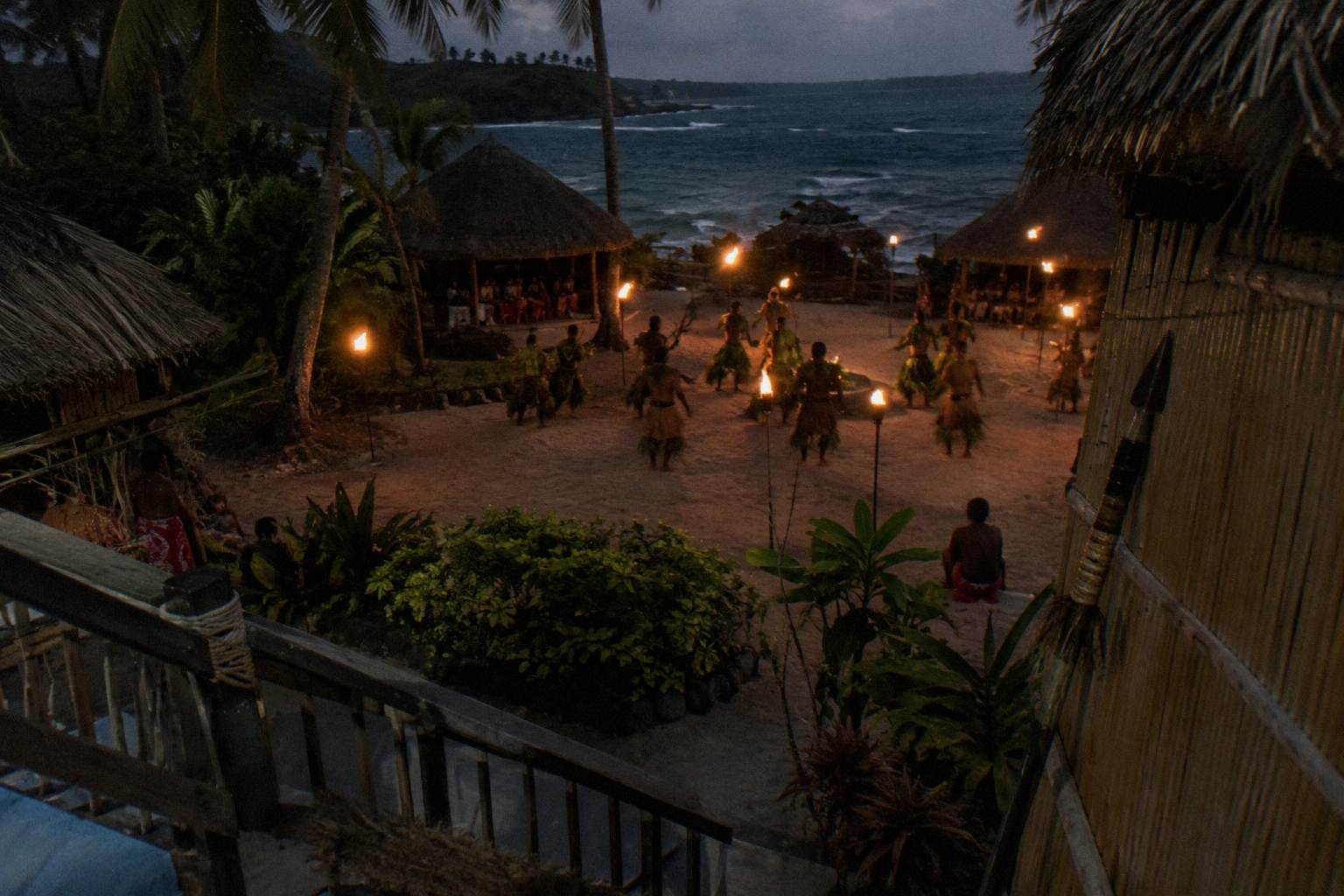
The weather and minimum-number clauses are worth distinguishing from the substitution clause. A cancellation means no evening at all and a refund per the terms. A substitution means the evening runs and dinner changes form. A reader who would be disappointed by a BBQ in place of a lovo, but still happy with the island, the bonfire and the show, can book anyway and simply know in advance what the fallback is.
Timing has its own stability. Robinson Crusoe's evening runs Monday, Wednesday and Saturday, and Fiji Culture Village runs Monday to Saturday, so the choice of night is a real constraint on both. The village operator also publishes a maintenance closure from Monday 22 February 2027 to reopening Wednesday 10 March 2027. Neither source says anything about an evening selling out, and no lead time is stated by either operator, so no booking-urgency claim is made here; matching your free night to the operator's fixed nights is the planning task that actually exists.
What A Lovo Feast Costs And When You Can Eat One
Fiji Culture Village publishes rates in Fijian dollars: F$175 per adult, F$105 per child aged 5 to 12, and F$500 for a family of 2 adults and 2 children, valid to 31 December 2026, with F$189, F$115 and F$550 respectively for 2027. Robinson Crusoe's tour pages print no prices; its rates are in Fijian dollars, tax inclusive of 15 percent VAT, with a 3 percent credit card fee. See the booking page for the island evening's price.
The village evening is the one lovo dinner here with a printed operator rate, and it is worth reading carefully because of the two validity bands. A family of two adults and two children pays F$500 under the rate valid to 31 December 2026; the family rate applies only to that exact group shape, and the operator's rate for 2027 rises to F$550. The child rate applies to ages 5 to 12, and the operator publishes no minimum age for the tour itself.
The village evening bundles a good deal around the buffet: the published timeline runs from hotel pick-up at 4:20pm from Denarau, Nadi and Wailoaloa hotels through a 5:15pm warrior welcome, a 5:30pm guided village walk, the 6:45pm lovo unearthing, the 7:00pm kava ceremony, the 7:20pm buffet, and a 7:50pm meke show and fire dance, ending with farewell and departure at 8:30pm, about 4 to 4.5 hours door to door. The tour carries a 4.6 rating. The Lovo Buffet, 4 To 4.5 Hours link sits beside the fuller write-up of the Culture Village evening tour, which is the natural next stop for a reader closing in on this dinner.
Robinson Crusoe's pricing position is different and should be stated without apology: the tour pages print no prices. The terms say rates are in Fijian dollars, tax inclusive of 15 percent VAT, with a 3 percent credit card fee on card payments, and that all tour rates except one include return coach transfers from Nadi, Denarau and Coral Coast hotels as far as the Warwick, plus launch transfers. What that means for a reader is a call to the booking page or the operator on +679 776 0999 rather than a number quoted here.
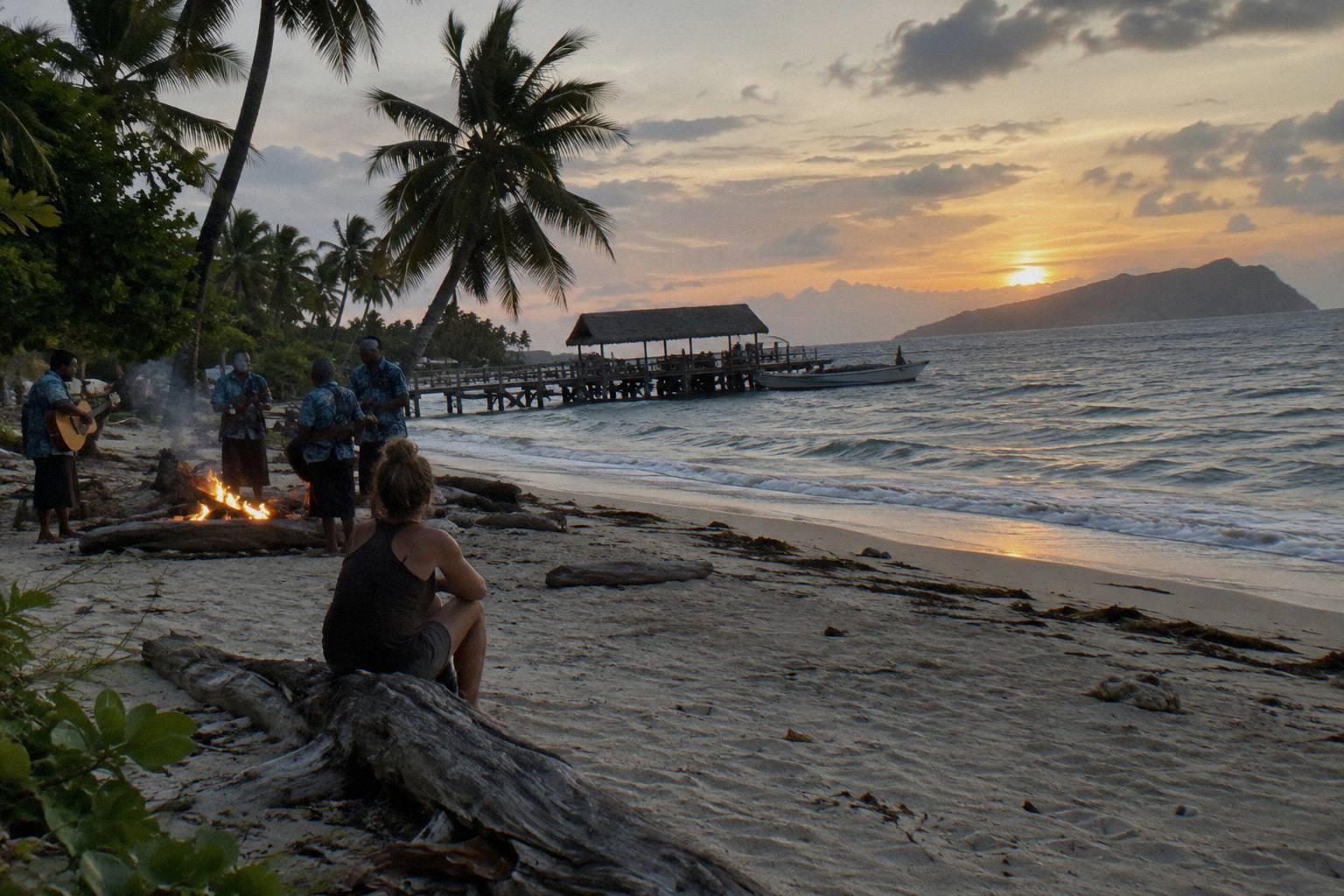
The island evening also involves real travel around the food. The jetty is near Natadola Beach, 45 minutes from Nadi, and the crossing is a 30-minute calm-water cruise down the Tuva River. The published itinerary gives the boat departing the mainland jetty at 5:00pm, arrival on the island at 5:45pm with a costumed island welcome, a 6:00pm sunset beach bonfire with serenaders, and the lovo unearthing at 6:30pm. A reader staying in Nadi or Denarau should budget the coach legs on top of the 5pm to 9pm island time. For the fuller picture of that evening, the Robinson Crusoe island cultural night walks the whole itinerary.
Valentine Tours Fiji also runs a Nadi evening billed as a culture night with dinner and a meke show, about 3 hours with hotel pick-up from the Nadi and Denarau area, but no official food details were captured for it: whether its dinner is a lovo is not stated, so check the booking page before assuming.
Common Mistakes When Choosing A Lovo Dinner
The mistakes that cost readers here are assuming a published menu exists, skipping the dietary conversation before booking, ignoring the BBQ substitution clause on the island evening, and fixing a date before checking which nights each operator runs. Each of these is avoidable with one phone call or one look at the operator's own pages. None of the four takes more than a few minutes to settle.
The first mistake is expecting a dish list. Neither operator publishes one, and articles that promise specific dishes are guessing. The grounded expectation is a buffet of earth-oven food in the categories Tourism Fiji names: meat, fish and root crops such as taro. Readers who need more certainty than that should ask the operator directly, and both phone numbers are published.
The second is the dietary conversation. Robinson Crusoe asks that dietary needs be advised at the time of booking, and states no vegan or halal options; Fiji Culture Village publishes nothing on the subject. A reader who arrives on the night with an unstated requirement has left it too late under both operators' own terms. The call belongs before payment, not after pick-up.
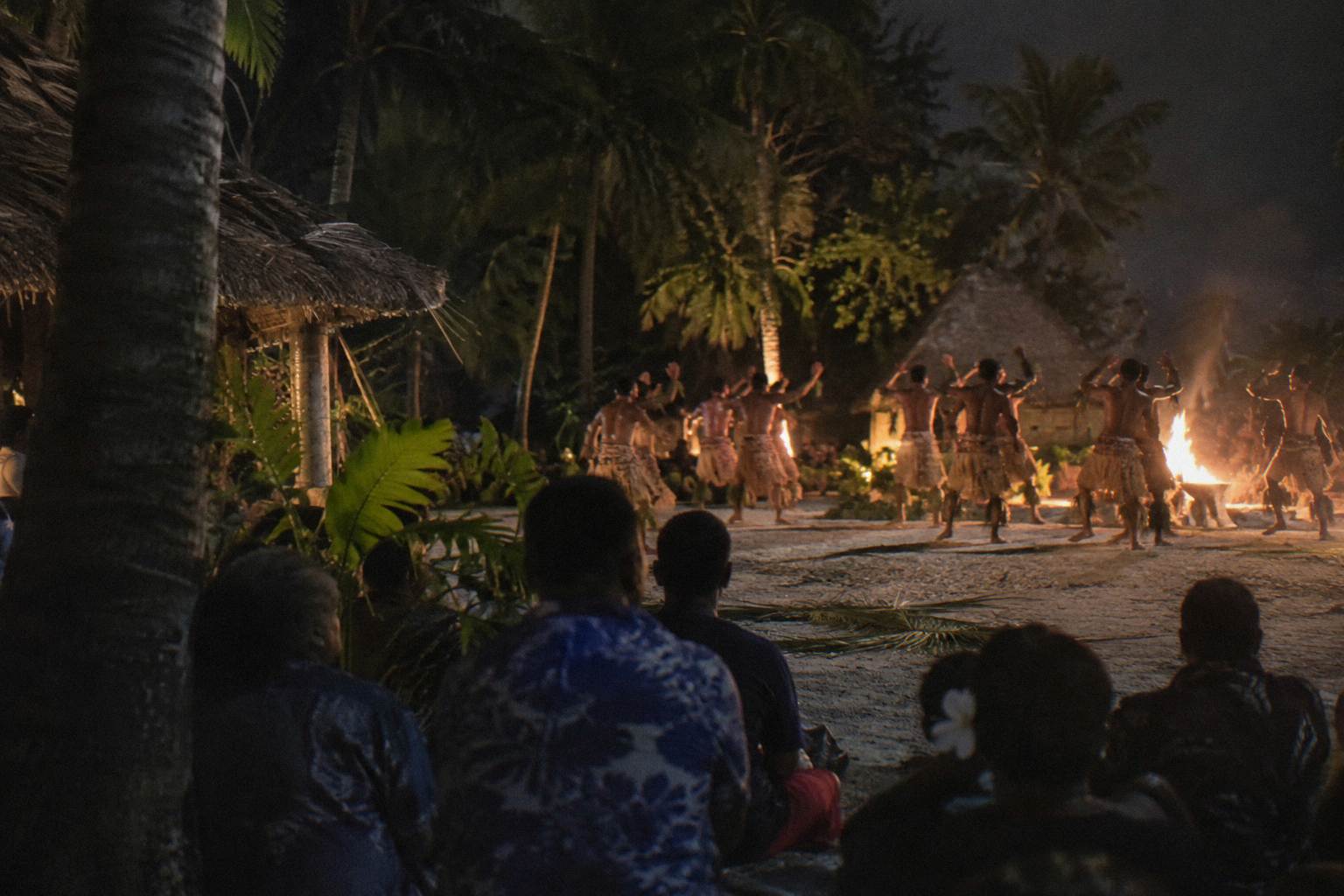
The third is treating the lovo as guaranteed on the island evening. The operator's terms allow a BBQ substitution when numbers are low, plus cancellation for low adult numbers or weather. A reader who books the island for the lovo specifically should know the fallback and the 24-hour cancellation line: full refund at 24 hours or more before pick-up, 100 percent forfeit inside it.
The fourth is date planning. Robinson Crusoe's evening runs Monday, Wednesday and Saturday; Fiji Culture Village runs Monday to Saturday and closes for maintenance from 22 February 2027 to 10 March 2027. A reader who picks Friday for the island evening, or a March date for the village, has planned around evenings that do not exist. Whether the evening is worth the price is covered separately in is a Fiji cultural night worth it.
Common Questions About A Lovo Feast
What Food Is Served At A Lovo Feast?
Tourism Fiji names the foods of the lovo: meat, fish and root crops such as taro, cooked on white-hot stones in a covered pit for a few hours. On the evenings covered here the food arrives as a buffet, at 7:20pm at Fiji Culture Village and 7:00pm at Robinson Crusoe. Neither operator publishes a dish-by-dish menu.
Is A Lovo A Buffet?
On these tours, yes: Fiji Culture Village lists a buffet dinner of lovo food and Robinson Crusoe lists a lovo buffet dinner. The lovo itself is the oven, a covered earth pit, and the buffet is how the cooked food is served to guests.
Can Vegetarians Or Vegans Eat At A Lovo Feast?
Not stated by either operator. Tourism Fiji's description includes meat and fish among the foods cooked in a lovo. Robinson Crusoe asks that dietary needs be advised at the time of booking and states no vegan or halal options; Fiji Culture Village publishes no dietary information. Ask the operator before booking.
Can The Lovo Be Replaced By Something Else?
On Robinson Crusoe's evening, yes: the operator's terms say the lovo may be replaced by a BBQ if numbers are low, and management may cancel for fewer than 15 adults or for weather. Fiji Culture Village publishes no substitution clause.
What Time Is Dinner Served On A Lovo Evening?
Fiji Culture Village unearths the lovo at 6:45pm and serves the buffet at 7:20pm. Robinson Crusoe unearths the lovo at 6:30pm, with a fire walking demonstration, and serves the lovo buffet at 7:00pm.
How Much Does A Lovo Dinner Evening Cost?
Fiji Culture Village's operator rate is F$175 per adult, F$105 per child aged 5 to 12, and F$500 for a family of 2 adults and 2 children, valid to 31 December 2026, rising to F$189, F$115 and F$550 for 2027. Robinson Crusoe's tour pages print no price; its rates are in Fijian dollars with 15 percent VAT included and a 3 percent card fee, so see the booking page.