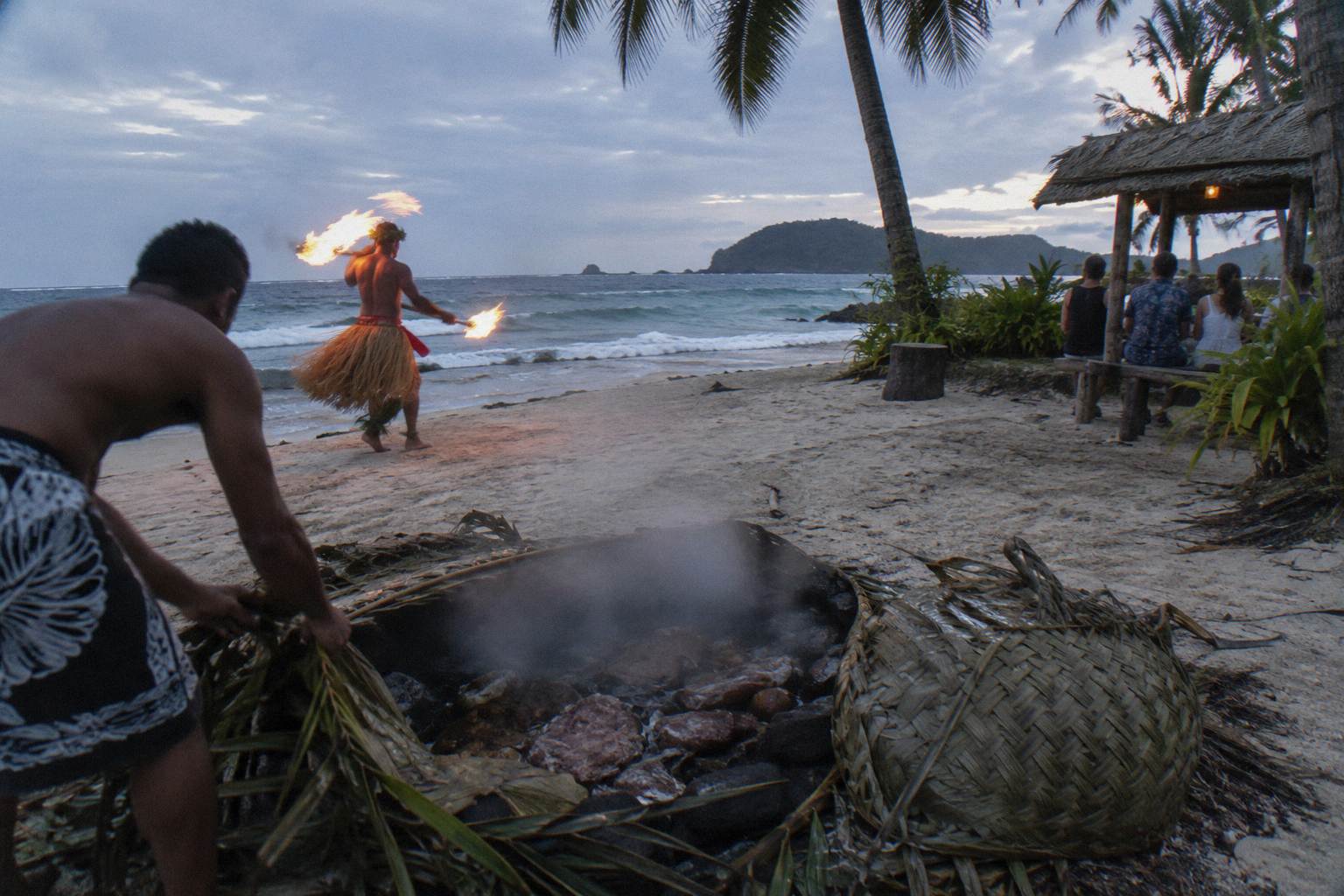
Beqa Island Firewalkers: The Tradition Behind The Show
Firewalking in Fiji belongs, by Tourism Fiji's account, to one bloodline on one island. Here is that story in the source's own words, and where the evening shows near Nadi actually stage fire performances.
Short answer
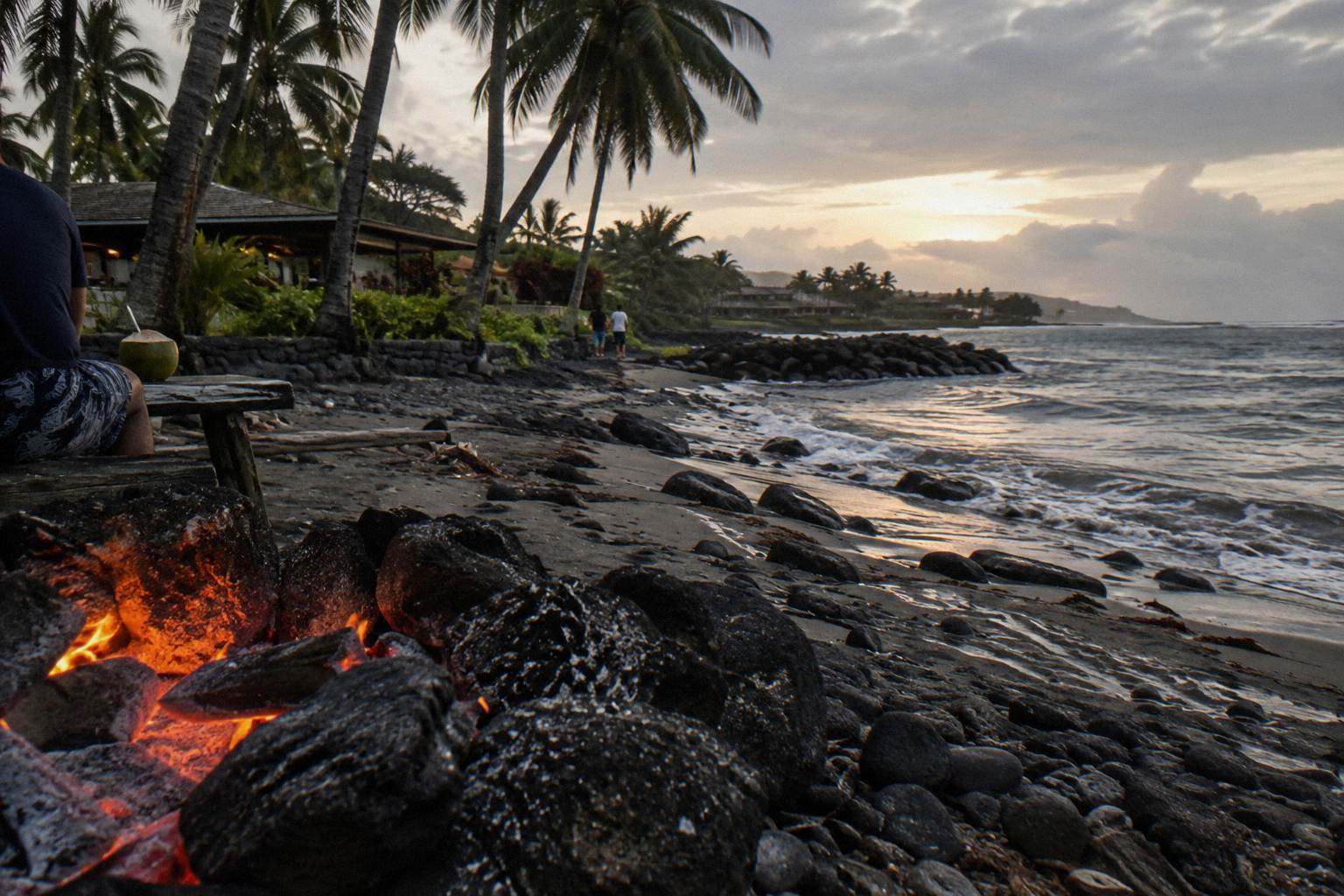
Tourism Fiji says the power to walk on white-hot stones flows only through the bloodline of Tuinaiviqalita to members of Beqa's Sawau tribe. There is no Beqa island trip bookable here. The evening shows near Nadi stage fire performances: Robinson Crusoe lists a fire walking demonstration at 6:30pm, and Fiji Culture Village a fire dance at 7:50pm.
Firewalking is one of Fiji's most recognisable traditions, and its origin story belongs to a single place: Beqa (pronounced Benga), the island Tourism Fiji names as home of the Sawau tribe. The evening shows staged around Nadi and the Coral Coast borrow the spectacle, but the tradition itself has a specific lineage, and the national tourism body tells it in specific words. This page sets out that story exactly as Tourism Fiji tells it, then maps every evening performance near Nadi and Denarau where fire appears in some form, from a demonstrated fire walk to a Samoan-origin fire knife dance.
Who The Beqa Island Firewalkers Are
Tourism Fiji's firewalkers page says the power to walk on white-hot stones flows only through Tuinaiviqalita's bloodline to members of Beqa's Sawau tribe, and that the gift came from a spirit god known as a veli. No other body is named, no other island is credited, and no tour operator on this site claims its performers are Sawau. That makes Beqa the reference point for every fire performance you will actually book.
Beqa (pronounced Benga) is an island Tourism Fiji covers on its own destination page, separate from Viti Levu where the resorts and tour departures sit. The connection between the two is performance: Tourism Fiji says firewalking is also performed on Viti Levu at major hotels in Pacific Harbour, the Coral Coast and Denarau as resort entertainment, and its advice is simply to check with those resorts. No resort is named, and no resort firewalking show is bookable through this site.
That gap between origin and staging matters when you read an evening tour's description. An operator can list a fire walking demonstration without saying who performs it or where the performers learned it. Robinson Crusoe Island Tours does exactly that: its itinerary lists a fire walking demonstration at 6:30pm, and says nothing about the performers' background. Treating every fire performance as Sawau firewalking would be a claim no source here supports.
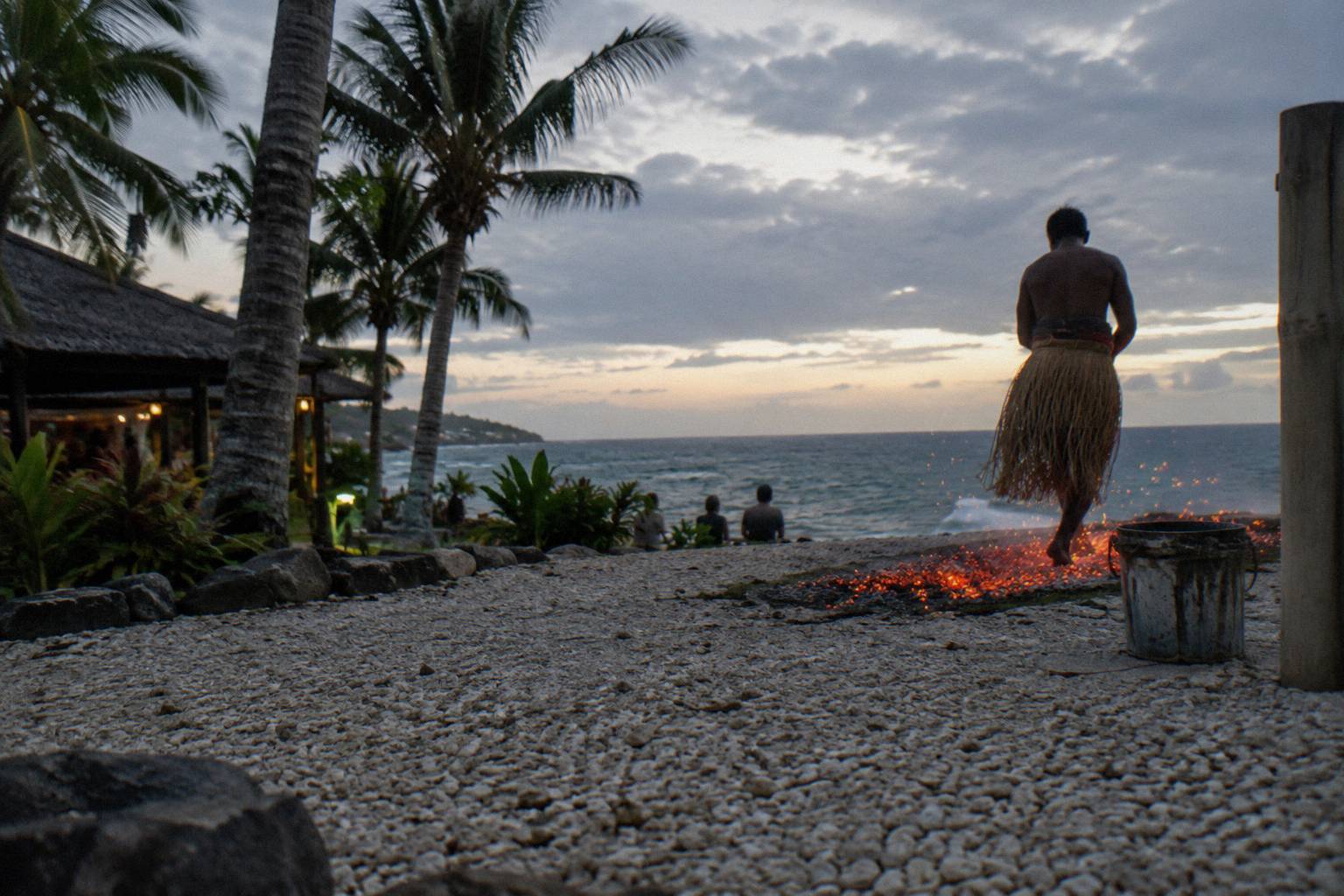
If the deeper story is what drew you here, the companion page on fire walking traditions in Fiji traces the same Tourism Fiji account in more detail, and where you can see fire walking in Fiji covers the question from the traveller's side.
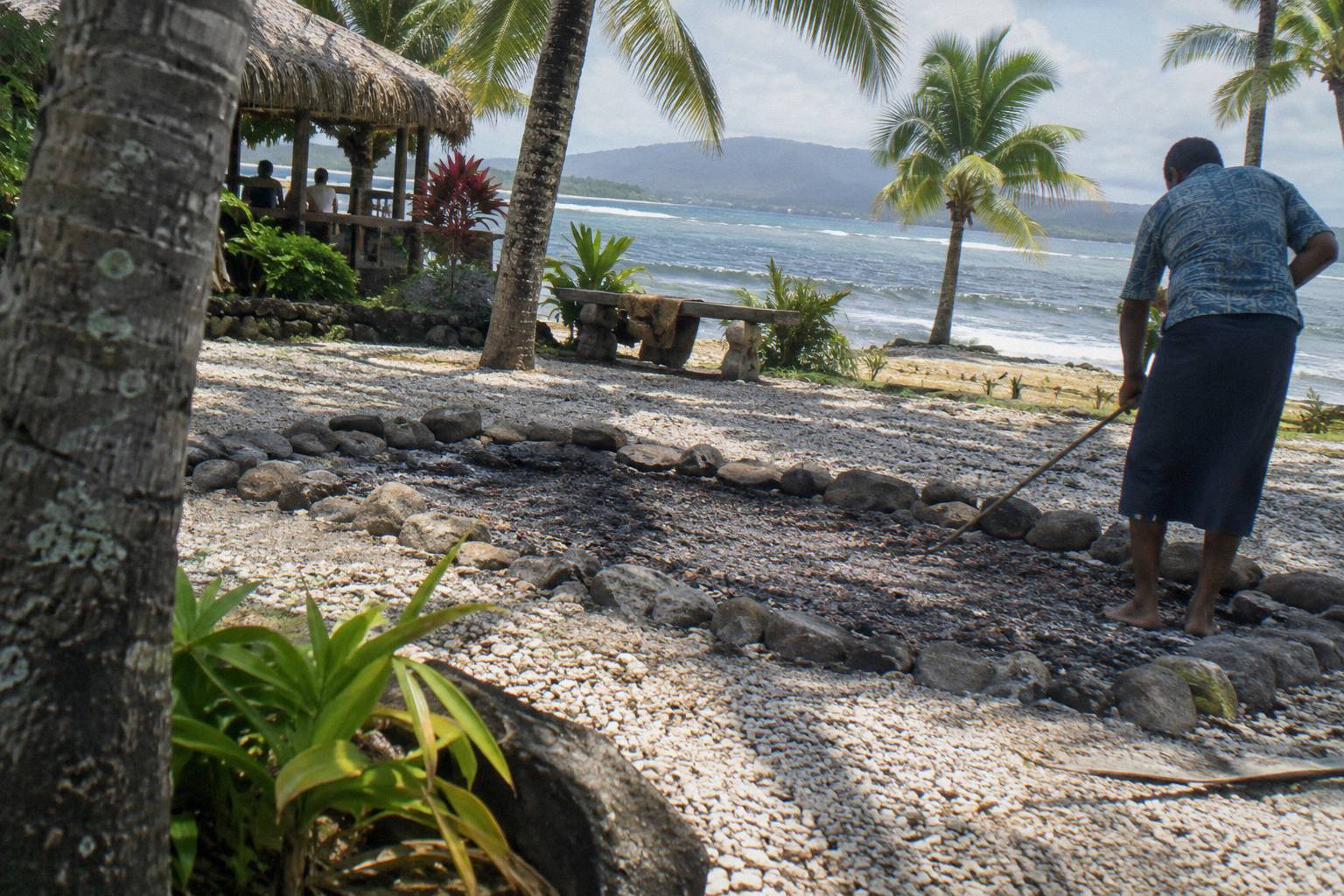
The Legend Of Tuinaiviqalita, In Tourism Fiji's Own Words
That is the whole of the printed story, and it is worth reading slowly rather than expanded. A man looks for an eel to give as a gift. He catches something else entirely, a veli, a spirit god in Tourism Fiji's phrasing. The veli bargains: power over fire, for Tuinaiviqalita and for his descendants after him. The proof is the stones. And the inheritance is not general, it runs through one bloodline into one tribe on one island. Tourism Fiji's line that the power only flows through Tuinaiviqalita's bloodline to members of Beqa's Sawau tribe is doing specific work: it explains why firewalking is a Sawau inheritance rather than a general Fijian craft.
The claim deserves respect precisely because it is specific. Stories like this are not free-floating folklore; they belong to the people whose inheritance they describe, and Tourism Fiji, the national tourism body, is the source reprinting it. Any retelling that swaps in other names, other spirits or other islands is not a variant, it is a different story dressed as this one. If you read a version elsewhere naming a different ancestor or a shark god, that version is not Tourism Fiji's account and should not be passed off as it.
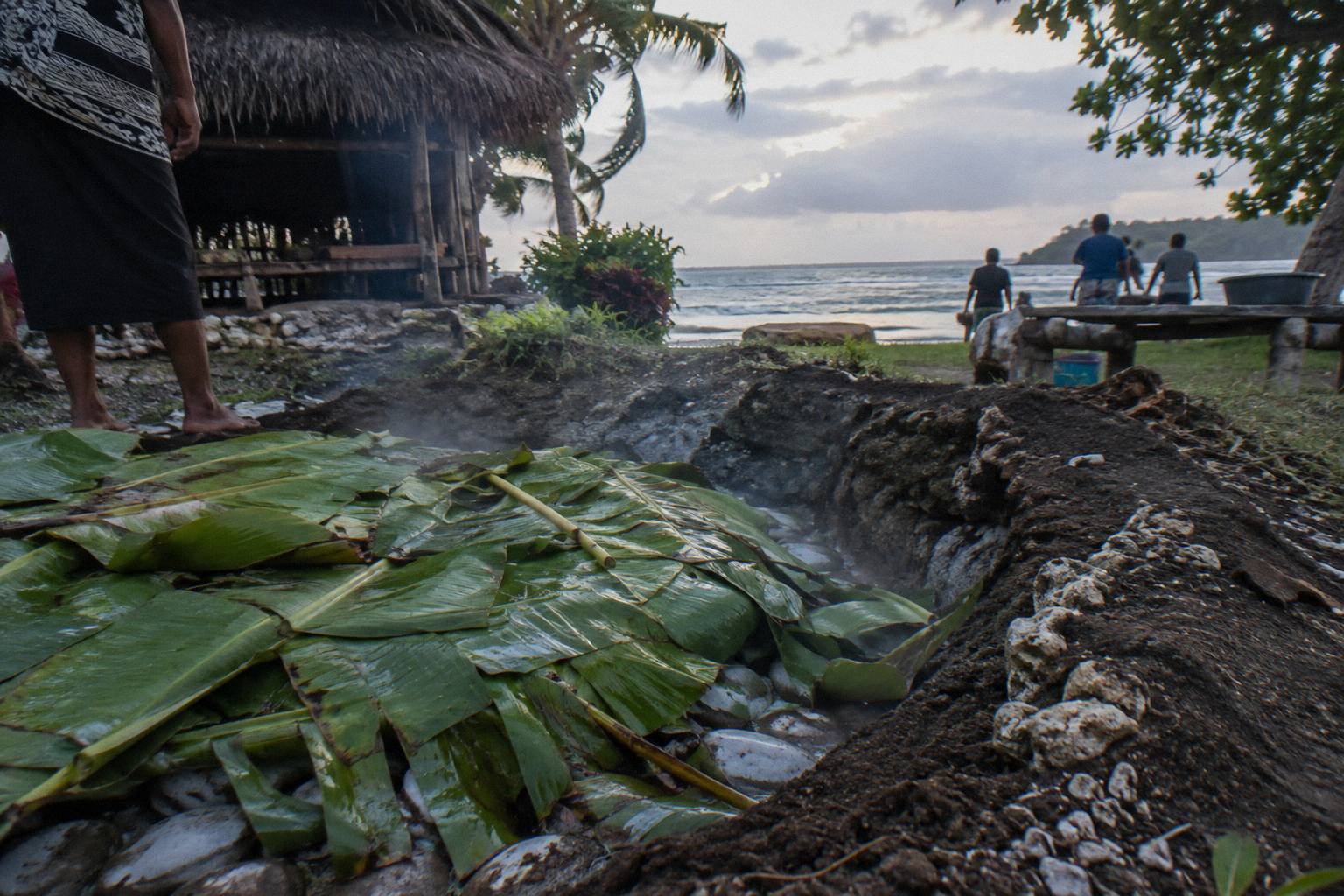
For the traveller, the legend explains what you are watching when stones come out of a pit. A lovo, per Tourism Fiji's cultural must-dos guide, cooks meat, fish and root crops such as taro on white-hot stones in a covered pit for a few hours. Firewalking uses the same physics and a different inheritance. When an operator unearths a lovo and then demonstrates walking on heated stones, you are seeing the practical oven of a Fijian feast and a staged demonstration of a Sawau lineage craft in the same hour.
| Element of the legend | Tourism Fiji's wording |
|---|---|
| The man | Tuinaiviqalita, seeking an eel as a gift |
| The spirit | A spirit god known as a veli |
| The offer | Power over fire, to him and his descendants |
| The demonstration | Stepping on white-hot stones |
| The inheritance | Only through Tuinaiviqalita's bloodline to members of Beqa's Sawau tribe |
Where You Can Watch A Fire Performance Near Nadi
Four bookable evenings near Nadi include fire in some form. Robinson Crusoe's Sunset Dinner Show lists a fire walking demonstration at 6:30pm and fire and knife dancing after dinner; its Day And Night Combo ends with the same show; Fiji Culture Village lists a fire dance at 7:50pm; and Damodar Arts Village in Pacific Harbour announces an 11am daytime firewalking ceremony, which is not an evening product. No Beqa island trip exists on this site.
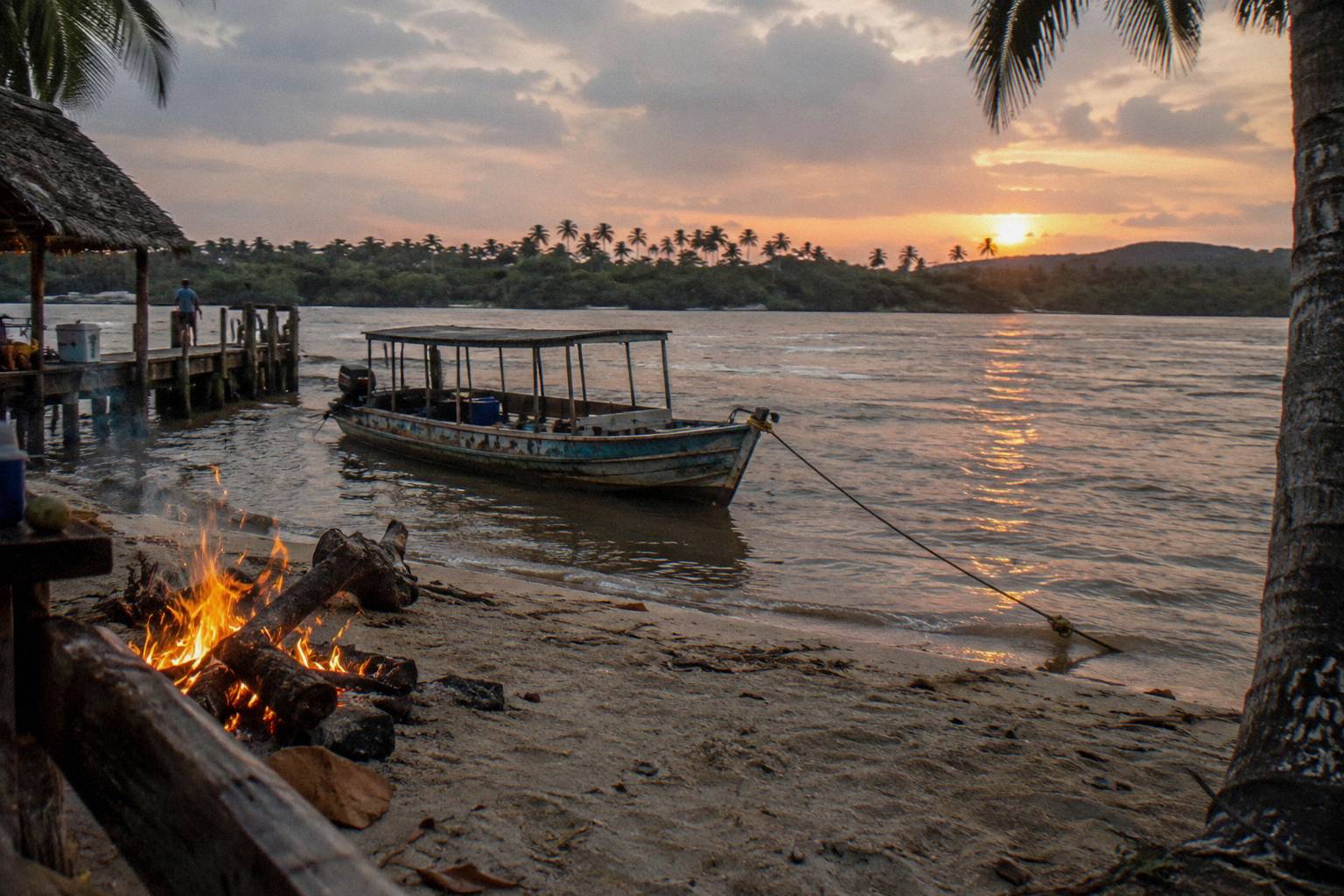
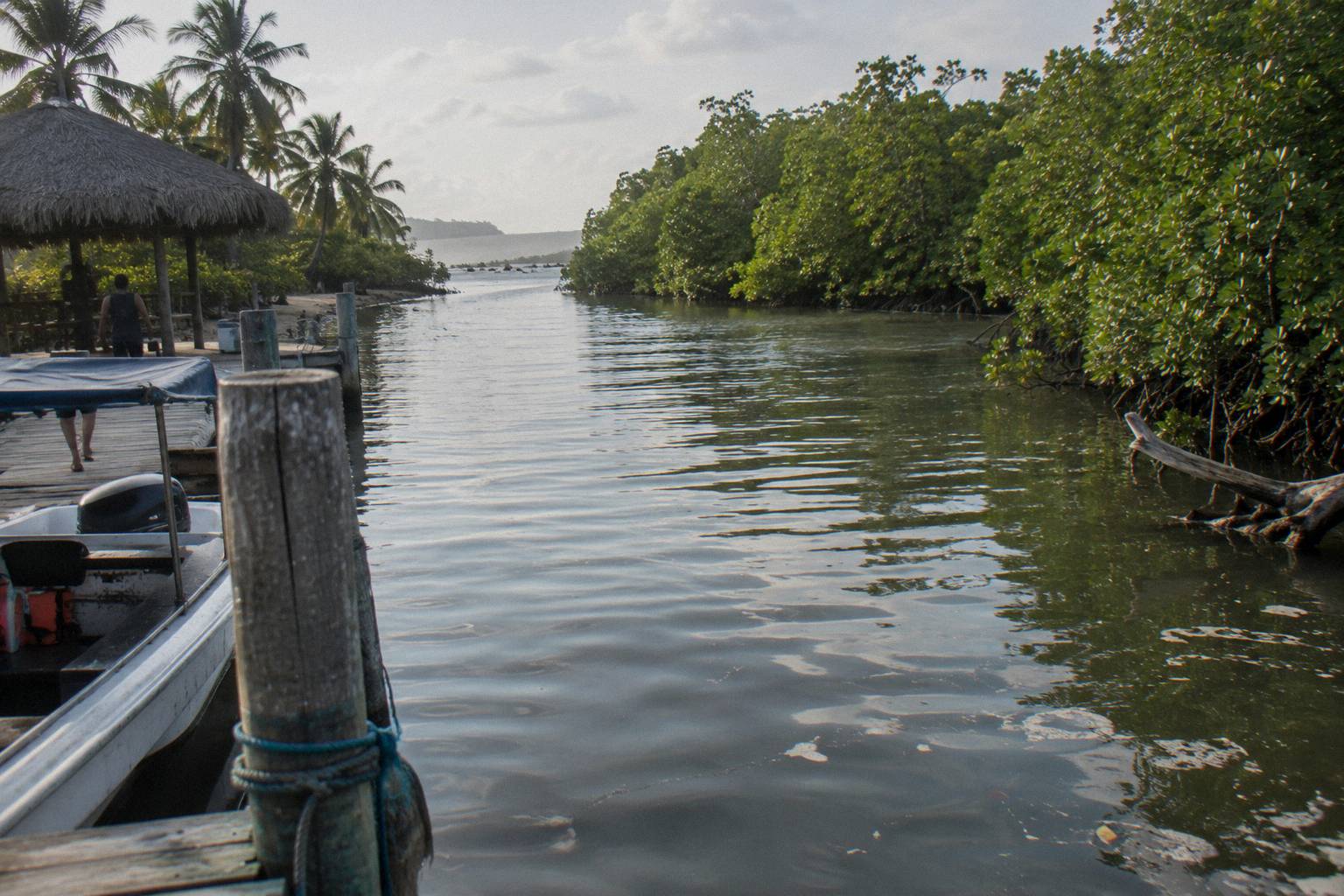
The two island evenings and the village evening differ in shape. Robinson Crusoe's show sits on Likuri Island, reached by a boat that leaves the mainland jetty at 5:00pm, near Natadola Beach, 45 minutes from Nadi, then a 30-minute calm-water cruise down the Tuva River, per the operator's getting-there page. Fiji Culture Village sits on Queens Road in Nadi itself, with hotel pick-up from 4:20pm and farewell at 8:30pm. One is a boat journey and a beach bonfire; the other is a village walking tour and a kava ceremony on the mainland. Both end in fire, differently staged.
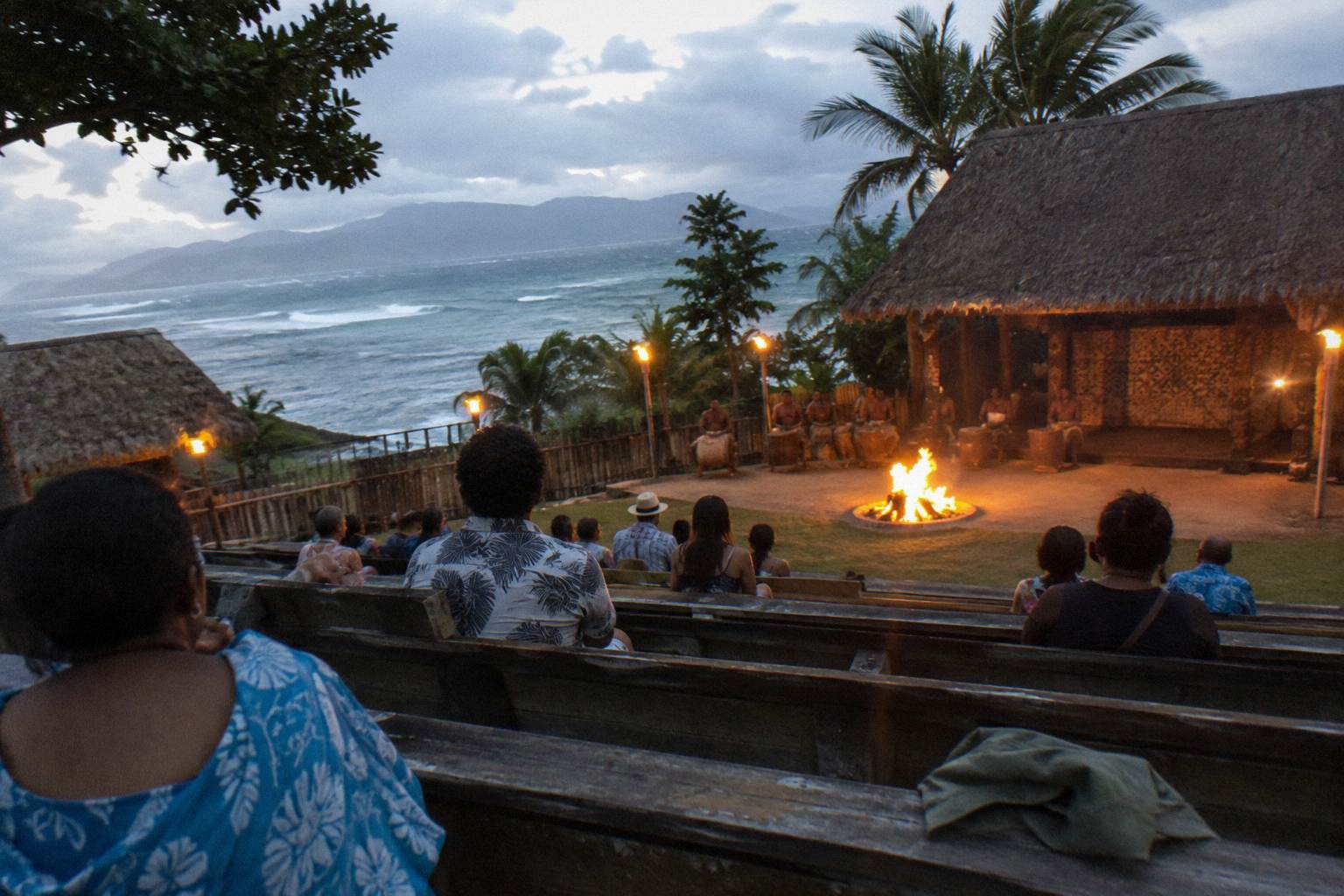
What no evening here offers is Beqa itself. There is no Beqa firewalking tour, no Pacific Harbour evening product and no Suva departure on this site. The closest you can get to the source, without arranging your own travel, is the daytime announcement at Damodar Arts Village, covered below. For everything else, the honest framing is that you are watching staged fire performances on Viti Levu and its near islands, in the same Tourism Fiji-documented tradition of resort and tour staging.
| Performance | Where it is staged | When, per the operator |
|---|---|---|
| Fire walking demonstration, then 'Legends of the Pacific' fire and knife dancing | Likuri Island, Coral Coast | 6:30pm and after the 7:00pm dinner, Monday, Wednesday, Saturday |
| Fire dance after the meke show | Fiji Culture Village, Queens Road, Nadi | 7:50pm, Monday to Saturday |
| Firewalking ceremony | Damodar Arts Village, Pacific Harbour | Announced as an 11am daytime show |
| Resort firewalking | Major hotels in Pacific Harbour, Coral Coast and Denarau | Tourism Fiji says check with these resorts |
Choosing between them usually comes down to where you are staying and which night of the week is free, so the guide to Nadi cultural nights is the natural next stop.
The three evenings above are the ones with full operator itineraries published. Among the other two, Valentine Tours Fiji runs a Nadi evening with dinner and a meke show, about 3 hours, with hotel pick-up from the Nadi and Denarau area per the booking page; a fire element is not stated for it. VOU Hub Fiji stages a theatrical dinner show with drumming, dinner and theatre in Nadi, about 3 hours; it is the modern-theatre contrast rather than a village night, and fire is not stated for it either. Both are bookable, and neither should be assumed to include firewalking on the strength of the word "show".
The Robinson Crusoe Sunset Dinner Show, Hour By Hour
The evening runs from the 5:00pm boat out of the mainland jetty to the 9:15pm ride back, four hours on the island covering a 5:45pm welcome, a 6:00pm sunset beach bonfire with serenaders, lovo unearthing and the fire walking demonstration at 6:30pm, a 7:00pm lovo buffet dinner followed by the 'Legends of the Pacific' fire and knife dancing show, and the 9:00pm Isa Lei farewell, offered Monday, Wednesday and Saturday.
Two words in that itinerary carry the firewalking traveller's attention, and they should be read as written. The 6:30pm slot is a fire walking demonstration alongside the lovo unearthing; the operator does not say who performs it, and does not claim a Sawau or Beqa lineage. The post-dinner 'Legends of the Pacific' show includes fire and knife dancing, and knife dancing here is siva afi, the fire knife dance, which is Samoan in origin and staged in Fiji shows; the fire knife dance's own history page treats it as a Samoan form. Two fire traditions, one evening, and only one of them Fijian.
The listed highlights add a sevusevu welcome ceremony with kava tasting, a 30-minute river cruise and the sunset bonfire with string band. Transfers are included from all Nadi, Denarau and Coral Coast hotels as far as the Warwick, plus the launch transfers; the operator asks you to be at the pick-up point 15 minutes early, and pick-up can come up to 10 minutes early. The jetty times vary a lot by hotel, and the operator publishes approximate times worth checking against your own resort.
| Hotel area to jetty, per the operator | Approximate time |
|---|---|
| InterContinental | 5 minutes |
| Yatule | 5 minutes |
| Shangri-La's Fijian | 15 minutes |
| Outrigger | 25 minutes |
| Marriott Momi Bay | 30 minutes |
| DoubleTree | 30 minutes |
| Fiji Hideaway | 35 minutes |
| Warwick | 45 minutes |
| Denarau | 45 minutes |
| Nadi | 45 minutes |
The operator's own tour page carries the full itinerary and the booking flow, and the full guide to the Robinson Crusoe island night walks the whole evening in more detail.
Booking terms matter on an island night because the weather call is the operator's: the terms say management may cancel for cyclones, flooding or other weather, and may cancel if fewer than 15 adults book. Cancellation received 24 hours or more before pick-up gets a full refund; inside 24 hours, it is a 100% forfeit. No price appears on the tour pages; the operator's terms state rates are in Fijian dollars, tax inclusive of 15% VAT, with a 3% credit card fee, so see the booking page for the current rate. You can also check the island evening's availability and check availability on the live booking page before locking in a night.
Fiji Culture Village: Fire Dance After The Meke
Fiji Culture Village's published timeline runs 4:20pm hotel pick-up from Denarau, Nadi and Wailoaloa to an 8:30pm farewell: warrior welcome at 5:15pm, guided village walking tour at 5:30pm, lovo unearthing at 6:45pm, kava ceremony at 7:00pm, buffet dinner of lovo food at 7:20pm, and a meke show with fire dance at 7:50pm. Monday to Saturday, about 4 to 4.5 hours door to door.
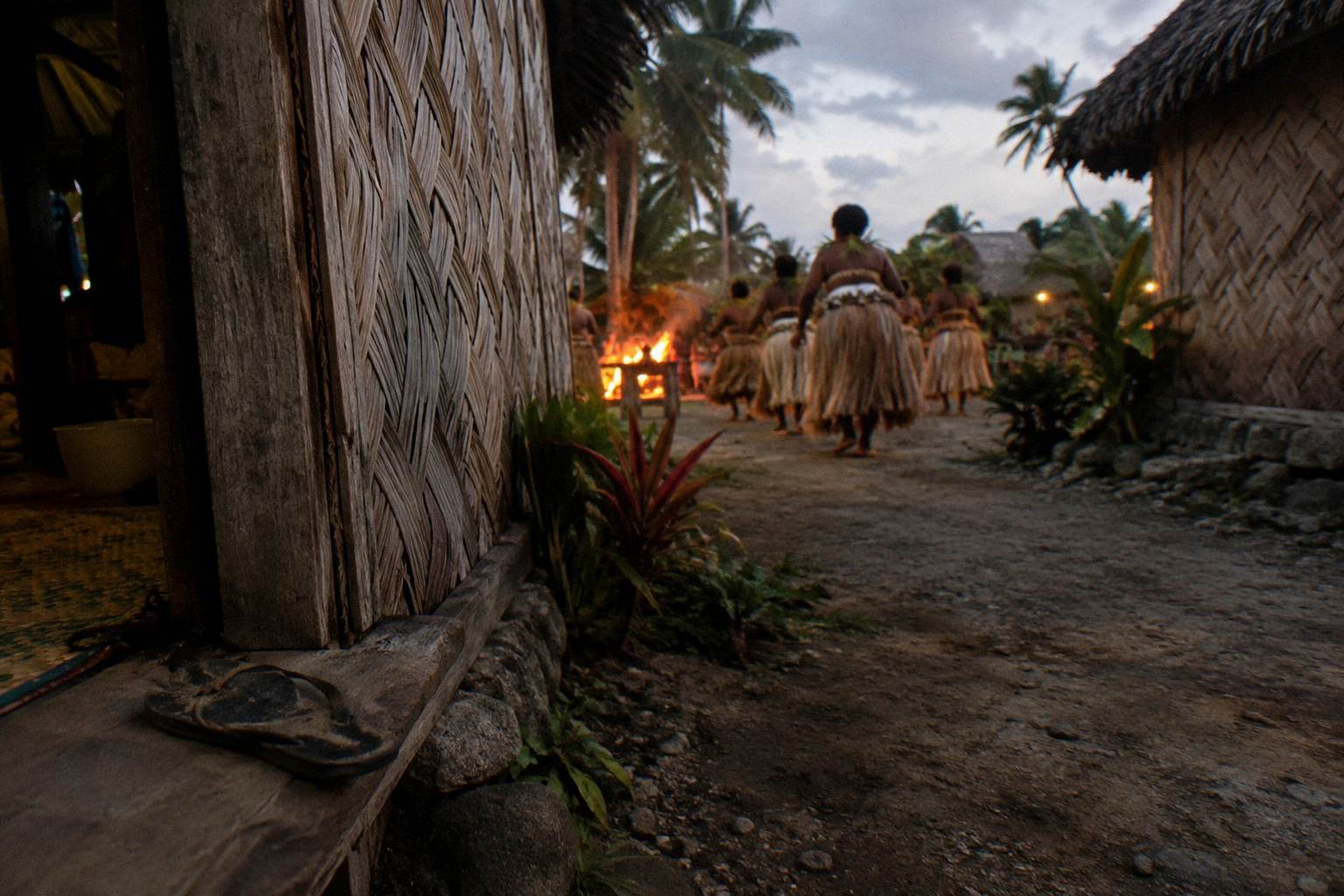
The fire element here is listed as a fire dance after the meke show, and the operator does not describe it as fire knife dancing or firewalking. The meke itself is the Fijian form: Tourism Fiji defines meke as a traditional dance performed by men and women of Fiji to tell stories through song and dance, and names the Fiji Culture Village, just outside Nadi town, as a place to see one. So the village evening offers the combination a reader researching firewalkers should weigh honestly: a documented meke tradition in its own setting, with a fire dance as the finale.
It is also the one evening with printable operator rates: the operator's rate, valid to 31 December 2026, is F$175 adult, F$105 for a child aged 5 to 12, and F$500 for a family of 2 adults and 2 children; for 2027 the rates are F$189, F$115 and F$550. Return transfer from Nadi and Denarau hotels is included. The operator's notice also closes the village for annual maintenance from Monday 22 February 2027 to reopening Wednesday 10 March 2027, with online orders after 21 February 2027 still processed.
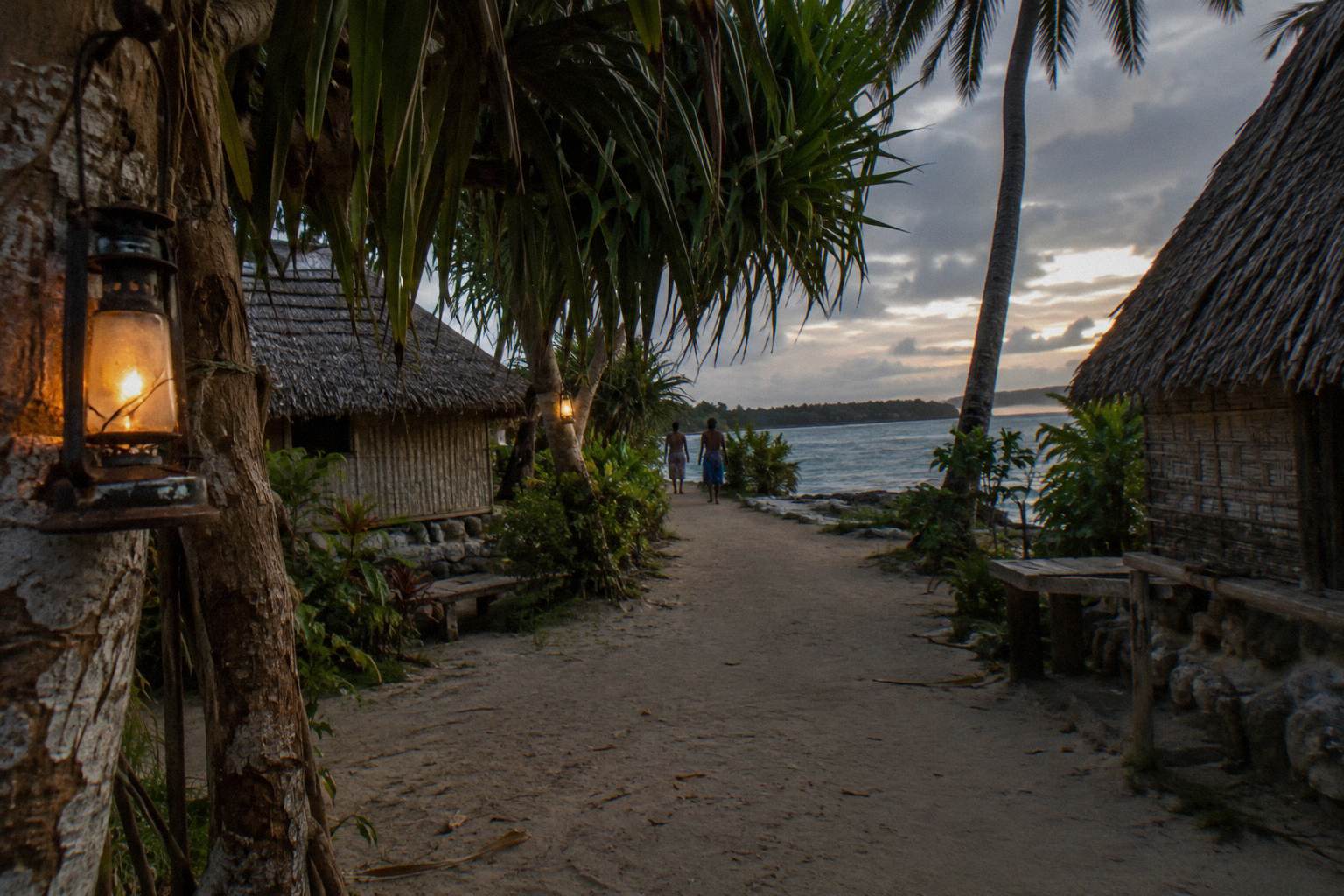
Dress guidance for this evening is not stated; ask the operator, or read the general village etiquette on Tourism Fiji's etiquette tips, which ask visitors to cover bare shoulders and legs, remove hats and sunglasses, and remove shoes before entering any village building. The evening's shape, the kava ceremony and what to expect from it, is covered in the guide to the Fiji Culture Village evening.
The Day And Night Combo And Other Ways To See The Same Fire Show
Robinson Crusoe's Day And Night Combo runs Mondays, Wednesdays and Saturdays, 10am to 9pm, pairing a full day of village visits, snorkelling and coconut climbing with the complete Sunset Dinner Show, including the 6:30pm fire walking demonstration and 'Legends of the Pacific' fire and knife dancing. Alternatively, the Fiji Culture Day Tour operates Tuesdays, Thursdays and Sundays, 10am to 4pm, featuring a lovo uncovering with fire walking plus a fire and knife dance show.
The Combo is the answer for the traveller who wants the fire evening but has only one matching night and a full day to spend. Before the show it includes a guided Vusama Village visit, mud crab catching, snorkelling and sea kayaks, a BBQ buffet lunch, a bush medicine walk and coconut climbing, in the operator's listing. The dress request is explicit: cover shoulders and bring a sulu or sarong to wear during the village visit, with spare sulus available. Same transfers, same terms and the same cancellation rule as the evening show.
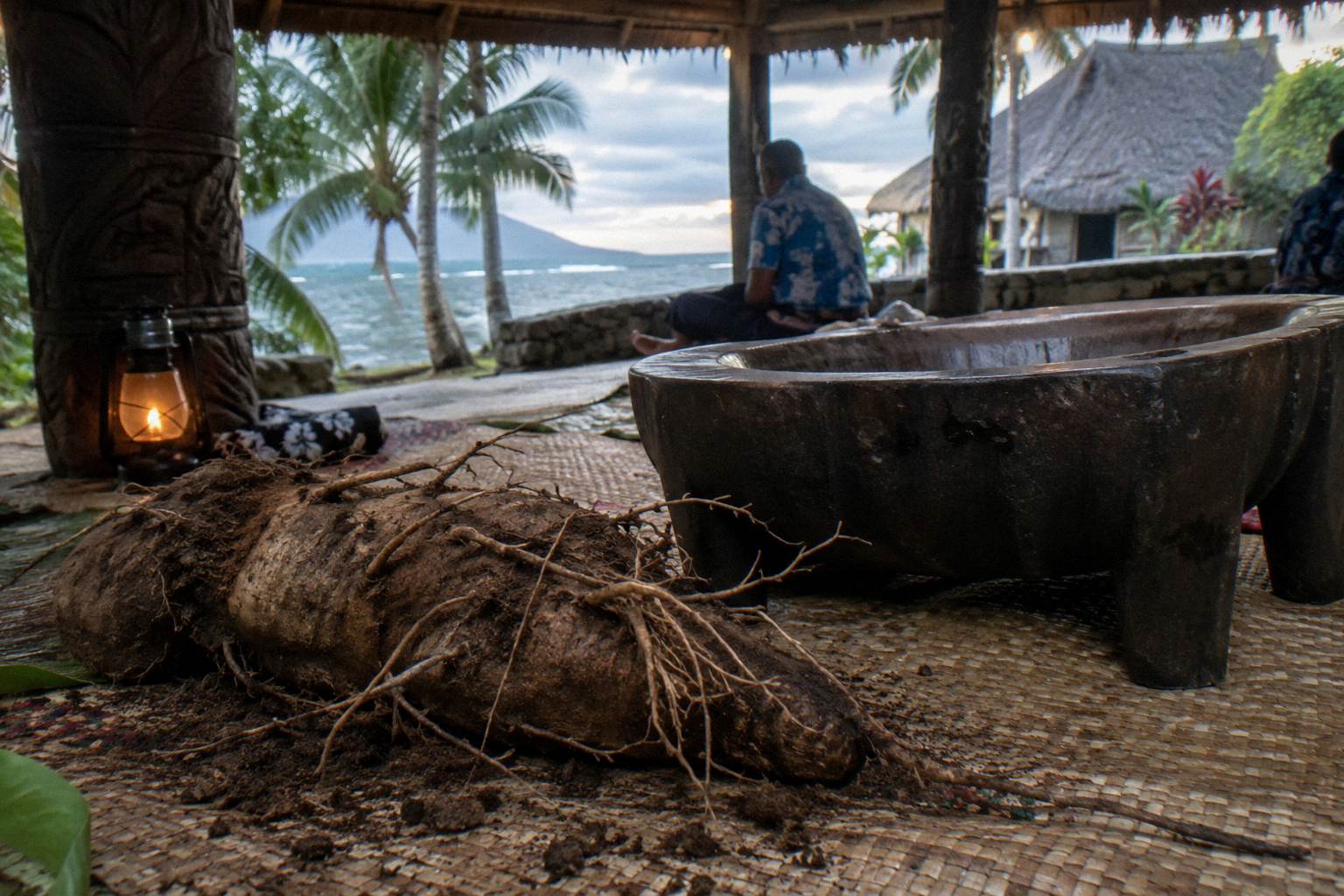
The daytime Culture Day Tour matters to a firewalking itinerary for one reason: it runs on the three evenings the island show does not. Tuesday, Thursday and Sunday, 10am to 4pm, with drinks available 11:30am to 3:30pm, the operator tags it as suiting families, notes RSA restrictions apply with no BYO, and includes a lovo uncovering with a fire walking demonstration plus a dance show with fire and knife dancing. It is a daytime tour and is not presented here as an evening product, but it fills the gap if Monday, Wednesday and Saturday do not fit your week.
Beyond the island, the daytime announcement at Damodar Arts Village in Pacific Harbour is the only place a venue claims the Beqa connection directly: the venue's wording says its firewalking ceremony is performed by the renowned firewalkers of Beqa, alongside meke performances from an open-air pavilion and storytelling. Its first public cultural show was Saturday 1 November 2025 at 11am, with tickets via artsvillage.com.fj; the reopening story covers the venue's background. No prices or schedule appear on its homepage, it is not an evening dinner, and it is not a bookable product on this site: it is the place where a daytime Beqa-claimed firewalking show is announced.
Siva Afi And Firewalking Are Not The Same Thing
Siva afi, the fire knife dance, is Samoan in origin and is staged in Fiji shows, including the 'Legends of the Pacific' show after Robinson Crusoe's dinner. Firewalking, in Tourism Fiji's account, is the Sawau inheritance from Tuinaiviqalita and the veli. They are separate traditions with separate origins, and an evening can contain both without either becoming the other.
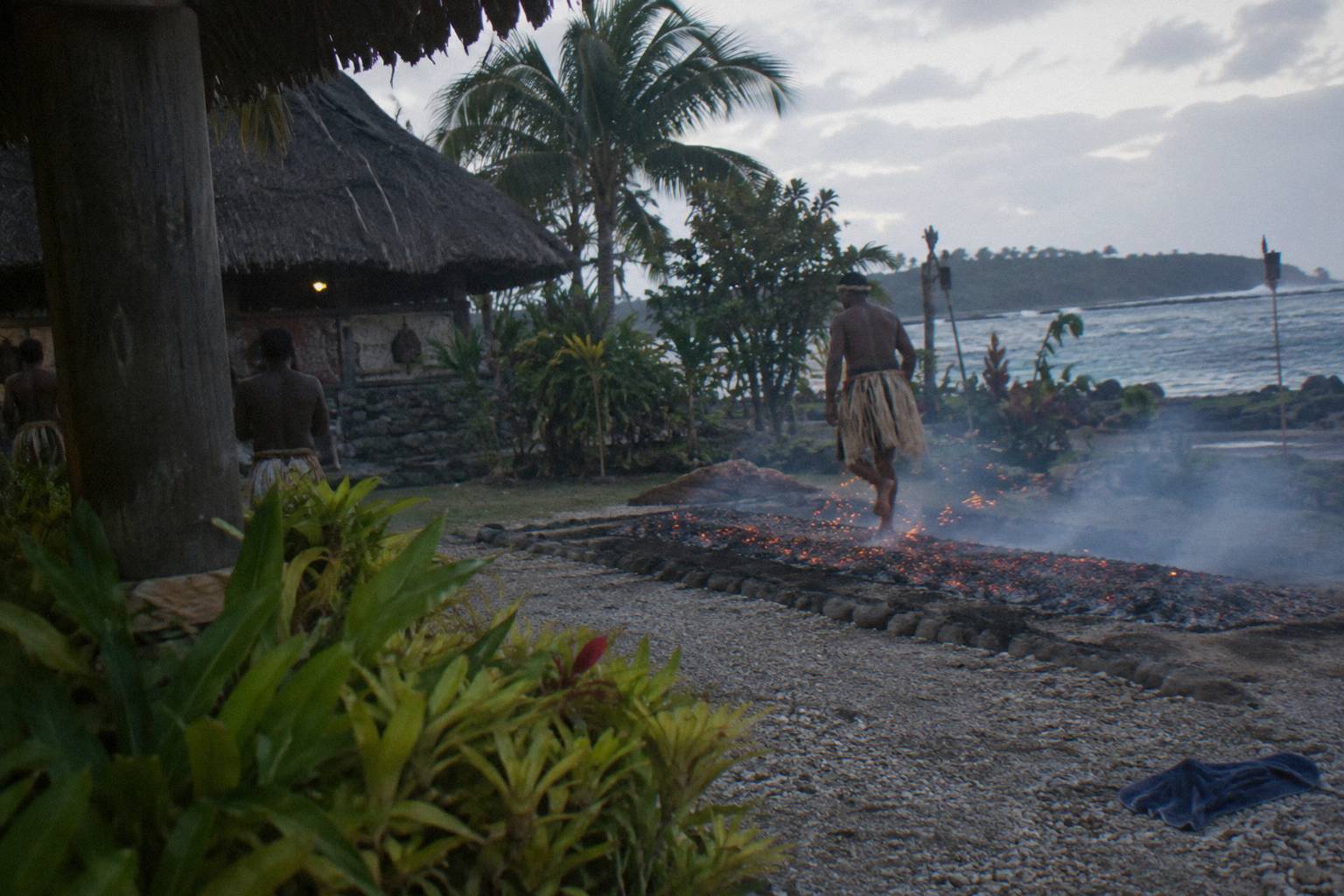
The distinction is easy to lose in a brochure. A spinning knife trailed with fire is siva afi; a barefoot walk across white-hot stones is firewalking. Robinson Crusoe's evening has both, listed separately in its own itinerary: the fire walking demonstration at 6:30pm, the fire and knife dancing after the 7:00pm dinner. Fiji Culture Village lists only a fire dance, and the operator does not say which form it takes. Neither operator claims the Sawau lineage for its performers, and Damodar Arts Village is the only venue in these pages whose own wording invokes the firewalkers of Beqa.
For the reader choosing on tradition rather than spectacle, the honest test is three questions. Does the itinerary say fire walking, fire knife or just fire dance? Does the operator say anything about who performs it? And does the venue or operator claim a Beqa connection in its own words? The siva afi fire knife dance guide takes the Samoan side of the story further.
| Fire performance term | What it means in these sources | Origin per the sources |
|---|---|---|
| Firewalking | Walking on white-hot stones, demonstrated alongside lovo unearthings | Fijian, Tourism Fiji's Sawau account |
| Siva afi, fire knife dancing | Knife dancing with fire, in the 'Legends of the Pacific' show | Samoan in origin, staged in Fiji shows |
| Fire dance | Listed at Fiji Culture Village after the meke; form not specified | Not stated by the operator |
What Trips People Up When Choosing A Firewalking Show
The common mistakes are assuming every fire show is Beqa firewalking, assuming every evening includes fire at all, and reading a resort's brochure word "firewalking" as a lineage claim. Only one venue in these pages, Damodar Arts Village, claims Beqa firewalkers in its own words, and its show is an 11am daytime event. Among the bookable evenings, Valentine Tours Fiji and VOU do not state a fire element, and neither evening should be booked on the expectation of one.
Night-matching is the second trap. Robinson Crusoe's evening show and Combo run Monday, Wednesday and Saturday only; its Culture Day Tour fills Tuesday, Thursday and Sunday; Fiji Culture Village runs Monday to Saturday and closes for maintenance from 22 February to 10 March 2027. If your week leaves only a Tuesday or Thursday free near Nadi, the island evening is not an option that night, and the choice narrows before price or programme even enter the comparison.
The third is transfer arithmetic. The island evening's coach picks up from Nadi, Denarau and Coral Coast hotels as far as the Warwick, and the jetty alone is 45 minutes from Nadi before a 30-minute river cruise; the village evening picks up from Denarau, Nadi and Wailoaloa hotels to a venue on Queens Road in Nadi. A Coral Coast base suits the island; a Denarau or Wailoaloa base makes both easy. Neither operator's minimum age, dietary options beyond "advise at the time of booking", or pushchair rules are stated, so ask directly: Robinson Crusoe on +679 776 0999, Fiji Culture Village on +679 804 4800.
| Pitfall | What the sources actually say |
|---|---|
| "It is a firewalking show, so it must be Sawau" | Robinson Crusoe lists a demonstration and says nothing about the performers |
| Booking Valentine Tours Fiji or VOU expecting fire | Fire is not stated for either evening |
| Expecting a Beqa island trip | No Beqa, Pacific Harbour or Suva product exists on this site |
| Free cancellation on the island night | Full refund only 24 hours or more before pick-up; inside that, 100% forfeit |
| Sunday island evening | The island show runs Monday, Wednesday and Saturday |
For the wider question of whether the evening is worth the money and the transfer, whether a Fiji cultural night is worth it works through the decision with the same operator facts, and Fiji Cultural Night Tours keeps the whole set of evenings, etiquette and booking pages in one place.
Common Questions About The Beqa Island Firewalkers
Who Are The Beqa Island Firewalkers?
Tourism Fiji's firewalkers page says the power to walk on white-hot stones flows only through Tuinaiviqalita's bloodline to members of Beqa's Sawau tribe. Beqa (pronounced Benga) is the island; the Sawau tribe is the lineage Tourism Fiji names.
Can You Visit Beqa To See The Firewalkers?
Not through this site. No Beqa island trip, firewalking tour or Pacific Harbour evening product exists among the tours covered here. Damodar Arts Village in Pacific Harbour announces a daytime 11am show whose firewalking it says is performed by the renowned firewalkers of Beqa, in the venue's wording.
Which Evening Tours Near Nadi Include Fire?
Robinson Crusoe's Sunset Dinner Show lists a fire walking demonstration at 6:30pm and fire and knife dancing after dinner; its Day And Night Combo ends with the same show; Fiji Culture Village lists a fire dance at 7:50pm. Fire is not stated for the Valentine Tours Fiji and VOU evenings.
Is The Fire Knife Dance A Fijian Tradition?
No. Siva afi, the fire knife dance in the 'Legends of the Pacific' show, is Samoan in origin and is staged in Fiji shows. Fiji's own firewalking tradition is the Sawau inheritance Tourism Fiji describes, and the two are separate.
What Is The Legend Behind Fijian Firewalking?
Tourism Fiji's account: Tuinaiviqalita, seeking an eel as a gift, caught a spirit god known as a veli; the veli offered power over fire to him and his descendants and showed him by stepping on white-hot stones.
Do Resorts Stage Firewalking Too?
Tourism Fiji says firewalking is performed on Viti Levu at major hotels in Pacific Harbour, the Coral Coast and Denarau as resort entertainment, and advises checking with those resorts. No resort is named here.