Fiji Culture Village: The Nadi Evening Experience Explained
Fiji Culture Village runs a Monday to Saturday evening on Queens Road just outside Nadi town: a warrior welcome, a guided village walk, a lovo unearthing, a kava ceremony, a buffet dinner, then a meke show and fire dance.
Short answer
The Cultural Night Tour runs Monday to Saturday, about 4 to 4.5 hours door to door, from F$175 per adult valid to 31 December 2026. Pick-up is from Denarau, Nadi and Wailoaloa hotels from 4:20pm. The evening includes a village walk, kava ceremony, lovo buffet, meke show and fire dance.
Fiji Culture Village sits on Queens Road in Nadi, and Tourism Fiji names it, in its own words, "just outside Nadi town" as a place to see meke. Its Cultural Night Tour runs Monday to Saturday, picks up from Denarau, Nadi and Wailoaloa hotels from 4:20pm, and finishes with farewell and departure at 8:30pm.
What The Fiji Culture Village Evening Actually Includes
The evening packs in a warrior welcome, a guided village walking tour, the unearthing of the lovo, a kava ceremony, a buffet dinner of lovo food, a meke show and a fire dance, with return transfers from Nadi and Denarau hotels. The operator lists all of these as included, so nothing in the main sequence costs extra, and the fixed programme runs about 4 to 4.5 hours door to door.
That list comes from the operator's own page, and it is worth reading closely, because it explains why this evening is structured the way it is. Many cultural shows in Fiji are performances bolted onto a dinner. Here the operator sequences the evening as a village visit first, then food, then performance: the guided village walking tour sits at 5:30pm, well before the kava ceremony at 7:00pm and the meke show at 7:50pm. The food and the show are the back half of the night, not the whole of it.
Tourism Fiji's recognition of it as a meke venue is what gives the evening its standing. For readers weighing it against a hotel luau-style show or a resort firewalking display, the difference is the guided walk and the kava ceremony: those two elements are the parts of the programme that sit closest to what Tourism Fiji describes on its etiquette and kava pages for actual village visits. Whether that matters to you depends on what you want from the night, and the sections below take each part in turn.
The tour runs Monday to Saturday and is closed on Sunday. The operator has also posted a notice of a temporary closure for annual maintenance, from Monday 22 February 2027 to reopening Wednesday 10 March 2027, and says online orders after 21 February 2027 are still processed. If your trip falls inside that window, that closure is the single most important planning fact on this page, and the comparisons later in this article matter more, because the alternative Nadi evenings keep running.
The Full Evening Timeline, Hour By Hour
Read the timeline as two halves. From pick-up to the lovo unearthing at 6:45pm, the evening is about arrival, welcome and the village walk. From 6:45pm onward it is food and performance, compressed into just under two hours: the lovo comes out of the earth oven, kava is served at 7:00pm, dinner starts at 7:20pm, and the meke show and fire dance begin at 7:50pm. The final performance block is therefore short and close to the dinner service, not a long second half.
| Time | What the operator lists |
|---|---|
| 4:20pm | Pick-up from Denarau, Nadi and Wailoaloa hotels |
| 5:15pm | Warrior welcome |
| 5:30pm | Guided village walking tour |
| 6:45pm | Unearthing of the lovo |
| 7:00pm | Kava ceremony |
| 7:20pm | Buffet dinner, lovo food |
| 7:50pm | Meke show and fire dance |
| 8:30pm | Farewell and departure |
Two practical points follow from those times. First, pick-up at 4:20pm means the afternoon is gone: plan any pool time, spa appointment or late lunch around a mid-afternoon return to your hotel. Second, the 8:30pm farewell is the departure from the village, not the moment you reach your hotel, so the 4 to 4.5 hour door-to-door figure is the honest one to use when planning a following morning. If you want a deeper read on how that length stacks up against other Fiji evenings, the article on how long a Fiji cultural night lasts breaks the durations down.
The warrior welcome at 5:15pm is the operator's own phrase for the opening of the evening, and the operator's words are the only safe description of it. Nothing further about the welcome is published, so no more is claimed here. For the broader picture of what a staged village evening in Nadi covers across operators, see the companion guide to a Nadi cultural night.
What The Fiji Culture Village Costs
The operator's rate, valid to 31 December 2026, is F$175 per adult, F$105 per child aged 5 to 12, and F$500 for a family of 2 adults and 2 children. For 2027 the operator's rate is F$189 per adult, F$115 per child, and F$550 for the same family basis. Rates are in Fijian dollars and the operator's page is the source.
Those are the only figures printed for this tour, and they are the operator's own, not a reseller's. The family rate applies strictly to 2 adults plus 2 children; the operator publishes no extension of it to other group sizes, so a party of five, for example, would need to ask the operator directly how it is priced. The child age band is 5 to 12 years, and the operator publishes no minimum age for the evening: both are worth confirming by phone on +679 804 4800 if either applies to your group.
| Rate basis | Valid to 31 December 2026 | Valid to 31 December 2027 |
|---|---|---|
| Adult | F$175 | F$189 |
| Child, 5 to 12 | F$105 | F$115 |
| Family, 2 adults and 2 children | F$500 | F$550 |
The validity bands matter for anyone travelling across the New Year, because the rate steps up between them. A December 2026 booking and a January 2027 booking of the same evening sit in different bands, and the operator's page, not a booking page, defines which applies. For the fuller cost picture across Nadi's cultural evenings, including what other operators do and do not publish, the guide to Fiji cultural night cost collects it in one place.
What the operator does not publish matters too. Say you are comparing against the Robinson Crusoe evening, whose terms state a full refund only 24 hours or more before pick-up with a 100 percent forfeit inside that: you cannot assume the same rule at Fiji Culture Village. That gap is a real reason to ask the operator before booking if your plans might move. To see the live inclusions and rate as the operator presents it, check the Culture Village Evening Tour page or Check availability.
Getting There: Pickups From Nadi, Denarau And Wailoaloa
The transfer is listed as included, which separates this evening from any show you would need to reach under your own steam. That said, the published pick-up zone is specific: Denarau, Nadi and Wailoaloa. A reader staying on the Coral Coast should not assume a coach comes that far, because the operator does not say so. The comparison matters here: Robinson Crusoe's terms explicitly include return coach transfers from all Nadi, Denarau and Coral Coast hotels as far as the Warwick, so if your hotel sits outside Nadi, that difference alone may decide which evening is simpler for you.
| Pick-up fact | Fiji Culture Village | Robinson Crusoe evening show |
|---|---|---|
| Included transfer | Return from Nadi and Denarau hotels | Return coach plus launch transfers |
| Published pick-up zone | Denarau, Nadi, Wailoaloa | Nadi, Denarau and Coral Coast hotels, as far as the Warwick |
| Pick-up time | From 4:20pm | Set by the operator; boat leaves the jetty at 5:00pm |
| Route | Queens Road, Nadi | Coach to the jetty near Natadola Beach, then a 30-minute river cruise |
The two evenings also differ in what the transfer itself is. At Fiji Culture Village the transfer is a road run to a venue on Queens Road. The Robinson Crusoe evening puts you on a coach to a mainland jetty and then a 30-minute calm-water cruise down the Tuva River to Likuri Island, which the operator lists among its highlights. One is not better than the other; they are different products, and the Robinson Crusoe island cultural night guide covers the island end in detail.
Practical pickup advice: be in the lobby ahead of 4:20pm, and confirm the exact pick-up time for your specific hotel with the operator when you book. The published timeline gives the earliest pick-up, and door-to-door timing varies with where your hotel sits in the run. Anyone planning other nights out around Nadi can cross-reference the wider things to do in Nadi at night guide.
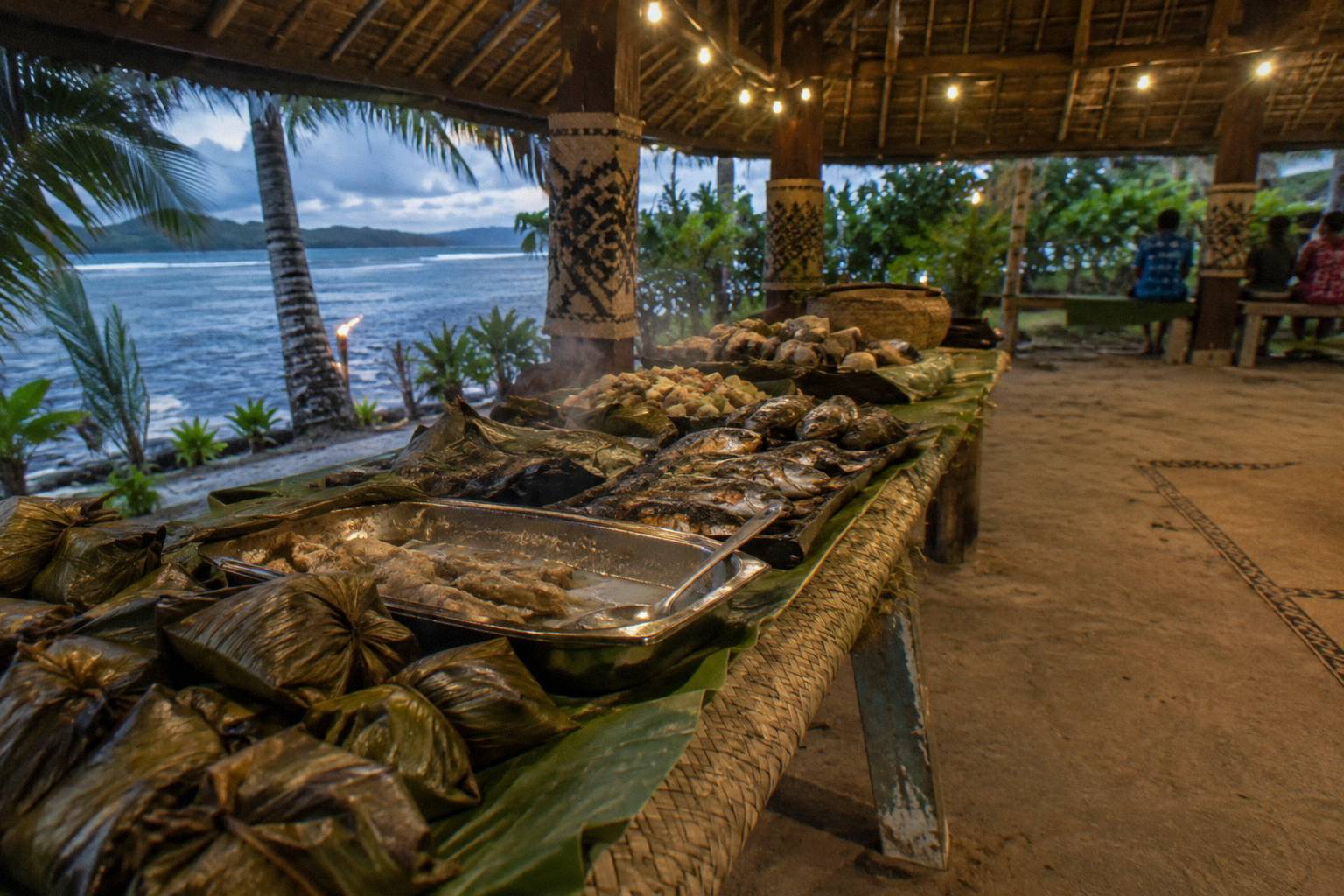
The Lovo Unearthing At 6:45pm And The Dinner Buffet
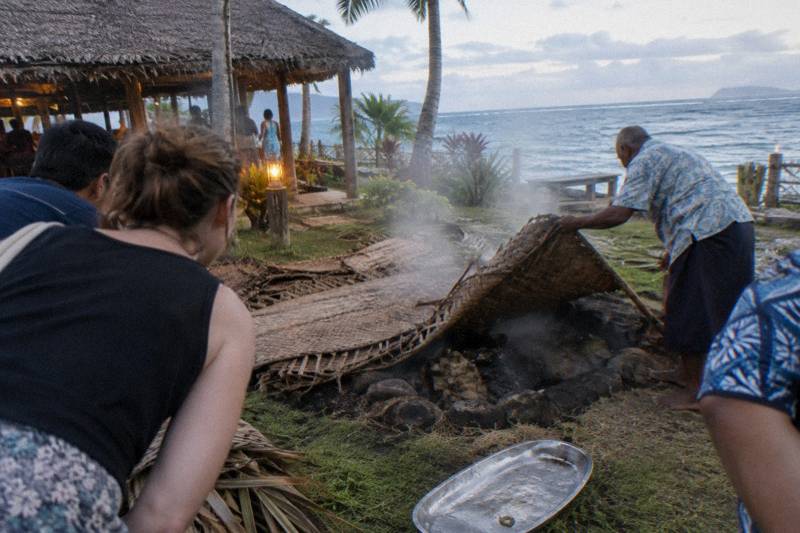
The operator unearths the lovo at 6:45pm and serves a buffet dinner of lovo food at 7:20pm. Tourism Fiji describes a lovo as a communal earth oven in which women prepare the food and men tend the fire, with meat, fish and root crops such as taro cooked on white-hot stones in a covered pit for a few hours.
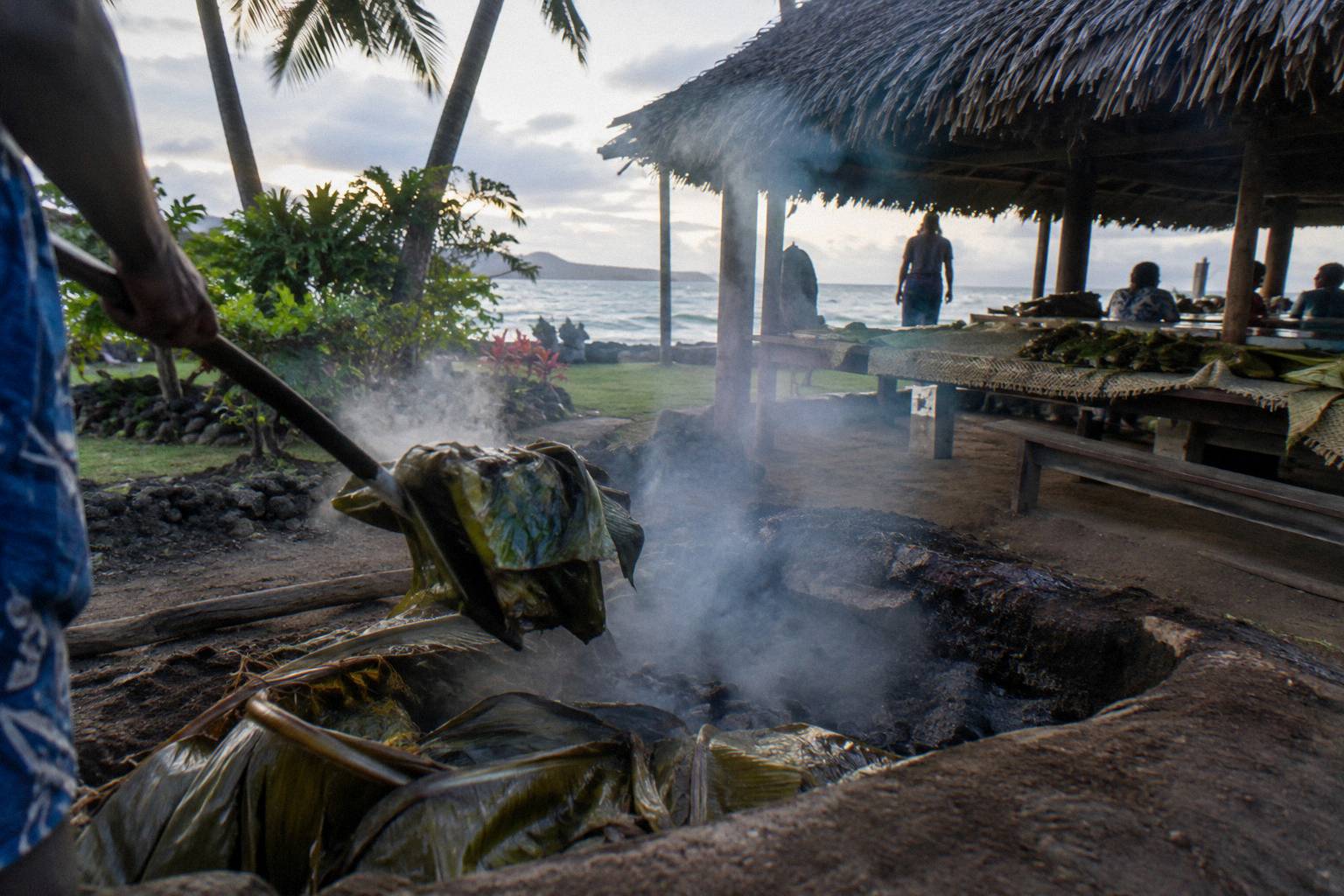
The unearthing is a scheduled, watchable moment, not a kitchen operation hidden behind a door. The operator places it in the timeline at 6:45pm, before the kava ceremony and dinner, so guests see the food come out of the pit before they eat it. What a lovo actually is, and how the term is used across Fiji's evenings, is explained from the ground up in what is a lovo and in the lovo feast in Fiji guide.
| Lovo fact | Source |
|---|---|
| Unearthing time at Fiji Culture Village | 6:45pm, operator timeline |
| Dinner service | 7:20pm buffet, lovo food |
| What a lovo is | Communal earth oven, Tourism Fiji |
| Who does what | Women prepare the food, men tend the fire, Tourism Fiji |
| What is cooked | Meat, fish and root crops such as taro, on white-hot stones in a covered pit, for a few hours |
What is not published is a menu, a dish list, dietary options or cooking times for a given evening, and no dish is invented here. If you have a dietary requirement, the honest position is that Fiji Culture Village's food options are not stated, so ask the operator on +679 804 4800 before booking. For comparison, Robinson Crusoe's FAQ says dietary needs are to be advised at the time of booking, and its terms say the lovo may be replaced by a BBQ if numbers are low. Whether a similar substitution applies at Fiji Culture Village is not stated.
The lovo unearthing is also the point where the two big Nadi-area evenings most resemble each other. Robinson Crusoe unearths its lovo at 6:30pm, with a fire walking demonstration attached to the moment, and serves its lovo buffet at 7:00pm. The Fiji Culture Village sequence runs the same idea, unearthing at 6:45pm and serving at 7:20pm, but keeps the demonstration apart from dinner and stages the fire element later, at the 7:50pm show. Readers deciding purely on the food moment can treat the two as close equivalents on paper.
The Kava Ceremony At 7:00pm
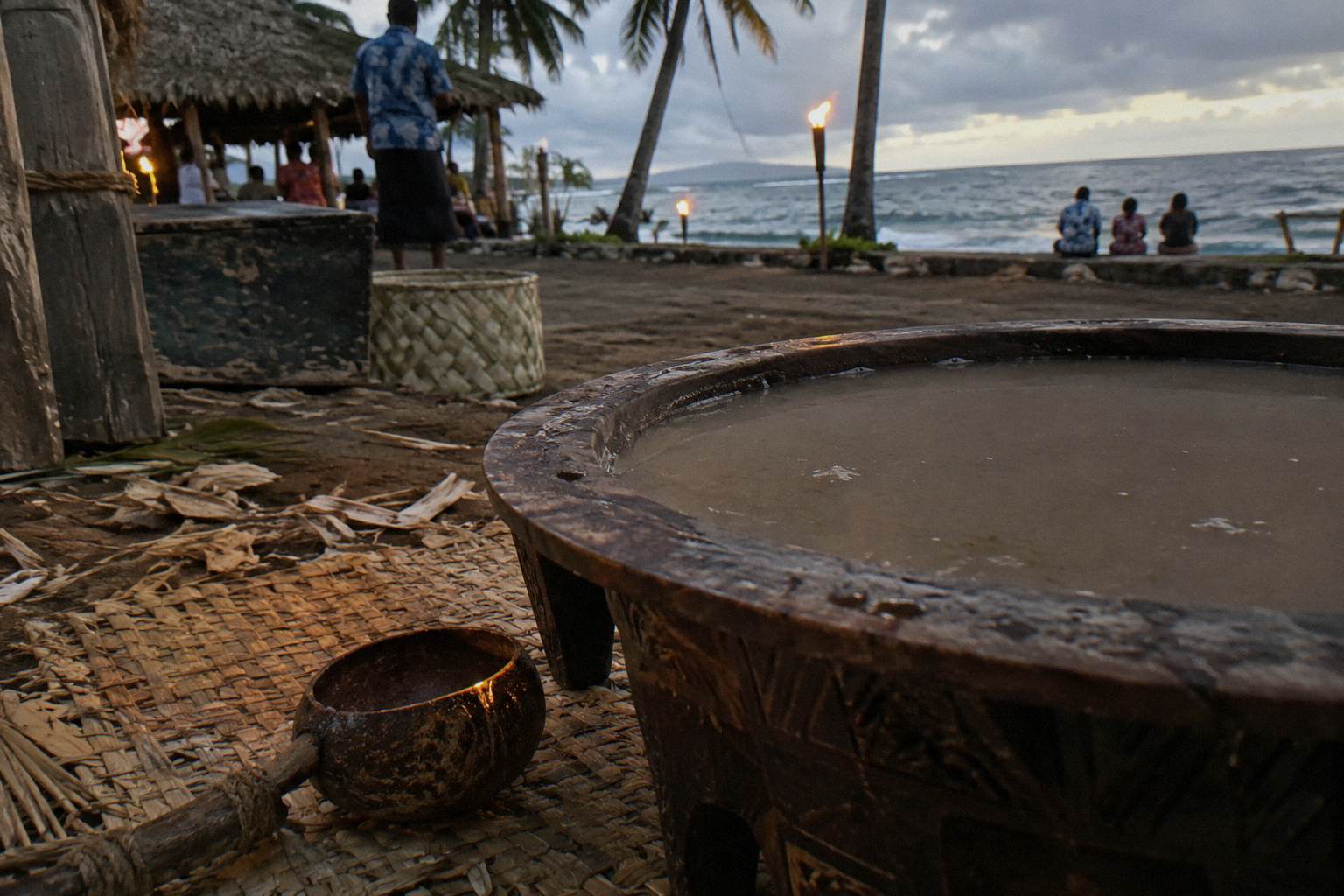
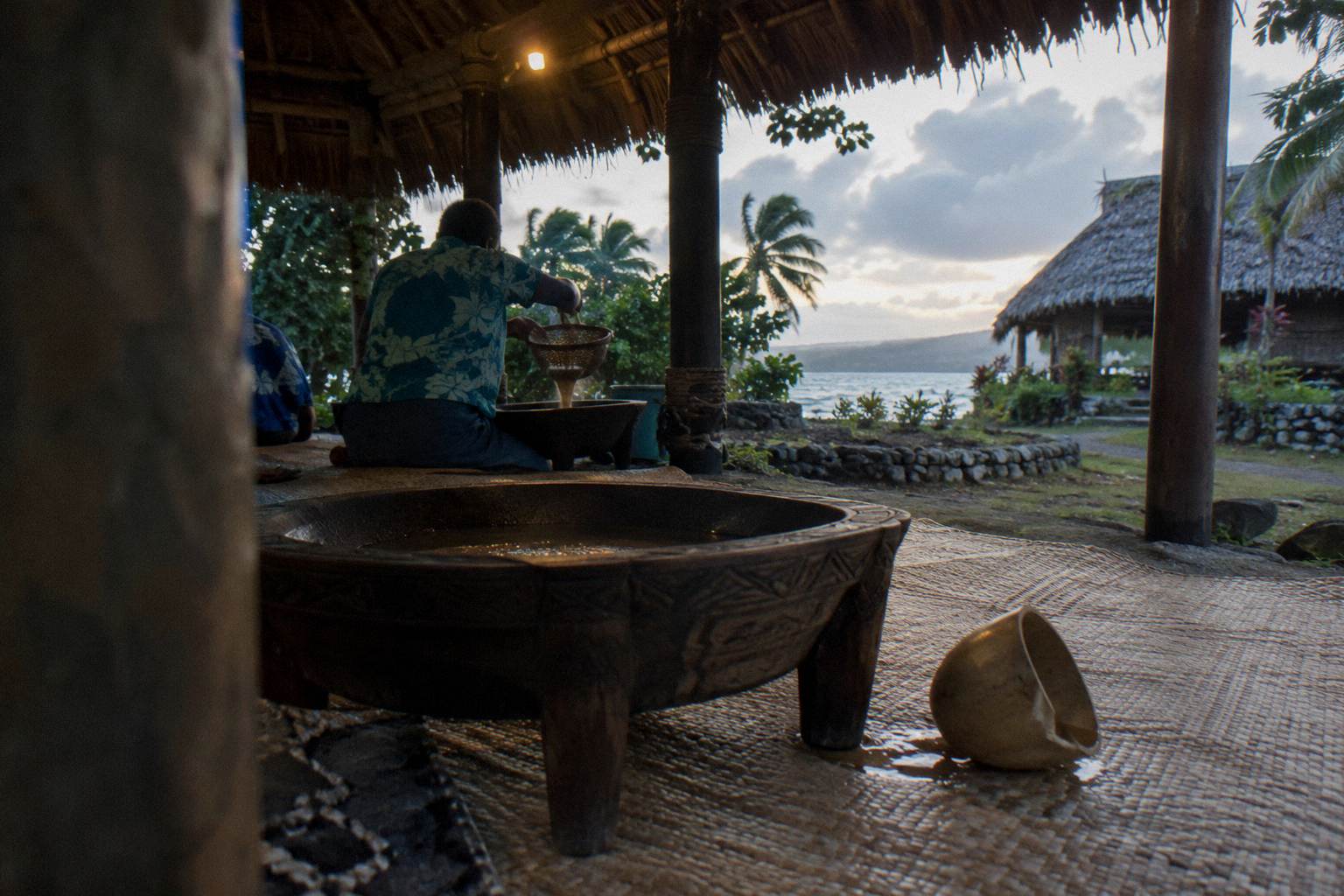
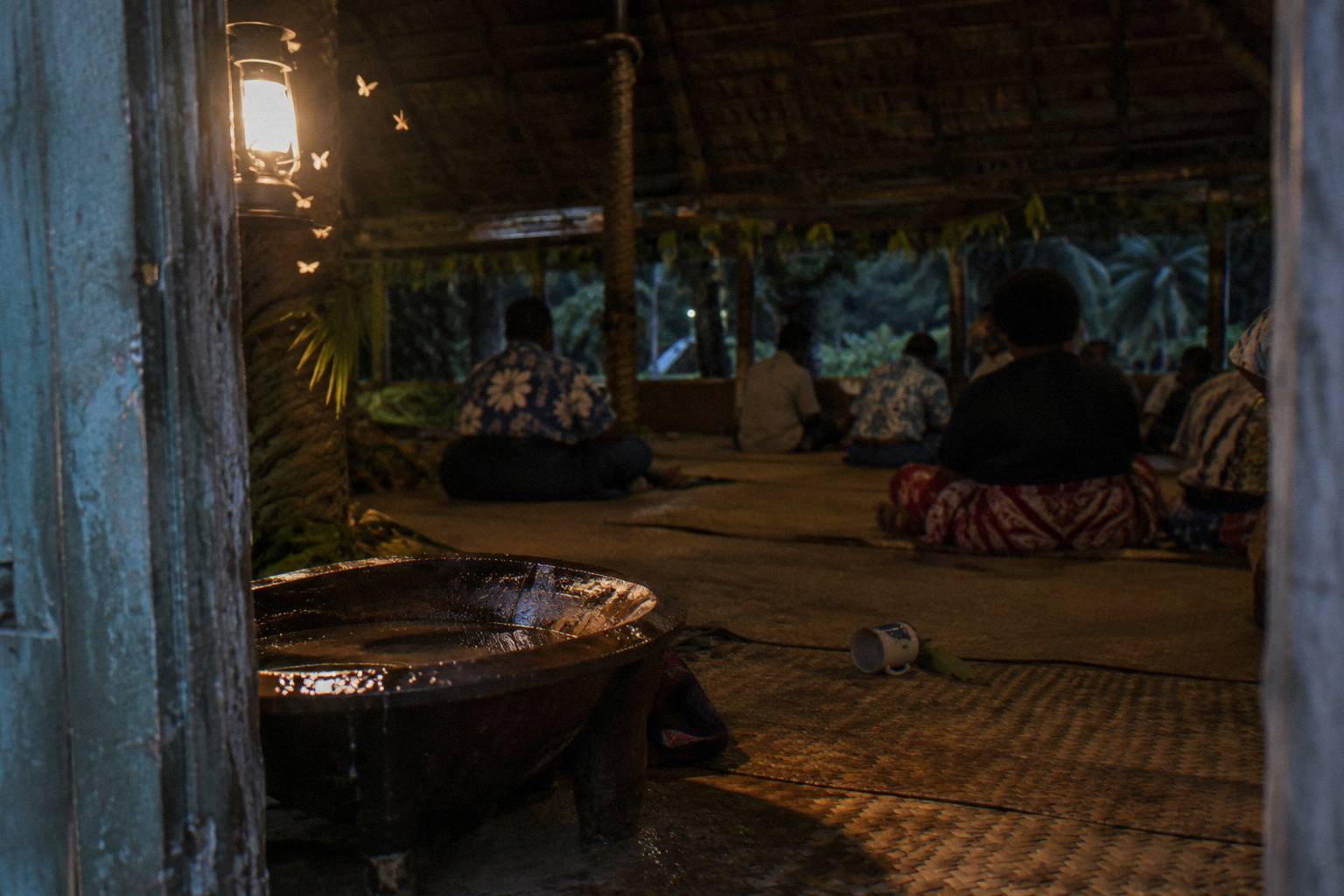
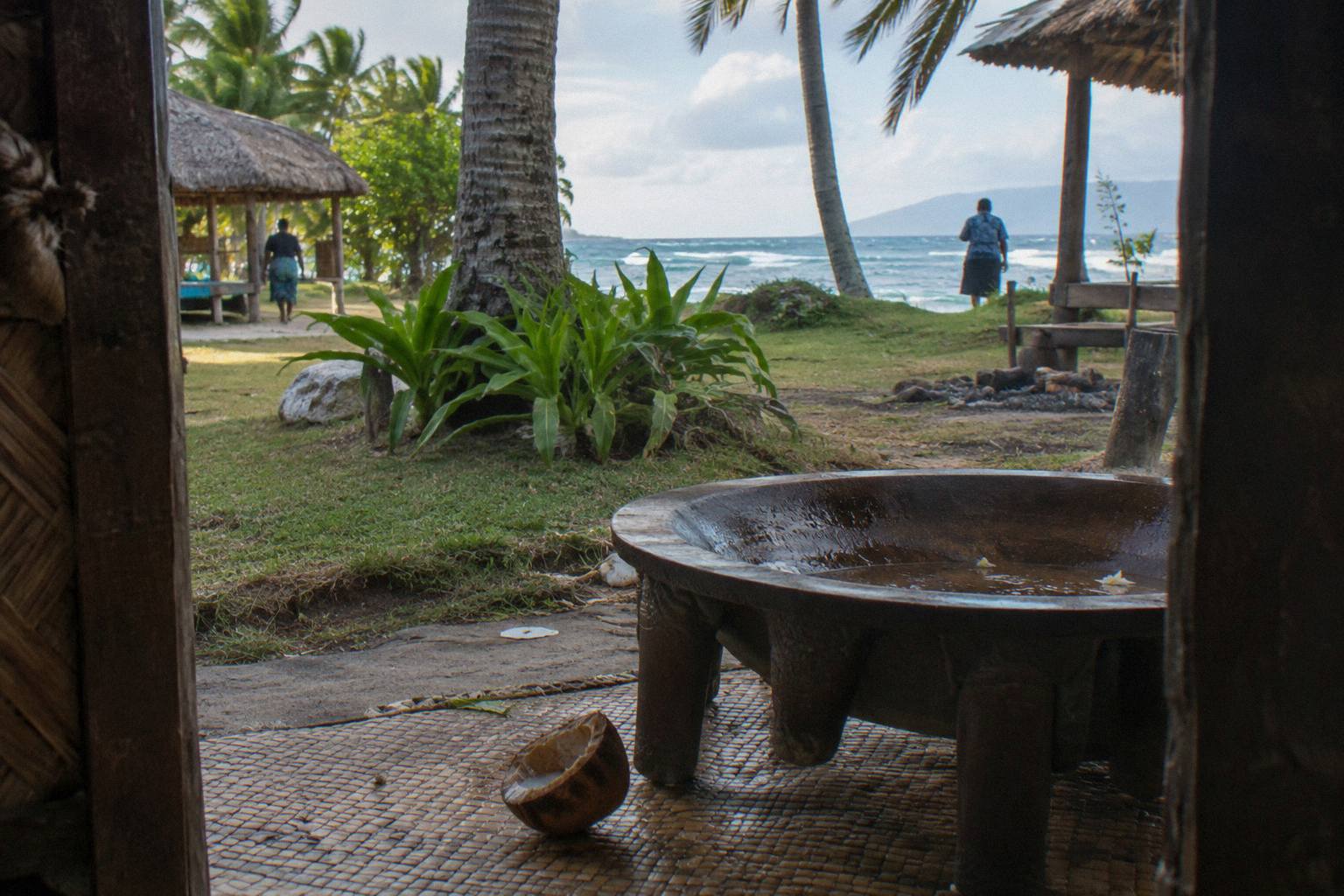
The operator lists a kava ceremony at 7:00pm, between the lovo unearthing and the buffet dinner. Tourism Fiji's kava guide explains that kava, or yaqona, comes from the dried roots of Piper methysticum, that the cup is called a bilo and the kava bowl a tanoa, and that a full cup is called high tide and a half cup low tide.
Knowing the mechanics beforehand turns the ceremony from a spectator moment into something you can take part in with confidence. Tourism Fiji's guide sets out the sequence for accepting a bilo: clap once, cupped and loud; say "Bula!"; drink in one gulp; return the cup, clap three times and say "vinaka". Those steps are Tourism Fiji's, published on its traveller's guide to drinking kava in Fiji, and they are the whole of the published protocol: nothing further about ceremony conduct is claimed here. The deeper background sits in the Fiji kava ceremony guide.
Context from Tourism Fiji's etiquette pages adds one layer: sevusevu, in its words, is "customary to present a small bundle or packet of powdered kava to the village chief to seek permission to enter their communal lands as a guest", and Tourism Fiji's kava guide puts the gift of half a kilogram of yaqona root at around FJD 30 to F$40. That is the custom in a village setting; the operator here simply lists "kava ceremony" as an included element of a staged evening. Whether you want to take part, and what happens if you would rather not drink, is covered from the reader's side in do you have to drink kava at a Fijian ceremony.
What this page cannot tell you: whether declining a bilo is acceptable at this specific evening, the effects of kava on the body, its legal status anywhere, or how it is prepared beyond "from dried roots". Those are not covered here; ask the operator or a health professional. For the object at the centre of the ceremony, the Fiji kava bowl, the tanoa guide explains it in full.
The Meke Show And Fire Dance At 7:50pm
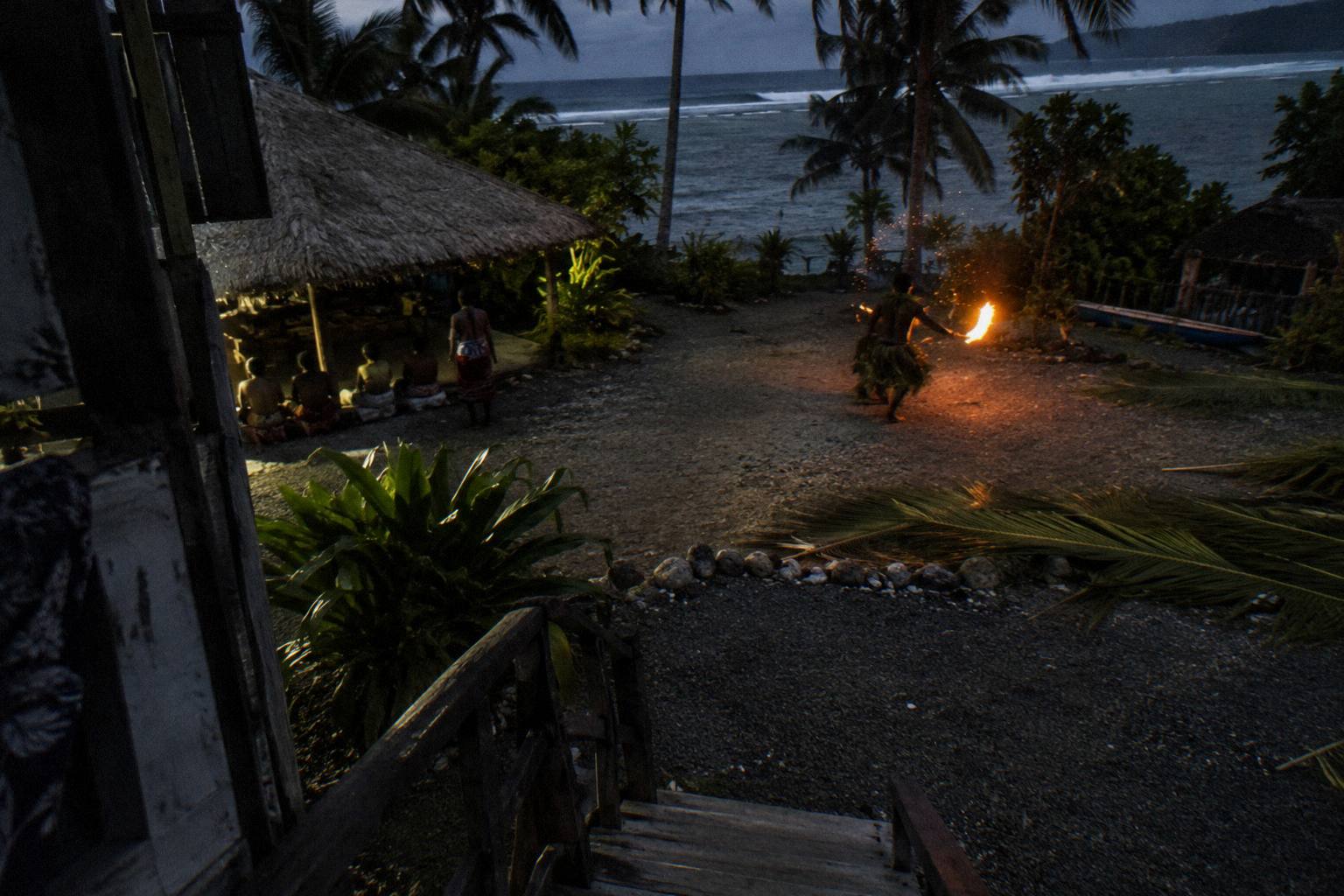
The operator lists a meke show and a fire dance at 7:50pm, closing the evening before the 8:30pm farewell. Tourism Fiji defines meke as a traditional dance performed by men and women of Fiji to tell stories through song and dance, with strong movements from the men, graceful movements from the women, and props that include clubs, spears and fans.
The meke is the answer to a question travellers often ask in the wrong words. The haka is a Maori practice, not a Fijian one; the Fijian performance tradition visitors see at an evening like this is the meke, on Tourism Fiji's definition. What any particular meke means, the cibi, costume details, lali drum details and chant texts are not covered here, and the performances are described only as the operators list them. The dedicated guides to what is a Fijian meke and the Fijian war dance carry what is published.
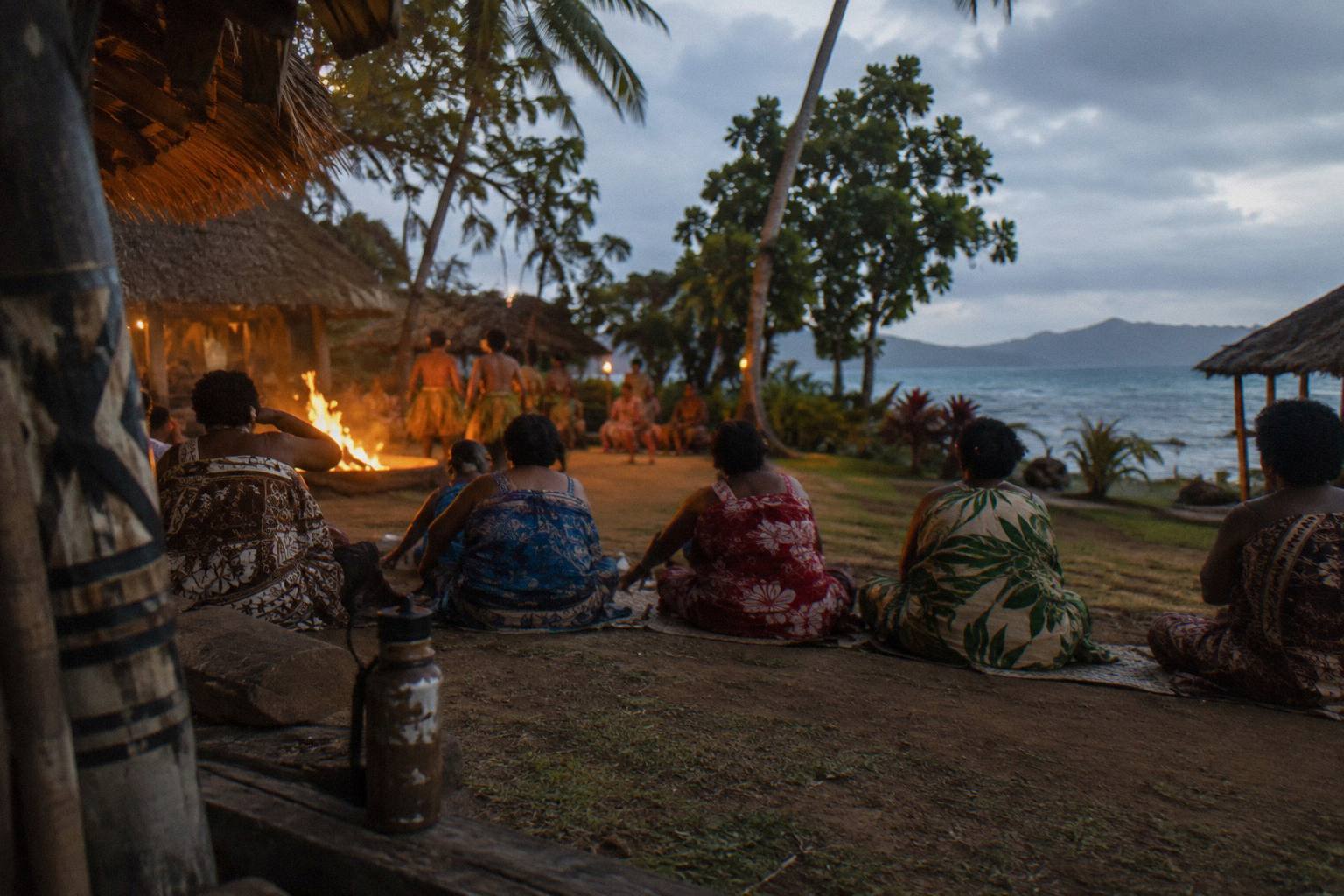
The fire element needs one careful distinction. The operator lists a "fire dance" at 7:50pm and does not say it is fire-knife. Where fire-knife dancing does come up in Fiji shows, it should be said plainly that siva afi, the fire-knife dance, is Samoan in origin and staged in Fiji shows, and that it is separate from Fiji's own firewalking tradition, which Tourism Fiji traces to Beqa (pronounced Benga) and the Sawau tribe through the legend of Tuinaiviqalita. Tourism Fiji tells that legend in its own terms on its firewalkers page: the veli offered power over fire to Tuinaiviqalita and his descendants, and the power flows through his bloodline to the Sawau tribe. Robinson Crusoe, by contrast, lists a fire walking demonstration at 6:30pm and says nothing about who performs it, so no claim is made about its performers either.
| Fire element | What the operator lists | What is known |
|---|---|---|
| Fiji Culture Village, 7:50pm | Fire dance after the meke show | The operator does not say it is fire-knife |
| Robinson Crusoe evening | Fire walking demonstration at 6:30pm, then fire and knife dancing in the Legends of the Pacific show | No statement on who performs it |
| Firewalking tradition | Not part of this tour's listed programme | Tourism Fiji traces it to Beqa's Sawau tribe |
| Siva afi | Not named by Fiji Culture Village | Samoan in origin, staged in Fiji shows |
Readers whose main interest is fire performance should read the Fiji fire dance show and Fiji fire walking guides before choosing, and the siva afi fire-knife dance page for the Samoan origin story. The distinction is not pedantry: an evening sold on a village walk and a meke, with a fire dance at the end, is a different promise from an island show built around fire walking and knife dancing.
How The Culture Village Compares With Other Nadi Evenings
The Culture Village runs six nights a week, Monday to Saturday, for about 4 to 4.5 hours from F$175 per adult, valid to 31 December 2026. The Robinson Crusoe Sunset Dinner Show runs Monday, Wednesday and Saturday for about 4 hours on the island, with its price on the booking page, while Valentine Tours Fiji lasts about 3 hours with Nadi and Denarau pick-up and the fewest published details.
Start with the nights, because the choice of night is the real constraint. Culture Village gives you six evenings a week to aim at, minus the maintenance closure in early 2027. Robinson Crusoe's evening runs only Monday, Wednesday and Saturday, so a Tuesday-only stay in Fiji cannot include it, though the operator's daytime Culture Day Tour runs Tuesday, Thursday and Sunday if a daytime experience fits instead. Valentine Tours Fiji's days are not stated, so the booking page is the only source.
| Culture Village Evening | Valentine Tours Fiji Night | Robinson Crusoe Sunset Show | |
|---|---|---|---|
| Nights | Monday to Saturday | Not stated | Monday, Wednesday, Saturday |
| Duration | About 4 to 4.5 hours | About 3 hours | About 4 hours on the island, plus coach |
| Price | F$175 adult to 31 Dec 2026 | See the booking page | See the booking page |
| Transfers | Nadi and Denarau hotels included | Nadi and Denarau area pick-up | Nadi, Denarau and Coral Coast coach plus launch |
| Format | Village walk, kava, lovo buffet, meke and fire dance | Dinner and meke show | Island, river cruise, lovo, fire walking, fire and knife dancing |
The format difference is the heart of the decision. Culture Village is the village-evening shape: walk, ceremony, shared food, meke. Robinson Crusoe is the island-evening shape: coach, jetty, a 30-minute river cruise down the Tuva River, a sunset beach bonfire with serenaders at 6:00pm, then the lovo and the show. Valentine Tours Fiji is billed as a dinner and meke show evening, with no further facts published, so it functions here as the shorter, less documented Nadi option; its booking page is the source for anything beyond duration and pick-up area.
If your stay includes a Monday, Wednesday or Saturday and you want the biggest single evening, there is also the Robinson Crusoe Day And Night Combo, about 11 hours from 10am to 9pm, which adds a guided Vusama Village visit, mud crab catching, snorkelling, sea kayaks, a BBQ buffet lunch, a bush medicine walk and coconut climbing ahead of the full evening show. It is a full day, not a second version of the same night. For the resort-show alternative, the guide to Fiji cultural night versus a resort show sets out that trade.
For many readers the Valentine Tours Fiji evening works as the short-night option: about 3 hours, hotel pick-up from the Nadi and Denarau area, dinner and a meke show. Its start time and inclusions are not independently verified, so check the booking page for the details that matter to you, and read the wider Fijian culture at a cultural night guide for what these evenings share culturally.
The Robinson Crusoe Sunset Dinner And Fire Show carries a 4.6 rating; the Culture Village evening also carries a 4.6 rating. The two figures sit in separate reviews on separate products and say nothing relative about each other. What actually separates them is structure and logistics: island versus village, coach plus boat versus road transfer, three nights versus six. On the island end, the evening reaches the Isa Lei farewell at 9:00pm and the boat departs at 9:15pm, later than the Culture Village farewell at 8:30pm, and the operator's FAQ advises Fijian dollars for drinks, insect repellent and resort wear for night tours.
What To Wear And How To Behave On The Village Walk
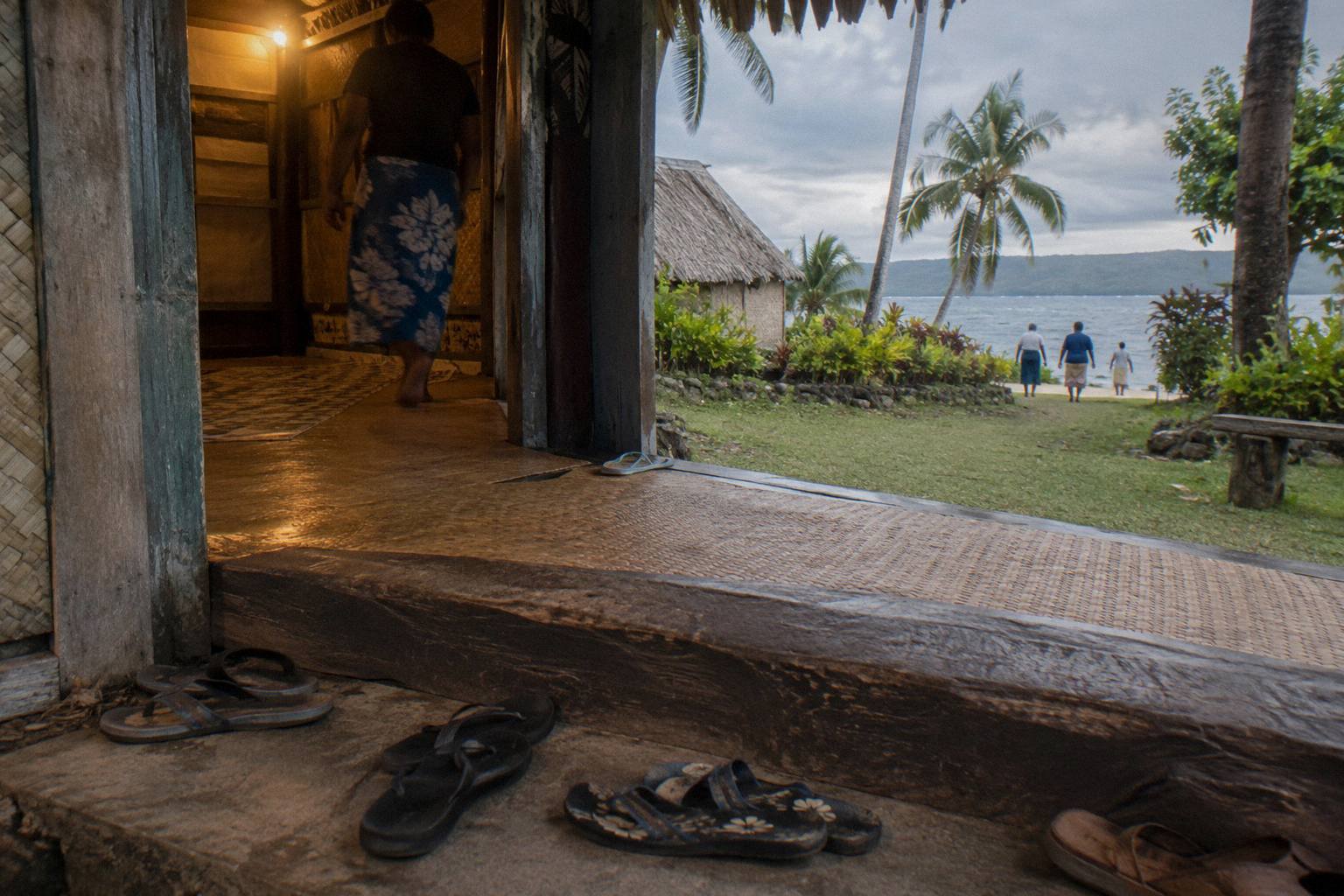
Tourism Fiji's etiquette page says to cover bare shoulders and legs when visiting a Fijian village, wrap a sulu around the waist, remove hat and sunglasses, carry bags in hand rather than on the shoulders, ask permission before taking photos or entering a home or communal area, and remove shoes before entering any village building. Fiji Culture Village's own dress guidance is not stated, so ask the operator.
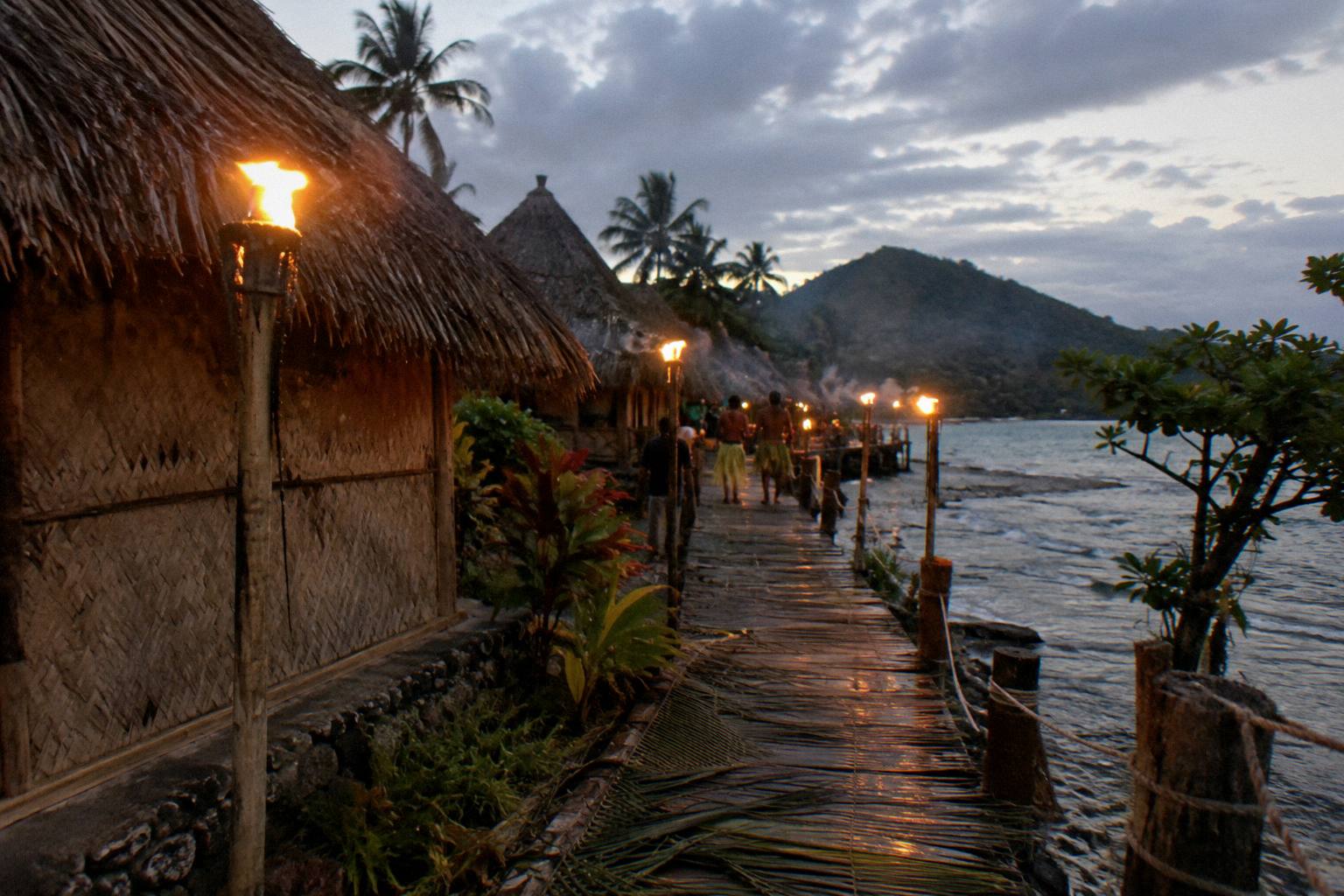
Because the evening includes a guided village walking tour at 5:30pm, the etiquette that Tourism Fiji publishes for village visits is the sensible default for this night, even though the venue is a cultural centre rather than a living village. Two of the published points deserve emphasis ahead of the others. First, the head: do not touch someone's head, which Tourism Fiji notes is sacred in many villages. Second, the camera: ask permission before taking photos or entering a home or communal area. Both are easy to get wrong in the first ten minutes of a walk if nobody has mentioned them.
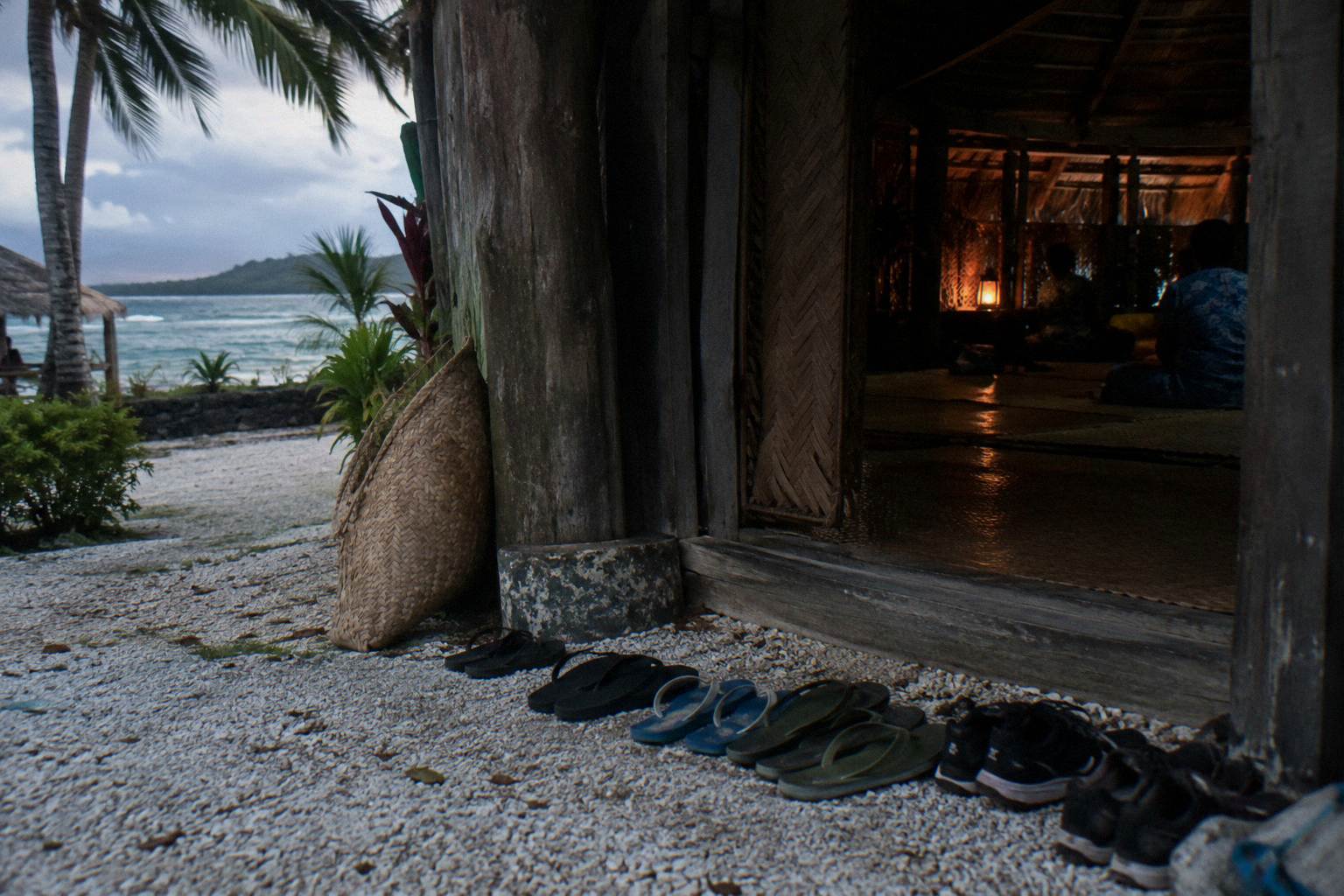
Tourism Fiji also notes that meals are eaten cross-legged on a mat, that guests wait for the masu, the prayer, before eating, that visitors should speak softly, and that Sundays are sacred and most village tours do not run. The Sunday point matches the operator's own schedule, since the Cultural Night Tour runs Monday to Saturday and is closed Sunday. More detail, including how the sulu is worn, is in what to wear to a Fijian village night and the dedicated Fiji cultural night etiquette and what to wear guides, and the customs themselves are on Tourism Fiji's etiquette page.
One honest gap, stated once: whether the operator requires or suggests any specific dress for its own village walk is not stated, so ask the operator on +679 804 4800 when booking. Robinson Crusoe, for its Combo's village visit, asks visitors to cover shoulders and bring a sulu or sarong, with spare sulus available; no equivalent request is published for Fiji Culture Village, and none is invented.
Common Mistakes When Booking The Fiji Culture Village
The mistakes that cost people money or the evening itself: assuming a Sunday or maintenance-period date works, assuming the family rate stretches beyond 2 adults and 2 children, and comparing this evening's price against reseller figures rather than the operator's F$ rates. Each one is avoidable with a phone call or a careful read.
Take them in turn. The schedule mistakes are the commonest: the tour runs Monday to Saturday, closed Sunday, and closed 22 February to 10 March 2027 for annual maintenance. A traveller who books a Sunday evening in March 2027 without checking has booked nothing that runs. The rate mistakes come next: the child band is 5 to 12, the family rate is exactly 2 adults plus 2 children, and the 2026 and 2027 validity bands differ, F$175 versus F$189 per adult, with the step landing at New Year.
| Mistake | What the facts say |
|---|---|
| Booking a Sunday | The tour runs Monday to Saturday |
| Booking 22 Feb to 10 Mar 2027 | Closed for annual maintenance, operator notice |
| Extending the family rate | It covers 2 adults and 2 children only |
| Assuming a refund policy | Full refund 24 hours or more before pick-up; confirm on the booking page |
| Assuming a minimum age rule | Not published; child price applies to ages 5 to 12 |
| Assuming dietary options | Not stated; ask the operator on +679 804 4800 |
The third group is assumption risk. No minimum age is published. No dietary claim is published. None of these gaps is a reason to avoid the evening; each is a question to put to the operator on +679 804 4800 or reservationfijiculturevillage@gmail.com before booking. The final mistake is comparing apples to resellers: the only printable prices for this tour are the operator's own F$ figures above, with their validity periods, and no other currency or platform figure belongs in the comparison.
One more, softer trap: expecting a fire-knife spectacle. The operator lists a meke show and a fire dance, and does not say fire-knife. Readers who specifically want fire walking and knife dancing should read the Robinson Crusoe itinerary first, remembering that siva afi is Samoan in origin and staged in Fiji shows, and that it is not Fiji's own firewalking tradition.
Whether the evening justifies its rate is a fair closing question, and the answer depends on what you are buying: a village walk, a kava ceremony and a meke, with the lovo dinner inside the price and the transfer included. Readers still undecided can weigh it against the general case in is a Fiji cultural night worth it, and families can read can kids go to a Fiji cultural night for the child-age side of the decision. The site's full evening coverage starts at Fiji Cultural Night Tours.
Common Questions About The Fiji Culture Village Evening
How Much Is The Fiji Culture Village Evening Tour?
The operator's rate, valid to 31 December 2026, is F$175 per adult, F$105 per child aged 5 to 12, and F$500 for a family of 2 adults and 2 children. For 2027 the rate is F$189 per adult, F$115 per child and F$550 for the same family basis. Rates are in Fijian dollars.
What Time Does The Fiji Culture Village Evening Start And Finish?
Hotel pick-up is from 4:20pm for Denarau, Nadi and Wailoaloa hotels, and farewell and departure is at 8:30pm. Door to door the operator describes it as about 4 to 4.5 hours, with the return transfer included.
Which Nights Does The Fiji Culture Village Run?
Monday to Saturday, and it is closed on Sunday. The operator has also posted a notice of a temporary closure for annual maintenance from Monday 22 February 2027 to reopening Wednesday 10 March 2027, with online orders after 21 February 2027 still processed.
Is Dinner Included At The Fiji Culture Village?
Yes. The operator lists a buffet dinner of lovo food at 7:20pm as included, following the unearthing of the lovo at 6:45pm. A menu and dietary options are not stated, so ask the operator on +679 804 4800 about any requirement.
Is There A Kava Ceremony At The Fiji Culture Village?
Yes, the operator lists a kava ceremony at 7:00pm, between the lovo unearthing and dinner. Tourism Fiji's kava guide explains the bilo and tanoa and the high tide and low tide cup sizes; whether declining a bilo is acceptable at this evening is not stated, so ask the operator.
Can Children Go To The Fiji Culture Village Evening?
The operator prices children aged 5 to 12 at F$105 valid to 31 December 2026, and F$115 for 2027. A minimum age is not published, and no pushchair, bedtime or noise rule is stated, so ask the operator directly about younger children.