What Is A Fijian Meke? Dance, Chant And Costume
A meke is a Fijian dance that tells a story through song and movement. Tourism Fiji defines it, two Nadi evenings stage it, and the details below separate it from fire knife dancing and the Maori haka.
Short answer
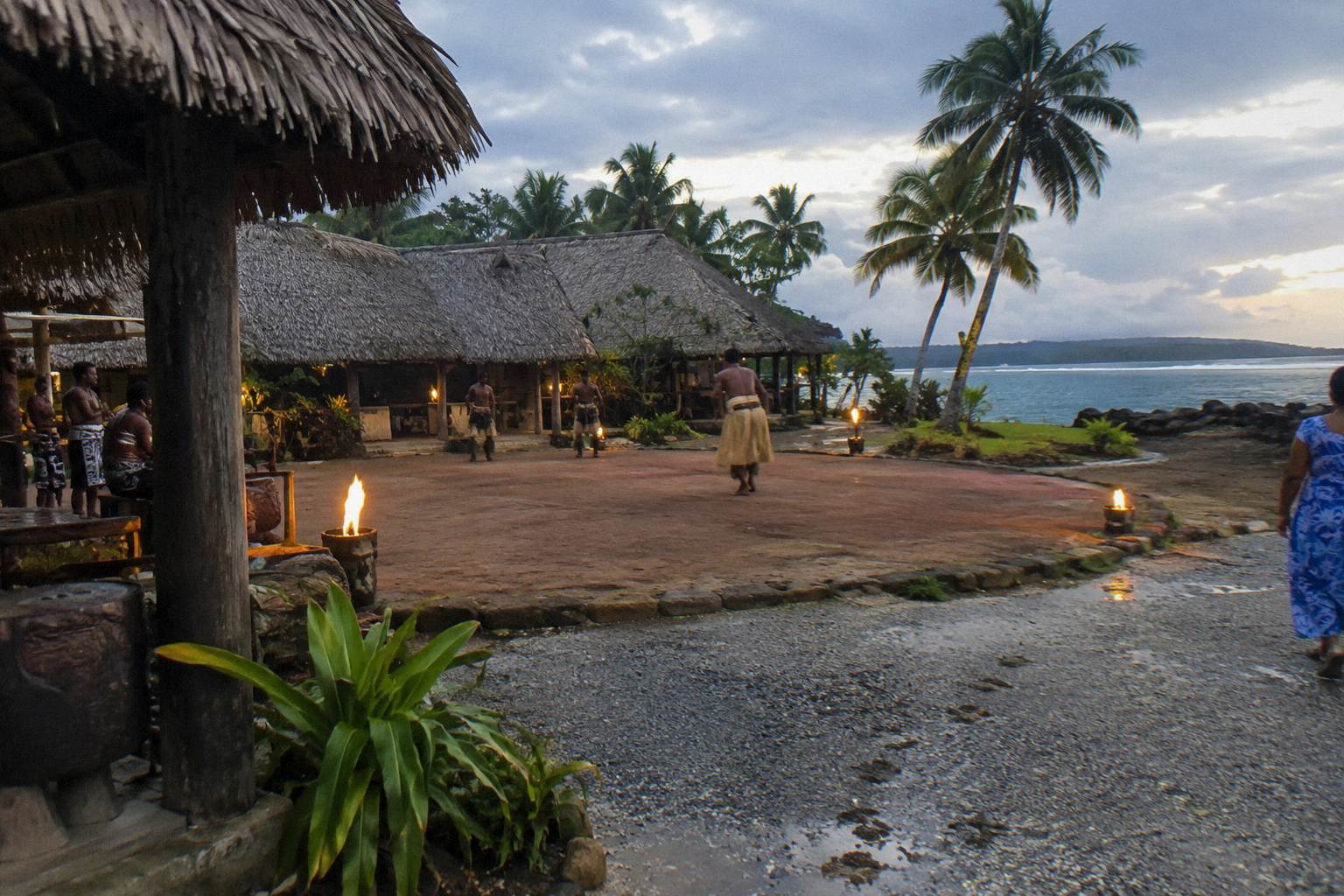
A meke is, in Tourism Fiji's words, a traditional dance performed by men and women of Fiji to tell stories through song and dance. Men dance with strong movements, women with graceful ones, and props include clubs, spears and fans. Fiji Culture Village stages a meke show at 7:50pm; Valentine Tours Fiji bills its Nadi evening with a meke show.
A meke is a story told with the whole body. Tourism Fiji defines it as "a traditional dance performed by men and women of Fiji to tell stories through song and dance", and it names the Fiji Culture Village, just outside Nadi town, as a place to see one. The dance sits at the heart of the cultural evenings staged around Nadi, so understanding what it is, and what it is not, sharpens the choice of which night to book.
What Is A Fijian Meke?
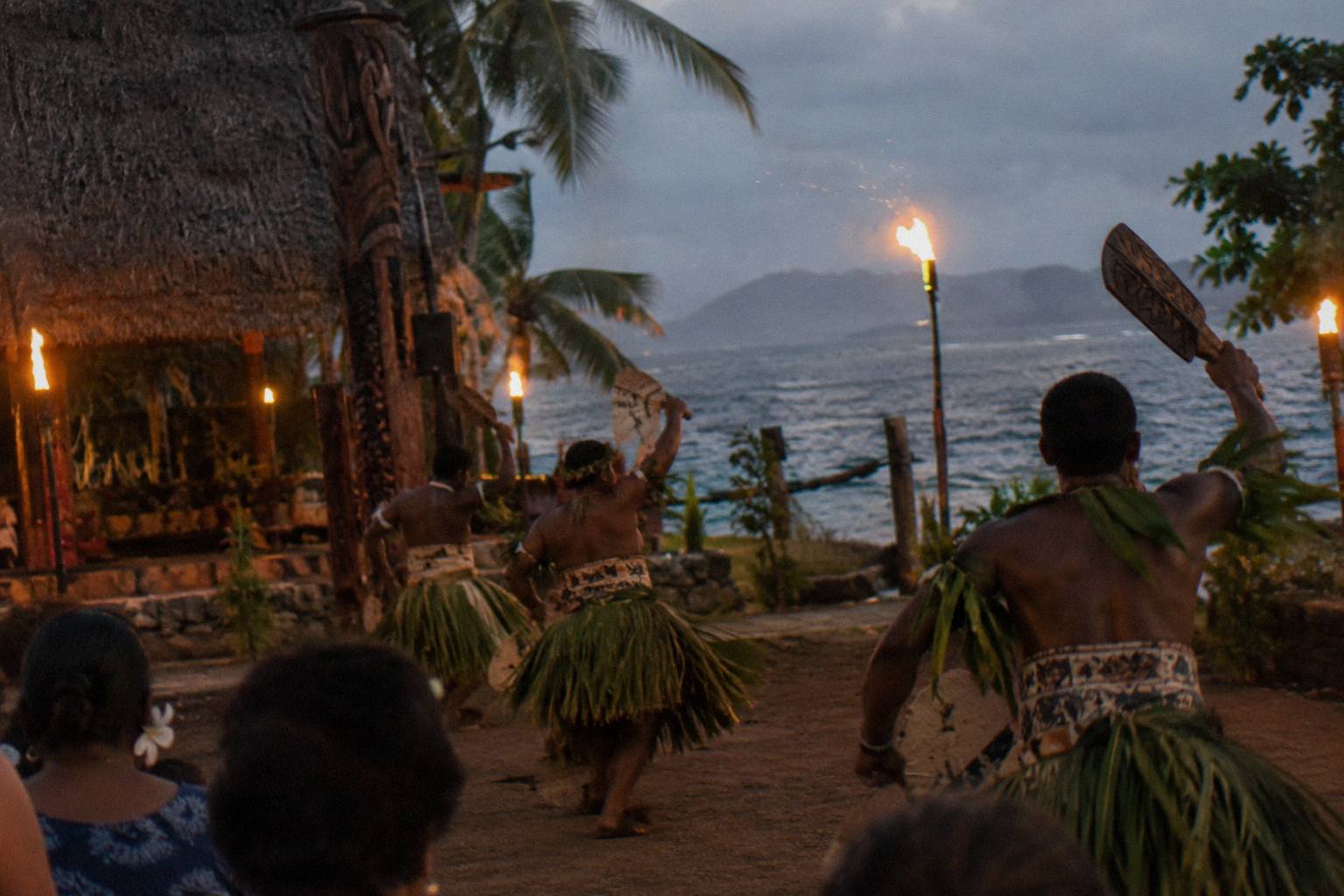
A meke is a Fijian storytelling performance that combines dance, chant and song. Tourism Fiji's definition calls it "a traditional dance performed by men and women of Fiji to tell stories through song and dance", with men's movements strong and women's graceful, and props that include clubs, spears and fans. It is a staged and shared art form, performed at celebrations and cultural evenings, and two of the operators covered here list a meke show on their itineraries.
That definition is the anchor for everything on this page, because the word "meke" gets stretched loosely in travel copy. Some writers fold fire dancing into it, others reach for the word "haka", and a few treat any Pacific chant as a meke. Tourism Fiji's own wording is narrower and clearer: a story told through song and dance, danced by men and women together, with recognisable props. Anything beyond that description, the meanings of particular mekes, the chant texts, costume details, belongs to sources this page does not carry, and the scope is stated here once rather than guessed at.
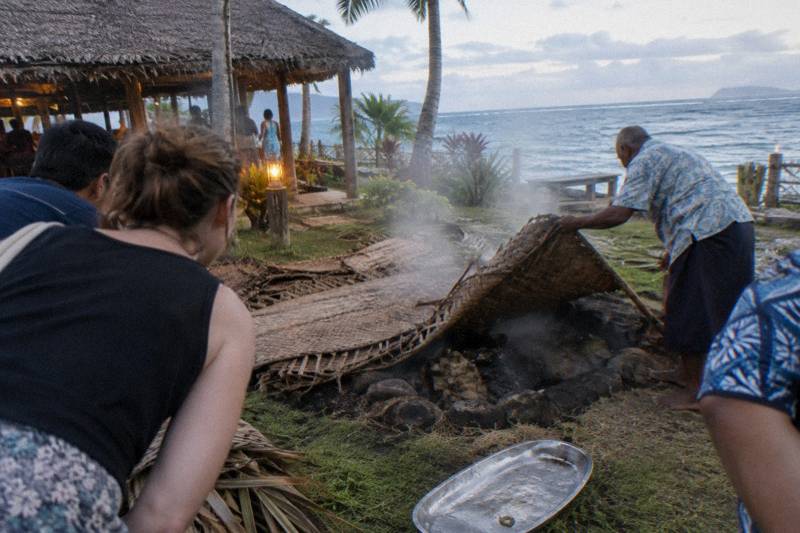
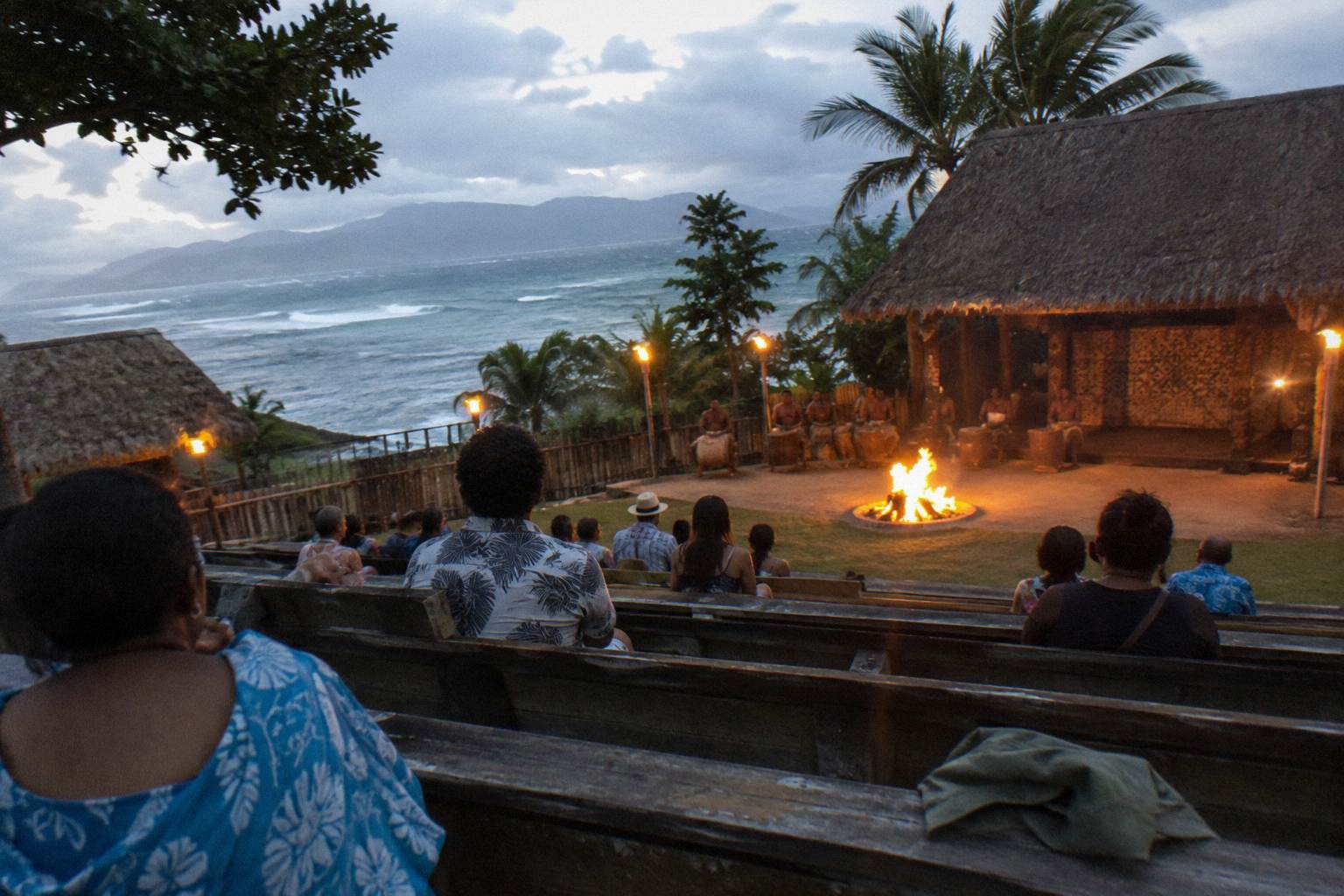
The meke's place in a cultural evening is easier to pin down than its inner history. Fiji Culture Village's published timeline puts its meke show at 7:50pm, directly after the lovo buffet dinner, followed by a fire dance at the same point in the evening. Valentine Tours Fiji bills its Nadi evening as a Fijian culture night with dinner and a meke show. In both cases the meke is the performance centrepiece of the night, the moment the storytelling tradition takes the stage after the food has been served.
For a wider look at how these evenings are built, the guide to a Fijian village evening visit walks through the full sequence, and what a meke evening in Nadi offers covers the city's options. What follows here is the dance itself: what the performance looks like, where to see it, and the distinctions that matter.
| Element | What Tourism Fiji says |
|---|---|
| Definition | A traditional dance performed by men and women of Fiji to tell stories through song and dance |
| Men's style | Strong movements |
| Women's style | Graceful movements |
| Props listed | Clubs, spears and fans |
Men, Women And Props: What The Performance Looks Like
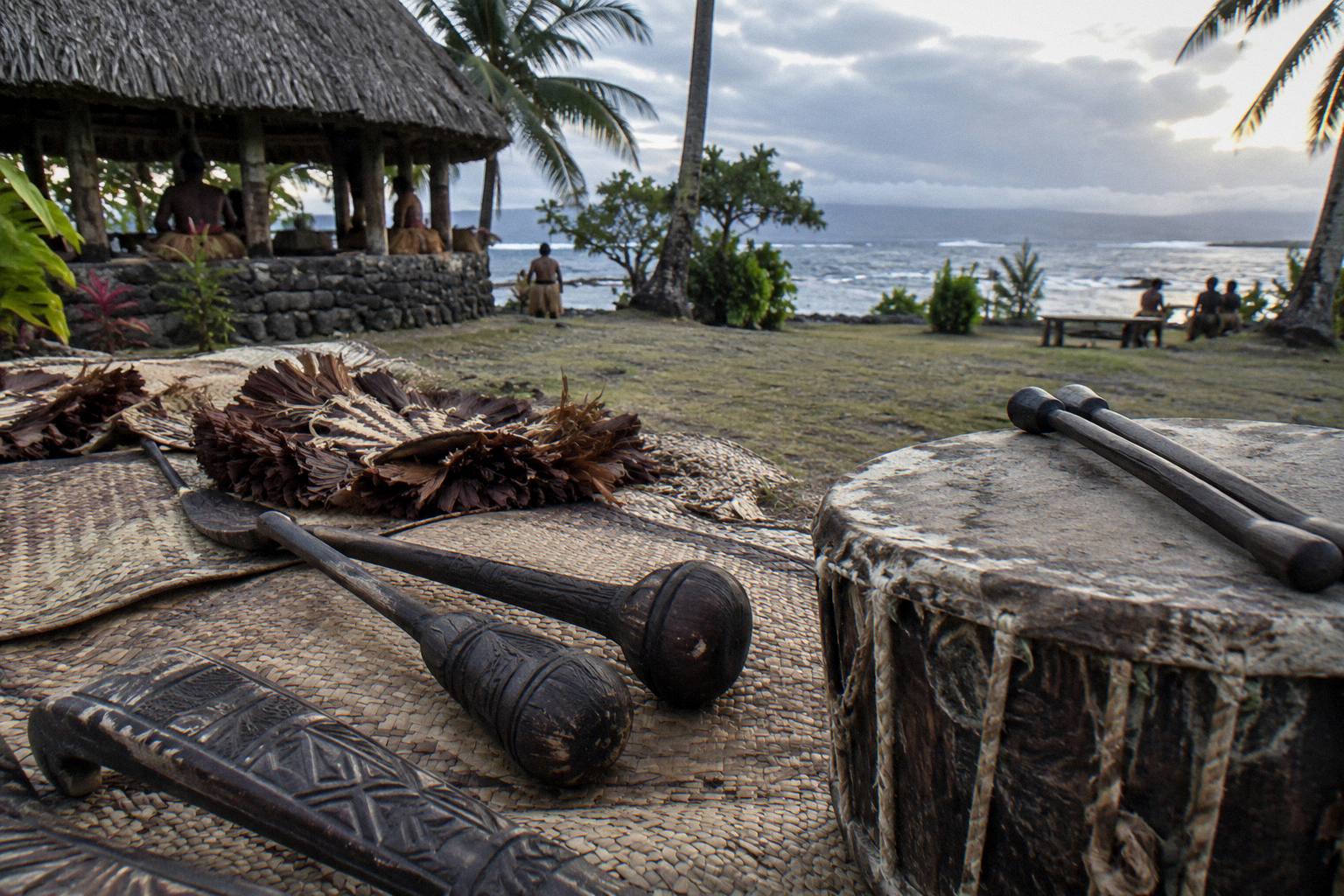
A meke divides its movement by gender, with men dancing in strong, emphatic motions and women dancing gracefully while performers carry clubs, spears and fans. The story is carried by song and chant as much as by movement, so the performance is heard as well as watched, and Tourism Fiji lists those prop types only, offering no costume detail, so this page describes the staging operators publish and nothing further.
The contrast between the two movement styles is the thing to watch for. A first-time viewer tends to focus on the fire elements of a cultural night, the torches and the knife dancing, but the meke is the quieter structure underneath the evening. Because men's and women's parts differ, the stage holds two registers at once, and the props give each group something to work with. Tourism Fiji does not explain what individual mekes mean, and the meanings of specific performances are not covered here, so the honest position is to describe what is listed and let the evening carry the rest.
What the operators publish is specific about timing even where it is silent on meaning. Fiji Culture Village places its meke show at 7:50pm, running into a fire dance, and the whole evening closes with a farewell at 8:30pm. Valentine Tours Fiji's evening runs about 3 hours with dinner and a meke show, and the operator publishes no further detail: no start time, no itinerary, no prop or costume description, so the booking page is the place to ask. A reader deciding between the two on the strength of the meke alone has one firmly documented timeline and one billed headline.
Those three evenings are the natural starting set for a meke night: the Fiji Culture Village evening with its published 7:50pm meke show, the Valentine Tours Fiji culture night billed with a meke show, and the Robinson Crusoe Sunset Dinner Show, which stages its own performance line-up on an island instead of a village. The sections below pull them apart properly.
Meke Vs Siva Afi Vs Firewalking: Three Different Things
Robinson Crusoe's evening is where the lines blur most easily, because its itinerary stacks several performance types in one night. After the 7:00pm lovo buffet dinner comes the "Legends of the Pacific" show with fire and knife dancing, the operator's words, and earlier in the evening, at 6:30pm, a lovo unearthing with a fire walking demonstration. Neither of those is a meke by the definitions here, and Robinson Crusoe does not bill a meke in its evening itinerary. Fiji Culture Village's evening is different again: a meke show at 7:50pm followed by a fire dance, and the operator does not say the fire dance is fire knife. For the background on the Samoan dance, the siva afi fire knife dance explained covers it, and Fiji's fire walking tradition handles the Beqa material. The firewalking legend belongs to Tourism Fiji's telling alone, and this page does not repeat it in full.
| Performance | Origin per the sources | Where it appears on the evenings here |
|---|---|---|
| Meke | Fijian storytelling dance, Tourism Fiji's definition | Fiji Culture Village 7:50pm; Valentine Tours Fiji evening, billed |
| Siva afi (fire knife) | Samoan in origin, staged in Fiji shows | Robinson Crusoe "Legends of the Pacific" after the 7:00pm dinner |
| Fire dance | Not specified as fire knife by the operator | Fiji Culture Village, after the meke show |
| Firewalking | Fiji's own tradition, tied to Beqa's Sawau tribe by Tourism Fiji | Robinson Crusoe 6:30pm demonstration |
The word "haka" needs its own boundary. The haka is a Maori practice, not a Fijian one, and where the question "what is Fiji's haka called?" comes up, the answer is the meke, on Tourism Fiji's definition, and nothing more is said about the haka here. The cibi and "meke wesi" war dance details are likewise not in the research behind this page, so they are not described. For the dance-family questions, the Fijian war dance page carries what the sources support.
Where You Can See A Meke Around Nadi
The two evenings suit different plans. The Culture Village night is the fully documented one: hotel pick-up from 4:20pm, a warrior welcome at 5:15pm, a guided village walk, the lovo unearthing at 6:45pm, a kava ceremony at 7:00pm, dinner at 7:20pm, then the meke show and fire dance, and farewell at 8:30pm. The whole thing runs about 4 to 4.5 hours door to door with return transfer from Nadi and Denarau hotels included. It runs Monday to Saturday, closed Sunday, and the operator's notice closes it for annual maintenance from Monday 22 February 2027 to reopening Wednesday 10 March 2027. Valentine Tours Fiji's evening publishes no itinerary, so the meke billing and the roughly 3-hour duration carry the decision; not stated, so check the booking page.
The Valentine evening earns its place in the comparison honestly: it is the shorter Nadi option, roughly 3 hours against the Culture Village's 4 to 4.5, which matters on a night with an early start the next morning. The gap in documented detail is the trade-off, and the honest way to buy it is with a question sent through the booking page rather than an assumption about what the meke show includes.
The Culture Village evening's operator rates are the only prices printable on this site: adult F$175, child (5 to 12) F$105, family of 2 adults and 2 children F$500, valid to 31 December 2026, then adult F$189, child F$115, family F$550 for 2027. Return transfer from Nadi and Denarau hotels is included. Check availability for the nights you are in Nadi, or read the full Culture Village evening tour page first.
The Fiji Culture Village Evening, Hour By Hour
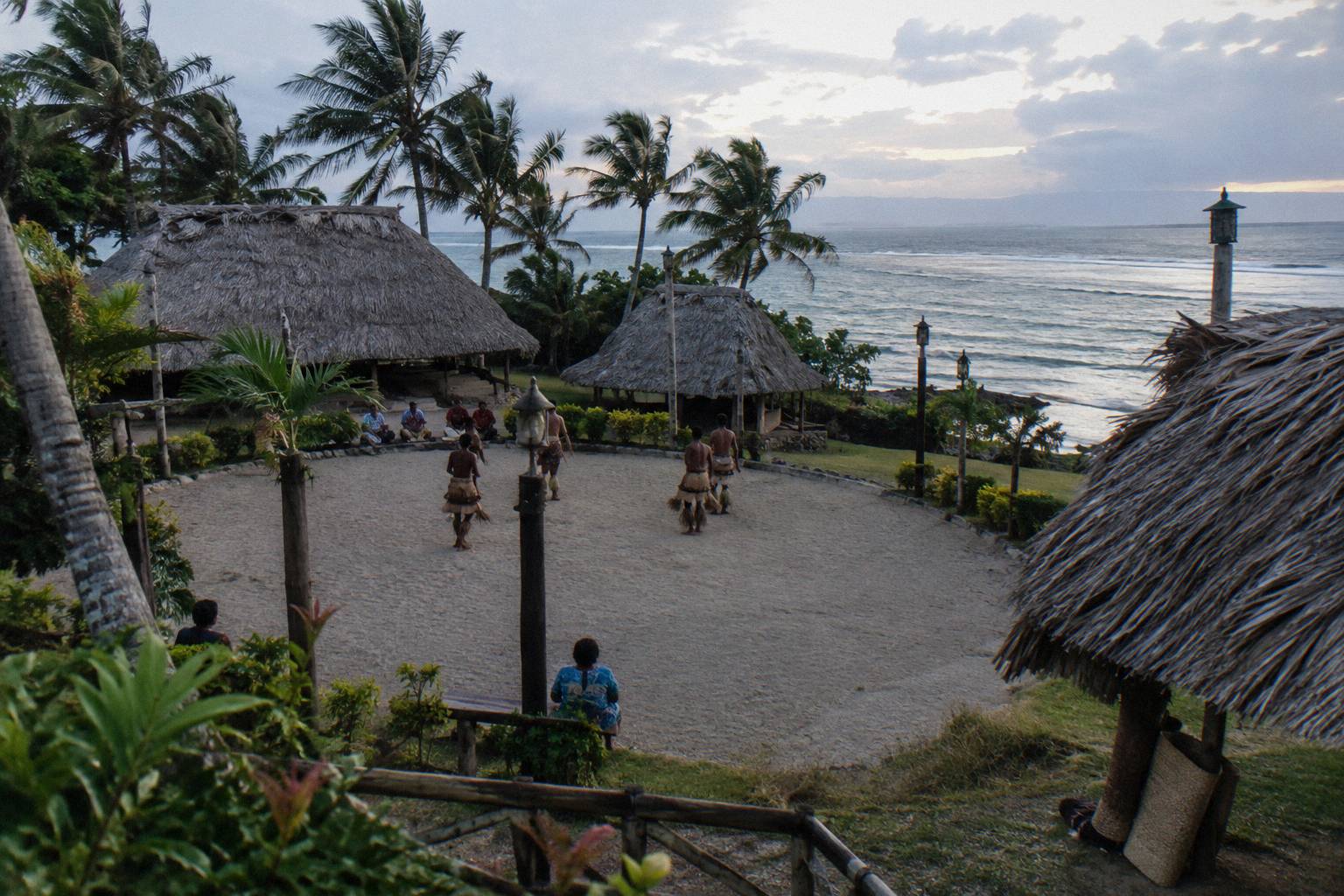
The Culture Village evening runs Monday to Saturday on a published minute-by-minute schedule: pick-up from Denarau, Nadi and Wailoaloa hotels at 4:20pm, warrior welcome at 5:15pm, village walk at 5:30pm, lovo unearthing at 6:45pm, kava ceremony at 7:00pm, buffet dinner at 7:20pm, meke show and fire dance at 7:50pm, farewell at 8:30pm, roughly 4 to 4.5 hours door to door with return transfer included.
Read as a sequence, the timeline shows where the meke sits: it is the climax, not the opener. The first hour is arrival and orientation, the warrior welcome and the village walk. The middle hour belongs to food and ceremony, the lovo coming out of the earth oven and the kava being shared. Only then, with dinner eaten, does the performance element take over, the meke show at 7:50pm and the fire dance after it. Anyone choosing this evening for the meke specifically should know the dance arrives nearly three hours into the night, which is one reason the shorter Valentine evening appeals to some schedules.
| Time | What the operator lists |
|---|---|
| 4:20pm | Pick-up from Denarau, Nadi and Wailoaloa hotels |
| 5:15pm | Warrior welcome |
| 5:30pm | Guided village walking tour |
| 6:45pm | Unearthing of the lovo |
| 7:00pm | Kava ceremony |
| 7:20pm | Buffet dinner, lovo food |
| 7:50pm | Meke show and fire dance |
| 8:30pm | Farewell and departure |
The village itself sits on Queens Road, Nadi, and Tourism Fiji names it "just outside Nadi town" as a place to see meke, which makes the location claim an official one rather than marketing copy. The full evening description, with the lovo and kava elements expanded, lives on the Fiji Culture Village guide. For the questions visitors most often ask before a ceremony, what happens at a Fiji kava ceremony covers the sequence the 7:00pm slot follows.
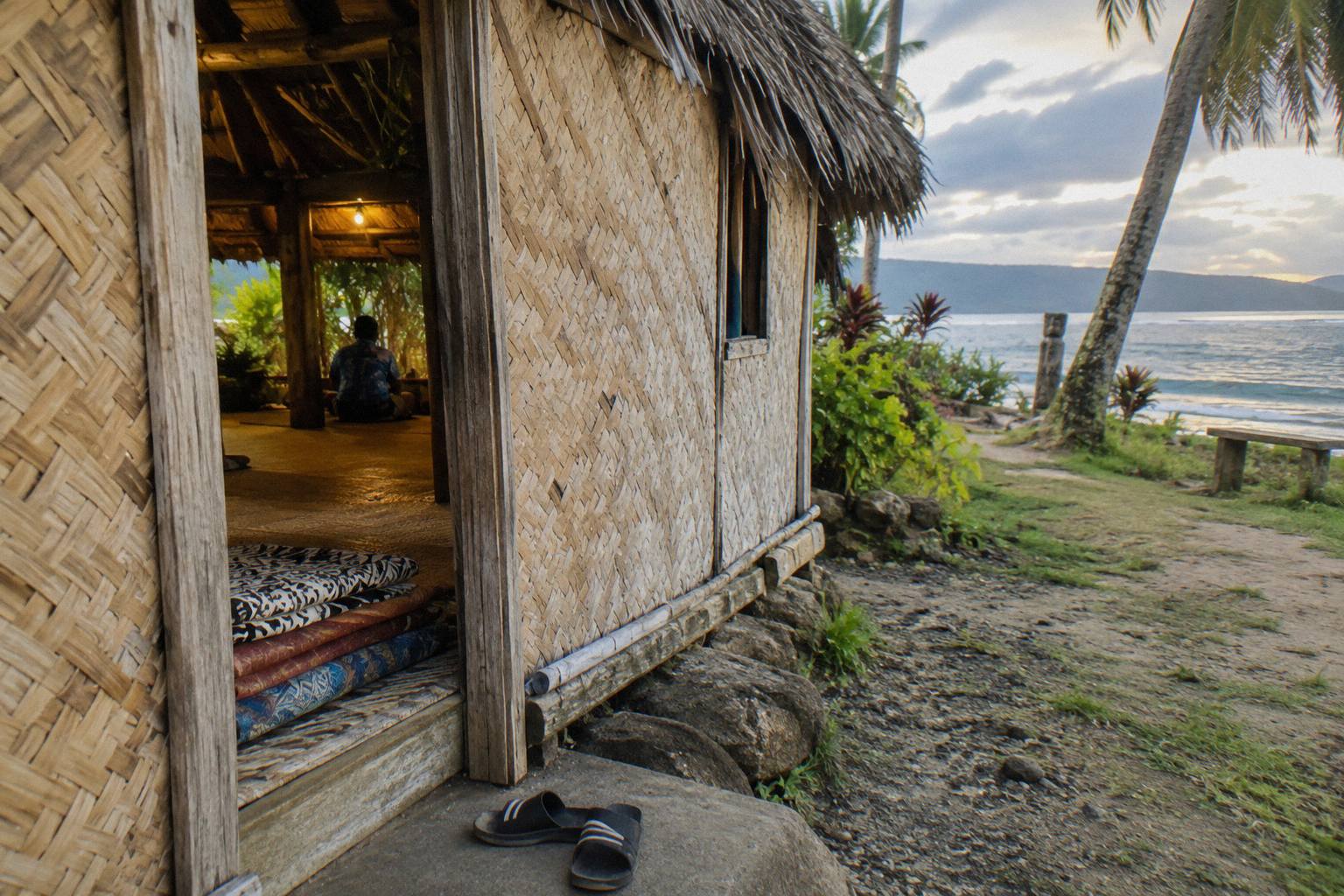
How The Meke Fits The Wider Cultural Evening
Every documented cultural evening here follows the same architecture: arrival and welcome, then a ceremonial element, then food, then performance. The meke is the performance capstone in the village format, arriving at 7:50pm at the Culture Village. The island format at Robinson Crusoe puts its own performance stack after the 7:00pm dinner instead, with fire and knife dancing rather than a billed meke. Knowing which format you prefer is a better filter than comparing individual dances.
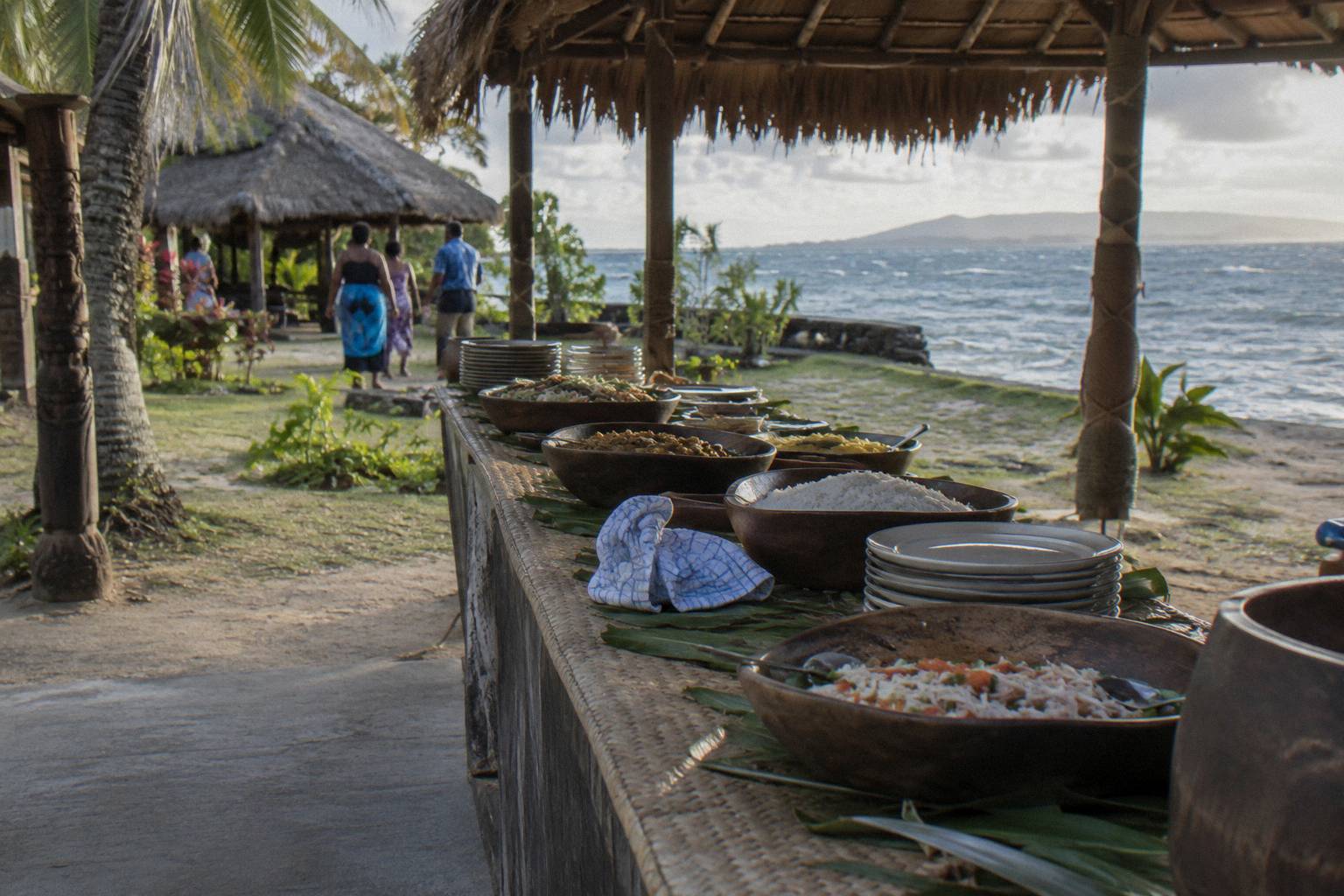
The ceremony-before-performance structure is not decoration. The sevusevu, which Tourism Fiji's etiquette guide describes as the customary presentation of a small bundle of powdered kava to the village chief to seek permission to enter communal lands as a guest, is the traditional doorway into a village setting, and both operator evenings carry a version of it: the Culture Village lists a kava ceremony at 7:00pm, and Robinson Crusoe lists a sevusevu welcome ceremony with kava tasting among its highlights. The lovo, which Tourism Fiji describes as a communal earth oven where meat, fish and root crops such as taro cook on white-hot stones in a covered pit for a few hours, supplies the dinner, unearthed at 6:45pm at the Culture Village and at 6:30pm on the island. Only after those two pillars, ceremony and food, does the performance element arrive.
For readers who want the food story in depth, what a lovo feast actually is and the lovo feast guide carry it. The meke's own background as storytelling lives on Tourism Fiji's cultural must-dos page, alongside its lovo and meke definitions, at Tourism Fiji's cultural must-dos guide. The Samoan origin of the fire knife dance is documented at the fire knife dance reference page, which is the source behind the siva afi distinction drawn earlier.
The Sunset Dinner Show is the format contrast in the set: an island evening rather than a village evening, with the boat leaving the mainland jetty at 5:00pm, four hours on the island to 9:00pm, and a performance stack of fire walking and fire-and-knife dancing rather than a billed meke. It runs Monday, Wednesday and Saturday, with return coach transfers from Nadi, Denarau and Coral Coast hotels plus the launch transfers included. Its own tour page, the operator's sunset dinner show itinerary, carries the full sequence.
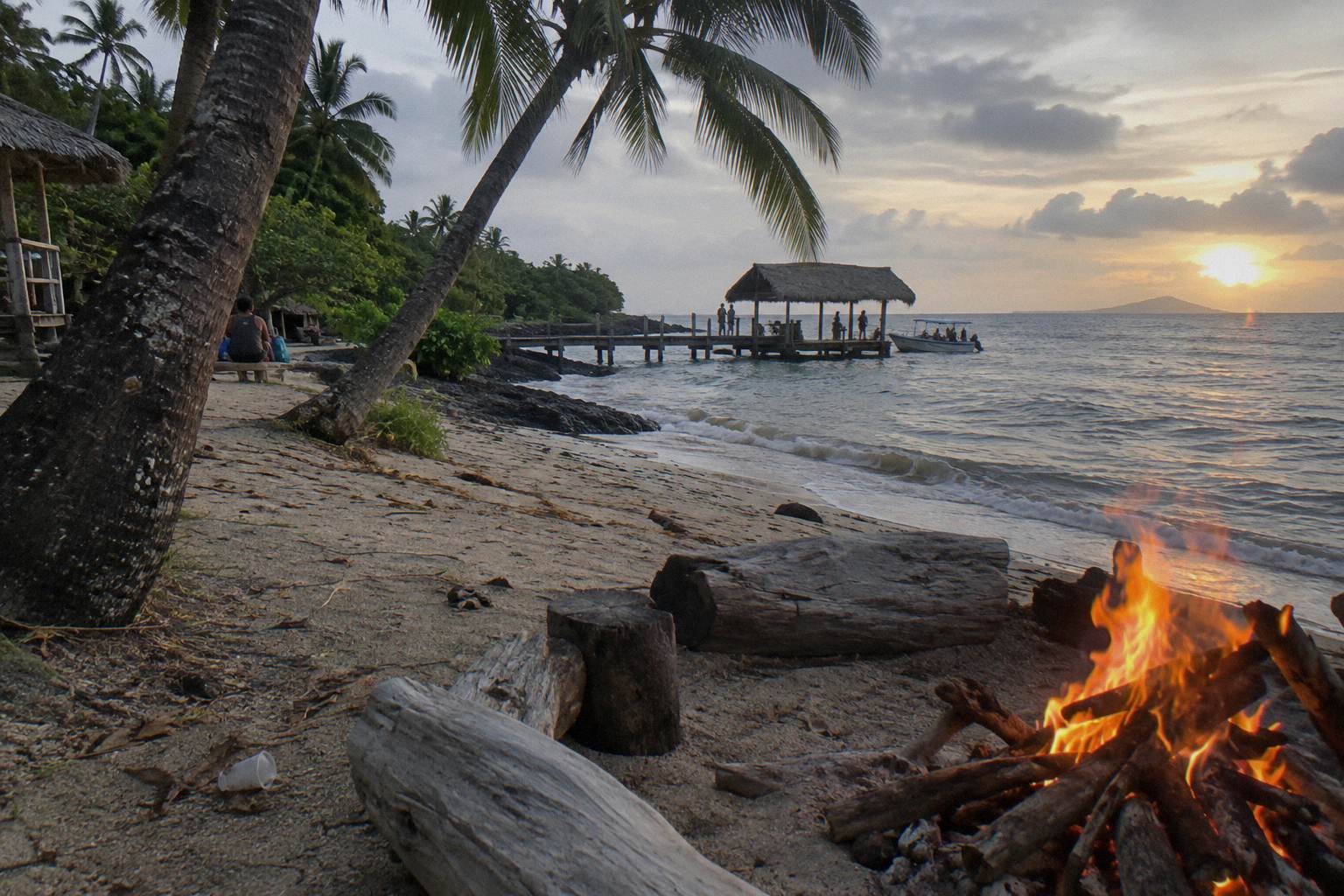
Choosing Between The Meke Evenings
Choose the Fiji Culture Village evening for the documented meke: a published 7:50pm show inside a 4 to 4.5-hour village night, F$175 adult to 31 December 2026, Monday to Saturday. Choose Valentine Tours Fiji for a shorter, about 3-hour Nadi evening billed with a meke show, accepting that its itinerary is not published. Choose Robinson Crusoe for the island format, whose performances are fire walking and fire-and-knife dancing, not a billed meke. Format decides this, not dance quality, which no source here measures.
The comparison below holds only what the operators state. Where a cell reads "not stated", the operator has not published the figure, and the booking page or the phone numbers given at the end of this page are the way to fill it.
| Culture Village Evening | Valentine Tours Fiji Night | Robinson Crusoe Sunset Show | |
|---|---|---|---|
| Meke show | Listed, 7:50pm | Billed, no detail | Not billed; fire walking and fire-and-knife dancing |
| Duration | About 4 to 4.5 hours | About 3 hours | About 4 hours on the island, 5pm to 9pm, plus coach |
| Nights | Monday to Saturday | Not stated | Monday, Wednesday and Saturday |
| Price | F$175 adult to 31 Dec 2026 | Not stated; check the booking page | Not stated; check the booking page |
| Transfer | Return from Nadi and Denarau hotels | Hotel pick-up, Nadi and Denarau area | Return coach from Nadi, Denarau and Coral Coast hotels plus launches |
Two decision patterns are worth naming. A reader whose priority is the meke as an art form, the storytelling dance Tourism Fiji defines, has one evening that documents it on a timeline, and one that bills it without detail; the Culture Village is the evidence-backed pick and Valentine the shorter bet. A reader who wants spectacle above ceremony, fire over chant, is better served by the island evening, which stacks fire walking at 6:30pm and the "Legends of the Pacific" fire-and-knife show after dinner. Neither preference is wrong, and no source here rates one performance above another.
Families should note what is and is not stated. The Culture Village prices a child rate for ages 5 to 12 and a family rate for 2 adults and 2 children, but publishes no minimum age; Robinson Crusoe tags its evening "suits adults" and states no minimum age either. The family-angle questions, bedtimes included, are handled at can kids go to a Fiji cultural night, and no operator states a pushchair, noise or bedtime rule, so ask before booking if that is your group's situation.
Robinson Crusoe, by contrast, prints full terms: a full refund 24 hours or more before pick-up, 100% forfeit inside that, per the operator's terms.
Common Mistakes When Choosing A Meke Evening
The common mistakes are calling every fire performance a meke, expecting the haka, assuming all evenings share one format, and reading one operator's facts onto another. A meke is the Fijian storytelling dance Tourism Fiji defines, not fire knife dancing, which is Samoan in origin, and not firewalking, which is Fiji's separate Beqa tradition. The evenings differ in documented depth, duration, nights and price basis, so each fact belongs to the operator that published it.
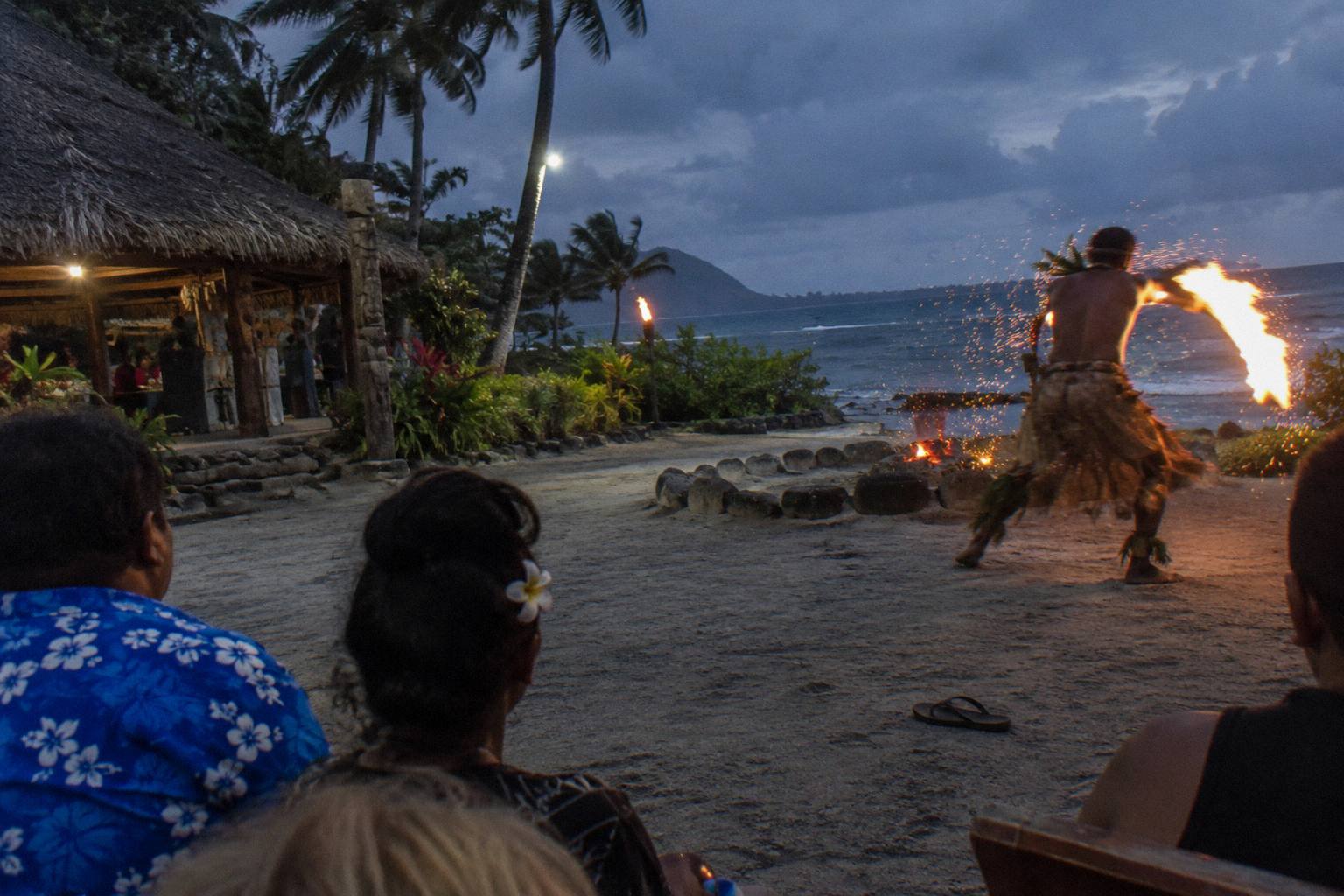
The first mistake usually shows up in search phrasing. A visitor asks for "the Fijian haka", books an island fire show, and finds no meke at all, because the haka is Maori, and the island evening's performances are fire walking and fire-and-knife dancing. The second is assuming the meke opens the night; at the Culture Village it lands at 7:50pm, after the village walk, the kava ceremony and dinner, so a late arrival misses the foundation of the evening. The third is price assumption: only the Culture Village's F$ operator rates are printable, and any figure quoted elsewhere for the other evenings deserves suspicion, because neither operator publishes one. The fourth is date assumption: the Culture Village closes for maintenance from 22 February 2027 to 10 March 2027, and Robinson Crusoe's evenings run only three nights a week, so the calendar, not the tour, is often the constraint. Nothing in the research says an evening sells out, so the fixed nights are the real planning variable.
Respectful Watching: Etiquette Around The Performance
Etiquette around the performance follows village protocol: cover bare shoulders and legs, wrap a sulu or sarong at the waist, remove hat, sunglasses, and shoes before entering any building, carry bags in hand, ask permission before photos, never touch anyone's head, and speak softly; Robinson Crusoe requires covered shoulders with spare sulus available, and since Fiji Culture Village states no dress guidance, ask on +679 804 4800.
These are the practices around the setting the meke happens in, not rules for the dance itself, and no source here invents any. The kava element of the evening carries its own etiquette, which Tourism Fiji's guide sets out: clap once before accepting the bilo, say "Bula!", drink in one gulp, return the cup, clap three times and say "vinaka", all detailed at Tourism Fiji's kava guide. Whether declining a cup is acceptable is not covered by the sources here, and neither are kava's effects, so those questions go to the operator or a health professional rather than to guesswork. For the clothing question in full, what to wear to a Fijian village night is the practical page, and the photography and behaviour guidance above comes from Tourism Fiji's etiquette tips.
One cultural boundary deserves a plain sentence: the meke, the lovo and the kava ceremony are living practices presented on these evenings as they are performed in village life, and the sources here, Tourism Fiji and the operators, describe them in those terms. The firewalking legend, where it comes up, is told only in Tourism Fiji's own words. Nothing on this page adds legend, meaning or protocol beyond what those sources state, which is the honest way to write about a tradition that is not being performed for the page.
Whatever the choice of evening, Fiji Cultural Night Tours exists to make exactly this decision easier: matching the evening that fits your nights in Nadi, your budget and your interest in the meke against what each operator actually publishes. If the questions left are about a meke's meaning, a costume detail or a chant text, those sit outside what the sources carry, and the operators' own contacts, +679 804 4800 for the Culture Village and +679 776 0999 for Robinson Crusoe, are the direct route to an answer.
Common Questions About The Fijian Meke
What Is A Fijian Meke?
A meke is, in Tourism Fiji's definition, a traditional dance performed by men and women of Fiji to tell stories through song and dance, with men's movements strong, women's graceful, and props that include clubs, spears and fans.
Is A Meke The Same As The Haka?
No. The haka is a Maori practice, not a Fijian one. Where the question "what is Fiji's haka called?" comes up, the answer is the meke, on Tourism Fiji's definition, and the two are not equated.
Is Fire Knife Dancing Part Of A Meke?
No. Siva afi, the fire knife dance, is Samoan in origin and is staged in Fiji shows, including Robinson Crusoe's "Legends of the Pacific". Fiji Culture Village lists a fire dance after its meke show and does not say it is fire knife. Firewalking is separate again, a Fijian tradition Tourism Fiji ties to Beqa's Sawau tribe.
Where Can You See A Meke Near Nadi?
Fiji Culture Village, which Tourism Fiji names as just outside Nadi town, stages a meke show at 7:50pm on its Cultural Night Tour, Monday to Saturday. Valentine Tours Fiji's Nadi evening, about 3 hours, is billed with dinner and a meke show.
What Does The Fiji Culture Village Evening Cost?
The operator's rates are F$175 adult, F$105 child (5 to 12) and F$500 for a family of 2 adults and 2 children, valid to 31 December 2026, then F$189, F$115 and F$550 for 2027. Return transfer from Nadi and Denarau hotels is included.
What Do The Meanings Of Specific Mekes Or The Chants Mean?
The meanings of particular mekes, chant texts, costume details and the cibi war dance are not covered by the sources on this page. Ask the operator directly: Fiji Culture Village on +679 804 4800.