Does Kava Get You High?
What the official sources actually say about kava at a Fiji cultural evening: what yaqona is, the ceremony steps, and where to ask the health questions.
Kava, or yaqona, is a drink made from the dried roots of Piper methysticum, and it sits at the centre of the welcome ceremony on many Fiji cultural evenings. The question of what it does to the body is a health question. This page covers what the official sources say about the plant, the ceremony and the words used around it, and points the health questions where they belong.
The honest answer is that this is a health question, and no health claim appears in the official travel sources used here. Tourism Fiji's kava guide describes what kava is, how it is served and the etiquette of accepting a cup, and says nothing about effects on the body. Questions about how kava feels, dosage, safety or legality belong with a health professional or the operator, not a travel article. What the sources do cover is rich enough on its own: the plant, the vessel names, the ceremony sequence and the welcome ritual that opens a village visit. On the staged evenings around Nadi, that ritual is a fixed part of the run sheet, timed to the minute by the operator. Understanding what the ceremony is, and what each step means to the hosts, answers most of what a visitor actually needs before the first bilo is passed.
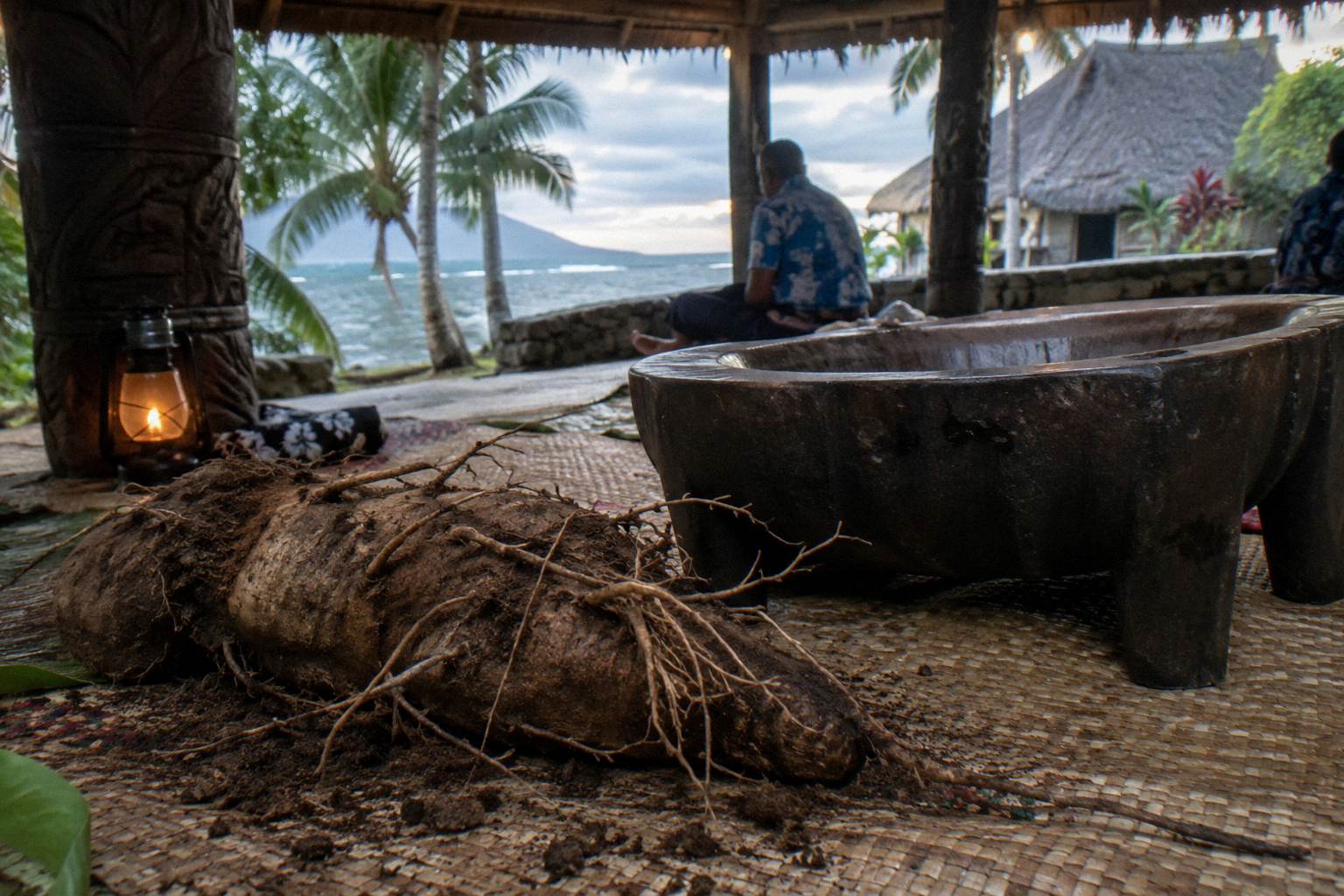
The word itself needs untangling first. Tourism Fiji's kava guide gives the plant as Piper methysticum and the drink as made from its dried roots. That is the full extent of the preparation detail in the official material: no mortar, no straining, no water ratios, because none of that is stated. The same guide supplies the vocabulary that fills the rest of this page, from the cup to the bowl to the tide metaphors for serving size. A visitor who learns those few words arrives at the ceremony already fluent in the parts that matter socially.
The scope here is deliberate. Effects, strength, how it feels, whether it is legal anywhere, none of that is covered on this site, and inventing it would be worse than saying nothing. So the sections below do three things instead: they set out what Tourism Fiji says the plant and the ritual are, they give the exact ceremony steps as both the guide and the operators describe them, and they show where kava sits in the timetable of the bookable evenings around Nadi. The decision that follows, whether to accept a bilo, is easier with facts than with folklore.
What Kava Actually Is, According To Tourism Fiji
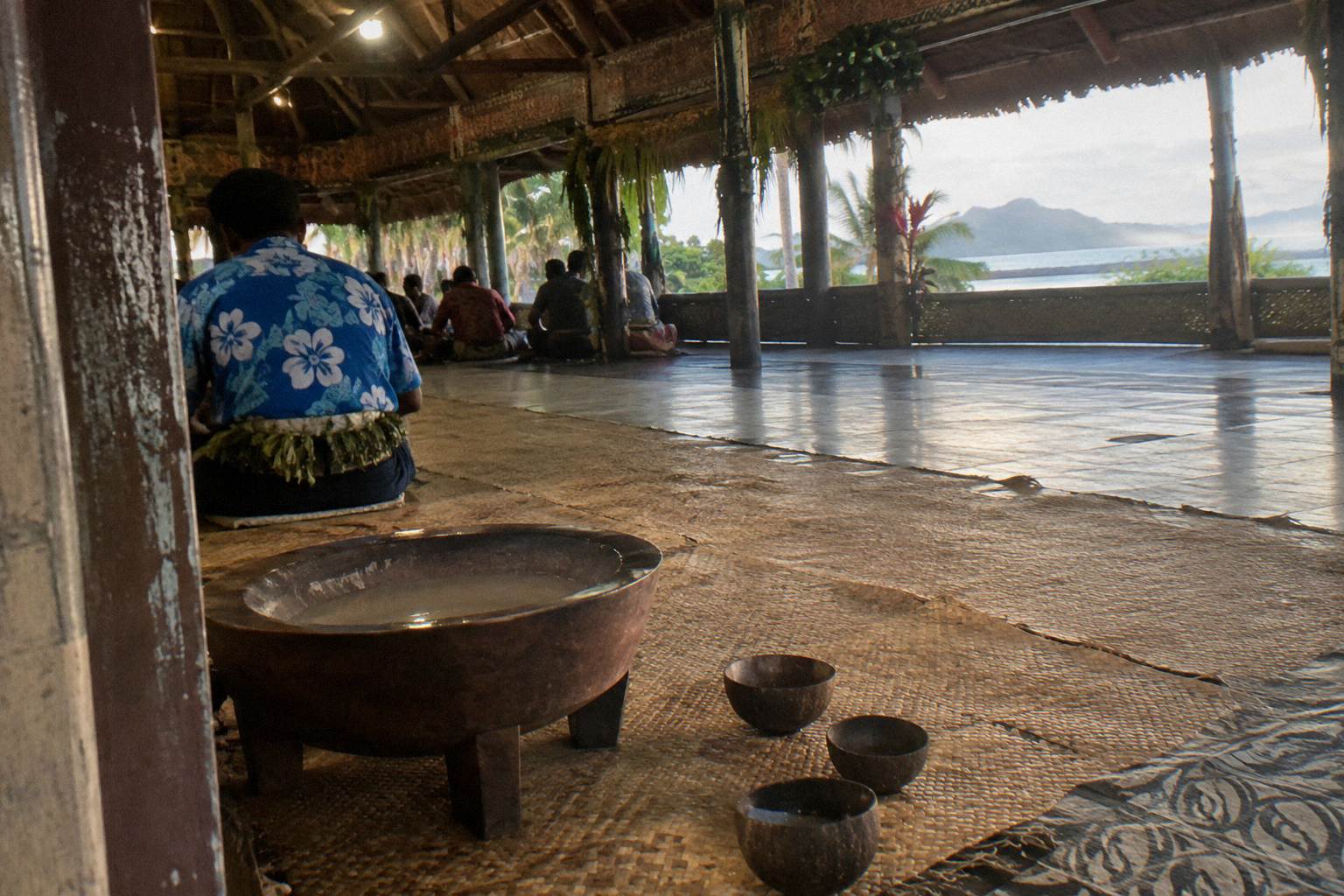
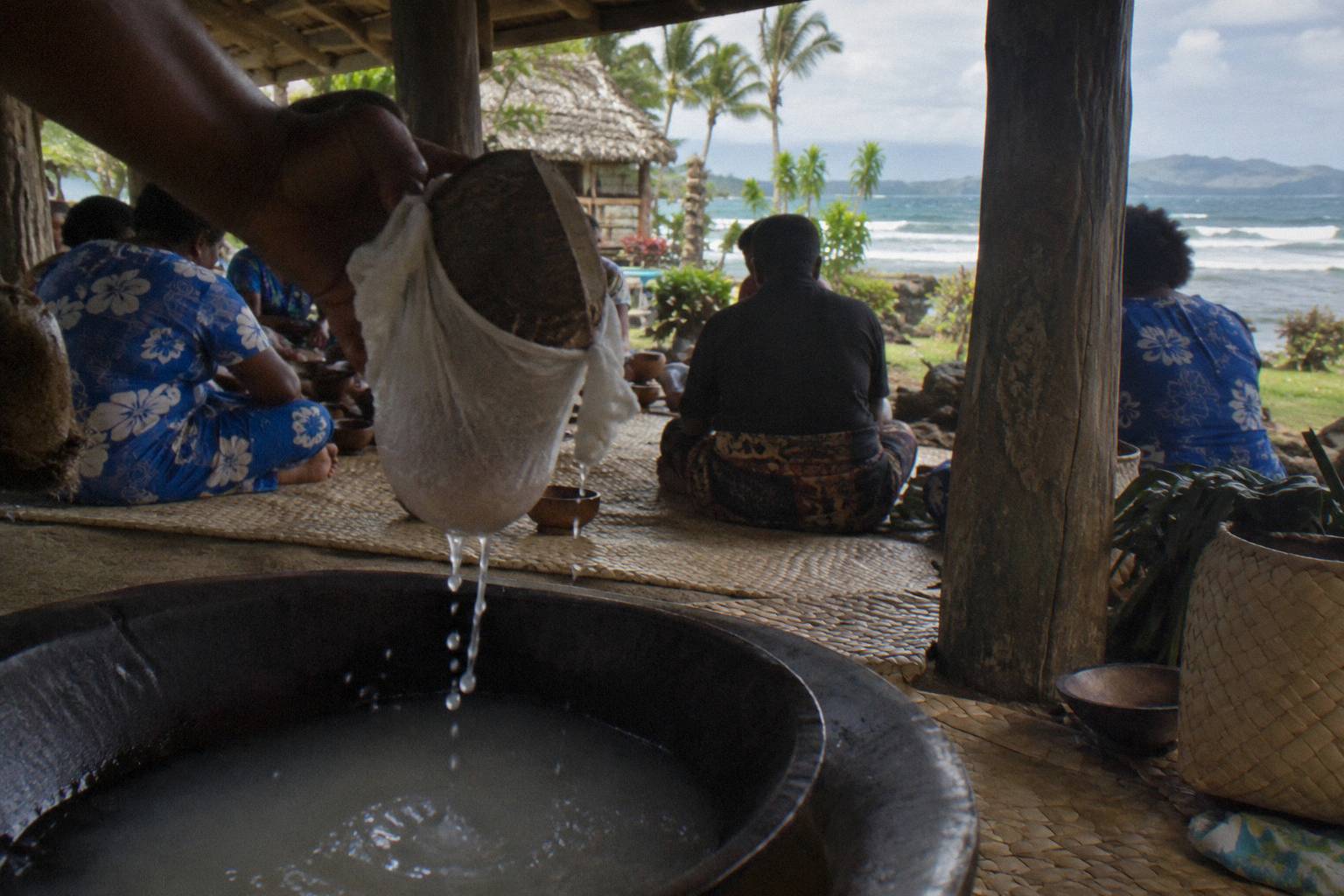
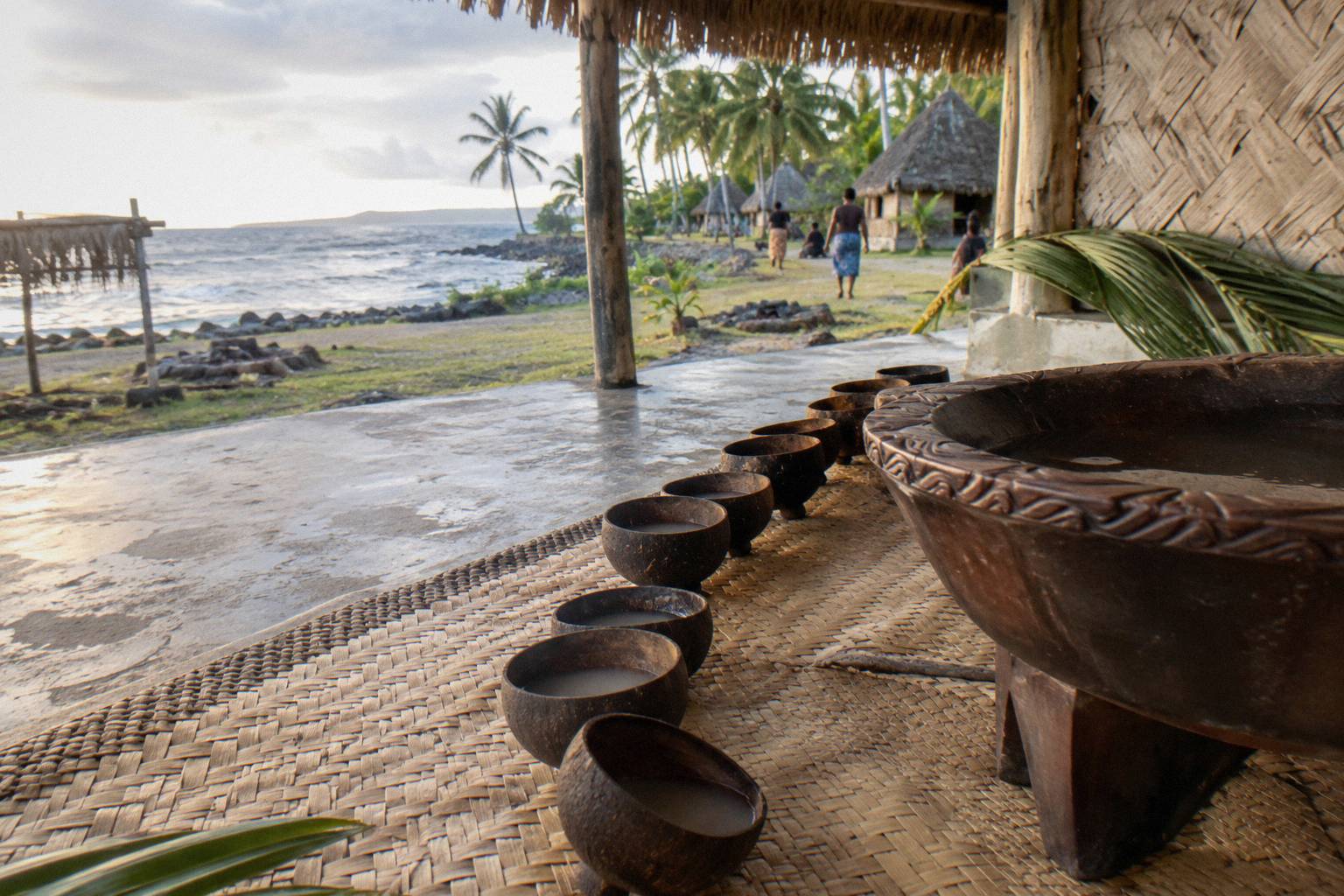
Tourism Fiji's guide defines kava, or yaqona, as a drink made from the dried roots of the Piper methysticum plant. It is served from a shared bowl called a tanoa into a cup called a bilo, and a full cup is known as high tide while a half cup is low tide. The guide gives no further botanical, chemical or preparation detail, and none is added here. Those few lines carry more weight than they look to. The naming of the vessels matters because hosts use them constantly during an evening, and a guest who knows a bilo from a tanoa follows the ritual without prompting. The tide terms matter because they are the only serving-size language in the official material, and a visitor may hear them offered as a choice.
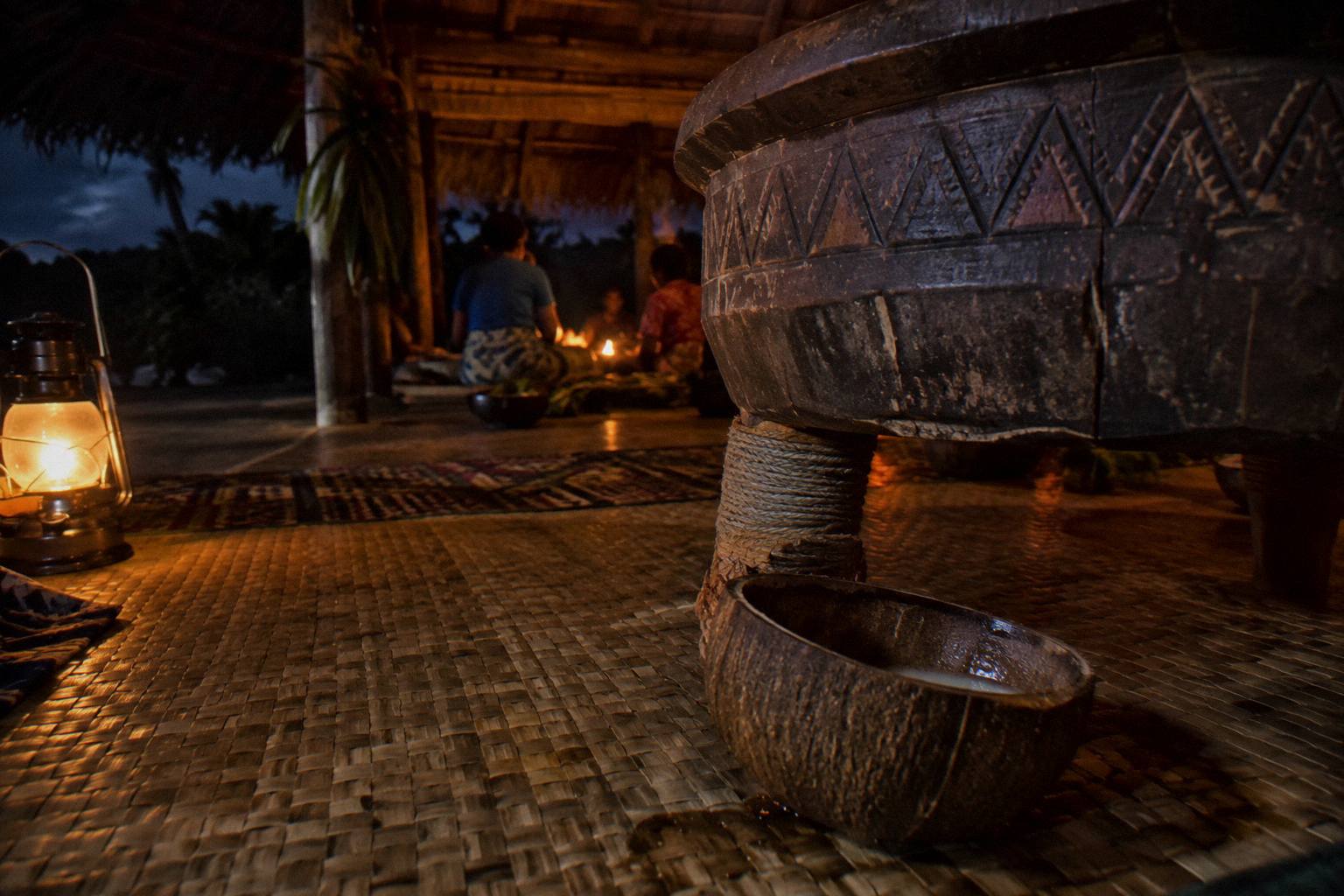
The guide also fixes the spelling that official pages use: yaqona for the plant and drink, sevusevu for the gift ceremony that opens a visit. Spellings drift across the internet, and holding to the official ones keeps the page consistent with the sources. Tourism Fiji's etiquette companion page, which covers village conduct from dress to the prayer before a meal, uses i-sevusevu for the same gift ritual, a variation worth knowing before reading further afield. Neither page editorialises about the drink itself; both treat it as an ordinary, honoured part of hospitality.
For a visitor, the practical reading is this: the official material is entirely about form. What the plant is, what the cup is called, how to receive it, what to say. The physical experience of drinking it is outside what Tourism Fiji publishes, and any specific claim a reader finds elsewhere should be checked with a source qualified to make it. The operator running the evening can say what is in the cup and how much is served; a health professional can say what that means for a particular person. Between them, they cover everything this page cannot.
The Kava Ceremony, Step By Step
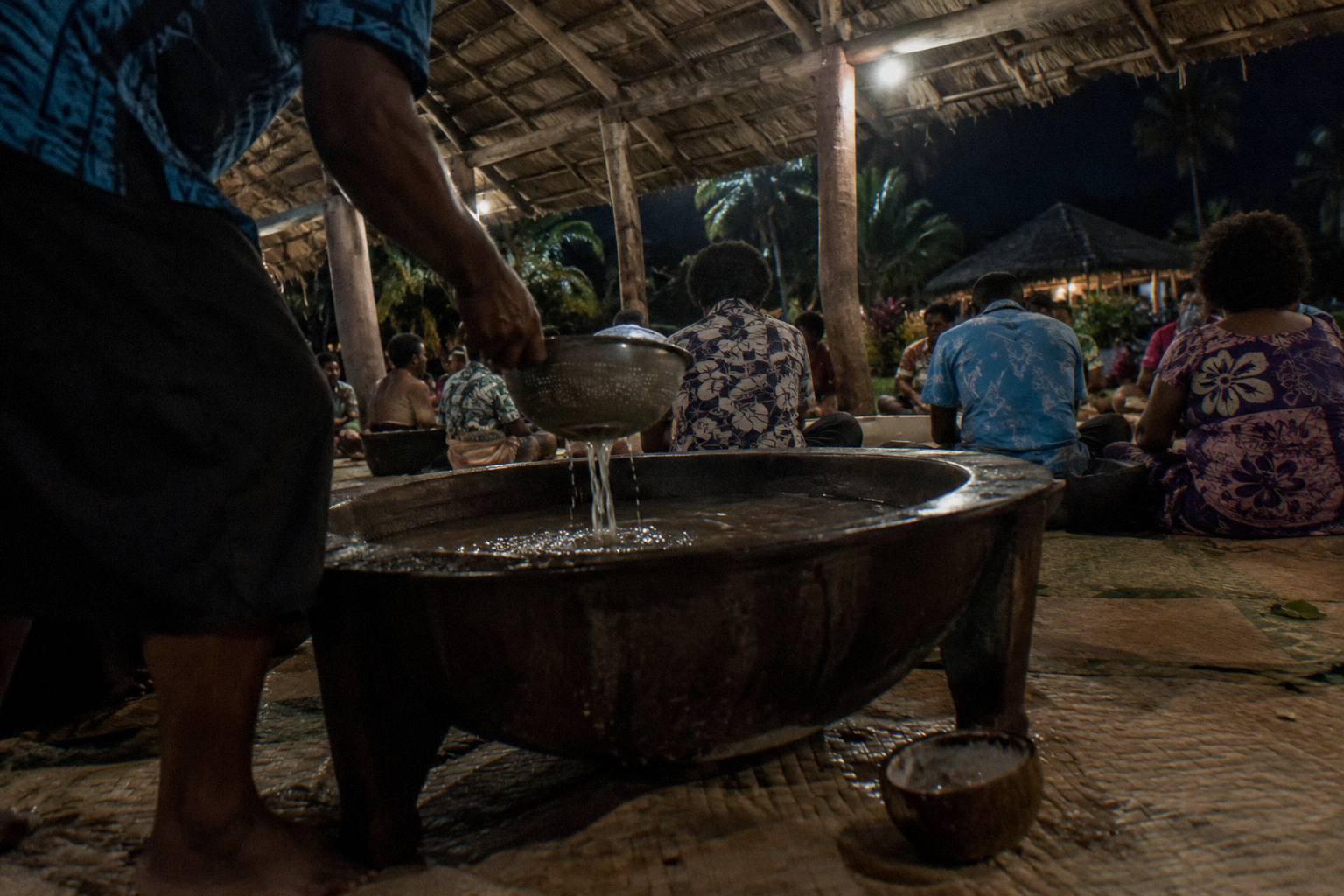
Tourism Fiji's guide gives four steps for accepting a bilo: clap once, cupped and loud; say Bula!; drink in one gulp; return the cup, clap three times and say vinaka. The guide gives no steps for declining a cup, and no official source states whether declining is acceptable, so that question goes to the operator on the night. Those four steps are the entire published choreography, and they are worth memorising because they come around quickly. The cup is passed, the claps are short and communal, and the words are the same two that run through every friendly exchange in Fiji: bula on the way in, vinaka on the way out.
The claps are described precisely, cupped and loud, once before and three times after. Nothing in the guide frames the sequence as a test, and nothing here should either; it is a repeated rhythm that the whole room shares, host and guest alike. Reading the steps once before the evening is enough to carry them. The guide offers no guidance on sipping, sharing a cup, or asking for a smaller serve beyond the high tide and low tide terms already covered, so those questions also belong to the operator.
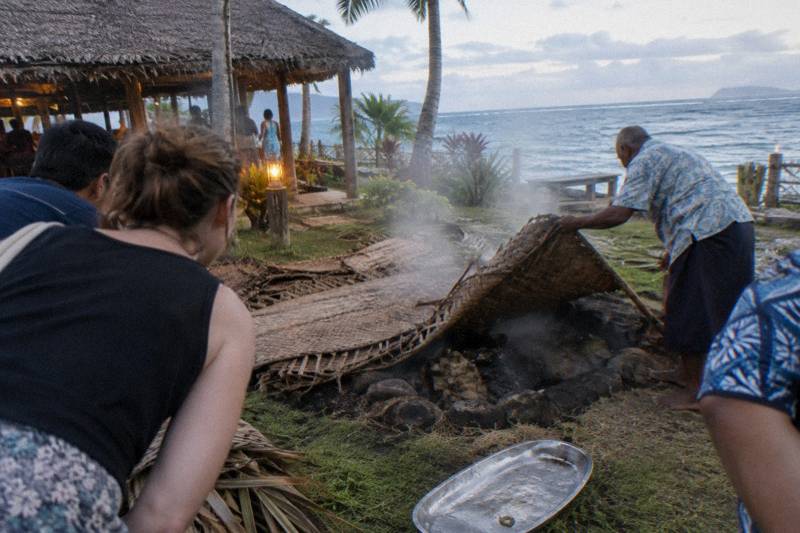
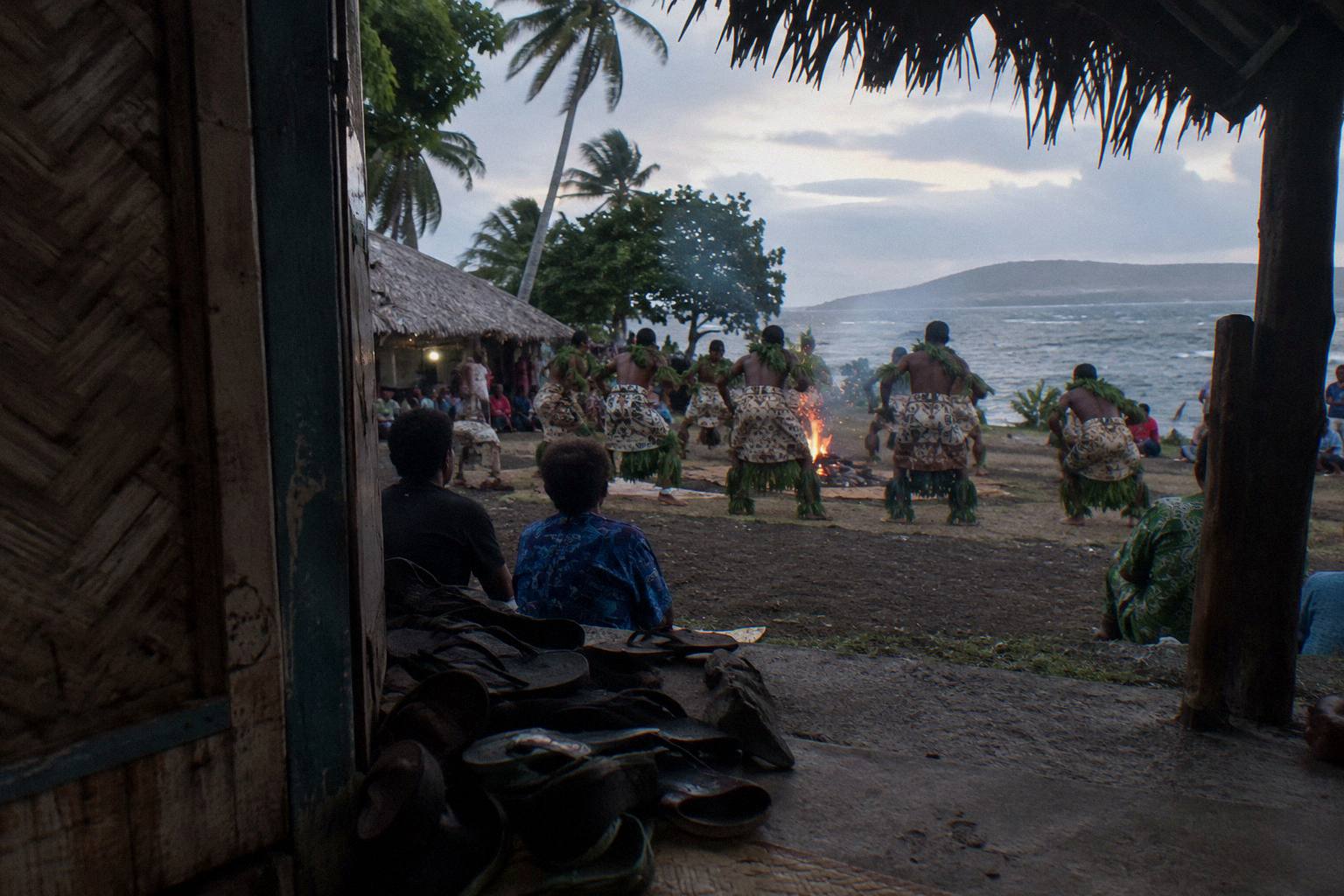
Where the ceremony sits in an actual evening is fixed by each operator's run sheet. Fiji Culture Village's Cultural Night Tour lists its kava ceremony at 7:00pm, after the unearthing of the lovo at 6:45pm and before the buffet dinner at 7:20pm. Robinson Crusoe lists its sevusevu welcome ceremony with kava tasting among the highlights of its Sunset Dinner Show, alongside the river cruise, the bonfire, the lovo dinner and the fire walking demonstration. The Culture Village Evening Tour With Dinner And Show places the ceremony between the village walk and dinner, with hotel pick-up from Denarau, Nadi and Wailoaloa hotels from 4:20pm; Check availability to see the operator's current nights.
The Words Of The Ceremony: Bilo, Tanoa, High Tide, Low Tide
Four Fijian words carry the whole vocabulary of a kava ceremony as the official sources present it: yaqona, the drink from dried Piper methysticum roots; tanoa, the shared bowl; bilo, the cup; and the tide terms, high tide for a full cup and low tide for a half. Tourism Fiji's guide supplies all four, and no other ceremony vocabulary appears in the official material. Learning them takes a minute and pays for itself across the evening, because the hosts use them naturally and a guest who recognises them follows the flow without explanation.
| Word | What It Means | Source |
|---|---|---|
| Yaqona | Kava, a drink from the dried roots of Piper methysticum | Tourism Fiji kava guide |
| Tanoa | The shared kava bowl | Tourism Fiji kava guide |
| Bilo | The cup, traditionally a coconut shell | Tourism Fiji kava guide |
| High tide | A full cup | Tourism Fiji kava guide |
| Low tide | A half cup | Tourism Fiji kava guide |
| Sevusevu | The gift of powdered kava presented to a village chief | Tourism Fiji etiquette page |
| Vinaka | The word said with three claps on returning the cup | Tourism Fiji kava guide |
The table above is the complete official glossary for the ceremony; anything beyond it, chants, speeches, the order of servers, is not stated in the sources and is left to the hosts on the night. The etiquette page adds the surrounding courtesies that apply to any village setting: cover bare shoulders and legs, wrap a sulu at the waist, remove hat and sunglasses, carry bags in hand rather than on shoulders, ask permission before photographs, remove shoes before entering a building, speak softly and do not touch anyone's head. Those rules frame the kava ceremony rather than govern it, but a visitor standing in a village walks into the ceremony already inside them.
Two more words from the same page complete the picture of a shared meal evening: masu, the prayer said before eating, and the custom of eating cross-legged on a mat while waiting for it. On the staged evenings around Nadi the dinner is a buffet rather than a mat meal, but the masu custom is worth knowing wherever a village visit runs. Together with the kava vocabulary, it is the full set of words a visitor is likely to hear explained, or not explained, in English on the night.
Sevusevu: The Kava Gift That Opens A Village Visit
Tourism Fiji's etiquette page describes sevusevu as customary: presenting a small bundle or packet of powdered kava to the village chief to seek permission to enter their communal lands as a guest. The same site's kava guide puts the gift of half a kilogram of yaqona root at around FJD 30 to 40, a figure attributed to Tourism Fiji. On a staged evening the operator supplies the ceremony, so a visitor does not need to bring kava. The distinction between a village visit and a staged evening matters here. Robinson Crusoe's Combo includes a guided Vusama Village visit, and its listed highlights include the sevusevu welcome ceremony with kava tasting; the operator asks visitors to cover shoulders and bring a sulu or sarong for the village portion, with spare sulus available.
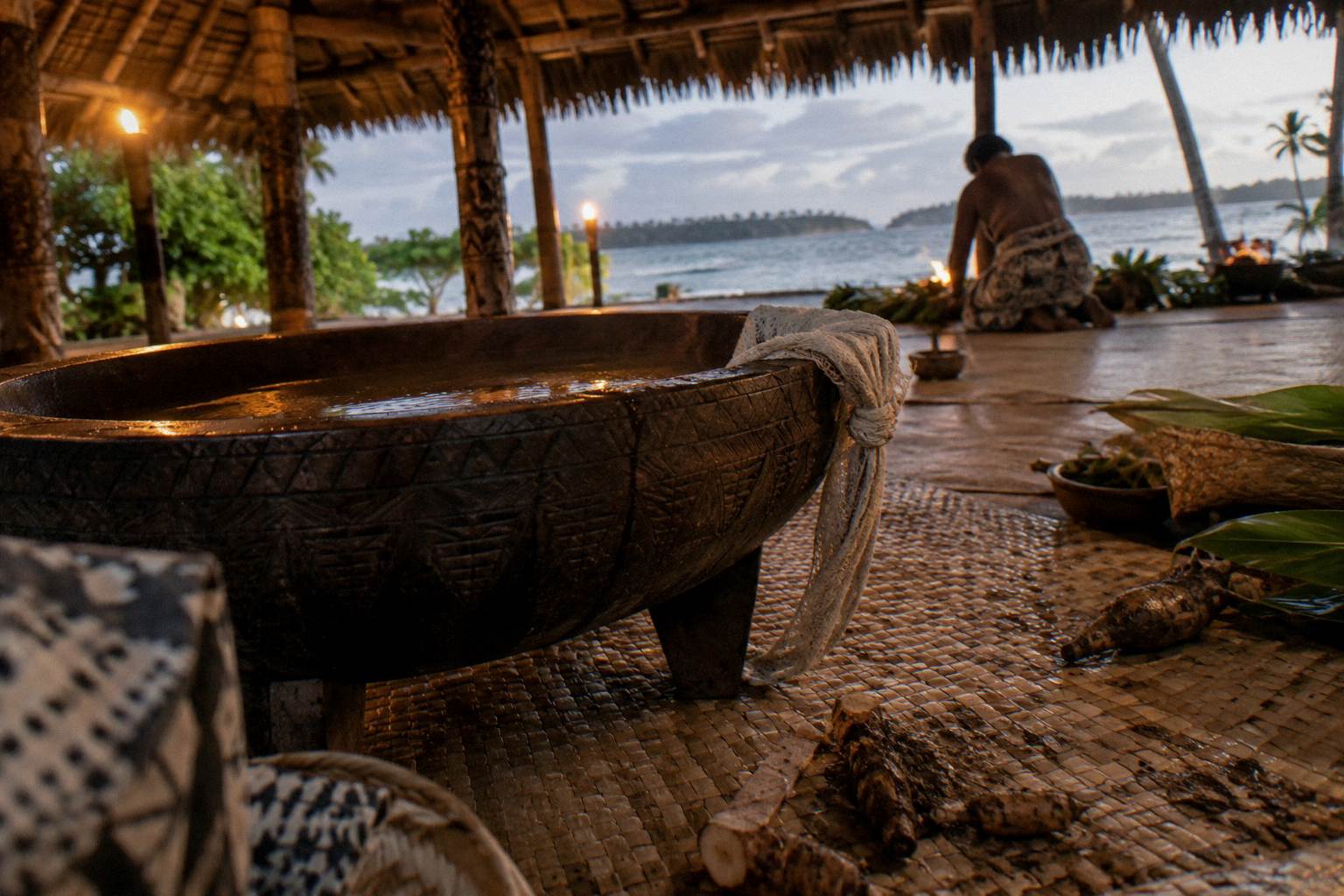
The etiquette page gives the conduct rules for such a visit, and they apply around the ceremony rather than to the drink: hats and sunglasses off, bags in hand, shoes off indoors, photographs only with permission, quiet voices. The page also notes that Sundays are sacred and most village tours do not run, which is consistent with the operators' own schedules: Fiji Culture Village runs Monday to Saturday, and Robinson Crusoe's evening show runs Monday, Wednesday and Saturday, leaving its daytime Culture Day Tour for Tuesday, Thursday and Sunday. A visitor matching a village visit to the right day is working from the same calendar logic.
What the etiquette material does not do is rank the gift ritual or grade the welcome; it simply states the custom and the courtesies. The staged evenings compress the same ideas into a run sheet. Culture Village's timeline gives the kava ceremony its own slot at 7:00pm, twenty minutes after the lovo is unearthed and thirty before dinner; Robinson Crusoe folds its sevusevu welcome with kava tasting into the arrival sequence. Neither operator publishes a script beyond that, so the shape of the ritual on any night is the host's to set. Tourism Fiji's etiquette guide is the source for every custom in this section.
If You Would Rather Not Drink: What To Actually Do
No official source states whether declining a bilo is acceptable, and no operator publishes a rule about it, so the honest instruction is to ask the operator before the evening. Fiji Culture Village can be reached on +679 804 4800, and Robinson Crusoe on +679 776 0999. Asking in advance turns an awkward moment on the night into a settled arrangement, and the operators answer these questions routinely. The published material offers one real lever: the tide terms. High tide and low tide are the only serving sizes in the official vocabulary, and they are presented as a normal part of the ritual rather than a concession.
Beyond that, the sources are silent, and silence is not permission to invent reassurance. Nothing states that guests may simply watch, that water is offered as an alternative, or that the ceremony can be skipped, because none of that is written anywhere official. What is written is the etiquette of the room: clap, bula, one gulp, return the cup, three claps, vinaka. A visitor who cannot or does not want to drink has two honest paths, ask the operator beforehand, or raise it with the host on the night, and the second is easier when the first has already been tried.
The health dimension stays where it belongs. Whether kava interacts with medication, suits a particular person, or carries any risk are medical questions, and the answer belongs to a qualified professional, not to a travel page or a tour guide. The operator can describe what is served and how much; a pharmacist or doctor can say what that means for an individual. Splitting the question that way is not a dodge, it is the accurate division of labour, and any page that blurs it is guessing.
Which Fiji Evenings Include Kava
Two of the evening tours covered here list kava explicitly: the Culture Village Evening Tour With Dinner And Show, which gives its kava ceremony a 7:00pm slot, and the Robinson Crusoe Sunset Dinner And Fire Show, which lists a sevusevu welcome ceremony with kava tasting. Valentine Tours Fiji's evening is billed with dinner and a meke show, and its kava details are not stated; VOU's evening is a theatre and dinner show with no kava claim stated. The comparison below holds to what each operator publishes, cell by cell, and marks the gaps plainly.
| Evening Tour | Kava As Listed | Operator's Own Detail | Nights |
|---|---|---|---|
| Culture Village Evening Tour With Dinner And Show | Kava ceremony at 7:00pm | Full timeline published, pick-up 4:20pm, about 4 to 4.5 hours | Monday to Saturday |
| Robinson Crusoe Sunset Dinner And Fire Show | Sevusevu welcome ceremony with kava tasting | 5pm to 9pm on the island, coach and boat transfers included | Monday, Wednesday, Saturday |
| Valentine Tours Fijian Culture Night, Dinner And Meke Show | Not stated | About 3 hours, hotel pick-up Nadi and Denarau area | Not stated |
| VOU Evening Dinner And Show | Not stated | About 3 hours, described as theatre, drumming and dinner | Not stated |
The pattern is plain: the two operators whose full run sheets are public are the two that name kava, and the two whose details are thinner leave the question open. For a reader whose main interest is the ceremony, that resolves the choice on evidence alone. The Fiji Cultural Night Tours site exists for exactly this kind of side-by-side, and the deeper comparisons live in the individual tour pages and guides.
Robinson Crusoe's evening wraps its kava tasting into a bigger arc: the 30-minute river cruise down the Tuva River, the sunset beach bonfire with serenaders at 6:00pm, the lovo unearthing with a fire walking demonstration at 6:30pm, the lovo buffet at 7:00pm and the Legends of the Pacific show with fire and knife dancing after it, closing with the Isa Lei farewell at 9:00pm. Its terms state cancellation 24 hours or more before pick-up earns a full refund, within 24 hours a 100 percent forfeit.
Valentine Tours Fiji's evening runs about three hours with hotel pick-up from the Nadi and Denarau area, dinner and a meke show; its price, start time and inclusions beyond that are not stated, so check the booking page. For a shorter Nadi evening it is the natural comparator to Culture Village's four-and-a-half-hour village night.
Common Mistakes When Preparing For The Kava Ceremony
The recurring mistakes are treating the ceremony as a tasting event, arriving without asking the questions that matter, expecting published rules where none exist, and reading health claims into travel pages. The official material covers form and courtesy, not physiology, and the gaps are closed by two phone numbers, the operator's, not by guesswork. Visitors who separate those layers enjoy the evening; visitors who blur them arrive anxious about the wrong things. The list below is drawn from what the sources do and do not say, and each row ends with the honest fix.
| Mistake | What The Sources Say | The Fix |
|---|---|---|
| Asking a tour page whether kava is strong or safe | No health claim appears in any official source here | Ask a health professional; ask the operator what is served |
| Assuming declining is fine | Not stated by any operator or by Tourism Fiji | Ask the operator in advance of the night |
| Ignoring the tide terms | High tide and low tide are the official serving sizes | Learn both words before the evening |
| Skipping the etiquette basics around the ceremony | Dress, shoes, photos and voice rules are published | Read the etiquette guidance before a village visit |
| Expecting kava at every cultural evening | Two evenings list it, two do not state it | Check the tour's inclusions before booking |
One layer of preparation that visitors overlook is timing. Culture Village's ceremony sits at 7:00pm, which means a 4:20pm hotel pick-up and a full village walk come first; a guest who plans dinner around the evening will find the ceremony already part of the paid sequence. Robinson Crusoe's kava tasting arrives early in an evening that ends with the boat departing at 9:15pm. Neither detail is health-related, but both shape the night more than any question about the drink itself.
The last mistake is subtler: treating the ceremony as a spectacle to be graded. The published material frames kava as hospitality, a gift, a shared bowl, a rhythm of claps, and the hosts on the staged evenings present it the same way. A visitor who meets it on those terms, whatever they choose to drink, has understood the part the travel sources actually explain. The rest, respectfully, belongs to other kinds of expertise.
Common Questions About Kava At A Fiji Cultural Evening
Does Kava Get You High?
No health claim about kava's effects appears in the official sources used here. Tourism Fiji's kava guide covers the plant, the vessels and the etiquette of accepting a cup, and says nothing about effects on the body. Questions about how kava feels, dosage, safety or legality belong with a health professional; the operator can say what is served on the night.
What Is Kava Made From?
Per Tourism Fiji's kava guide, yaqona is a drink made from the dried roots of the Piper methysticum plant. The guide gives no further preparation detail, and none is added here.
What Do You Say When You Accept A Bilo?
Tourism Fiji's guide gives four steps: clap once, cupped and loud; say Bula!; drink in one gulp; return the cup, clap three times and say vinaka.
Do You Have To Drink Kava At The Ceremony?
Not stated. No official source says whether declining a bilo is acceptable, so ask the operator in advance: Fiji Culture Village on +679 804 4800, Robinson Crusoe on +679 776 0999.
Which Evening Tours Around Nadi Include Kava?
The Culture Village Evening Tour lists a kava ceremony at 7:00pm, and the Robinson Crusoe Sunset Dinner Show lists a sevusevu welcome ceremony with kava tasting. Valentine Tours Fiji's and VOU's evenings make no stated kava claim.
What Does Sevusevu Mean?
Tourism Fiji's etiquette page describes it as customary to present a small bundle or packet of powdered kava to the village chief to seek permission to enter their communal lands as a guest. Tourism Fiji's kava guide puts a half-kilogram gift of yaqona root at around FJD 30 to 40.