What Happens At A Fiji Kava Ceremony?
A plain explanation of what happens at a Fiji kava ceremony, from the sevusevu gift to the tanoa, the bilo and how the evening tours stage it.
A kava ceremony is the moment a Fijian cultural evening slows down and becomes something older than the dinner that follows it. Tourism Fiji describes kava, or yaqona, as a drink made from the dried roots of Piper methysticum, and the ceremony that surrounds it has its own objects, words and sequence.
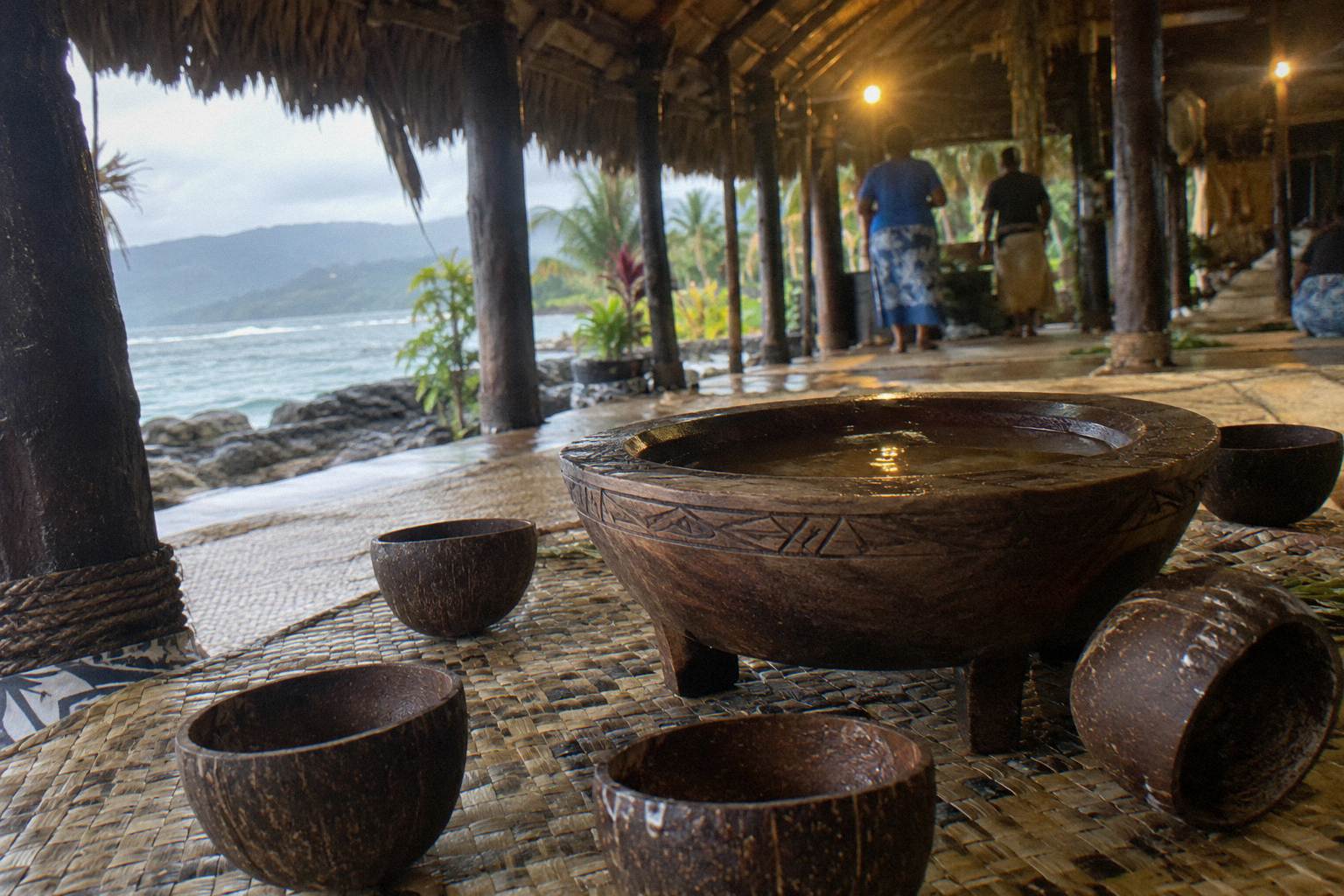
At a Fiji kava ceremony, the drink is mixed in a large wooden bowl called a tanoa and served in a coconut shell cup called a bilo, offered to guests in turn. Tourism Fiji's guidance says you clap once, say "Bula!", drink in one gulp, then clap three times and say "vinaka".
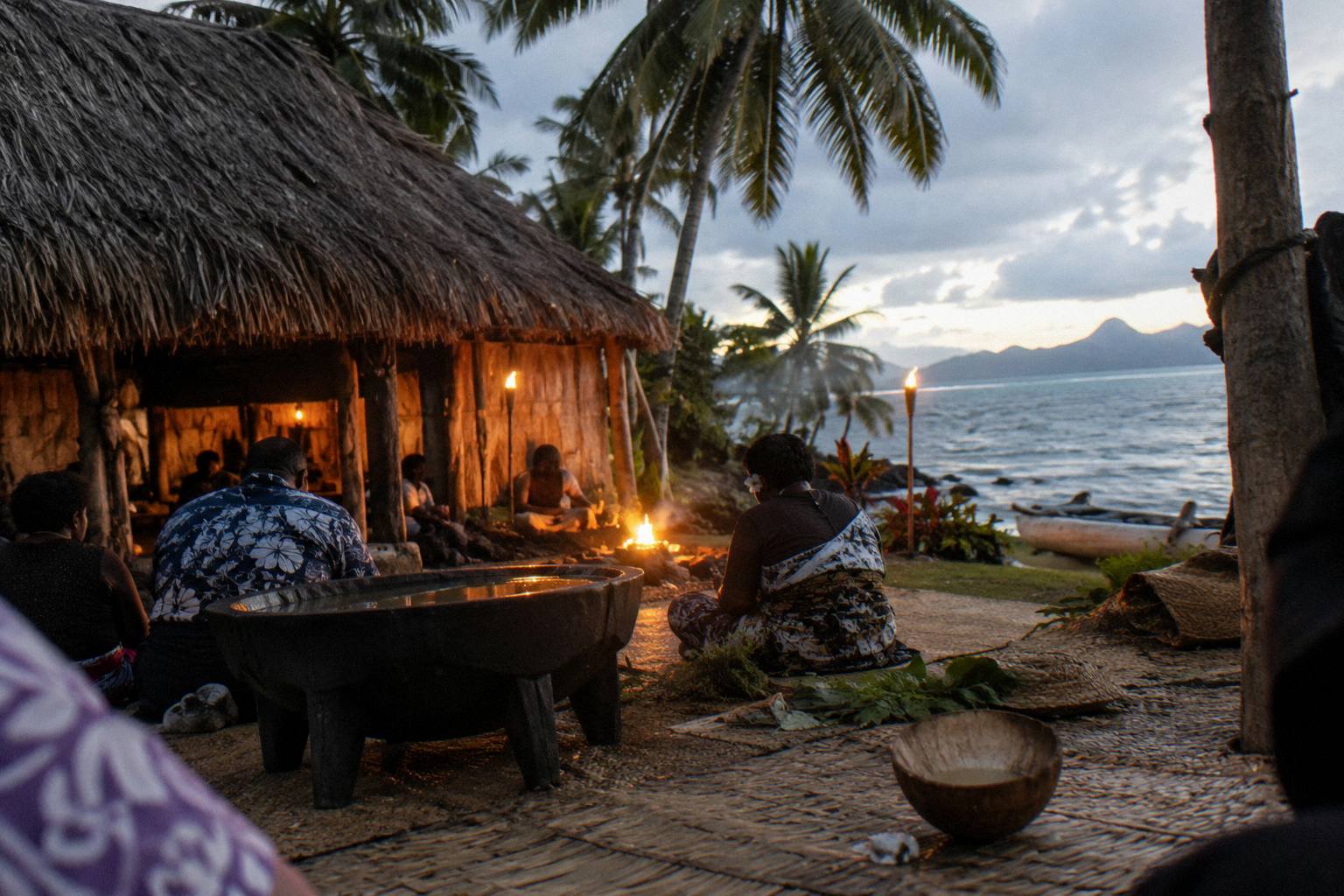
The ceremony is not a spectacle you watch from a distance, it is something you are invited into. On the staged evenings around Nadi and the Coral Coast, the host explains what is happening and hands the bilo around, and guests who want to take part do so alongside the performers. The whole thing usually takes a short stretch of the evening, sandwiched between the welcome, the meal and the dance performances that follow.
What the ceremony preserves is a village ritual. Tourism Fiji's etiquette page explains that presenting powdered kava to a village chief, a gift called sevusevu, is the customary way a guest seeks permission to enter communal lands. The evening-show version is a compressed, visitor-friendly staging of that tradition, and understanding the original makes the staged version far more meaningful.
If you are deciding which evening to book, three of the options covered here stage a ceremony or a kava tasting as part of the night:
- Lovo Buffet, 4 To 4.5 Hours
- Fire Show, Lovo Buffet Dinner
- Meke Show, 3 Hours
- 11-Hour Day And Night Combo
- VOU Theatrical Dinner Show
Each of those evenings wraps the ceremony inside a fuller programme of dinner, dance and fire performances, so the kava is one chapter of the night rather than the whole story. The sections below walk through each part of the ceremony in the order you would meet it.
What Kava Actually Is?
Kava is a drink made from the dried roots of a plant called Piper methysticum, and in Fiji it is known as yaqona. Tourism Fiji's kava guide gives the vocabulary of the ceremony: the cup is a bilo, the large communal bowl is a tanoa, a full cup is called "high tide" and a half cup "low tide". That is the full extent of what the official sources state about the drink itself.
The root, not the leaf or stem, is what the drink comes from. Tourism Fiji's guide says only "from dried roots", and no further preparation detail is stated in the official material: how it is pounded, strained or mixed on a given evening is not covered here, and a question about that is best asked of the operator directly. Fiji Culture Village can be reached at +679 804 4800, and Robinson Crusoe at +679 776 0999.
The drink has a formal role in Fijian life that goes well beyond tourism. It is the substance of the sevusevu gift presented to a chief, and it is the centrepiece of gatherings that the evening shows draw on. The Tourism Fiji kava guide is the source for the vocabulary and the etiquette summarised through this article, and it is worth reading in full before a first ceremony.
One point of respect matters: the ceremony is a living tradition, not a themed dinner activity. The words bula and vinaka, the clapping and the order of serving all carry weight in village life, and the operators who stage the ceremony treat it accordingly. Joining in the way the host demonstrates is the whole of what is asked of a guest.
Where Does Sevusevu Fit In?
Sevusevu is the customary gift of powdered kava presented to a village chief to seek permission to enter communal lands as a guest. Tourism Fiji's etiquette page puts it plainly: it is "customary to present a small bundle or packet of powdered kava to the village chief to seek permission to enter their communal lands as a guest". Tourism Fiji's kava guide prices a gift of half a kilogram of yaqona root at around FJD 30 to 40.
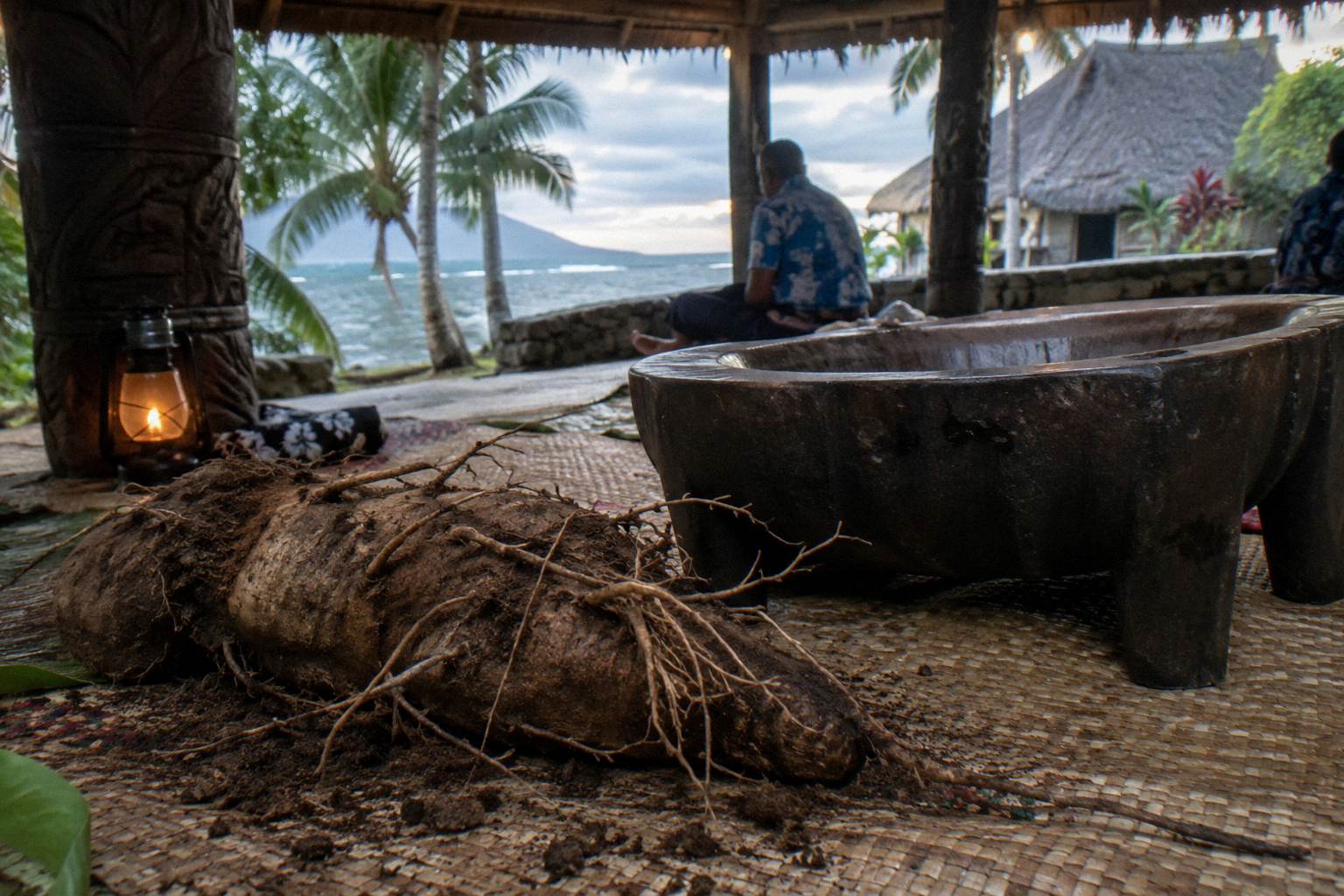
That figure is Tourism Fiji's, and it describes a village gift, not anything you pay on a tour evening. On a staged evening the sevusevu is part of the show rather than an obligation on you. Robinson Crusoe lists a "sevusevu welcome ceremony with kava tasting" among the highlights of its Sunset Dinner Show, and Fiji Culture Village lists a kava ceremony at 7:00pm in its evening timeline.
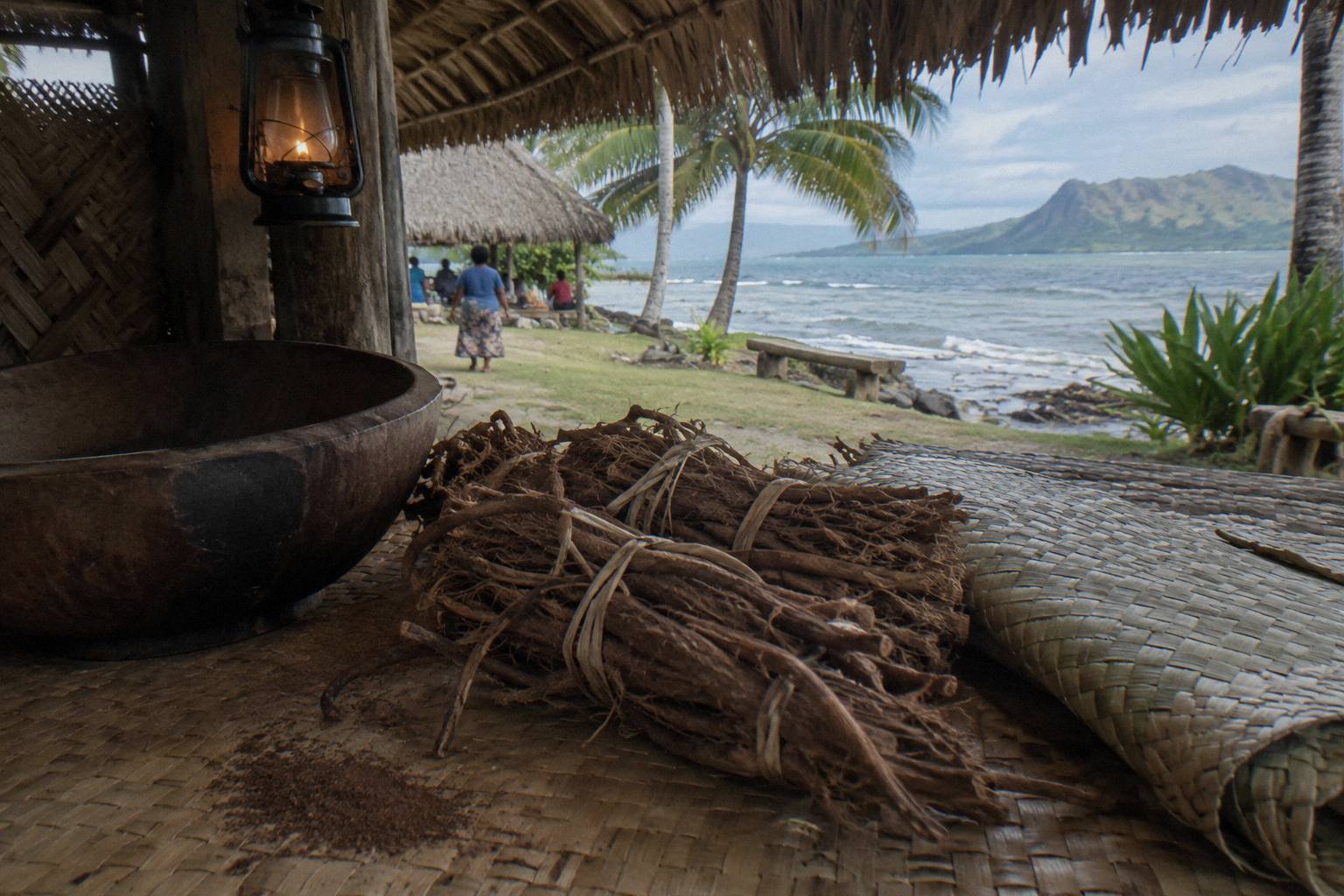
The distinction between a village sevusevu and a staged one is worth holding onto, because it explains the shape of the evening. In village life the gift opens the door: it is how a stranger becomes a guest. The evening shows compress that into a welcome moment early in the night, so that the dinner and performances that follow sit inside a frame of hospitality rather than mere entertainment.
No sevusevu protocol beyond Tourism Fiji's line is described in the official material, so nothing further is claimed here. If a village visit is part of your plans beyond a staged evening, the Tourism Fiji etiquette guide is the page to read, covering dress, photography and conduct in a village. For the depth behind the ceremony itself, see what the sevusevu ceremony involves.
| Item | What the sources say |
|---|---|
| Sevusevu | Gift of powdered kava to a village chief, per Tourism Fiji |
| Purpose | Seeks permission to enter communal lands as a guest |
| Gift size and price | Half a kilogram of yaqona root, around FJD 30 to 40, Tourism Fiji's figure |
| On evening tours | Robinson Crusoe lists a sevusevu welcome with kava tasting; Fiji Culture Village lists a kava ceremony |
The Tanoa And The Bilo Explained
The tanoa is the large communal kava bowl and the bilo is the individual coconut shell cup, and both names come from Tourism Fiji's kava guide. The tanoa holds the mixed drink for the whole gathering, and the bilo is filled from it and passed to each person in turn. Two objects, one shared drink: that structure is what gives the ceremony its communal character.
The tanoa is the visual anchor of the ceremony. It sits at the centre of the group, and everything moves around it: the mixing, the serving order and the rhythm of claps that mark each cup. You will recognise it instantly on any evening that stages a ceremony, a wide, low wooden bowl on legs, usually with plain, worn timber rather than showroom polish.
The bilo is smaller than a coffee cup, and it is the object placed in your hands. Touring guests are typically served from the same sequence as everyone else in the circle, which is the point: the ceremony does not separate the visitors from the hosts. For a fuller picture of the bowl itself, the tanoa and its role goes deeper into what the sources say.
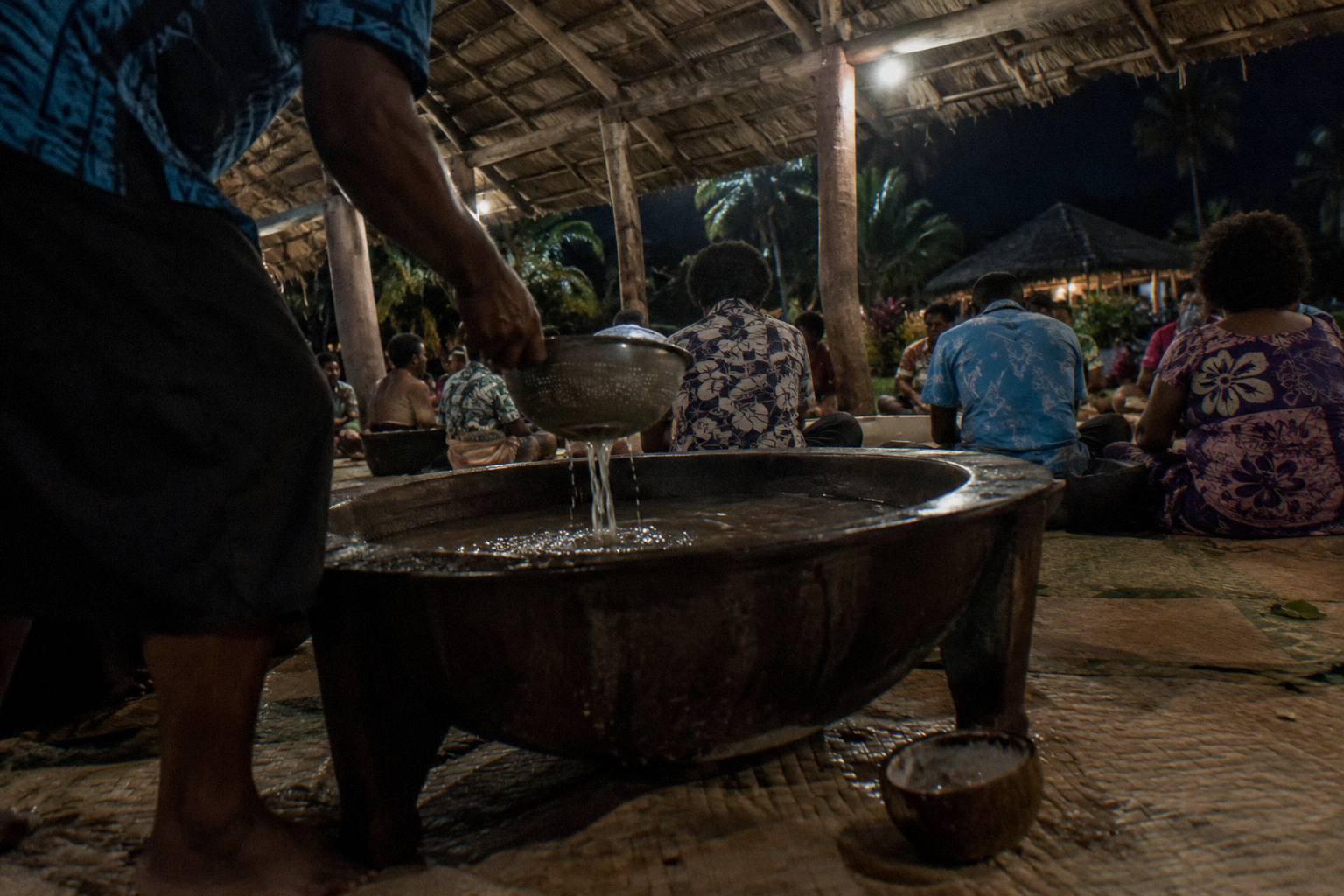
Neither operator's material describes the decoration or carving of these objects, so none is described here. What the operators list is the ceremony, not the craft of its equipment, and the craft question is one to raise with the hosts on the night.
How To Accept A Bilo, Step By Step
Tourism Fiji's kava guide gives a four step sequence for accepting a bilo: clap once, cupped and loud; say "Bula!"; drink in one gulp; return the cup, clap three times and say "vinaka". That is the entire published guidance, and it is simple enough to learn in a minute. The claps are not decoration, they are the rhythm of the ceremony.
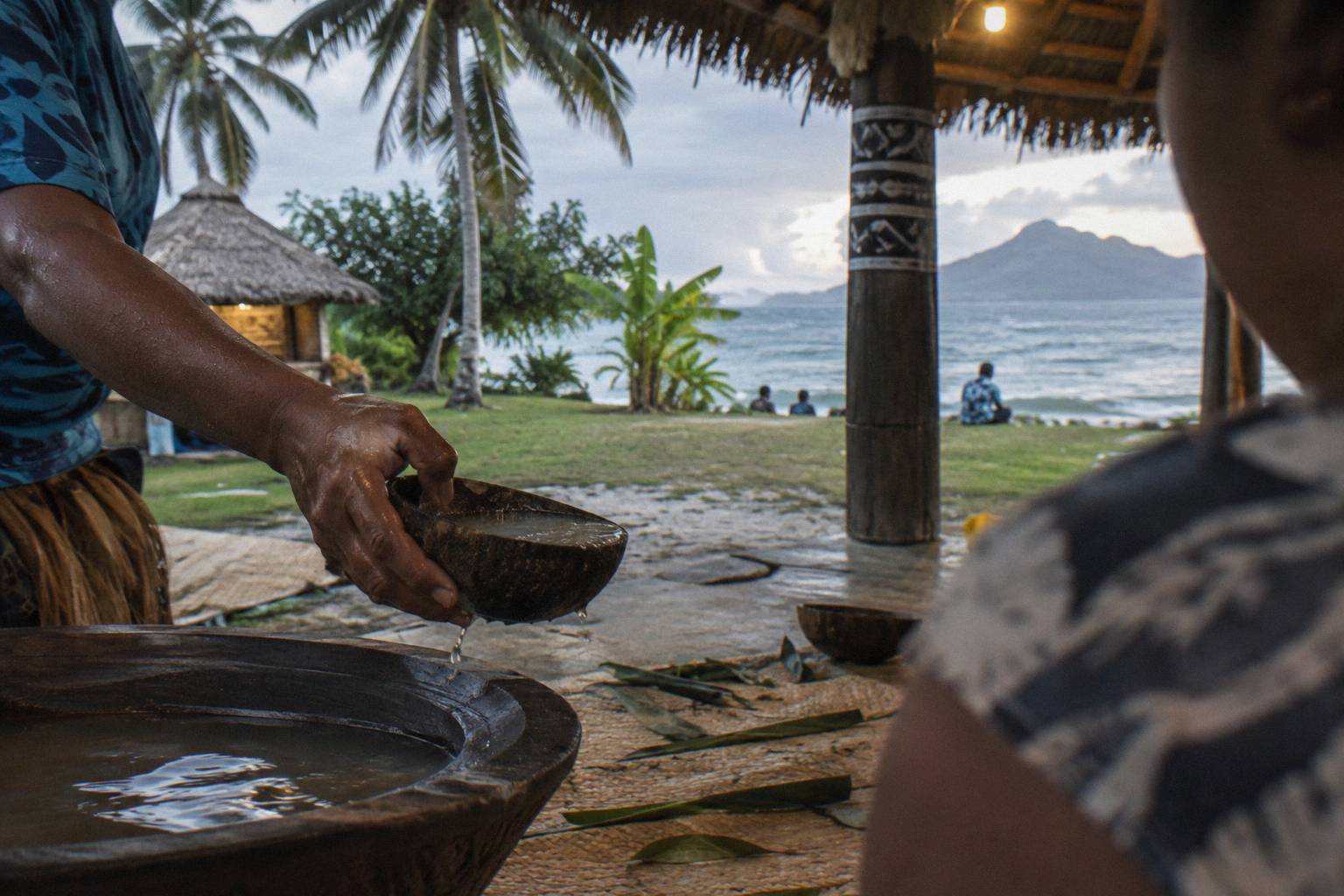
Practically, the sequence runs like this at a typical staged evening. The host fills the bilo from the tanoa, offers it to you with a word, and you receive it with both hands. One cupped, audible clap, the word bula, then the cup is emptied in a single motion. Hand it back, give three claps, and say vinaka, which the ceremony uses as thanks. Then the bilo moves to the next person.
| Step | Action, per Tourism Fiji's kava guide |
|---|---|
| 1 | Clap once, cupped and loud |
| 2 | Say "Bula!" |
| 3 | Drink in one gulp |
| 4 | Return the cup, clap three times, say "vinaka" |
Nobody expects perfection from a first time guest, and the host will usually demonstrate the sequence before the bilo reaches you. Watching one full round before your turn is the easiest way to be ready. The guide also gives the cup size vocabulary: ask for "high tide" for a full cup or "low tide" for a half cup, and the host will understand either.
For readers weighing the decision to take part at all, whether you have to drink kava at a Fijian ceremony covers that question directly from the same sources. The short answer is that the official material does not state whether declining is acceptable, so that page reads the situation carefully rather than guessing.
High Tide And Low Tide: Ordering Your Cup
"High tide" means a full cup and "low tide" means a half cup, in Tourism Fiji's kava guide vocabulary. Saying one of the two when the bilo comes to you sets how much you drink, and the phrase is the guide's own. It is the only choice the published guidance gives the drinker.
The two phrases are useful precisely because they spare you negotiation. A half cup is a completely ordinary request, and the vocabulary exists so guests can take part at whatever level suits them. On a staged evening the host will often ask, or you can offer the phrase as the bilo is filled.
No guidance in the official material goes beyond the two phrases. There is no stated etiquette about refusing a round later in the evening, no stated number of rounds on a tour night, and no stated alternative drink for guests who sit out. Those are questions for the host on the night, and asking them is normal.
When The Ceremony Happens On The Evening Tours
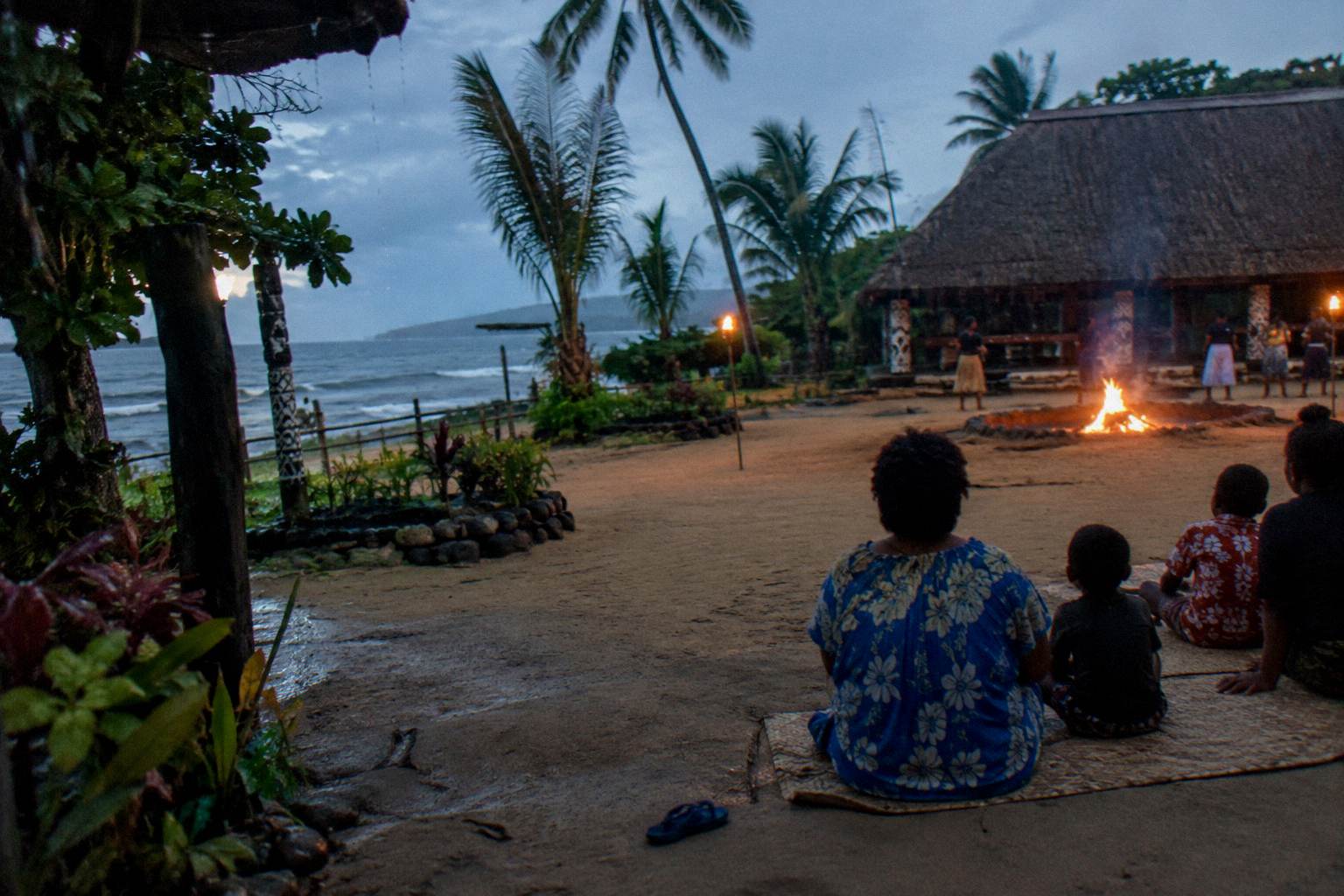
Fiji Culture Village places its kava ceremony at 7:00pm, between the unearthing of the lovo at 6:45pm and the buffet dinner at 7:20pm. Robinson Crusoe lists a sevusevu welcome ceremony with kava tasting among its Sunset Dinner Show highlights, as part of an evening that runs 5pm to 9pm on the island. Two different nights, two different placements of the same ritual.
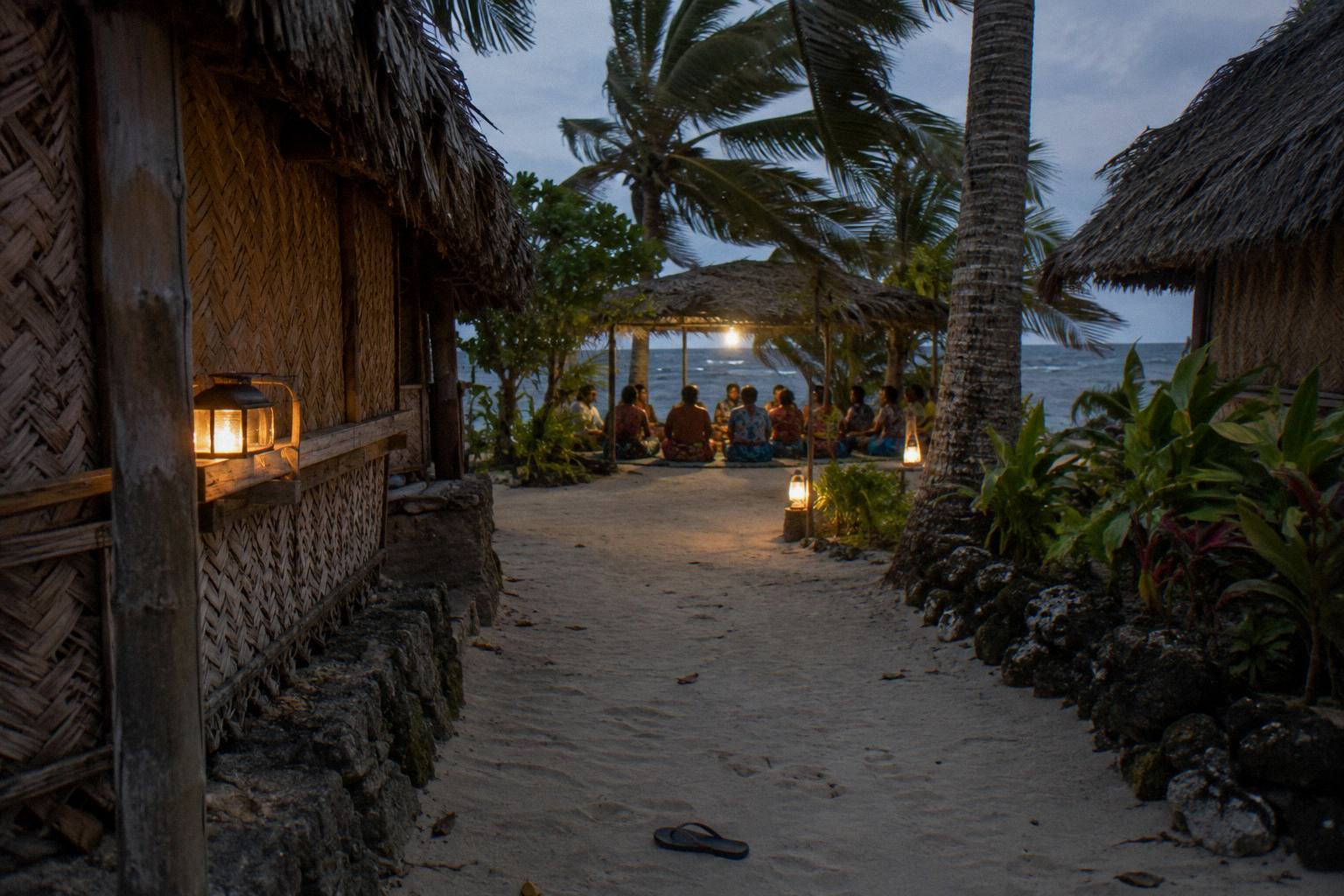
The full Fiji Culture Village timeline, from the operator's page, shows where the ceremony sits in the evening:
| Time | Fiji Culture Village evening, per the operator |
|---|---|
| 4:20pm | Hotel pick-up from Denarau, Nadi and Wailoaloa |
| 5:15pm | Warrior welcome |
| 5:30pm | Guided village walking tour |
| 6:45pm | Unearthing of the lovo |
| 7:00pm | Kava ceremony |
| 7:20pm | Buffet dinner, lovo food |
| 7:50pm | Meke show and fire dance |
| 8:30pm | Farewell and departure |
That placement matters for planning. The ceremony arrives after the village walk and the lovo unearthing, so by the time the bilo comes round you have already seen the setting and understood something of the evening's structure. The night runs Monday to Saturday, with return transfer from Nadi and Denarau hotels included, and the operator's rates are F$175 adult, F$105 child aged 5 to 12, and F$500 for a family of 2 adults and 2 children, valid to 31 December 2026. The tour is rated 4.6. Bookings for dates after 21 February 2027 are still processed even though the village closes for annual maintenance from Monday 22 February 2027 to reopening on Wednesday 10 March 2027, per the operator's notice.
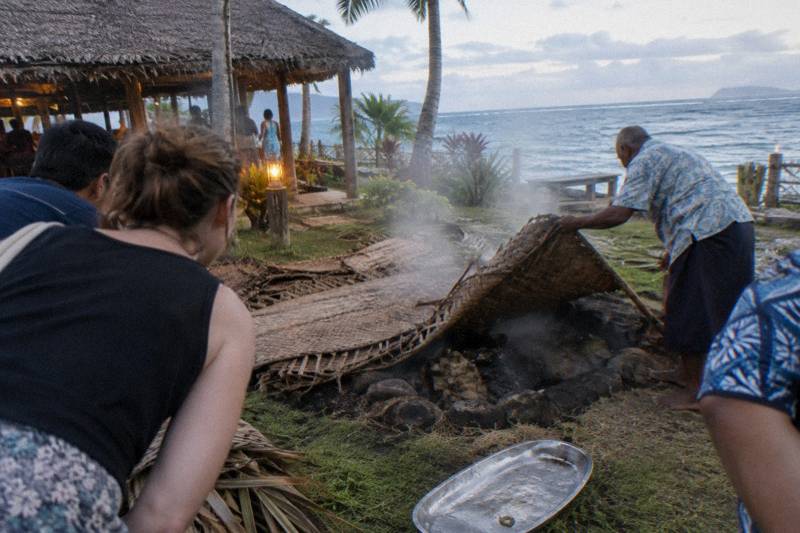
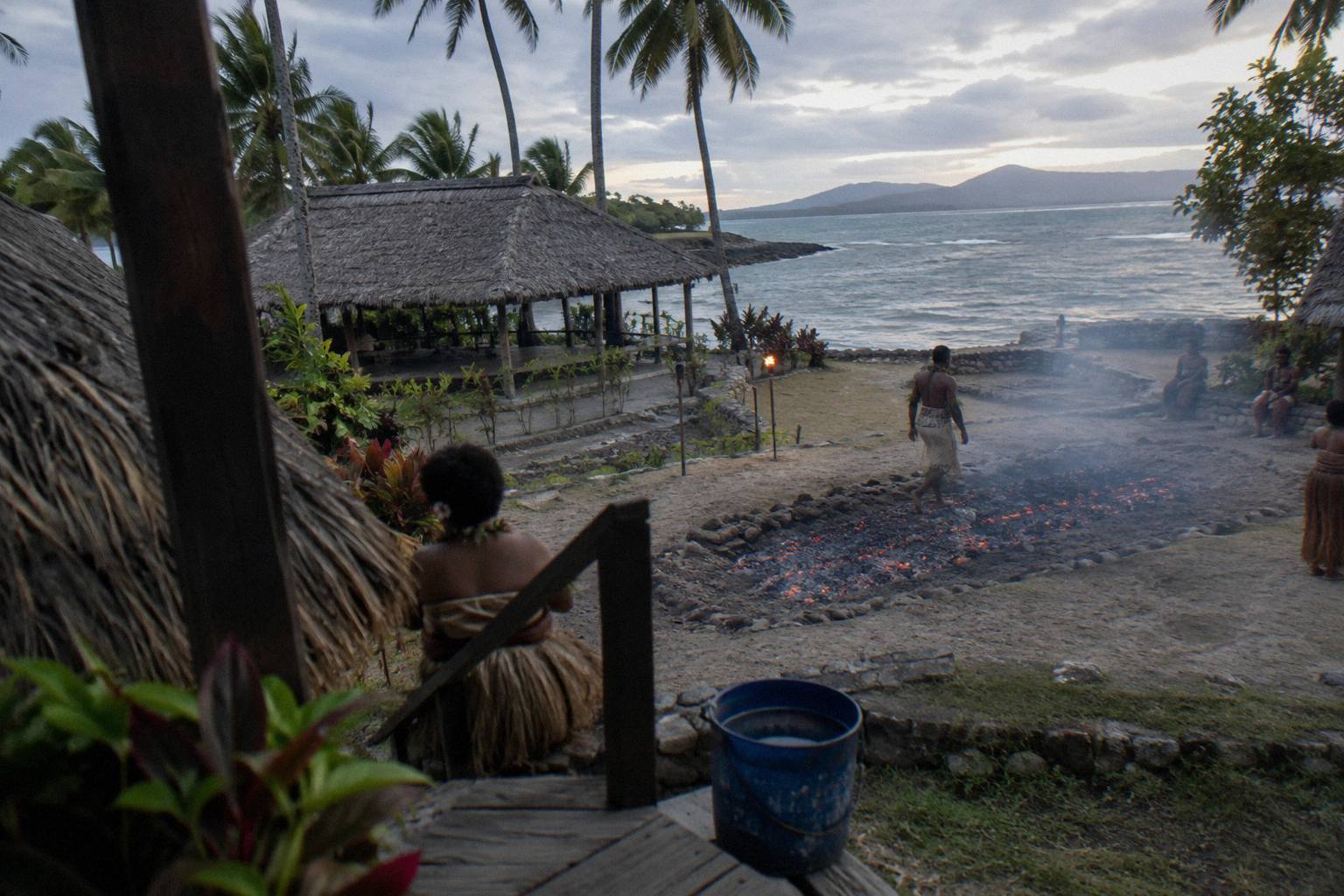
Robinson Crusoe's evening uses the ceremony differently, as a welcome. The operator's itinerary has the boat leaving the mainland jetty at 5:00pm, arrival on the island at 5:45pm with a costumed island welcome, a sunset beach bonfire at 6:00pm, the lovo unearthing with a fire walking demonstration at 6:30pm, the lovo buffet at 7:00pm and the "Legends of the Pacific" show with fire and knife dancing after dinner, then the Isa Lei farewell at 9:00pm. The sevusevu welcome ceremony with kava tasting is listed among the highlights rather than given a clock time, and the show runs Monday, Wednesday and Saturday. The Robinson Crusoe island cultural night lays out that full evening.
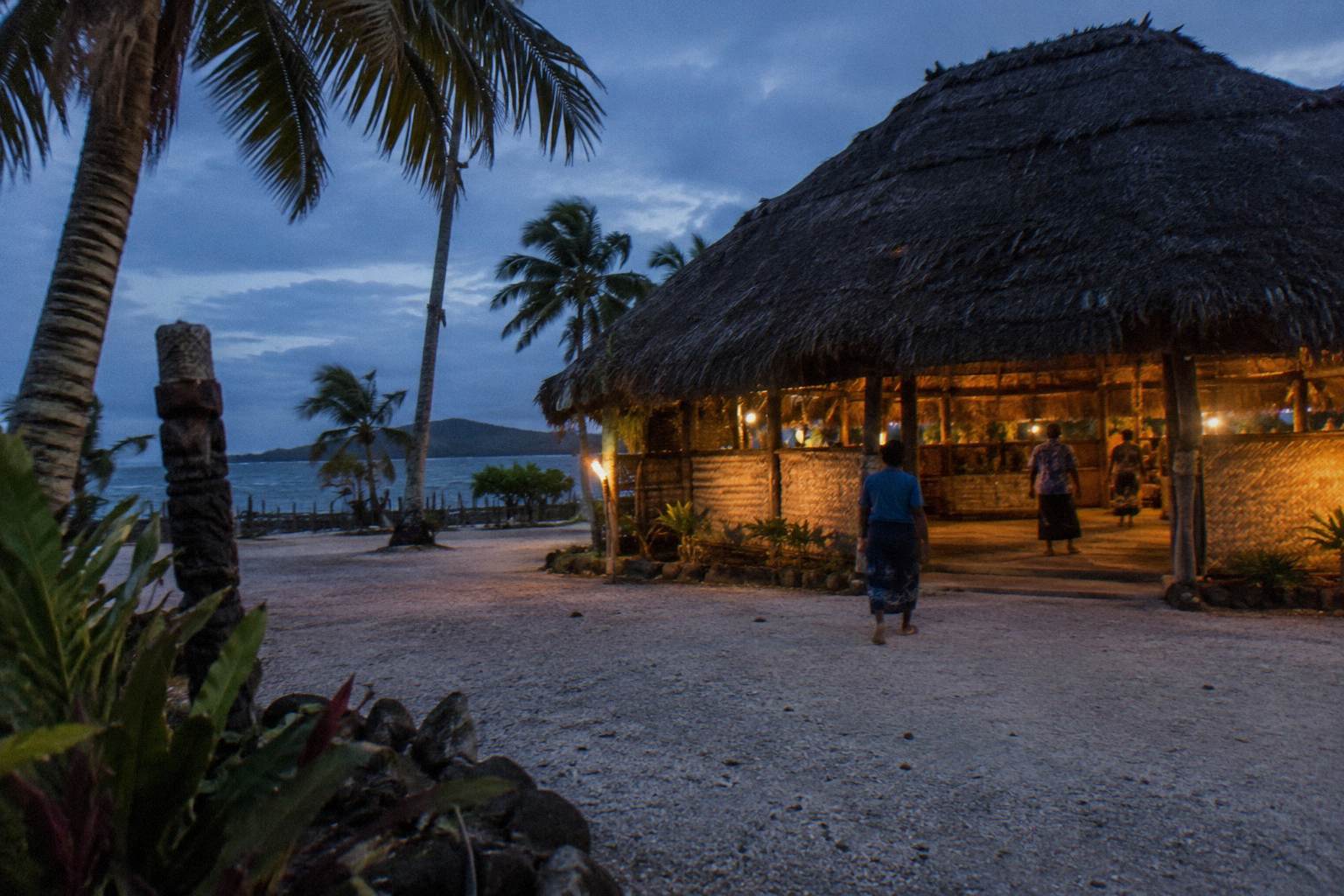
If you are choosing between them, the Culture Village Evening Tour gives the ceremony a fixed slot in a village setting close to Nadi, while the Robinson Crusoe Sunset Dinner And Fire Show folds its kava tasting into a welcome on an island reached by boat. You can Check availability for the Robinson Crusoe night on its booking page, and see the operator's own tour page for its itinerary. For the wider field, choosing a Nadi cultural night compares the evenings side by side.
What About The Effects Of Kava?
The effects of kava on the body are not covered by the sources used here, and no claim about strength, numbness, sleepiness or any other effect is made. What the sources state is the plant, the objects and the etiquette, nothing more. Questions about health, safety or legal status belong with a health professional, and questions about a specific evening's kava belong with the operator.
That is a deliberately narrow answer, and it is the honest one. Tourism Fiji's published guidance describes the ceremony, not the pharmacology, and repeating folk descriptions of effects would be inventing what no source here says. The same applies to legal status in any country, which is also not stated in this material.
If the effect question is the one that matters to you, whether kava gets you high addresses it within the same limits, and what kava is covers the plant itself. For a first hand answer on a given night, the host of the ceremony will say more than any page can, and Fiji Culture Village's contact is +679 804 4800.
Common Mistakes When Attending A Fiji Kava Ceremony
The avoidable mistakes are small ones: treating the tanoa as a prop rather than the centre of the ritual, missing the clap sequence because it felt optional, dressing for a beach bar rather than a village evening, and expecting the ceremony to be explained twice. The ceremony is short and the etiquette is simple, so a minute of preparation covers almost everything.
The dress point deserves emphasis. Tourism Fiji's etiquette page asks visitors to cover bare shoulders and legs when visiting a Fijian village and to wrap a sulu around the waist. Robinson Crusoe asks visitors on its Combo tour to cover shoulders and bring a sulu or sarong for its village visit, with spare sulus available. Fiji Culture Village's dress guidance is not stated; ask the operator at +679 804 4800. For a fuller walkthrough, what to wear to a Fijian village night covers it.
The other mistakes are social. Speaking over the host during the ceremony breaks the rhythm of the evening. Filming the tanoa from inside the circle without asking puts a camera where the ritual is happening; Tourism Fiji asks visitors to seek permission before taking photos in village settings generally. And declining a bilo rudely, rather than quietly and with the host's guidance, reads worse than simply asking what the options are, though the sources state no formal rule for declining.
Which Evening Should You Choose For A Ceremony?
Choose Fiji Culture Village if you want the ceremony as a defined chapter of a village evening near Nadi, at 7:00pm on a Monday to Saturday night, with the operator's rates at F$175 adult valid to 31 December 2026. Choose Robinson Crusoe if you want the kava tasting inside an island welcome that includes a bonfire, a lovo dinner and a fire walking demonstration on Monday, Wednesday or Saturday.
The two nights frame the same ritual differently, and the choice is about the evening you want around it, not the quality of the ceremony. The Culture Village night is a village visit: a walking tour, a lovo unearthing, then the ceremony, dinner and a meke show with a fire dance, all within about 4 to 4.5 hours door to door with pick-up from 4:20pm. The Robinson Crusoe night is a journey: a coach to the jetty near Natadola Beach, a 30 minute calm water cruise down the Tuva River, and an island programme that ends with the boat departing at 9:15pm.
There is also a third style of evening worth knowing about even though its ceremony details are not stated. Valentine Tours Fiji runs a Fijian culture night with dinner and a meke show in the Nadi area, about 3 hours long with hotel pick-up from Nadi and Denarau, and its price and start time are on the booking page. And VOU Hub Fiji stages a theatrical dinner show with drumming in a different register from a village night, which some travellers prefer after a long flight day. Whichever direction appeals, the ceremony basics on this page stay the same, and the evenings above all stage it within a full programme.
If the plan is coming together, Fiji Cultural Night Tours has a guide for each of these evenings, from cost comparisons to what the fire performances involve.
Common Questions About A Fiji Kava Ceremony
What Happens At A Fiji Kava Ceremony?
The drink is mixed in a tanoa and served in a bilo. Tourism Fiji's guidance says you clap once, say "Bula!", drink in one gulp, then clap three times and say "vinaka". Fiji Culture Village stages its ceremony at 7:00pm; Robinson Crusoe includes a sevusevu welcome with kava tasting.
Do You Have To Drink Kava At A Fijian Ceremony?
The official sources do not state whether declining is acceptable, so no rule is claimed here. Ask the host on the night, and see the dedicated article on this question for a careful reading of what the sources do say.
What Is Sevusevu?
Per Tourism Fiji, it is customary to present a small bundle or packet of powdered kava to the village chief to seek permission to enter their communal lands as a guest. Tourism Fiji's kava guide puts a gift of half a kilogram of yaqona root at around FJD 30 to 40.
What Do High Tide And Low Tide Mean?
Tourism Fiji's kava guide uses "high tide" for a full cup and "low tide" for a half cup. Saying either phrase sets how much you are served.
When Does The Ceremony Happen On The Evening Tours?
Fiji Culture Village places its kava ceremony at 7:00pm, between the lovo unearthing at 6:45pm and dinner at 7:20pm, on Monday to Saturday evenings. Robinson Crusoe lists a sevusevu welcome ceremony with kava tasting among its Sunset Dinner Show highlights on Monday, Wednesday and Saturday.
What Are The Effects Of Kava?
The effects of kava on the body are not covered by the sources used here, and no health, safety or legal claim is made. Ask a health professional, and ask the operator about a specific evening.