Do You Have To Drink Kava At A Fijian Ceremony?
Whether kava is compulsory at a Fijian ceremony evening, how to accept a cup correctly, and what each Nadi and Coral Coast operator actually lists on its itinerary.
Kava, or yaqona, is the traditional drink served at Fijian welcome ceremonies, and it appears on the itinerary of several cultural evening tours around Nadi and the Coral Coast. The question of whether participation is compulsory comes up constantly, and the honest answer sits in what the official sources do and do not say.
No official source says you must drink kava. Tourism Fiji's kava guide explains how to accept a cup when you choose to, but it does not state that declining is unacceptable or that drinking is required. The tour operators themselves describe the ceremony differently: Fiji Culture Village lists a kava ceremony at 7:00pm, and Robinson Crusoe lists a sevusevu welcome ceremony with kava tasting, and neither operator says participation is compulsory.
That is the full scope of what can be stated plainly, and it is worth being direct about it because plenty of travel chatter fills this gap with invented certainties. Some writers claim everyone must drink, others claim a polite refusal always works. Neither claim appears in the official guidance. What the guidance does give you is practical: Tourism Fiji's kava guide describes the drink itself, from the dried roots of Piper methysticum, and sets out the exact sequence for accepting a cup. The etiquette guidance around villages and ceremonies is also official and specific, and it covers dress, photographs and behaviour rather than any drinking obligation.
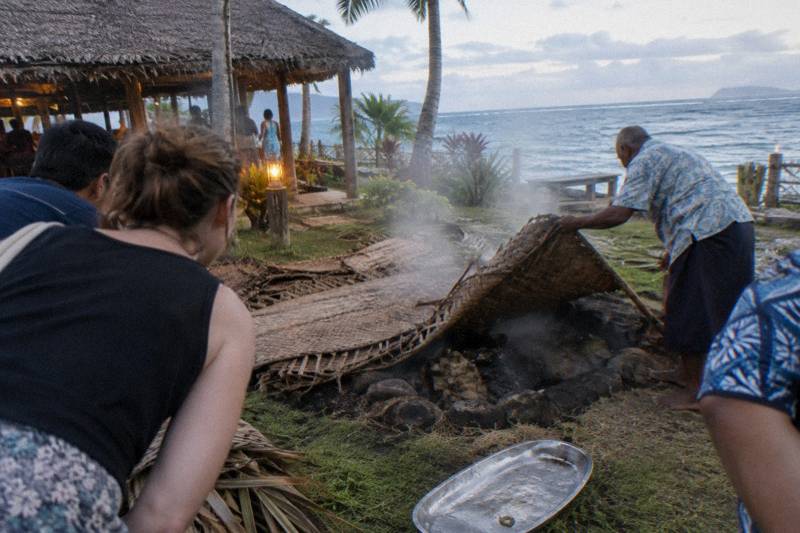
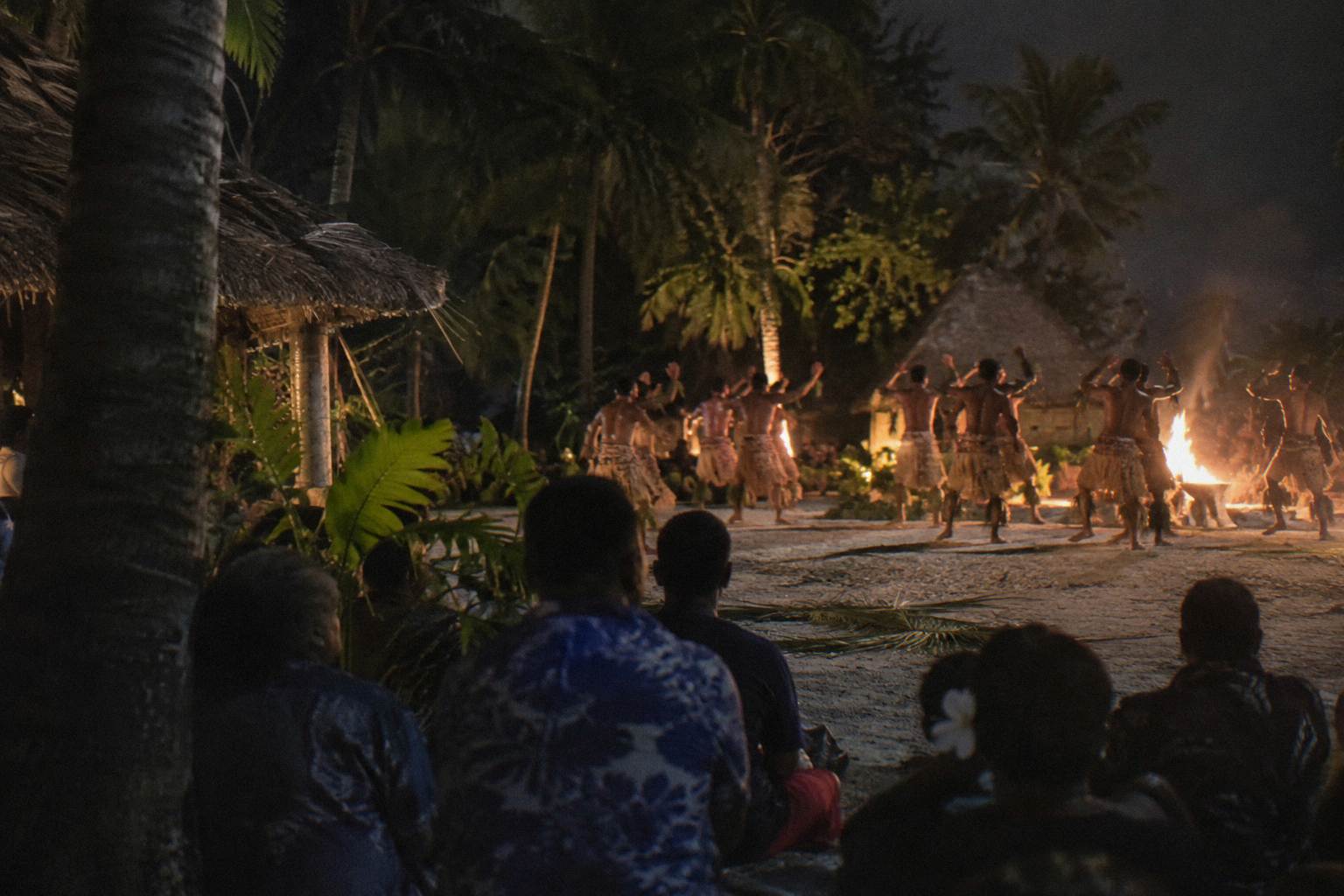
For a reader deciding whether a ceremony evening suits them, this changes the question. Instead of asking whether kava is forced on anyone, the useful question is what the evening actually involves and what your options are on the night. The tours covered here treat the ceremony as one item on a longer itinerary that includes a village walk or island welcome, a lovo dinner, and a meke or fire show. The Culture Village Evening Tour With Dinner And Show is the clearest example: the operator's published timeline puts the kava ceremony at 7:00pm, between the unearthing of the lovo at 6:45pm and the buffet dinner at 7:20pm. You can read more about the full sequence in how long a Fiji cultural night lasts.
If you already know you would like to book an evening that includes a ceremony, these are the three options most directly relevant:
- Lovo Buffet, 4 To 4.5 Hours
- Fire Show, Lovo Buffet Dinner
- Meke Show, 3 Hours
- 11-Hour Day And Night Combo
- VOU Theatrical Dinner Show
What The Kava Guide Actually Says About The Drink
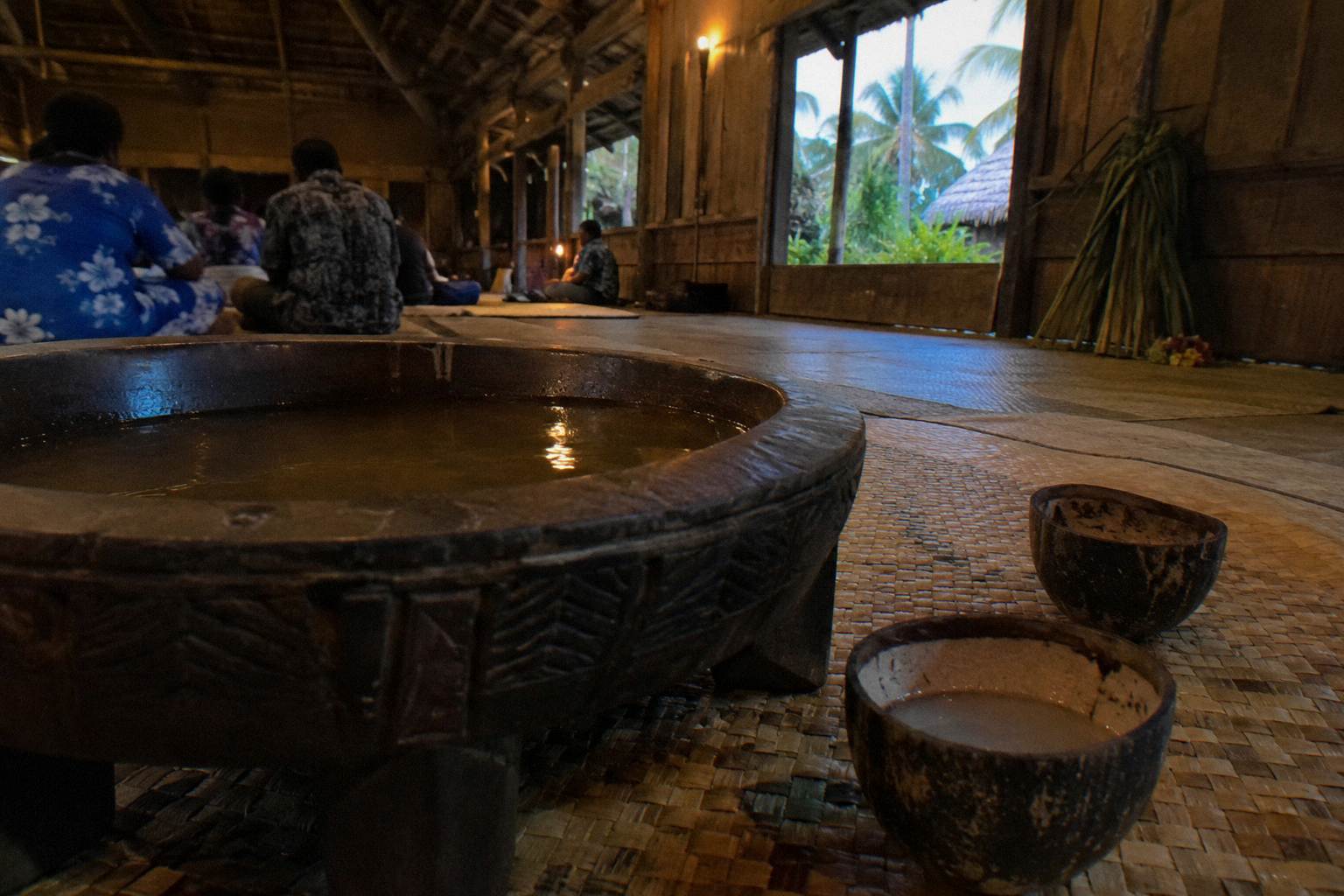
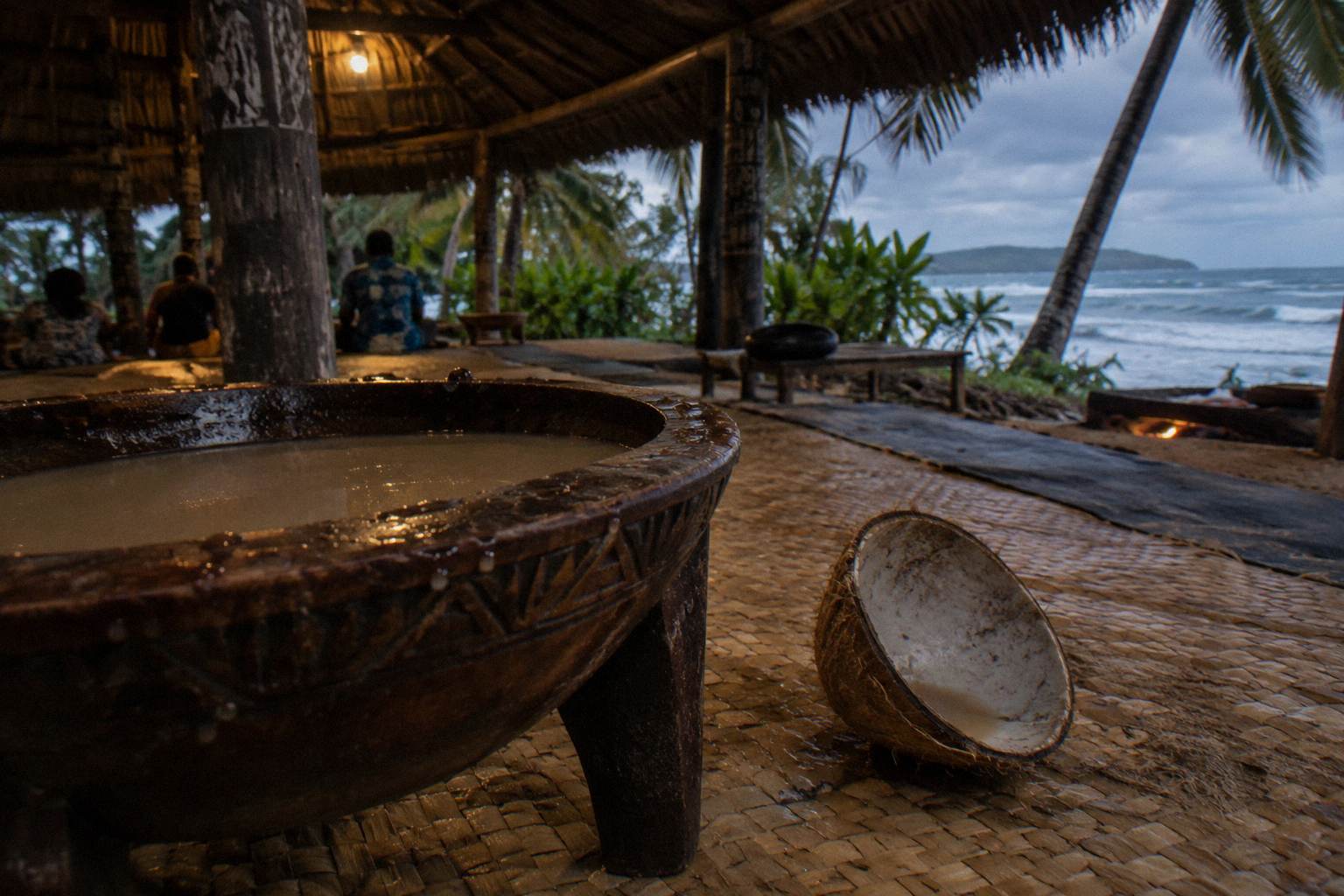
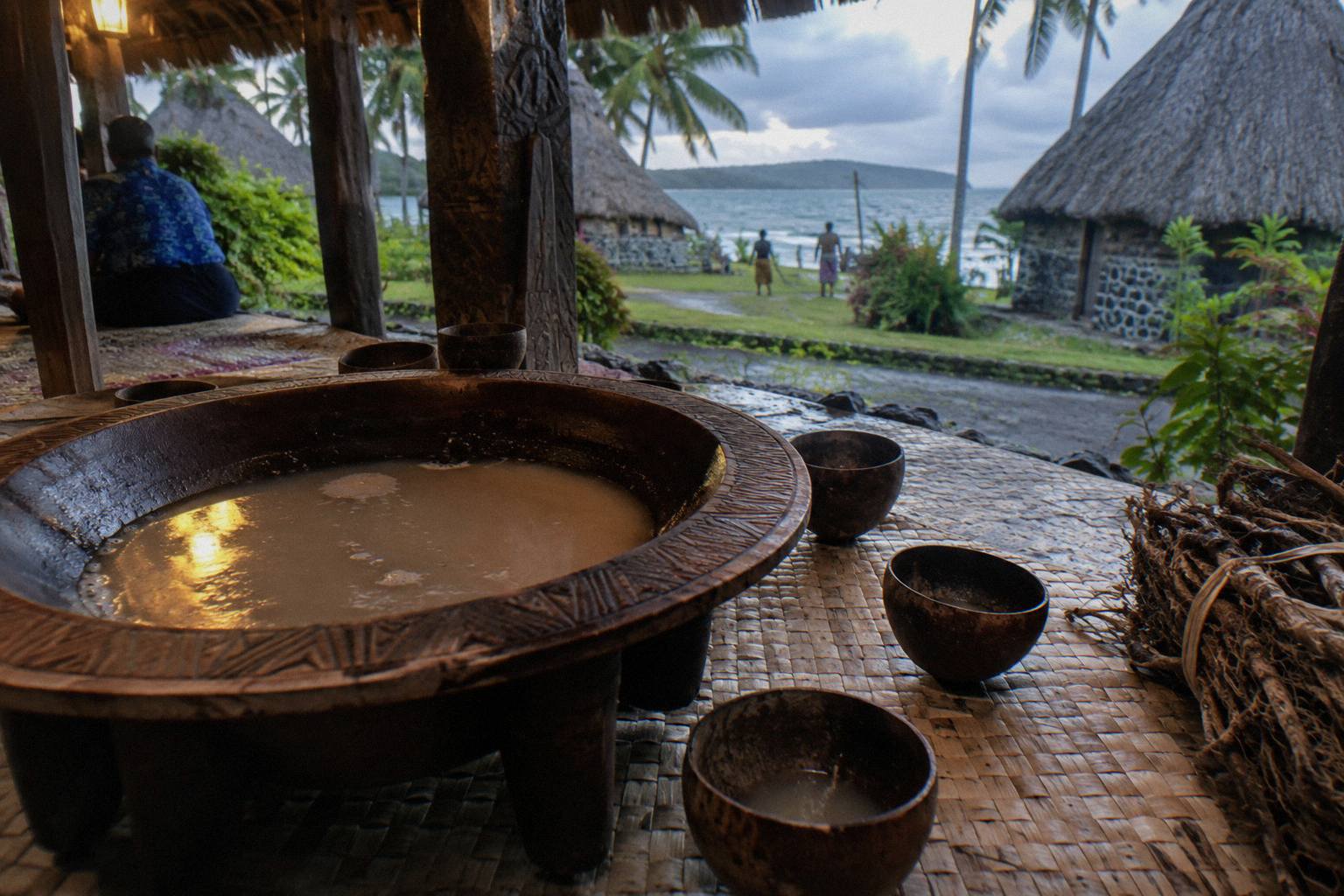
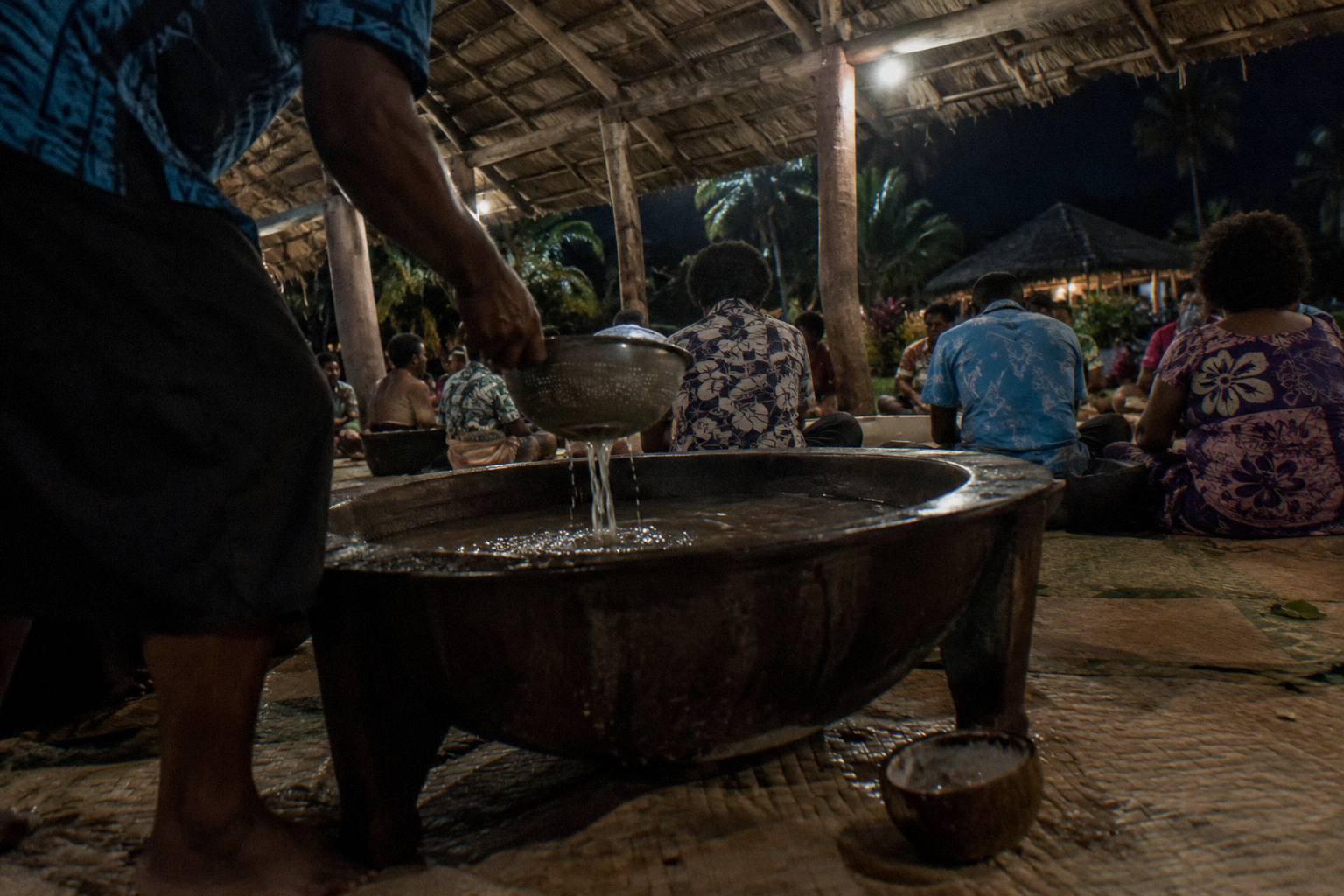
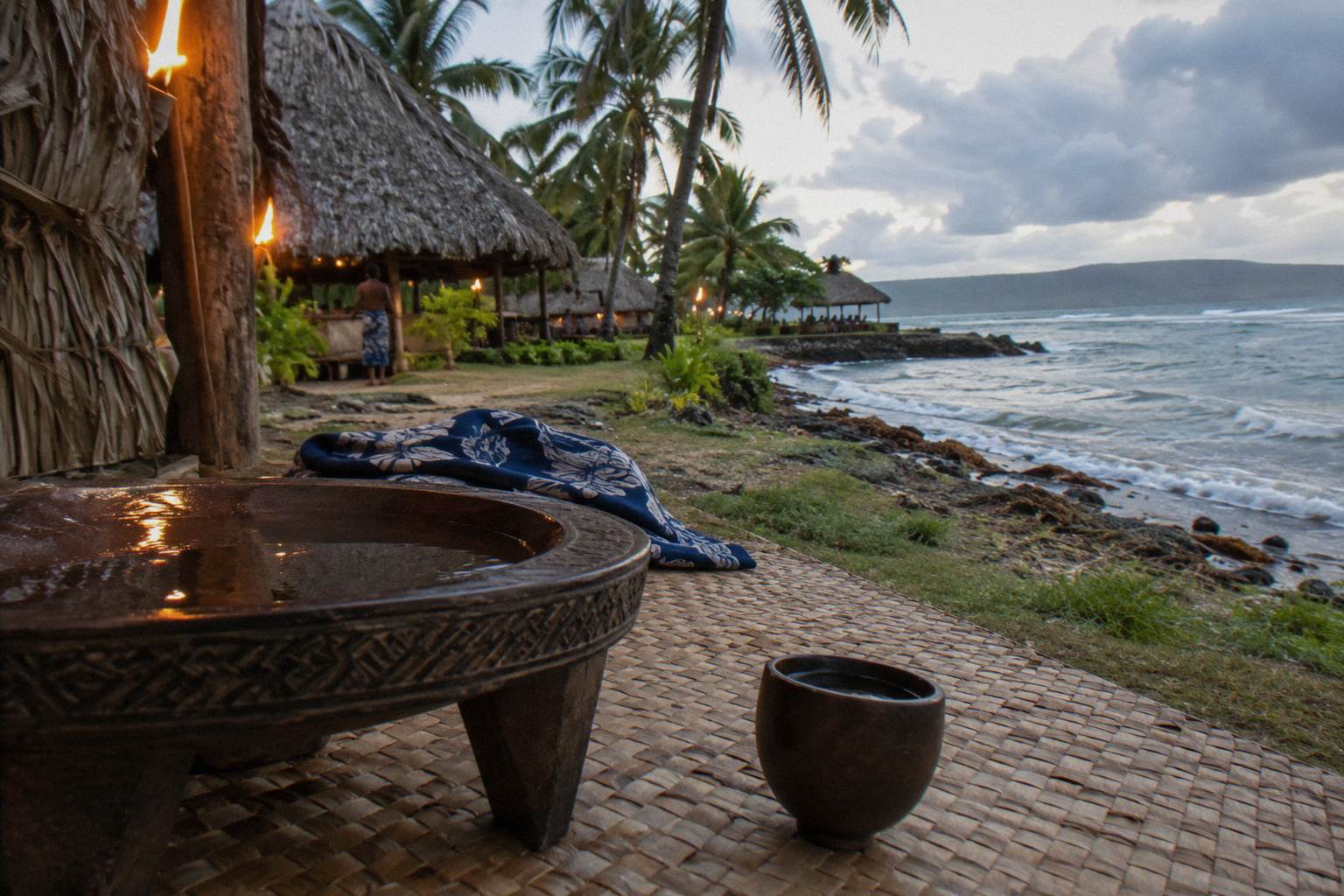
Kava, called yaqona in Fiji, is made from the dried roots of Piper methysticum, a pepper plant. Tourism Fiji's guide names the two objects at the centre of the ceremony: the bilo, the cup, usually a half coconut shell, and the tanoa, the kava bowl. The guide also gives the vocabulary of serving size, with a full cup called high tide and a half cup called low tide.
That is the official description, and it is deliberately matter of fact. The drink is prepared from dried roots, and the guide does not go further into preparation than that. It also does not describe effects on the body, strength, legal status in any country, or health considerations: those topics are outside what the official pages cover, and the right move if you have questions there is to ask the operator before booking and a health professional if you have any condition or medication that concerns you. A general article cannot answer those questions for you, and any page that confidently does so is guessing.
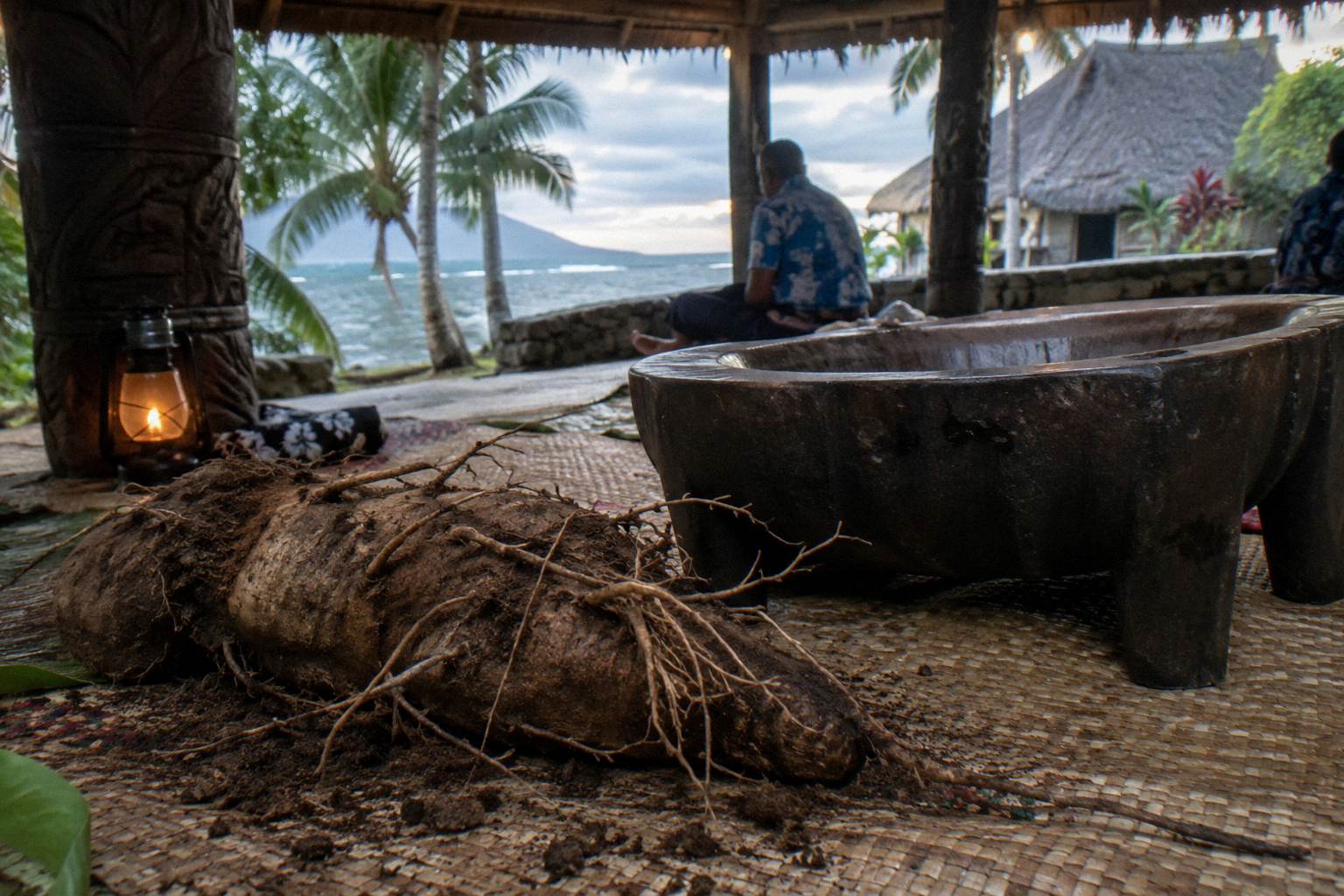
What the guide does do well is demystify the ritual mechanics. A ceremony has a visible structure: the tanoa sits at the centre, the bilo is filled and passed, and there is a correct way to receive it. Knowing the vocabulary before you arrive makes the whole evening less mysterious. When the host says high tide, that is simply the offer of a full cup; low tide is a half cup. There is nothing hidden in the terms, and nothing in the guide frames them as a test.
A word on where this fits into village life. The same guide covers sevusevu, spelled i-sevusevu on that page, the custom of presenting a small bundle of powdered kava to seek permission to enter communal lands as a guest. Tourism Fiji puts the gift of half a kilogram of yaqona root at around FJD 30 to 40, its figure, for context on what the root itself costs in village exchanges. On a staged tourist evening you are not the one presenting the gift, but understanding what sevusevu is helps you see why the ceremony opens the night rather than closing it. The sevusevu ceremony explained page covers that custom in full.
| Term | What it means, per Tourism Fiji's kava guide |
|---|---|
| Yaqona | Kava, from the dried roots of Piper methysticum |
| Bilo | The cup, from which kava is drunk |
| Tanoa | The kava bowl |
| High tide | A full cup |
| Low tide | A half cup |
| Sevusevu | Presenting kava to seek permission to enter communal lands as a guest |
How To Accept A Bilo, Step By Step
Accepting a bilo follows a fixed sequence in Tourism Fiji's kava guide: clap once, cupped and loud, receive the cup, say "Bula!", drink in one gulp, return the cup, then clap three times and say "vinaka". Those steps are for when you accept a cup. The guide sets out this sequence in full and says nothing about a required sequence for declining, which is the honest scope of the official advice.
The sequence is short enough to learn in a minute and specific enough that knowing it beforehand removes any anxiety about getting it wrong. The clap before receiving is a single cupped clap, and the guide describes it as loud. The drink itself is taken in one gulp rather than sipped. After returning the bilo, three claps follow, and the word "vinaka" closes the exchange. Visitors are not expected to invent any of this on the spot, and nobody is testing you: the guide presents it as custom, plain and simple.
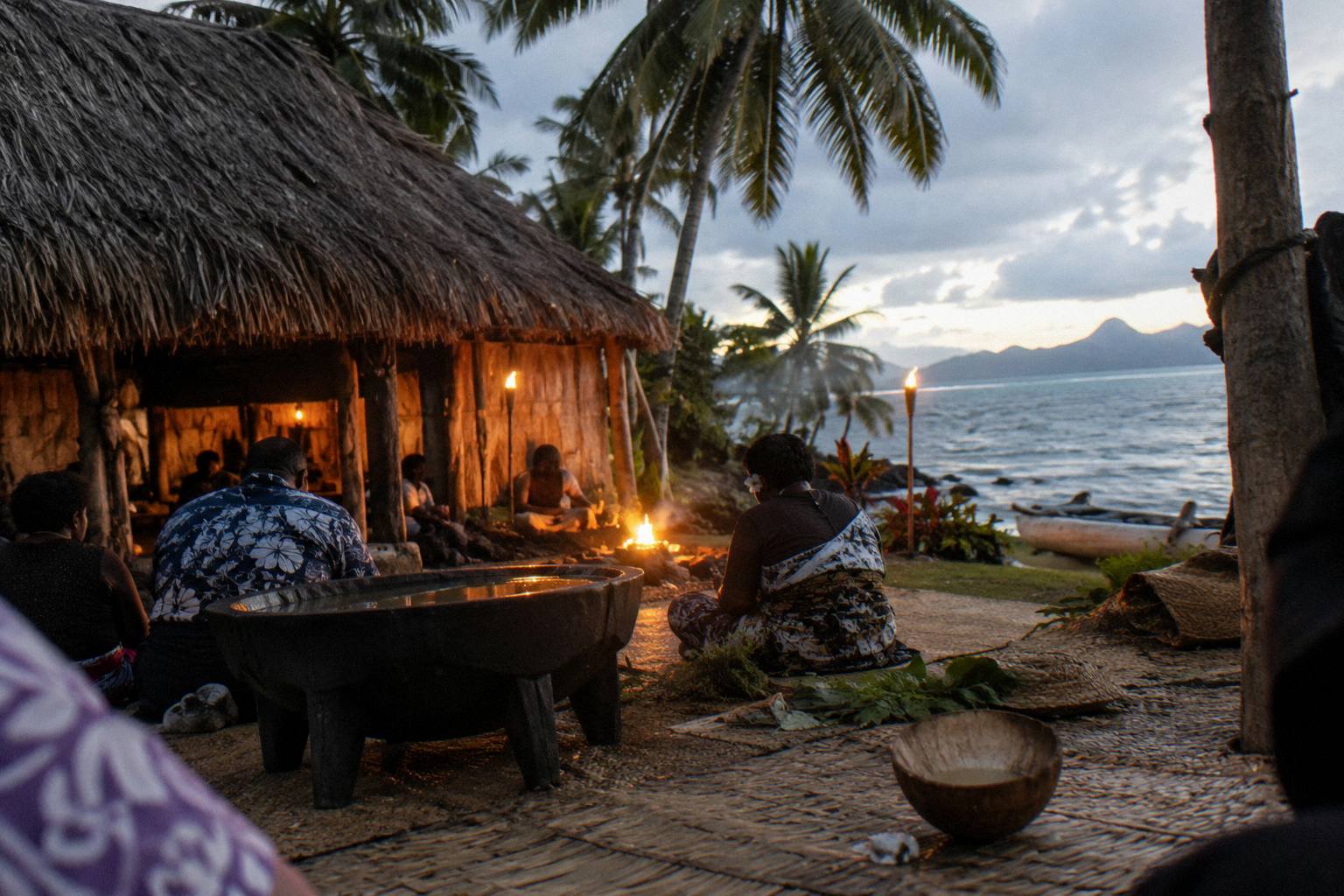
Why does this matter for someone who is unsure about drinking at all? Two reasons. First, an evening's ceremony is a shared public moment, and understanding the rhythm of it lets you participate as an observer comfortably, clapping and greeting even if you pass on the cup. Second, the vocabulary above, bilo, tanoa, high tide, low tide, will be used by hosts on the night, and recognising the words keeps you oriented. If you want to go deeper before you travel, the Fiji kava ceremony guide walks through the full ceremony setting, and the tanoa, the Fijian kava bowl, explains the object at the centre of it.
One practical note on the "one gulp" instruction. If you do choose to drink and want a smaller amount, the guide's own vocabulary offers the answer: low tide, the half cup, is an established serving size. Asking for low tide is not a workaround anyone invented for tourists, it is part of how kava is served. What no official page does is rank servings by strength or effect, and no reliable article should, so treat low tide simply as the smaller serve, not as a lighter experience in any promised sense.
If You Would Rather Not Drink: What To Actually Do
When you would rather not drink, the practical advice is to say so to the host on the night, quietly and directly. Neither operator's published itinerary makes the ceremony compulsory, and no official guidance states that declining is unacceptable, so the decision rests with you and the host. Asking the operator in advance, Fiji Culture Village on +679 804 4800 or Robinson Crusoe on +679 776 0999, settles it before you travel.
This is the part of the question where invented internet certainty does the most damage. Some pages flatly declare that refusing kava insults the village; others insist nobody will even notice. Neither statement comes from the official sources, so neither appears here as fact. What is fact is narrower and still useful: the ceremony is one scheduled item on a multi-hour itinerary, the operators describe it as a ceremony or a tasting, and the hosts run these evenings for visitors every scheduled night of the week. Questions about your own participation belong to you, the host, and if you want certainty, the operator's own phone line before you book. The wider set of guides lives on Fiji Cultural Night Tours.
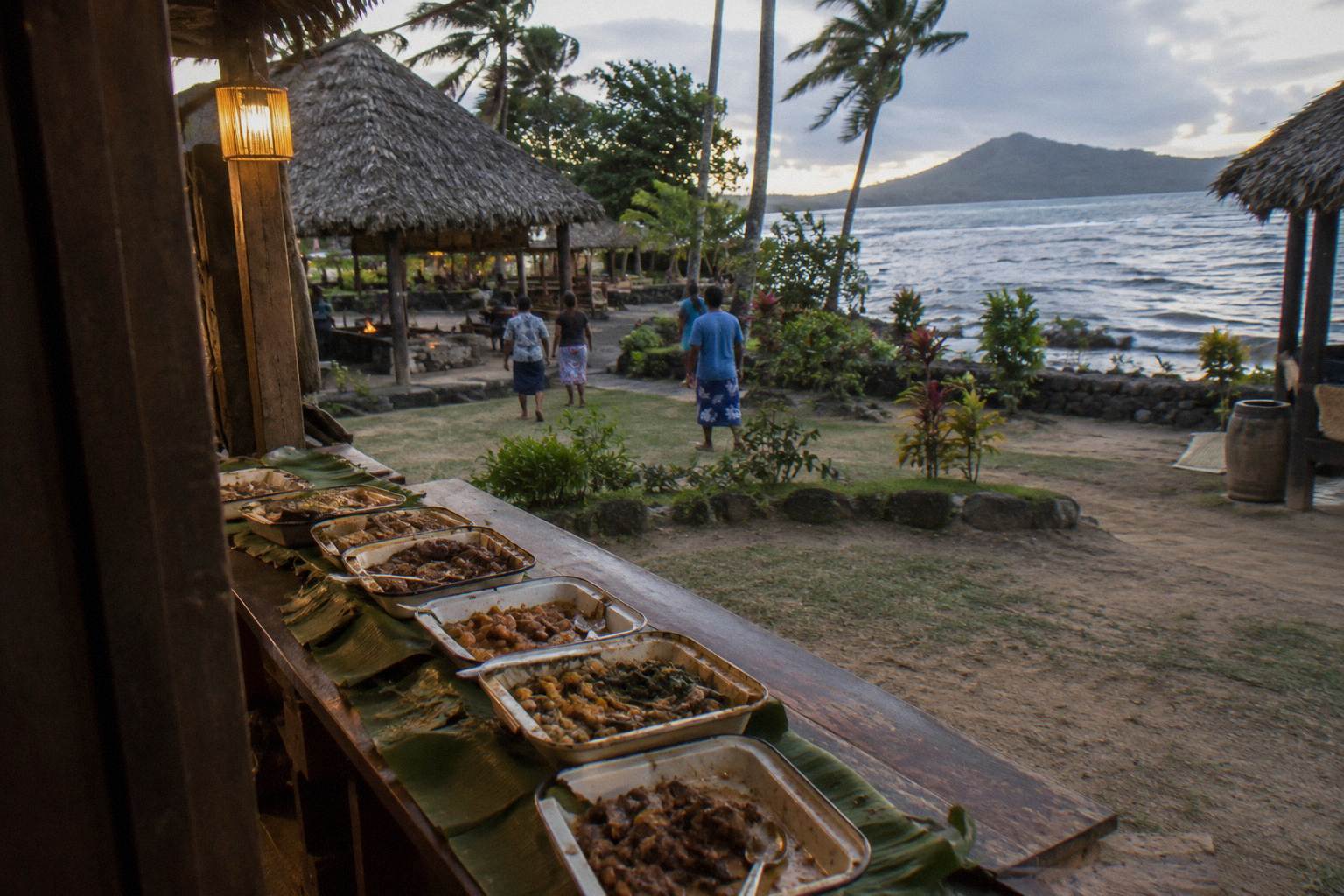
There are also entirely practical reasons someone sits out a round: medication, pregnancy, recovery, plain dislike of the taste, or an early start the next morning. You do not owe an evening's hosts a medical explanation, and you do not need one to read this article. The evening continues around the ceremony in any case. At Fiji Culture Village, the lovo is unearthed at 6:45pm, the kava ceremony follows at 7:00pm, and the buffet dinner starts at 7:20pm, so the ceremony is a twenty-minute window inside a four to four-and-a-half hour program that also includes a warrior welcome, a guided village walking tour, a meke show and a fire dance. Skipping the cup does not mean skipping the night.
For anyone weighing the evening against alternatives, it helps to compare what each operator actually lists. The table below sticks to the published facts, and where an operator has not stated something, it says so.
| Tour | What the operator lists for kava | The rest of the evening, as listed |
|---|---|---|
| Culture Village Evening Tour With Dinner And Show | Kava ceremony at 7:00pm | Warrior welcome, guided village walk, lovo unearthing, buffet dinner, meke show, fire dance |
| Robinson Crusoe Sunset Dinner And Fire Show | Sevusevu welcome ceremony with kava tasting | Island welcome, sunset bonfire with serenaders, lovo unearthing with fire walking demonstration, lovo buffet, evening show, Isa Lei farewell |
| Valentine Tours Fijian Culture Night, Dinner And Meke Show | Not stated; check the booking page | Dinner and a meke show, about 3 hours, hotel pick-up from the Nadi and Denarau area |
| VOU Evening Dinner And Show | Not stated | A theatrical dinner show with drumming, dinner and theatre, about 3 hours |
The Valentine Tours evening is worth a note here because it shows how the question changes with the product. Its dinner and meke show is listed at about three hours with hotel pick-up from the Nadi and Denarau area, but the operator has not published whether a kava ceremony forms part of the night. If the ceremony is the thing you specifically want to experience, an evening that names it on the itinerary, like the two above it in the table, is the safer choice; if kava is the thing you would rather avoid, the same logic applies in reverse.
What Sevusevu Means On A Staged Tour Evening
Sevusevu, in Tourism Fiji's words, is customary as a way of presenting a small bundle or packet of powdered kava to the village chief to seek permission to enter communal lands as a guest. On a staged tour evening, Robinson Crusoe lists a sevusevu welcome ceremony with kava tasting, which means the form of the welcome is drawn from that custom and offered to visitors as an experience rather than imposed as an entry requirement on you personally.
Understanding that distinction makes the whole evening read differently. In village life the sevusevu is the visitor's gesture, kava presented to the host community. On a tour, the operator stages the ceremony as part of the welcome, and the guests receive it rather than provide it. Nothing in the operator's description casts you as failing a village obligation if you do not drink: you are the guest being welcomed, and the ceremony is performed for the group. Tourism Fiji's etiquette guide is the official reference for behaviour around villages and ceremonies, and its advice covers dress, hats, photographs, shoes and speaking softly, not drinking requirements.
The etiquette guide is worth reading in full before any cultural evening, staged or otherwise, because several of its points apply to the parts of the tour outside the ceremony. Cover bare shoulders and legs for a village visit, wrap a sulu at the waist, remove hat and sunglasses, carry bags in hand rather than on the shoulders, ask permission before photographs, and remove shoes before entering a village building. Robinson Crusoe echoes the dress point for its Combo tour, which includes a village visit, and says spare sulus are available. The Fiji cultural night etiquette guide and the what to wear guide on this site carry the full rundown.
What the sources do not cover is also part of an honest answer. Whether a host on a particular night offers a non-kava alternative, whether children at the ceremony are served, and how an individual group's ceremony is paced are all details that vary and are not published. The operator's contact details exist for exactly this kind of question, and asking one specific question before booking gets one specific answer, which is always better than arriving with an assumption.
Which Evenings Include A Kava Ceremony
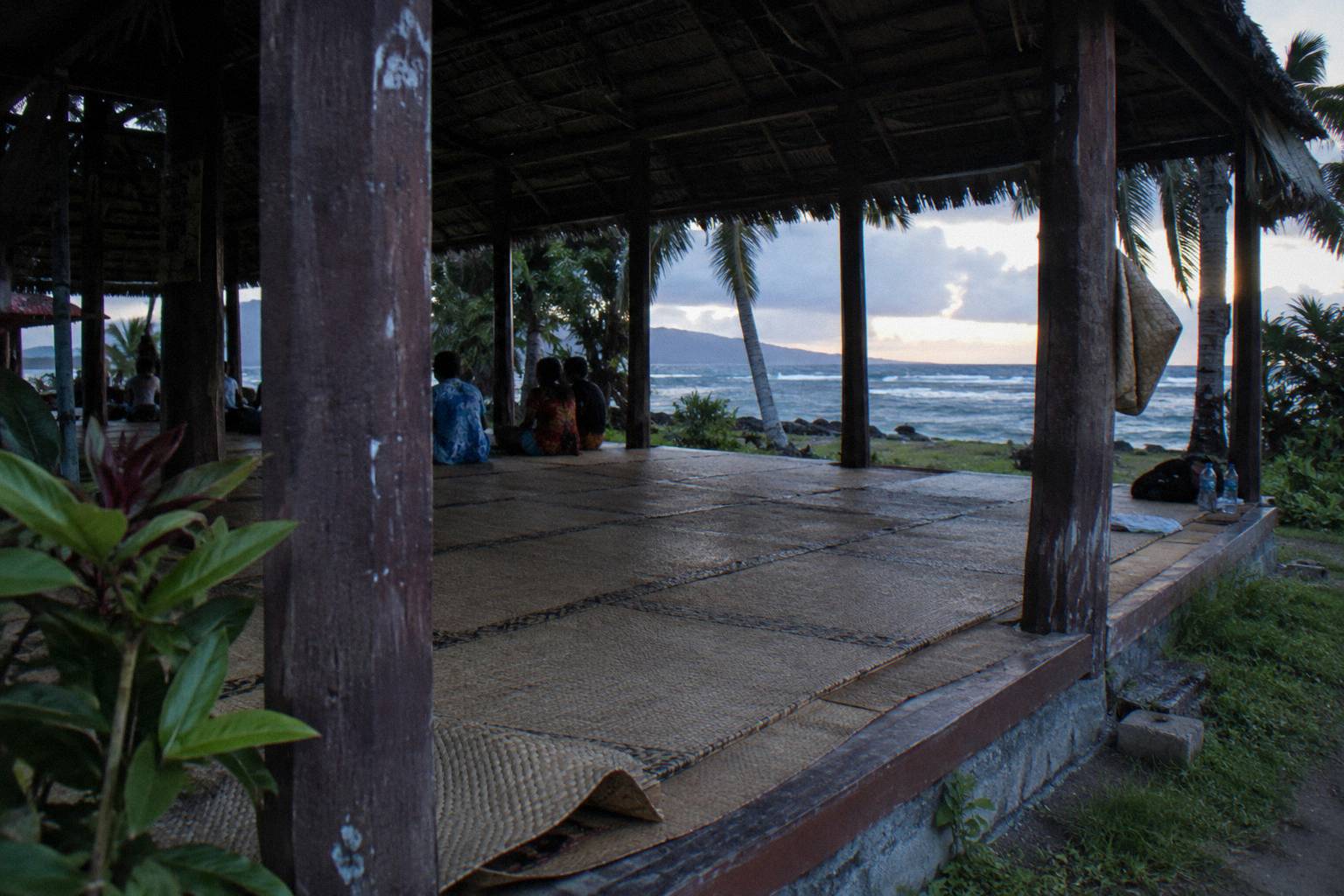
Two of the evening tours covered here name a kava element on their published itineraries: Fiji Culture Village lists a kava ceremony at 7:00pm on its Monday to Saturday program, and Robinson Crusoe lists a sevusevu welcome ceremony with kava tasting on its Monday, Wednesday and Saturday Sunset Dinner Show. Valentine Tours Fiji and VOU do not state whether kava forms part of their evenings.
The schedule differences matter as much as the ceremony itself. Fiji Culture Village runs Monday to Saturday, picking up from Denarau, Nadi and Wailoaloa hotels from 4:20pm, with farewell at 8:30pm, and the whole evening runs about four to four and a half hours door to door. Its operator rate is F$175 adult, F$105 child aged 5 to 12, or F$500 for a family of 2 adults and 2 children, valid to 31 December 2026, then F$189, F$115 and F$550 for 2027. Its notice also closes the village for annual maintenance from Monday 22 February 2027 to reopening Wednesday 10 March 2027, with online orders after 21 February 2027 still processed.
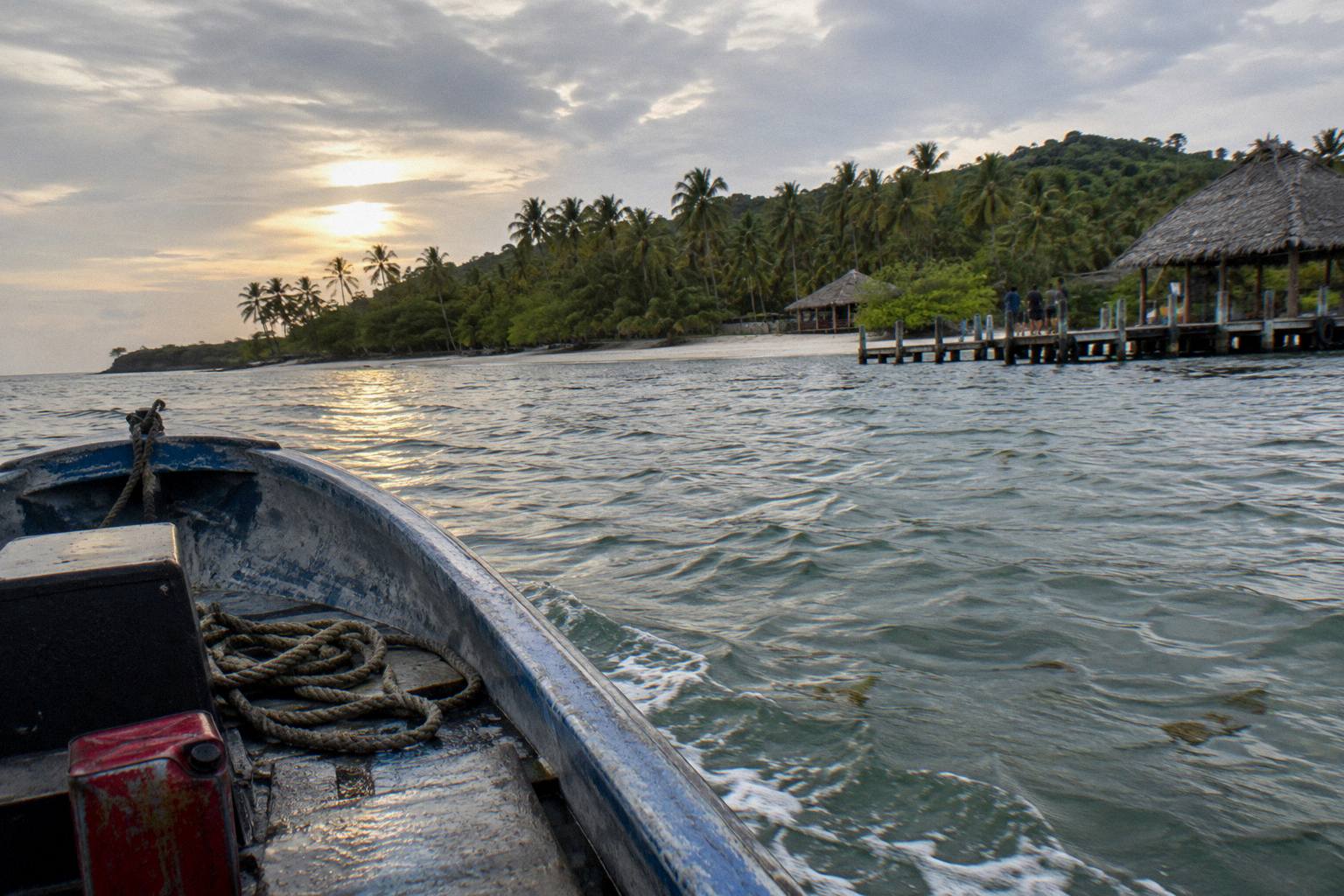
Robinson Crusoe's evening runs on three nights a week, Monday, Wednesday and Saturday, from 5pm to 9pm on the island, with the boat leaving the mainland jetty at 5:00pm. The jetty sits near Natadola Beach, 45 minutes from Nadi, followed by a 30-minute calm-water cruise down the Tuva River, and return coach transfers from Nadi, Denarau and Coral Coast hotels are included. Its tour page prints no price, so the rate to work from is whatever the booking page shows on the day. Its terms are clear on cancellation: a full refund 24 hours or more before pick-up, a 100 percent forfeit inside that window. If you are weighing the two against each other, the Robinson Crusoe island cultural night page covers that evening in detail.
There is a third angle worth naming: the Robinson Crusoe Day And Night Combo, which runs the same three nights from 10am to 9pm, about 11 hours, and includes the full Sunset Dinner Show after a day of village visit, snorkelling and kayaking. It carries the same sevusevu welcome and kava tasting, so the ceremony question is identical, but the day around it is much longer. The operator asks visitors on that tour to cover shoulders and bring a sulu or sarong for the village visit.
Common Mistakes When Attending A Fijian Kava Ceremony
The mistakes that trip visitors up are treating the ceremony as a test, arriving without knowing the etiquette basics, assuming published facts apply to every operator, and inventing obligations the sources never state. People worry about doing the wrong thing in front of a host, when the published guidance is short, public and easy to learn in advance. The failures are mostly preparation failures, not ritual ones.
The first mistake is assuming the ceremony is compulsory and arriving anxious about it. As set out above, no official source states that drinking is required, and no operator here describes the ceremony that way. If it is on your mind, one phone call before booking settles it. The second mistake is the mirror image: assuming nothing about etiquette applies to guests. Tourism Fiji's etiquette page is explicit about dress, hats, shoes, photographs and speaking softly, and those courtesies are entirely in your control regardless of what you drink.
The third mistake is crossing facts between operators. Each detail in this article belongs to the operator that published it: the 7:00pm ceremony time is Fiji Culture Village's, the kava tasting and the island welcome are Robinson Crusoe's, and the three-hour duration belongs to Valentine Tours Fiji. A start time, transfer or inclusion from one evening never transfers to another, and mixing them is how plans go wrong. The fourth mistake is treating unstated as forbidden. "Not stated" means exactly that: ask the operator, and decide with the answer in hand.
A short checklist avoids most of it: know the bilo sequence from Tourism Fiji's guide before you go, know the high tide and low tide vocabulary, follow the dress guidance, and ask your one personal question in advance. Then the ceremony becomes what the operators present it as, a welcome, rather than an exam.
Common Questions About Drinking Kava At A Fijian Ceremony
Do You Have To Drink Kava At A Fijian Ceremony?
No official source says you must. Tourism Fiji's kava guide explains how to accept a cup but does not state that declining is unacceptable, and neither Fiji Culture Village nor Robinson Crusoe describes its ceremony as compulsory. Say your preference to the host on the night, or ask the operator before booking.
What Happens At The Kava Ceremony On The Culture Village Evening?
The operator's timeline places the kava ceremony at 7:00pm, after the unearthing of the lovo at 6:45pm and before the buffet dinner at 7:20pm. The evening also includes a warrior welcome, a guided village walking tour, a meke show and a fire dance, running about four to four and a half hours door to door.
How Do You Accept A Bilo Correctly?
Per Tourism Fiji's kava guide: clap once, cupped and loud, say "Bula!", drink in one gulp, return the cup, clap three times and say "vinaka". A full cup is called high tide and a half cup low tide.
Can You Ask For A Smaller Cup?
Yes, low tide, the half cup, is an established serving size in Tourism Fiji's guide, not a tourist invention. Treat it as the smaller serve; the guide makes no claim about strength or effect.
Does The Robinson Crusoe Evening Include Kava?
The operator lists a sevusevu welcome ceremony with kava tasting among the highlights of its Sunset Dinner Show, which runs Monday, Wednesday and Saturday, 5pm to 9pm on the island.
What If I Cannot Or Do Not Want To Drink Kava?
Tell the host quietly on the night, or ask the operator in advance: Fiji Culture Village on +679 804 4800, Robinson Crusoe on +679 776 0999. The ceremony is one item on a longer itinerary, and the published guidance does not treat declining as unacceptable. Health questions belong with a health professional.