Fiji Kava Ceremony: What Happens And How To Take Part
A kava ceremony sits at the heart of most Fijian cultural evenings. Tourism Fiji's guide and the operators' own pages set out exactly what happens, and what a guest is asked to do.
Short answer
A Fiji kava ceremony is the serving of yaqona, made from the dried roots of Piper methysticum, from a communal tanoa bowl into a bilo cup. On staged evenings, Fiji Culture Village holds its ceremony at 7:00pm and Robinson Crusoe lists a sevusevu welcome with kava tasting. Adult rate for the Culture Village evening is F$175 to 31 December 2026.
A kava ceremony is the moment an evening of Fijian culture slows down and becomes participatory. Tourism Fiji's own guide describes yaqona as a drink made from the dried roots of Piper methysticum, served from a communal bowl called a tanoa into a cup called a bilo. Two of the operators covered here stage a ceremony as part of a booked evening, and their published timelines say exactly when it happens.
What A Fiji Kava Ceremony Actually Is
A Fiji kava ceremony is the formal serving and drinking of yaqona, Fiji's national drink, which is made from the dried roots of Piper methysticum. The root is mixed in a large communal wooden bowl called a tanoa and poured into a single coconut shell cup, the bilo, which guests drink from in turn as a shared act of welcome and gathering rather than a staged performance.
Tourism Fiji's kava guide is the clearest public source on the drink itself. Yaqona comes from the dried roots of Piper methysticum, a plant in the pepper family. The guide does not go further into preparation than that, and neither will this page: how the root is processed beyond drying is not covered in the source material. What the guide does give is the language of the ceremony, and that language is worth learning before an evening out, because it is the language an emcee will use.
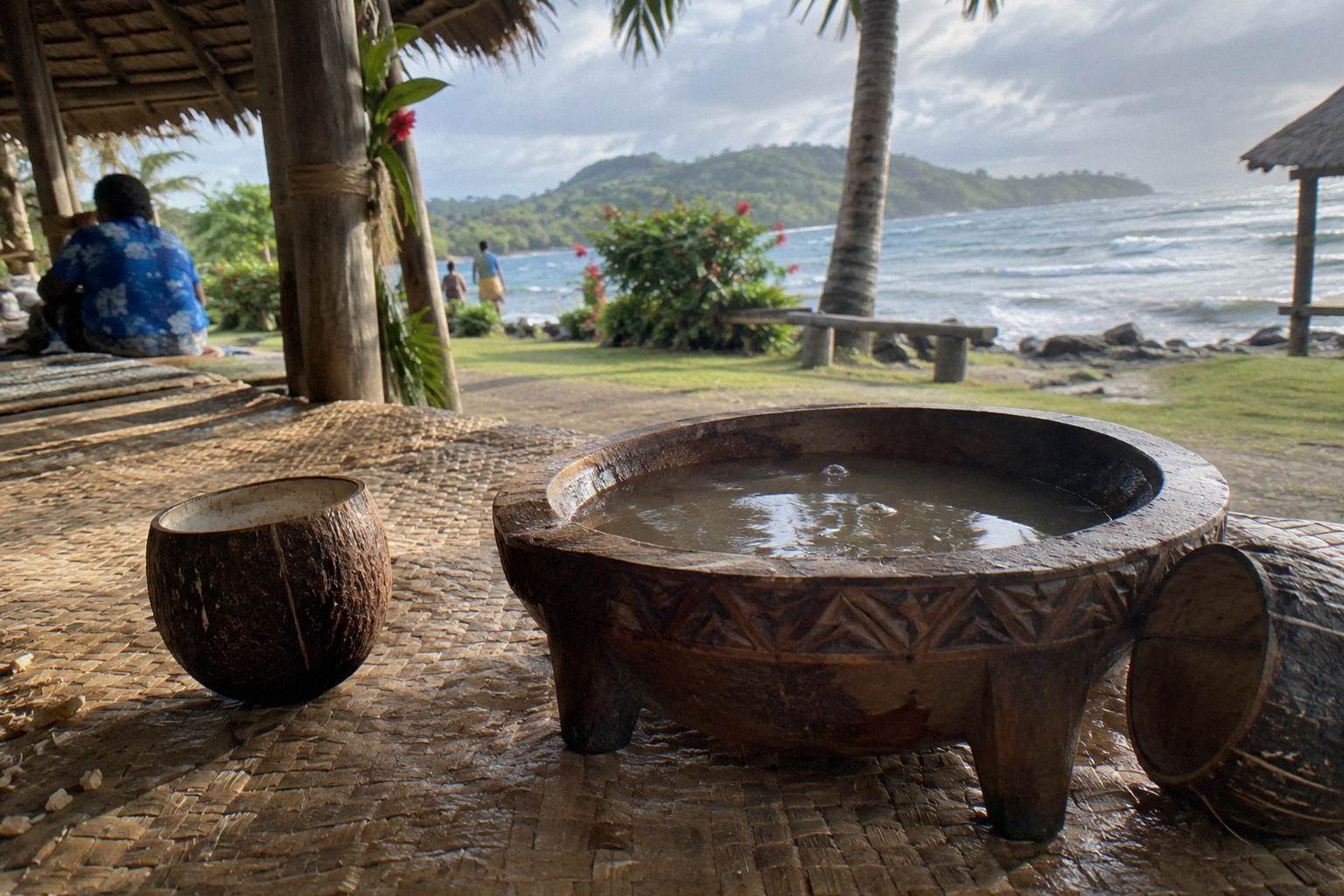
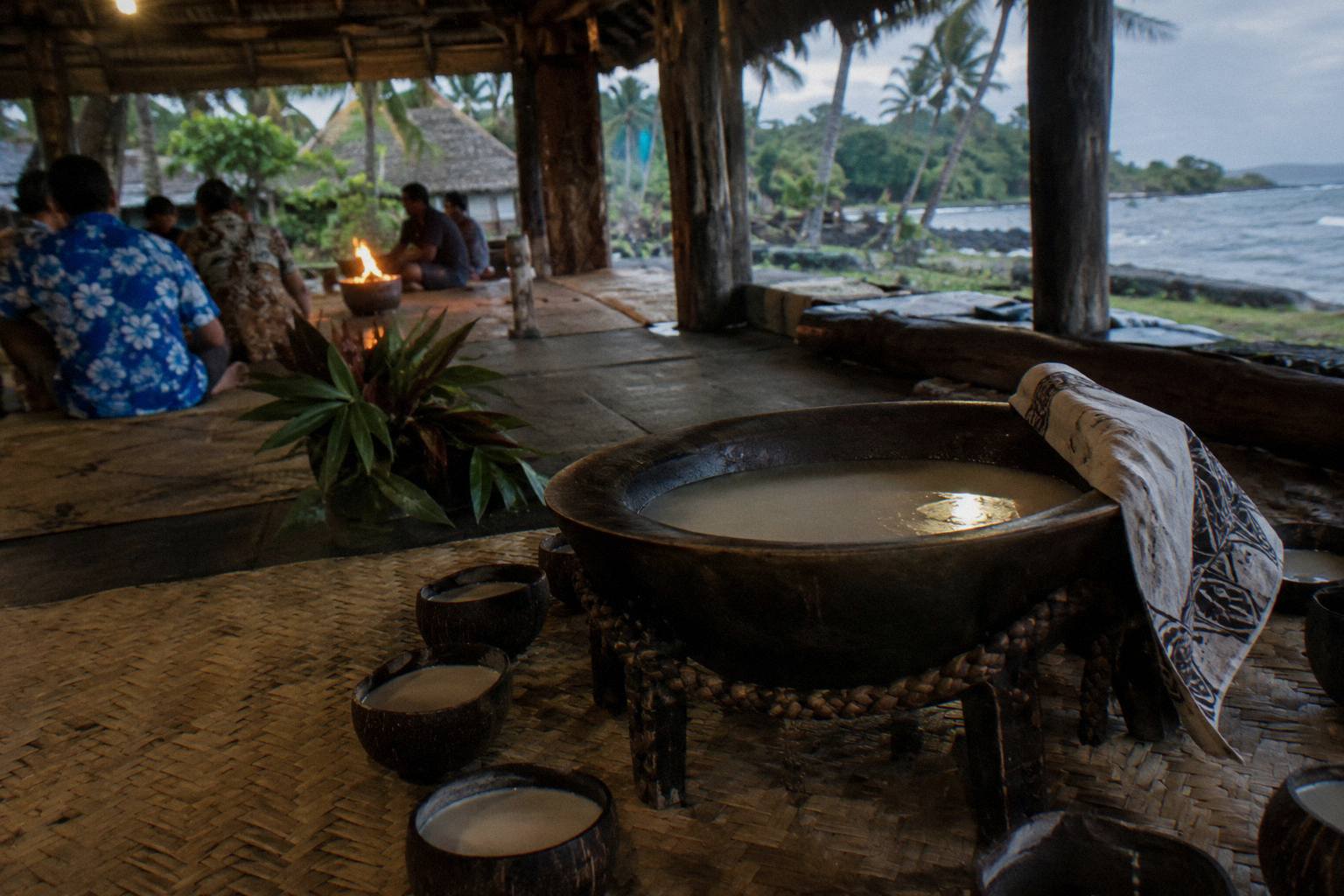
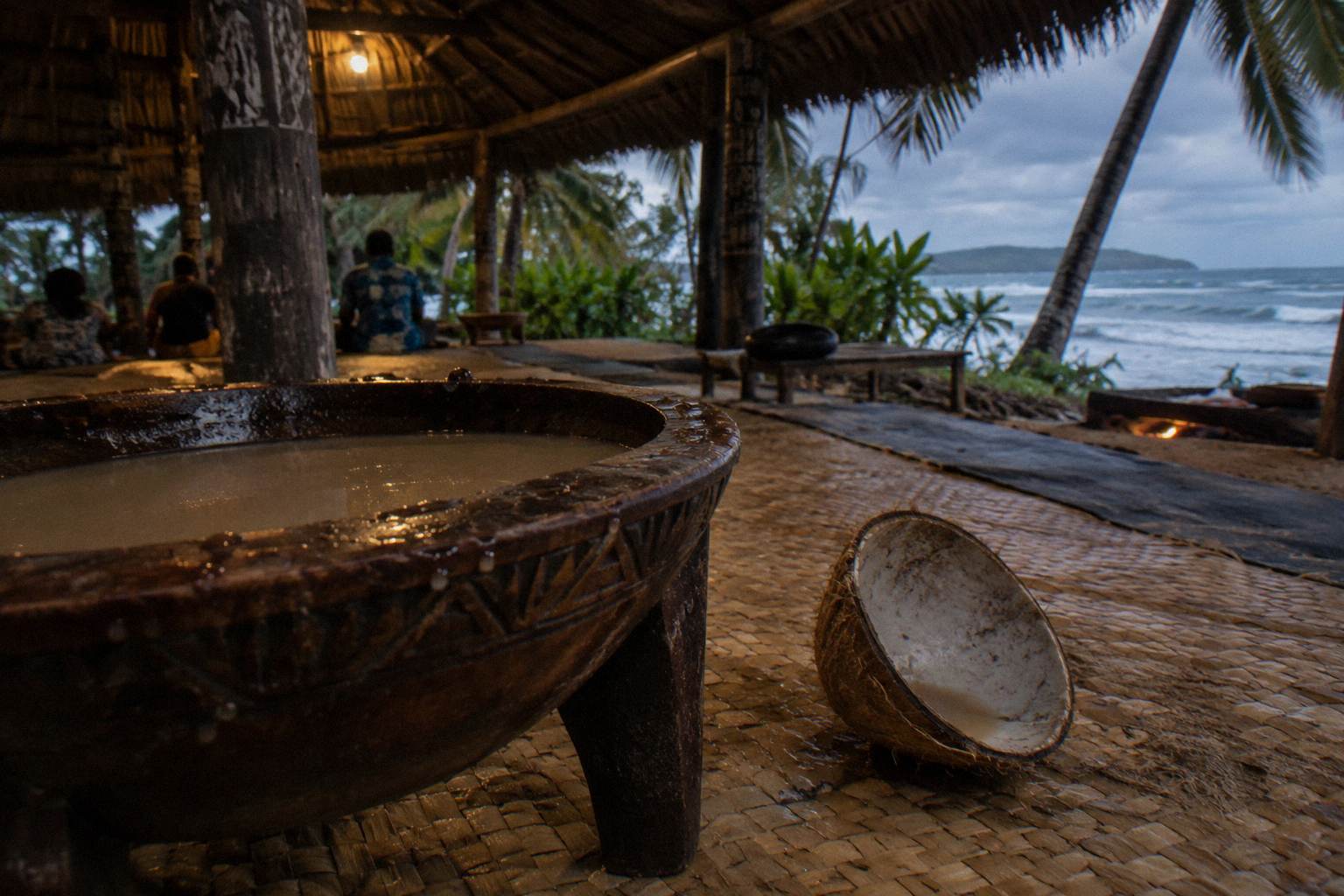
Three words carry most of the evening. The tanoa is the bowl, usually wooden and set on the ground or a low stand. The bilo is the cup, traditionally a half coconut shell, and it is shared rather than handed out individually. And the serving size has its own vocabulary: a full cup is called "high tide" and a half cup "low tide". Asking for low tide is a normal request, and on a staged evening the server will usually ask which a guest wants before pouring.
The ceremony has a place in the wider etiquette of visiting Fiji. On the same etiquette pages, Tourism Fiji explains sevusevu, the custom of presenting a small bundle of powdered kava to a village chief to seek permission to enter communal lands as a guest. A booked cultural evening is a staged version of that world, and the ceremony inside it is a simplified, guest-friendly form. The sevusevu ceremony and its meaning has its own page here for readers who want the background in full.
What a ceremony is not is a test. Nobody at a staged evening expects a visitor to know the clapping sequence in advance, and the sequence itself is short. The sections below set out what Tourism Fiji says, what each operator lists, and how the two fit together on a real night out in Nadi or on the Coral Coast.
Where The Ceremony Fits Into A Cultural Evening
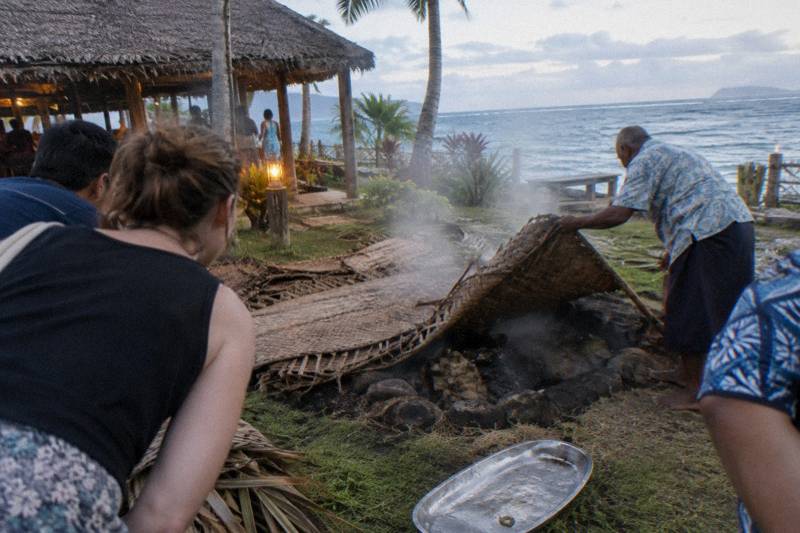
On the two evenings that publish full itineraries, the kava ceremony sits in the middle of the night, between the welcome and the meal. Fiji Culture Village's timeline places its kava ceremony at 7:00pm, after the unearthing of the lovo at 6:45pm and before the buffet dinner at 7:20pm. Robinson Crusoe instead lists a sevusevu welcome ceremony with kava tasting among its highlights, folded into the arrival and welcome rather than a fixed clock time.
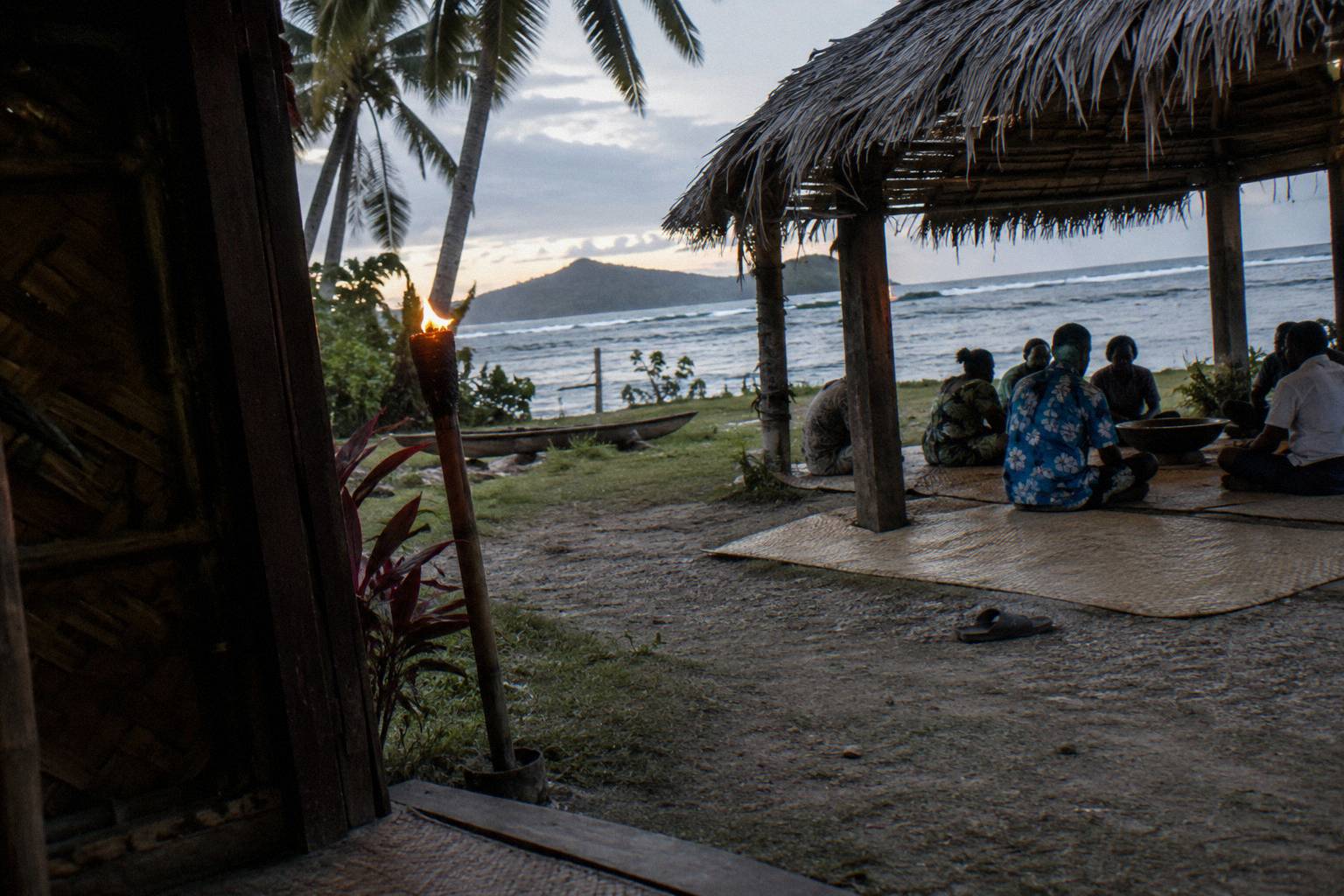
The Culture Village evening, bookable here, runs Monday to Saturday with hotel pick-up from Denarau, Nadi and Wailoaloa hotels from 4:20pm. The operator's published timeline then runs: 5:15pm warrior welcome, 5:30pm guided village walking tour, 6:45pm unearthing of the lovo, 7:00pm kava ceremony, 7:20pm buffet dinner of lovo food, 7:50pm meke show and fire dance, 8:30pm farewell and departure. That is about 4 to 4.5 hours door to door, and the ceremony is a fixed, announced item on the schedule, not an optional extra.
The Robinson Crusoe Sunset Dinner Show structures its night differently. The boat leaves the mainland jetty at 5:00pm, the island welcome follows at 5:45pm, a sunset beach bonfire with serenaders runs from 6:00pm, the lovo is unearthed with a fire walking demonstration at 6:30pm, and dinner is served at 7:00pm before the "Legends of the Pacific" show. The sevusevu welcome ceremony with kava tasting is listed among the highlights rather than given a clock time, so a guest should expect it woven around the arrival rather than announced as a slot.
Two other evenings in Nadi deserve a mention for completeness. Valentine Tours Fiji bills a Fijian culture night with dinner and a meke show, about 3 hours, with hotel pick-up from the Nadi and Denarau area; whether it includes a kava ceremony is not stated, so ask the operator or check the booking page. VOU Hub Fiji stages a theatrical dinner show with drumming, a modern stage format rather than a village night, and no kava ceremony is stated for it either.
The placement of the ceremony matters for planning because it shapes the shape of the evening. At the Culture Village it comes after a full village walk, so a guest arrives at the tanoa with context: the guided walk has already shown the buildings and the layout of a Fijian village. On the island evening the tasting comes earlier and lighter, part of the arrival sequence, with the lovo and the show carrying the rest of the night.
| Evening | Operator's ceremony line | Where it sits in the night | Days it runs |
|---|---|---|---|
| Culture Village Evening Tour With Dinner And Show | Kava ceremony at 7:00pm | After the lovo unearthing, before the buffet dinner | Monday to Saturday |
| Robinson Crusoe Sunset Dinner And Fire Show | Sevusevu welcome ceremony with kava tasting | Listed among highlights, around the island arrival | Monday, Wednesday, Saturday |
| Valentine Tours Fijian Culture Night | Not stated | Not stated | Not stated |
| VOU Evening Dinner And Show | Not stated | Theatrical dinner show format | Not stated |
One planning note from the operators' own pages: Fiji Culture Village closes for annual maintenance from Monday 22 February 2027 until it reopens on Wednesday 10 March 2027, and its online orders after 21 February 2027 are still processed. Robinson Crusoe's evenings run only three nights a week. The choice of night, not the pace of booking, is the real constraint, and nothing in any operator's material states that an evening sells out or needs a set lead time.
How To Accept A Bilo, Step By Step
Tourism Fiji's kava guide gives a four-part sequence for accepting a bilo: clap once, cupped and loud; say "Bula!"; drink in one gulp; then return the cup, clap three times and say "vinaka". The clap is made with cupped hands, which changes the sound, and the word vinaka closes the exchange as a thank you. On a staged evening the emcee will usually talk the room through it before the first pour.
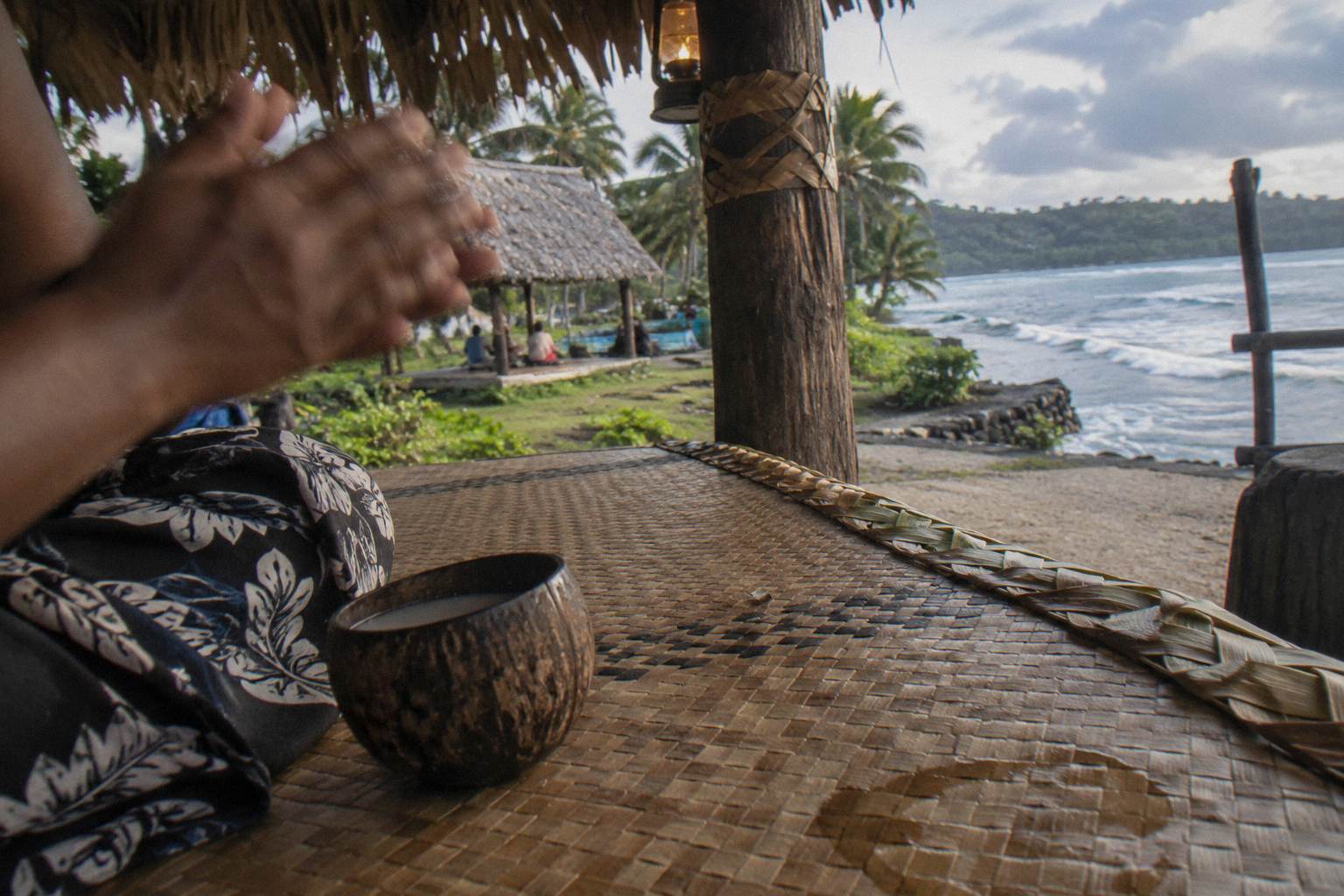
Breaking the sequence into its parts helps because the two claps are different. The single clap that opens the exchange is cupped and loud, in Tourism Fiji's wording, which produces a hollow sound rather than a sharp one. The three claps that close it, after the cup is returned, are the thank you. Between them sit the word "Bula!" before drinking and the word "vinaka" after, two words a visitor will hear constantly in Fiji in any case. The guide to why Fijians say bula so much covers the greeting's everyday use.
| Moment | Action | Tourism Fiji's wording |
|---|---|---|
| Before drinking | Clap once, hands cupped | "clap once, cupped and loud" |
| Before drinking | Say the greeting | "say 'Bula!'" |
| Drinking | Empty the cup | "drink in one gulp" |
| After drinking | Hand the cup back | "return the cup" |
| After drinking | Clap three times | "clap three times" |
| After drinking | Say the thanks | "say 'vinaka'" |
The serving size is the guest's one real decision. A full cup is "high tide" and a half cup is "low tide" in the guide's vocabulary, and asking for low tide is a perfectly ordinary request at a staged ceremony. First-timers often prefer it, and nothing in Tourism Fiji's guidance treats it as a lesser choice. The shared bilo also means the ceremony moves at the pace of the room: one cup, one guest, one exchange at a time.
What the sources do not cover also needs saying once, plainly. Whether declining a bilo is acceptable at a ceremony, the effects of kava on the body, its legal status in any country, health and safety claims, and its preparation beyond "from the dried roots" are not in the research behind this page. Those questions belong with the operator or a health professional. For the question of choice specifically, whether you have to drink kava at a ceremony is covered separately.
Sevusevu And The Kava Root Gift
Sevusevu, in Tourism Fiji's etiquette wording, makes it "customary to present a small bundle or packet of powdered kava to the village chief to seek permission to enter their communal lands as a guest". The kava guide, which spells it i-sevusevu on that page, puts the gift of half a kilogram of yaqona root at around FJD 30 to 40. That is Tourism Fiji's figure for a village context, not a requirement at a booked evening.
On a genuine village visit, sevusevu is the entry protocol: the gift is presented, permission is granted, and the guest is welcomed. Tourism Fiji's etiquette guide for visitors frames it exactly that way, as part of a wider set of customs that includes covering shoulders and legs, removing hats and sunglasses, and waiting for the masu before eating at a village meal.
A booked cultural evening stands that protocol on its head, in a guest-friendly way. The operator supplies the kava, and the visitor is the one being welcomed. Robinson Crusoe lists a "sevusevu welcome ceremony with kava tasting" among its highlights, which is the clearest example: the form of the welcome is staged for guests rather than required of them. Fiji Culture Village lists a kava ceremony at 7:00pm in its timeline. Neither operator asks visitors to bring a gift, and no operator material says otherwise. Everything else covered here is indexed on Fiji Cultural Night Tours.
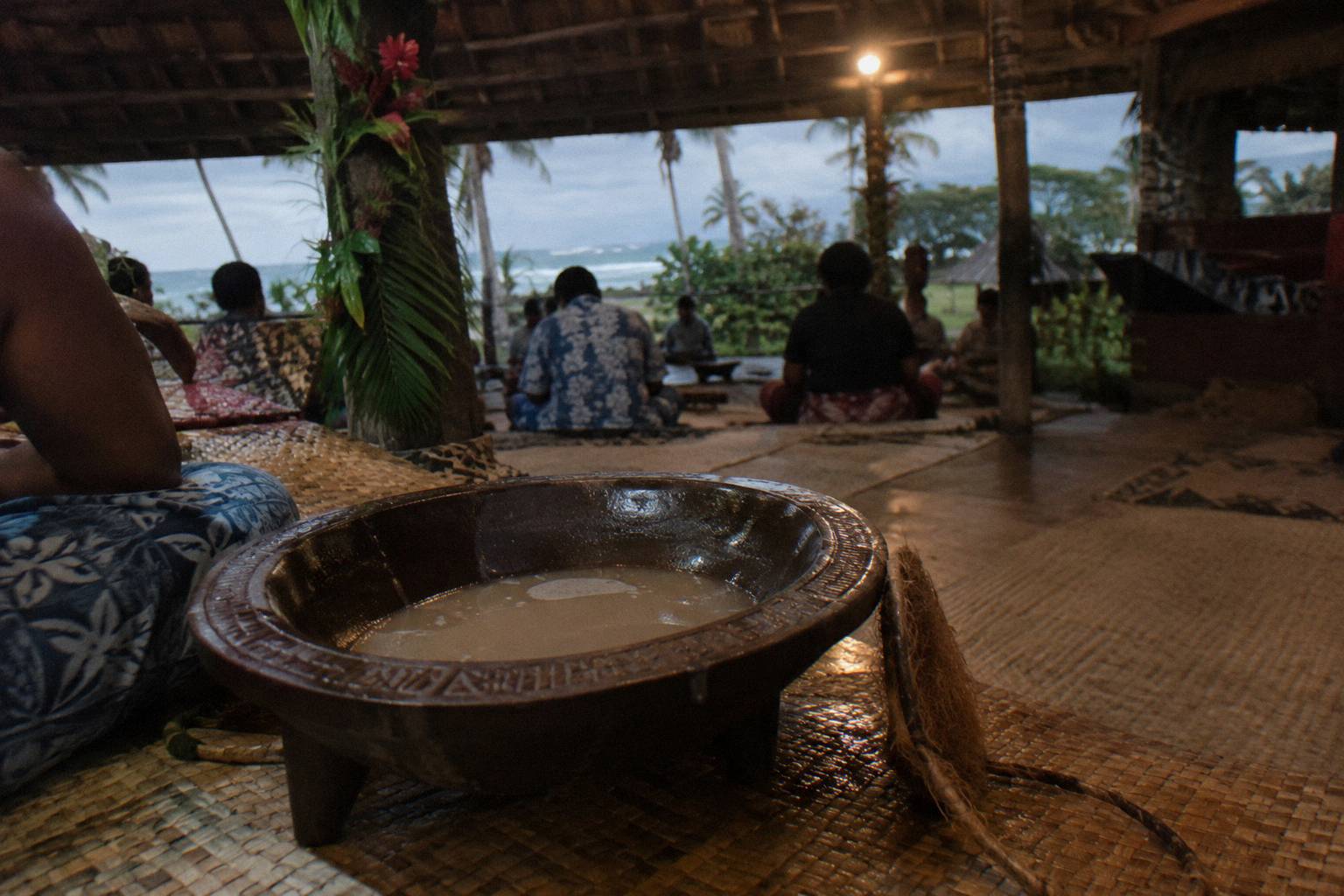
The distinction matters for expectations. A staged sevusevu is a demonstration and an invitation to taste, not a negotiation of entry. Nobody checks whether a guest owns yaqona. What carries over from the real custom is the shape of the thing: a bowl, a server, an exchange of words and claps, and the drink taken together. The deeper background, including the gift custom in village terms, sits on the page about what sevusevu actually is.
It also matters for budgeting, in one narrow sense. The FJD 30 to 40 figure is Tourism Fiji's price for half a kilogram of yaqona root bought as a gift for a village visit. It is not a tour price and not an extra charge on any evening here. The only printable tour prices on this site are Fiji Culture Village's operator rates: F$175 adult, F$105 child aged 5 to 12, and F$500 for a family of 2 adults and 2 children, valid to 31 December 2026, then F$189, F$115 and F$550 for 2027. Robinson Crusoe prints no tour price; see the booking page.
What Sits In The Tanoa: Yaqona Basics
The tanoa holds yaqona, which Tourism Fiji's guide describes as a drink from the dried roots of Piper methysticum. The guide gives no preparation method beyond that, no strength grading and no serving measurements, and none of that detail appears in the operators' material either. The bowl itself is a carved wooden vessel, and the ceremony's vocabulary, high tide and low tide, is the only quantity language any source uses.
The plant is worth naming correctly because the name appears on signage and menus. Piper methysticum is a shrub in the pepper family, and yaqona is the Fijian name both for the plant and for the drink made from its dried roots. Tourism Fiji's traveller's guide to drinking kava is the source for all of this page's vocabulary, and it deliberately stops short of describing effects, strength or preparation. That restraint is matched here.
| Term | Meaning | Source |
|---|---|---|
| Yaqona | The drink, from the dried roots of Piper methysticum | Tourism Fiji kava guide |
| Tanoa | The communal kava bowl | Tourism Fiji kava guide |
| Bilo | The cup, shared around the circle | Tourism Fiji kava guide |
| High tide | A full cup | Tourism Fiji kava guide |
| Low tide | A half cup | Tourism Fiji kava guide |
| Sevusevu | The kava gift presented to a village chief | Tourism Fiji etiquette page |
Questions about what kava does to the body, whether it is safe, and its legal status anywhere in the world are outside what any source here states, and this page will not guess at them. A reader with those questions should ask a health professional, and a reader wondering about the drink's character can read what kava is and the separate piece on whether kava gets you high, both of which stick to the same sourced lines.
The tanoa has its own page here as well, covering the kava bowl and its role in the ceremony's setting. On the evenings themselves, the bowl is the visual anchor of the ritual: guests sit or stand in a circle around it, the server works from it, and the shared bilo passes around that circle. Photography is generally possible at staged evenings, though Tourism Fiji's village etiquette asks permission before photos in a village context, so asking first is the respectful default.
Choosing An Evening That Includes The Ceremony
Two of the five evenings covered here state a kava ceremony. The Culture Village evening builds it into a published 7:00pm slot with a village walk before it, Monday to Saturday, from F$175 per adult to 31 December 2026. The Robinson Crusoe Sunset Dinner Show folds a sevusevu welcome with kava tasting into an island arrival, Monday, Wednesday and Saturday, with no price printed. The other three evenings state no ceremony either way.
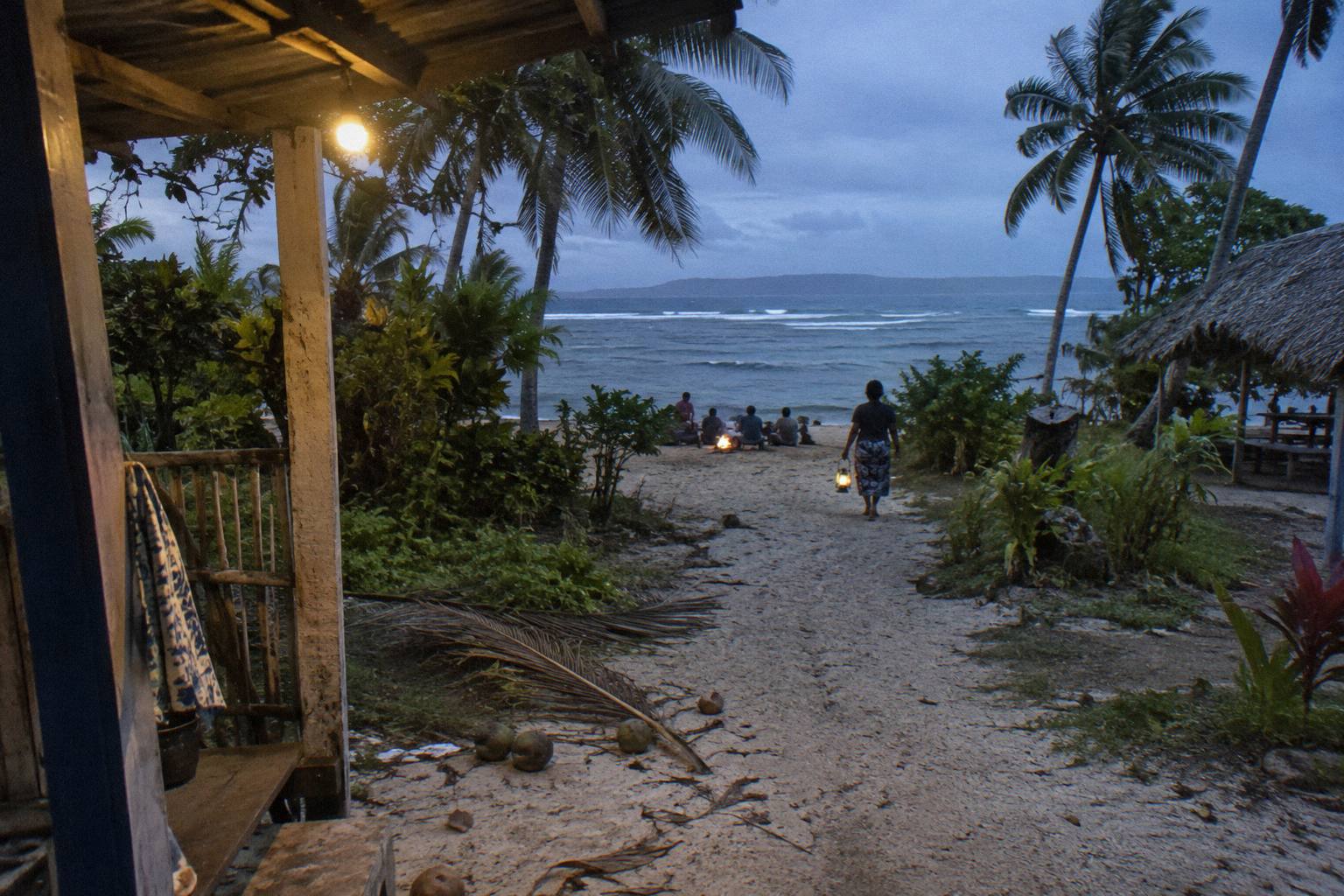
The decision usually comes down to what kind of evening a visitor wants around the ceremony. The Culture Village night is a village-format evening: a walking tour, a lovo unearthing, the ceremony, a buffet dinner and a meke show with a fire dance, all inside about 4 to 4.5 hours with transfers from Nadi and Denarau hotels included. Robinson Crusoe's night is an island-format evening: a 30-minute river cruise down the Tuva River after a coach transfer, a sunset bonfire, the lovo, and a fire and knife dancing show. The ceremony is lighter there, the setting is bigger.
| Culture Village Evening | Robinson Crusoe Sunset Dinner Show | |
|---|---|---|
| Ceremony | Kava ceremony at 7:00pm | Sevusevu welcome with kava tasting |
| Setting | Village on Queens Road, Nadi | Likuri Island, reached by boat |
| Days | Monday to Saturday | Monday, Wednesday, Saturday |
| Duration | About 4 to 4.5 hours door to door | About 4 hours on the island, plus coach |
| Transfers | Return transfer from Nadi and Denarau hotels | Coach from Nadi, Denarau and Coral Coast hotels, plus launches |
| Printed price | F$175 adult to 31 Dec 2026 | Not printed, see the booking page |
| Cancellation | Full refund 24 hours or more before pick-up | Full refund 24 hours or more before pick-up |
For a visitor staying in Nadi or Denarau who wants the ceremony explained and unhurried, the village evening is the closer fit, and it can be checked on the evening's own page or check availability for a chosen night. For a visitor who wants the ceremony as one item inside a bigger island night, the Sunset Dinner Show fits, with the caveat that its cancellation terms are strict: a full refund only 24 hours or more before pick-up, and a 100% forfeit inside that window.
A third path is the Day And Night Combo, which runs Monday, Wednesday and Saturday from 10am to 9pm and ends with the full Sunset Dinner Show, so it reaches the same sevusevu welcome after a day of village visits, snorkelling and a bush medicine walk. It runs about 11 hours, which is a commitment. The operator asks visitors to cover shoulders and bring a sulu or sarong for the village visit, with spare sulus available.
Common Mistakes When Taking Part In A Kava Ceremony
The most common mistakes are small and avoidable: expecting your own cup when the bilo is shared, not knowing that high tide and low tide are the only serving sizes, sitting back as a spectator when the emcee will invite the room to take part, and assuming every evening follows the same rules when only two operators even state a ceremony. Dress is the quiet one: village etiquette asks for covered shoulders and legs, and one operator states it directly.
The first mistake is overthinking the etiquette. Tourism Fiji's sequence is six beats long and the emcee at a staged evening walks the room through it. A guest who claps at the wrong moment has not offended anyone; the ceremony at a booked evening is designed for first-timers. The opposite mistake is treating the whole thing as a show to watch from the back. Participation is invited, gentle, and entirely in the spirit of the night.
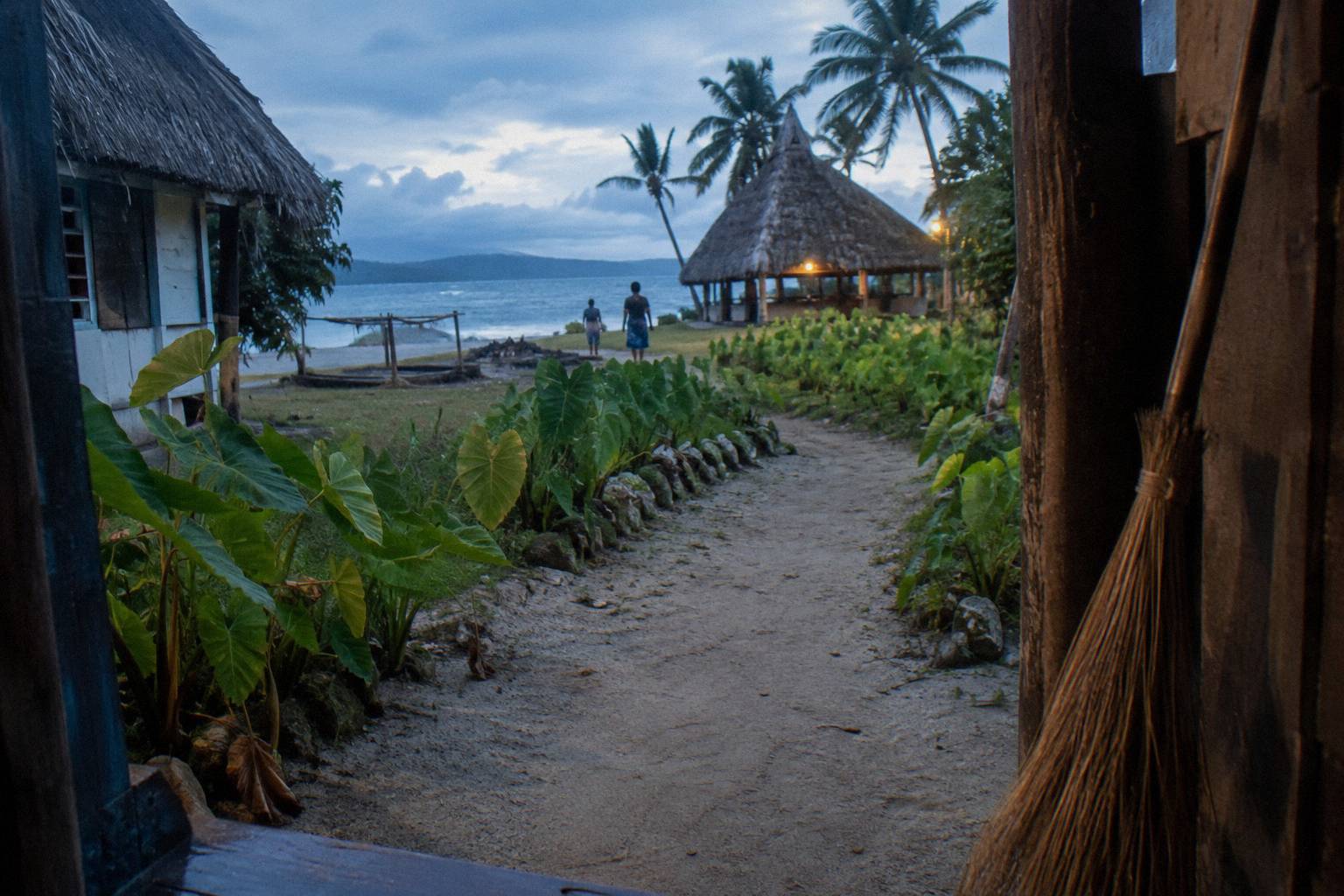
The second is assuming detail that no source states. Whether declining a bilo is acceptable is not stated anywhere in the operator or Tourism Fiji material behind this page, so the answer is to ask the operator ahead or quietly check with the server on the night, not to assume either way. The same goes for effects, safety and legality: none of it is covered by these sources, and a health professional is the right address for those questions.
The third is wardrobe. Robinson Crusoe asks visitors to cover shoulders and bring a sulu or sarong for its village visit, and Tourism Fiji's etiquette guidance says the same for any Fijian village. Fiji Culture Village's dress guidance is not stated, so ask the operator at +679 804 4800. Hats and sunglasses come off, shoes come off before entering any village building, and bags are carried in hand rather than on shoulders, all per Tourism Fiji's etiquette page. The page on what to wear to a Fijian village night covers the practical side.
The fourth is date planning. The Culture Village evening does not run on Sundays, and it closes entirely for maintenance from 22 February to 10 March 2027. The island evenings run only Monday, Wednesday and Saturday. A traveller who fixes the wrong night has no ceremony to attend at all, whatever the wardrobe. Fix the night first, then the rest follows.
Common Questions About The Fiji Kava Ceremony
What Happens At A Fiji Kava Ceremony?
Yaqona, made from the dried roots of Piper methysticum, is served from a communal tanoa bowl into a shared bilo cup. Tourism Fiji's sequence for accepting a cup is to clap once, say "Bula!", drink in one gulp, return the cup, clap three times and say "vinaka". At the Culture Village evening the ceremony is listed at 7:00pm; Robinson Crusoe lists a sevusevu welcome ceremony with kava tasting.
Do You Have To Drink Kava At A Fijian Ceremony?
Whether declining is acceptable is not stated in any of the source material behind this page. Tourism Fiji's guide covers how to accept a cup but not how to decline one. Ask the operator before booking, or check quietly with the server on the night.
What Does A Kava Ceremony Cost?
On a booked evening, nothing extra: the ceremony is included in the tour. Fiji Culture Village's operator rate is F$175 per adult, F$105 per child aged 5 to 12, and F$500 for a family of 2 adults and 2 children, valid to 31 December 2026, then F$189, F$115 and F$550 for 2027. Tourism Fiji separately puts a village sevusevu gift of half a kilogram of yaqona root at around FJD 30 to 40.
Is A Kava Ceremony Suitable For Children?
Fiji Culture Village prices a child rate for ages 5 to 12 and a family rate for 2 adults and 2 children, but states no minimum age. Robinson Crusoe tags its Sunset Dinner Show as suiting adults and states no minimum age either. Neither operator publishes a rule about children and kava, so ask the operator directly.
What Should You Wear To A Kava Ceremony?
Tourism Fiji's etiquette guidance for village visits asks visitors to cover bare shoulders and legs, wrap a sulu at the waist, and remove hats, sunglasses and shoes indoors. Robinson Crusoe states the shoulder and sulu request directly for its village visit. Fiji Culture Village's dress guidance is not stated, so ask the operator.
Which Evenings Near Nadi Include A Ceremony?
The Culture Village evening, Monday to Saturday, lists a kava ceremony at 7:00pm. The Robinson Crusoe Sunset Dinner Show and its Day And Night Combo, both Monday, Wednesday and Saturday, list a sevusevu welcome ceremony with kava tasting. Valentine Tours Fiji and VOU state no ceremony either way.