Why Do Fijians Say Bula So Much?
Where bula appears on a Fijian cultural evening, from the island welcome to the kava ceremony, according to Tourism Fiji and the operators who run the nights.
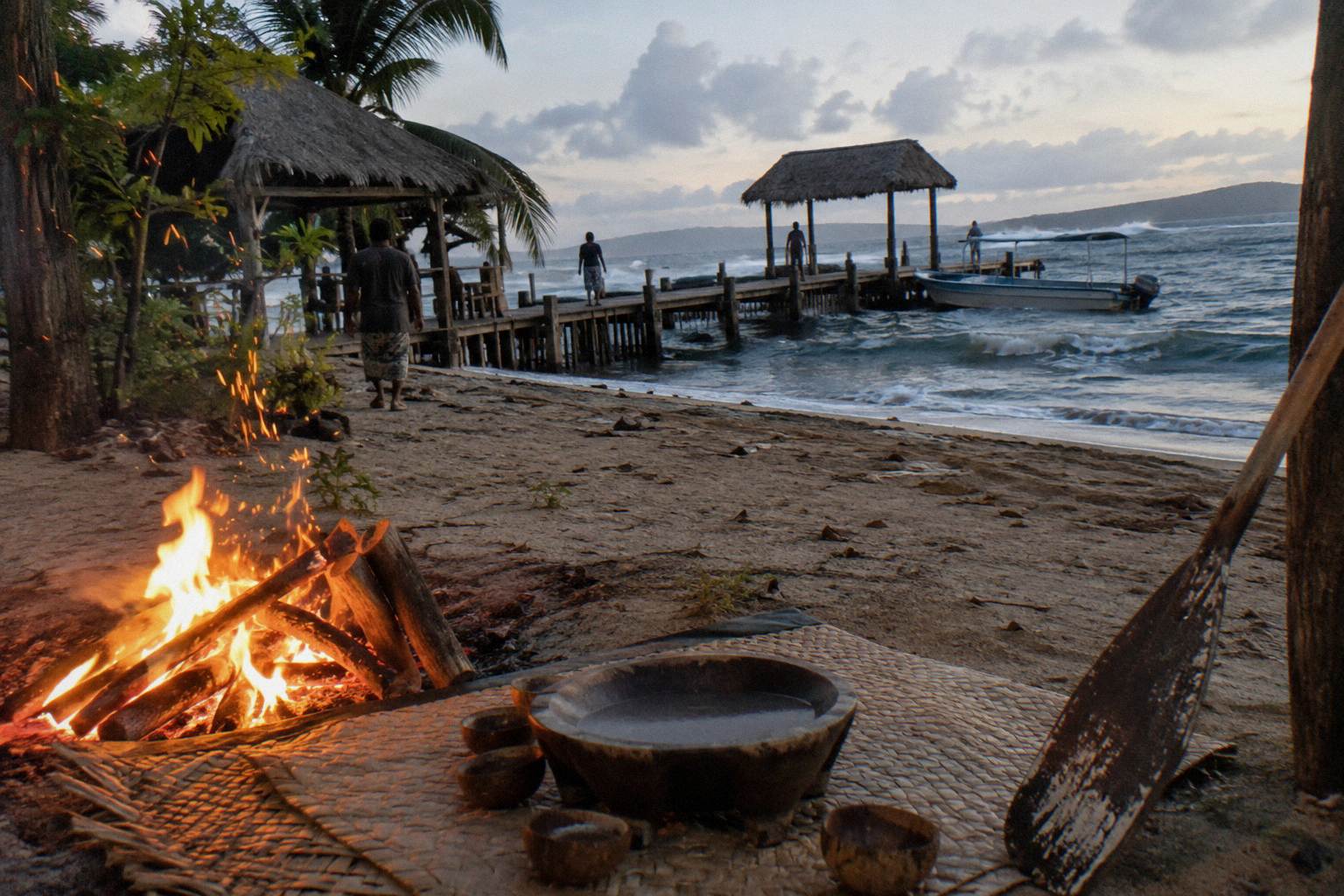
The sources here cannot fully answer that question, because none explains the word's origin, history, or why it is said so often; what they do show is where "Bula" appears in cultural practice. Tourism Fiji's kava guide has a visitor clap once, say "Bula!", drink in one gulp, then clap three times and say "vinaka", and Robinson Crusoe stages a costumed island welcome it bills as a Bula welcome.
The honest scope comes first. Tourism Fiji's pages, the operator pages and the tour data used on this site say nothing about why the word is common, where it comes from or how often it is used day to day. Any explanation of that would be invented, and a page about real bookable evenings has no business inventing one. The word "bula" appears in the research in exactly two contexts: the acceptance of a kava cup, on Tourism Fiji's kava guide, and the staged island welcome described in Robinson Crusoe's itinerary. Those two anchors are what make this a question worth answering for someone booking a night out, because both moments arrive early in the evening and both are participatory.
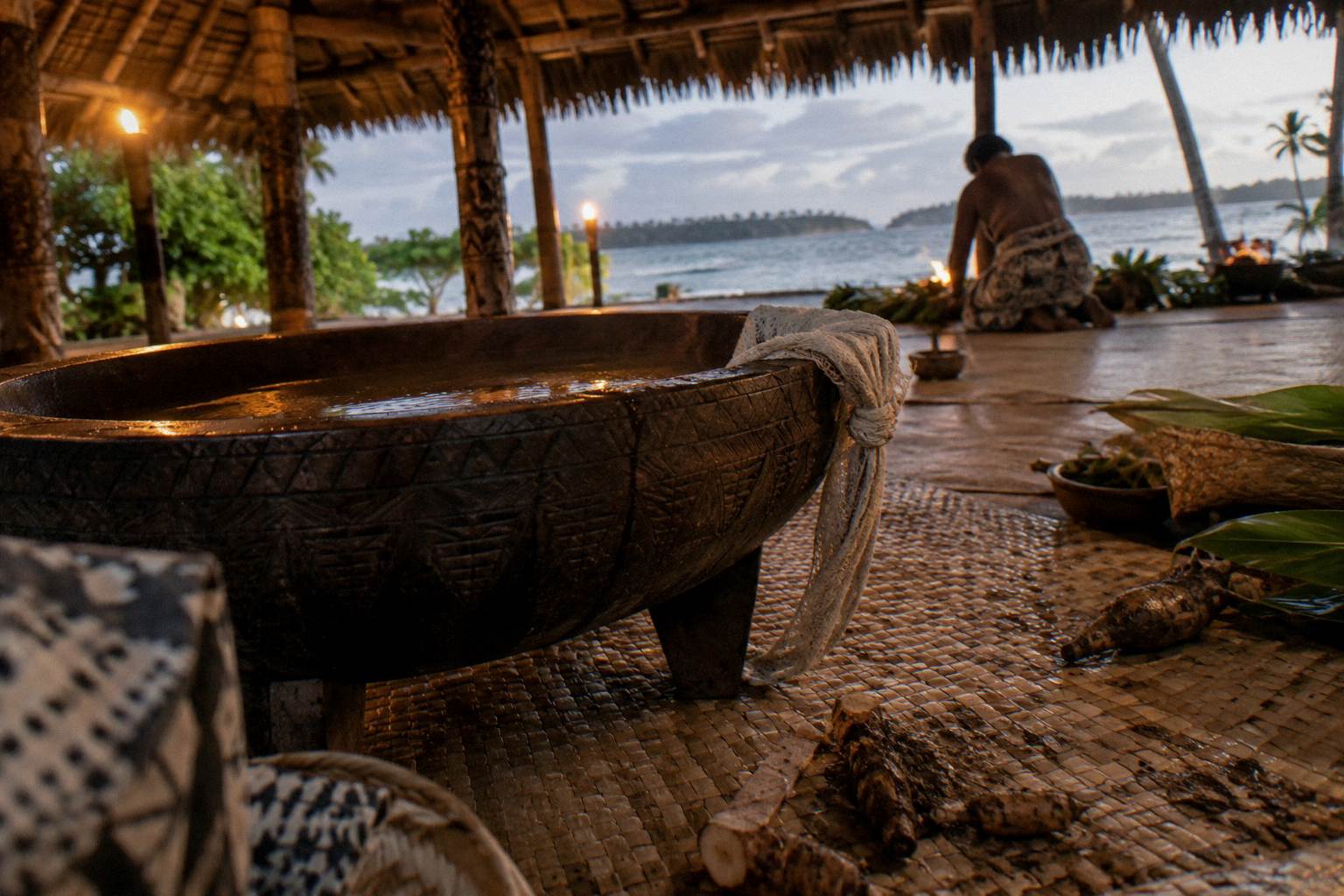
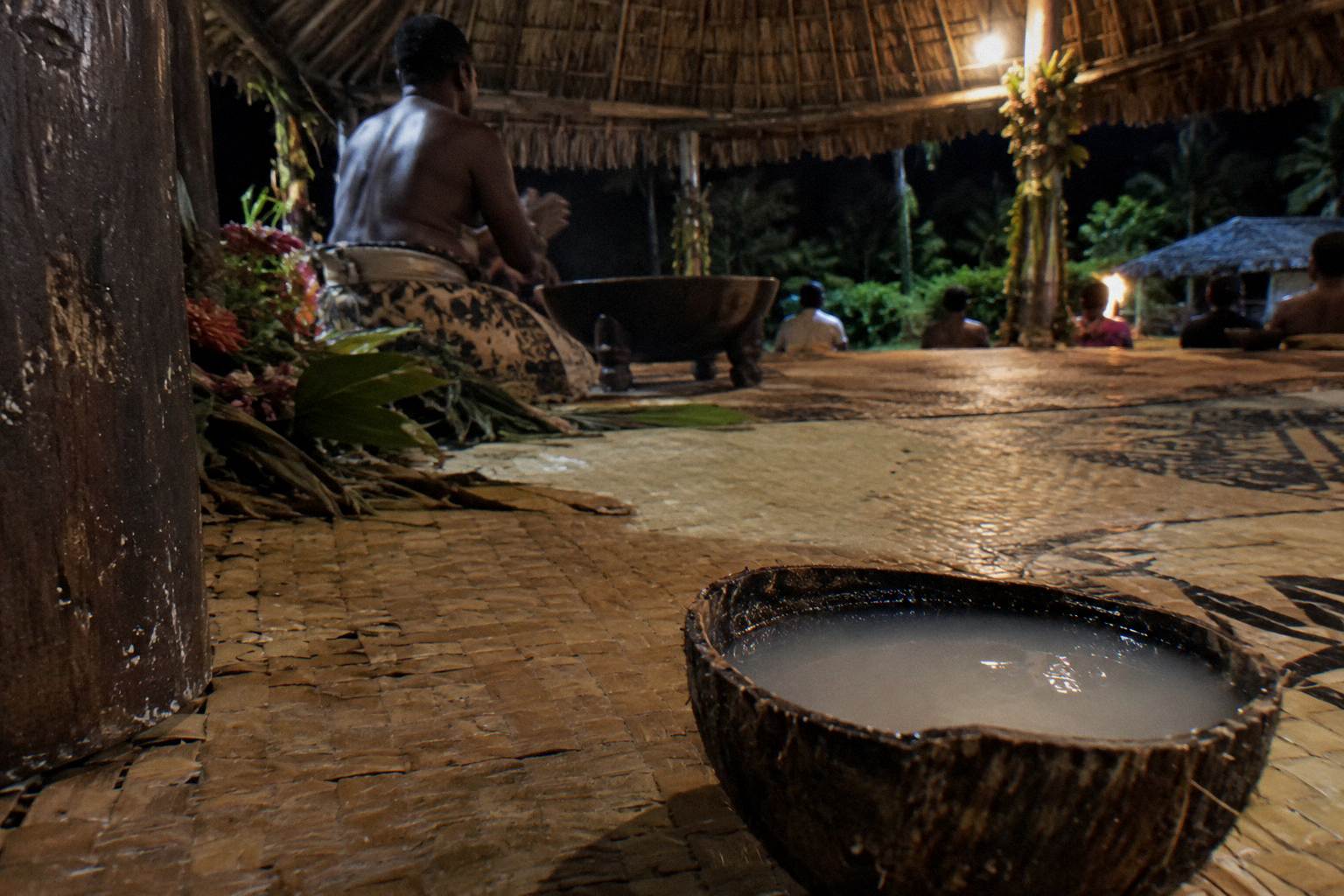
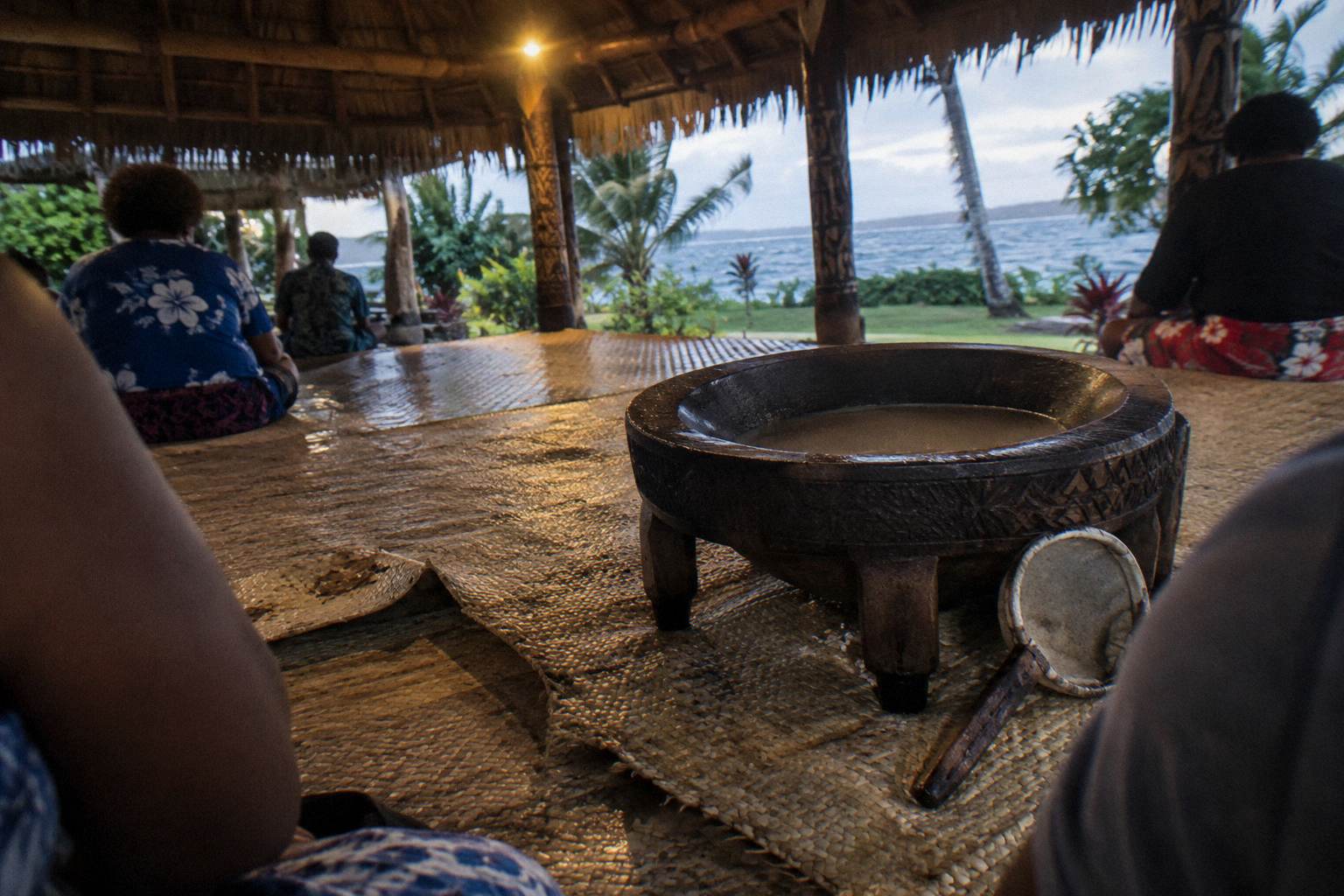
That second point matters. A visitor who books a cultural evening in Nadi will not merely hear the word, on at least one of the tours covered here the visitor is asked to say it. Tourism Fiji's sequence for accepting a bilo is specific: clap once, cupped and loud; say "Bula!"; drink in one gulp; return the cup, clap three times and say "vinaka". The guide also names the vocabulary around the cup: the kava bowl is a "tanoa", the cup is a "bilo", a full cup is "high tide" and a half cup "low tide". Kava itself, per the same guide, comes from the dried roots of Piper methysticum. Someone who reads this before the evening arrives already knows what to do when the bilo reaches them.
The question of which evening to book is where the word becomes practical. Three of the nights covered here stage the greeting in different ways: one inside a kava ceremony at a fixed time, one at a jetty-and-boat arrival, and one, the Valentine Tours Fiji evening, as a Nadi dinner with a meke show where the specific greeting moments are not stated anywhere in the research. The choice between them is a choice of format as much as anything, and the trio below covers all three shapes.
Where Bula Opens The Evening On Each Tour
The Bula moment differs by tour: Robinson Crusoe opens with a 5:00pm jetty departure and a costumed island welcome on Likuri Island at 5:45pm, Fiji Culture Village stages a warrior welcome at 5:15pm roughly an hour before its kava ceremony, and Valentine Tours Fiji leaves its greeting moment unstated, so the operator pages remain the authority on each evening's opening.
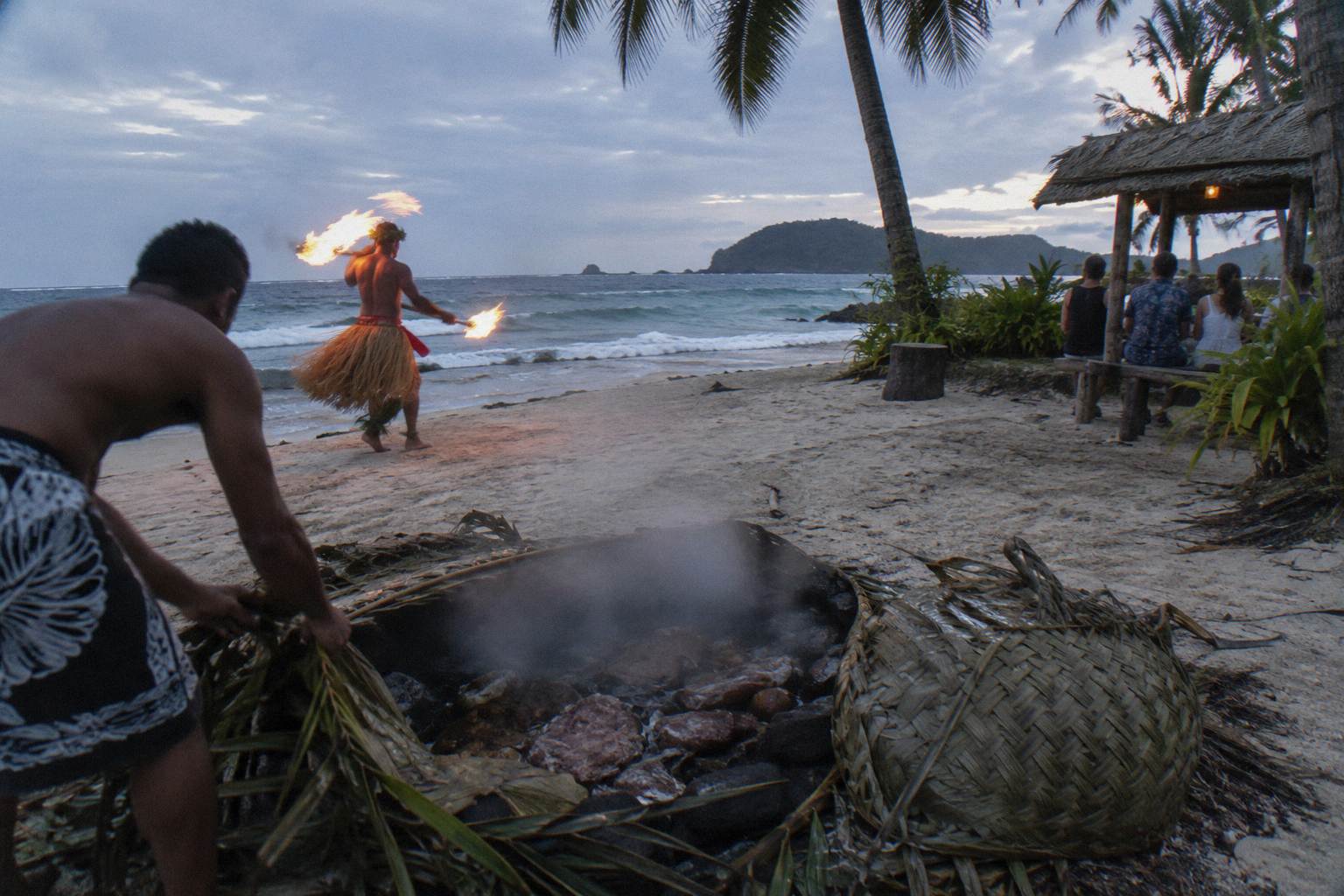
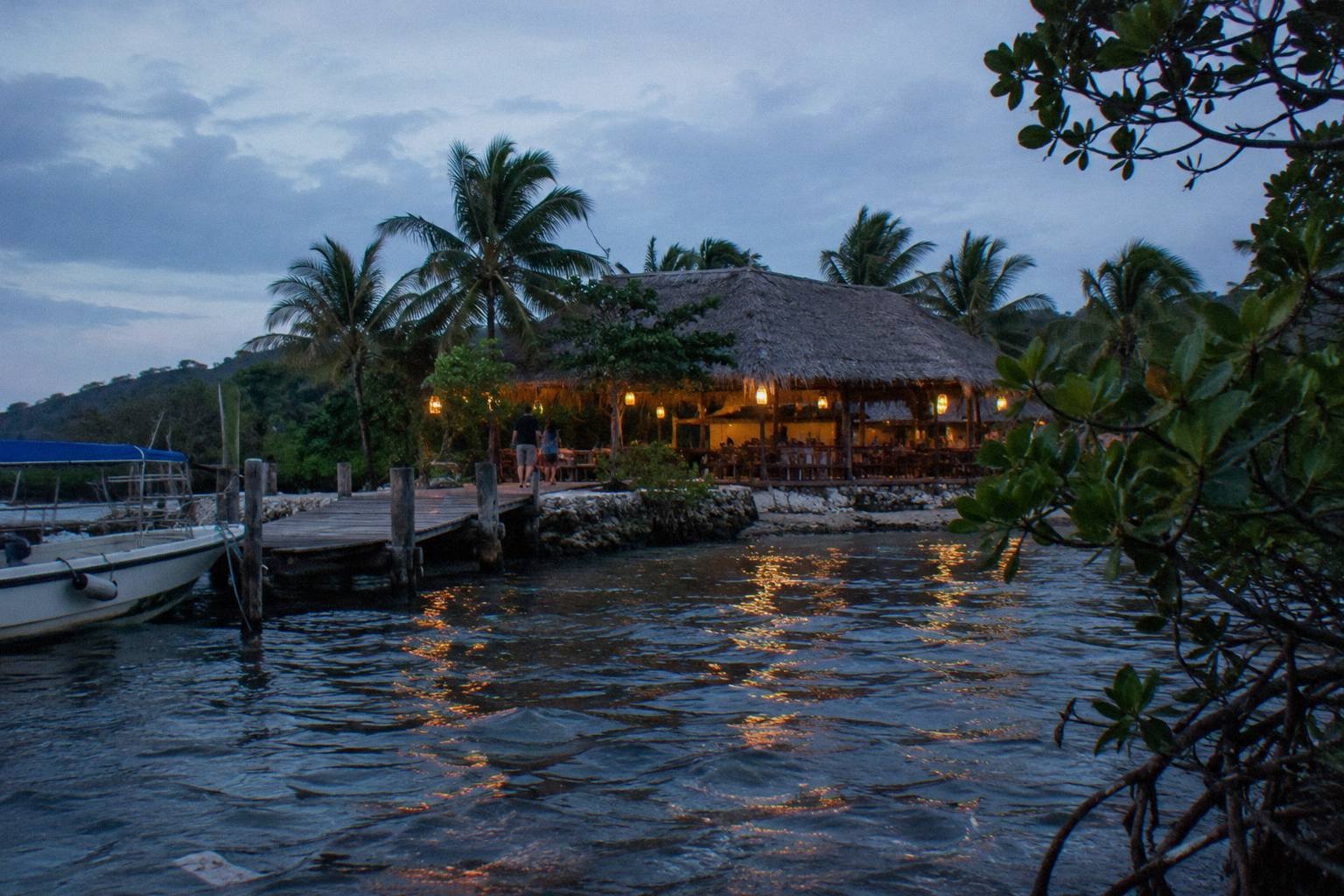
Start with the island, because Robinson Crusoe is the only one of the three where the welcome involves a boat. The jetty sits near Natadola Beach, 45 minutes from Nadi, followed by a 30-minute calm-water cruise down the Tuva River, and the evening on the island runs 5pm to 9pm. The operator's posted sequence is unusually detailed: 5:00pm departure, 5:45pm arrival and welcome, 6:00pm sunset beach bonfire with serenaders, 6:30pm lovo unearthing with a fire walking demonstration, 7:00pm lovo buffet dinner and then the "Legends of the Pacific" show with fire and knife dancing, 9:00pm Isa Lei farewell and a 9:15pm boat departure. The welcome is costumed and staged; the operator's own label for it is quoted in its itinerary, and describing it as the island welcome covers it accurately. The siva afi fire-knife dancing in the later show is Samoan in origin and staged in Fiji shows, a distinction worth holding onto, and one explored in full on the fire-knife dance explainer.
Fiji Culture Village works differently. The village sits on Queens Road, and Tourism Fiji names it "just outside Nadi town" as a place to see meke. Its Cultural Night Tour runs Monday to Saturday, with hotel pick-up from Denarau, Nadi and Wailoaloa hotels from 4:20pm, a warrior welcome at 5:15pm and a guided village walking tour at 5:30pm. The kava ceremony lands at 7:00pm, which is where Tourism Fiji's "Bula!" instruction becomes live for a guest holding a bilo. The evening closes with a meke show and fire dance at 7:50pm and farewell at 8:30pm, about 4 to 4.5 hours door to door. The tour carries a 4.6 rating. Its operator rates are F$175 adult, F$105 for a child aged 5 to 12 and F$500 for a family of 2 adults and 2 children, valid to 31 December 2026, then F$189, F$115 and F$550 for 2027.
| Evening | Welcome moment on the itinerary | Kava moment | Operator's stated days |
|---|---|---|---|
| Fiji Culture Village, Cultural Night Tour | Warrior welcome, 5:15pm | Kava ceremony, 7:00pm | Monday to Saturday |
| Robinson Crusoe Sunset Dinner Show | Costumed island welcome, 5:45pm | Sevusevu welcome ceremony with kava tasting, listed among highlights | Monday, Wednesday and Saturday |
| Valentine Tours Fiji, Fijian Culture Night | Not stated | Not stated | Not stated |
The third column is where a reader planning around the word should look. Only Fiji Culture Village gives the kava moment a clock time. Robinson Crusoe lists its sevusevu welcome ceremony with kava tasting among the evening's highlights without pinning it to the minute-by-minute itinerary. For Valentine Tours Fiji, the safe statements are the ones on its booking page: a Nadi evening with dinner and a meke show, hotel pick-up from the Nadi and Denarau area, about 3 hours long. Anything further is not stated, and the booking page is the place to ask.
Deciding between the village night and the island night usually comes down to transfer logistics and format rather than the greeting itself, and Fiji Cultural Night Tours compares the two formats in detail elsewhere. If the kava ceremony is the draw, the village evening is the one with a fixed 7:00pm slot for it.
The Kava Ceremony, Step By Step As Tourism Fiji Gives It
Tourism Fiji lays out a four-step sequence for accepting kava: clap once, cupped and loud; say "Bula!"; drink the contents of your bilo in a single gulp; then return the cup, clap three times, and say "vinaka". The same guide names the gear, a tanoa bowl and a bilo cup, and the serving sizes, "high tide" for a full cup and "low tide" for a half.
The guide is worth reading in its own terms rather than paraphrased, because the sequence is short and exact. Accepting the cup is the participatory moment. Nothing in the research covers the effects of kava on the body, its legal status anywhere, health or safety claims, or how it is prepared beyond "from dried roots"; those questions belong to the operator or a health professional, and a cultural-evening page does not answer them. The kava guide also mentions the sevusevu gift of half a kilogram of yaqona root at around FJD 30 to 40, Tourism Fiji's figure, though a guest on a staged evening does not bring that gift; the ceremony is part of the ticket.
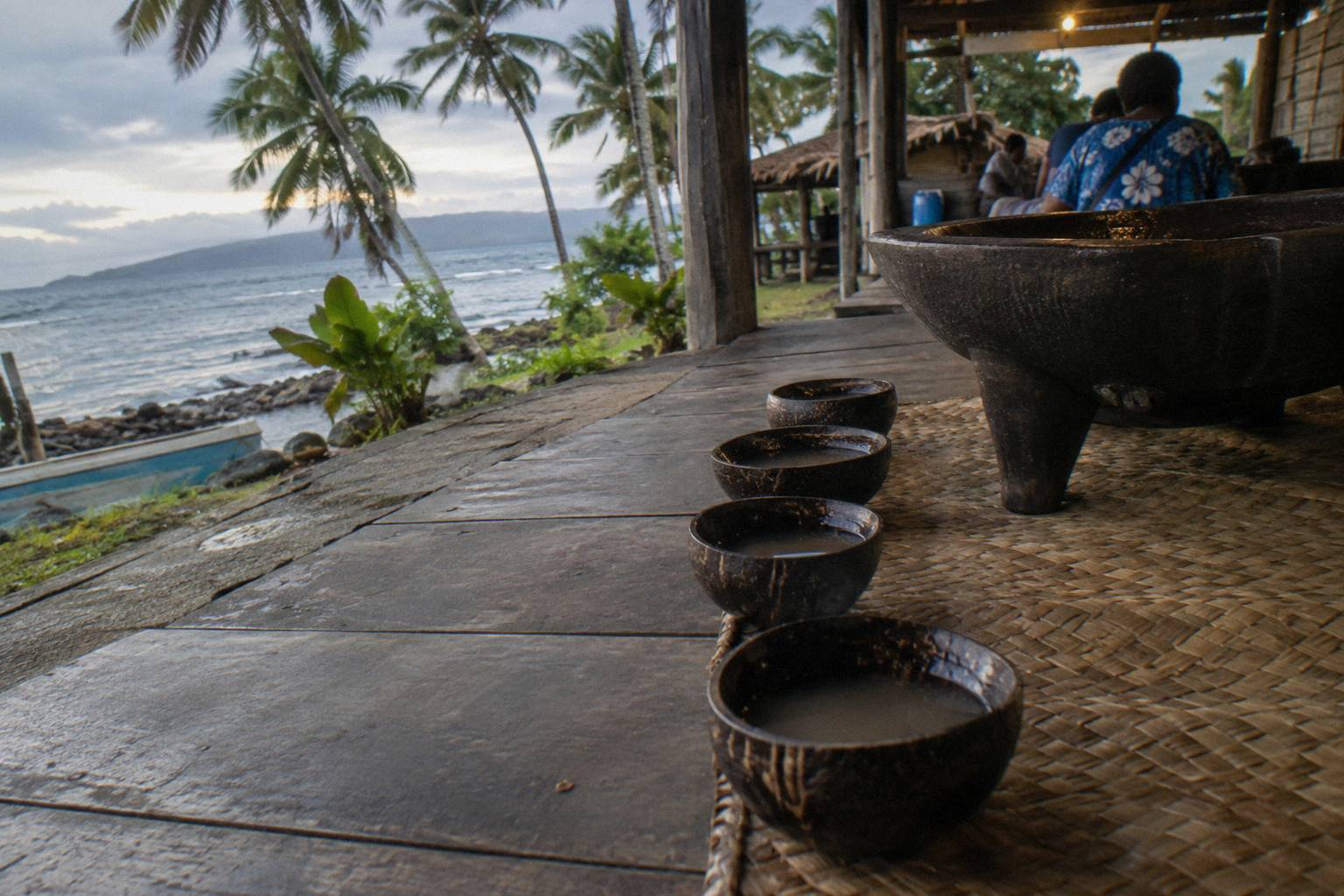
Sevusevu itself has a precise definition on Tourism Fiji's etiquette page: it is "customary to present a small bundle or packet of powdered kava to the village chief to seek permission to enter their communal lands as a guest". On a staged evening the operator handles that layer; Robinson Crusoe lists its sevusevu welcome ceremony with kava tasting as a highlight, and Fiji Culture Village lists its kava ceremony at 7:00pm. Neither operator's page goes further, and neither does this one. Readers weighing whether the ceremony is compulsory will find the honest answer on the page about drinking kava at a Fijian ceremony, which holds to the same source discipline.
What a visitor can do with the sequence is rehearse it. Clap once, cupped and loud. Say "Bula!". Drink in one gulp. Return the cup, clap three times, say "vinaka". The claps are part of it, not decoration; the guide specifies both the count and the shape of the hand. Between cups, the etiquette page's general village guidance applies to the room: speak softly, and wait for the "masu" before a meal is eaten. The meke that follows dinner at the village is its own tradition, defined by Tourism Fiji as "a traditional dance performed by men and women of Fiji to tell stories through song and dance", and covered separately on the meke explainer.
| Kava term | Meaning on Tourism Fiji's kava guide |
|---|---|
| Tanoa | The kava bowl |
| Bilo | The cup |
| High tide | A full cup |
| Low tide | A half cup |
| Yaqona | The kava plant, from whose dried roots the drink is made |
That table is the full vocabulary the guide gives. Anything more elaborate, chants or protocol beyond the sequence above, is not in the sources here and is not asserted.
What Trips People Up When Greeting On A Cultural Night
Three missteps catch visitors out: skipping "Bula!" even though the kava guide lists it as part of the accepted sequence for the cup, expecting the word at the same clock point every evening when only one tour publishes a kava ceremony time, and over-preparing for nights like the Valentine Tours Fiji evening or the VOU dinner show, whose operators publish no ceremony details; the fix is reading each operator's page and matching expectations to it.
The first mistake deserves a sentence more. The sequence on Tourism Fiji's kava guide is a visitor's part in a hosted moment, not a test. Getting the clap or the word wrong on a staged evening carries no stated consequence anywhere in the research, and no operator page says otherwise. But knowing the sequence in advance removes the small fumble at the moment the bilo arrives, which is worth the two minutes of reading on the full kava ceremony walkthrough.
The second mistake is calendar-shaped. Fiji Culture Village runs Monday to Saturday, closed Sunday, with an annual maintenance closure from Monday 22 February 2027 to reopening Wednesday 10 March 2027 per the operator's notice. Robinson Crusoe's evening show runs Monday, Wednesday and Saturday only. Sundays are sacred and most village tours do not run, per Tourism Fiji's etiquette page. A traveller who fixes their dates before checking the days can find the village night unavailable and the island night dark; the nights are the real constraint, not booking lead time, on which nothing is stated in the research.
The third mistake is expecting one format to be another. The VOU Evening Dinner And Show is described as a theatrical dinner show with drumming, dinner and theatre, not a meke-and-lovo village night, and the operator publishes nothing further that could be printed here. The Valentine Tours Fiji evening is a Nadi dinner with a meke show, about 3 hours, with hotel pick-up from the Nadi and Denarau area. Neither page states a kava ceremony, so assuming one is assuming too much. For a reader whose evening must include the ceremony, the tours below are the ones whose operators list one.
How The Evening Timelines Place The Word
Across both published evenings the word brackets the night rather than running through it: a welcome in the first hour, a farewell at the end. Fiji Culture Village runs from the 5:15pm warrior welcome to the 8:30pm farewell, Robinson Crusoe from the 5:45pm island welcome to the 9:00pm Isa Lei farewell, and the kava ceremony is the lone moment the visitor is handed the word to say.
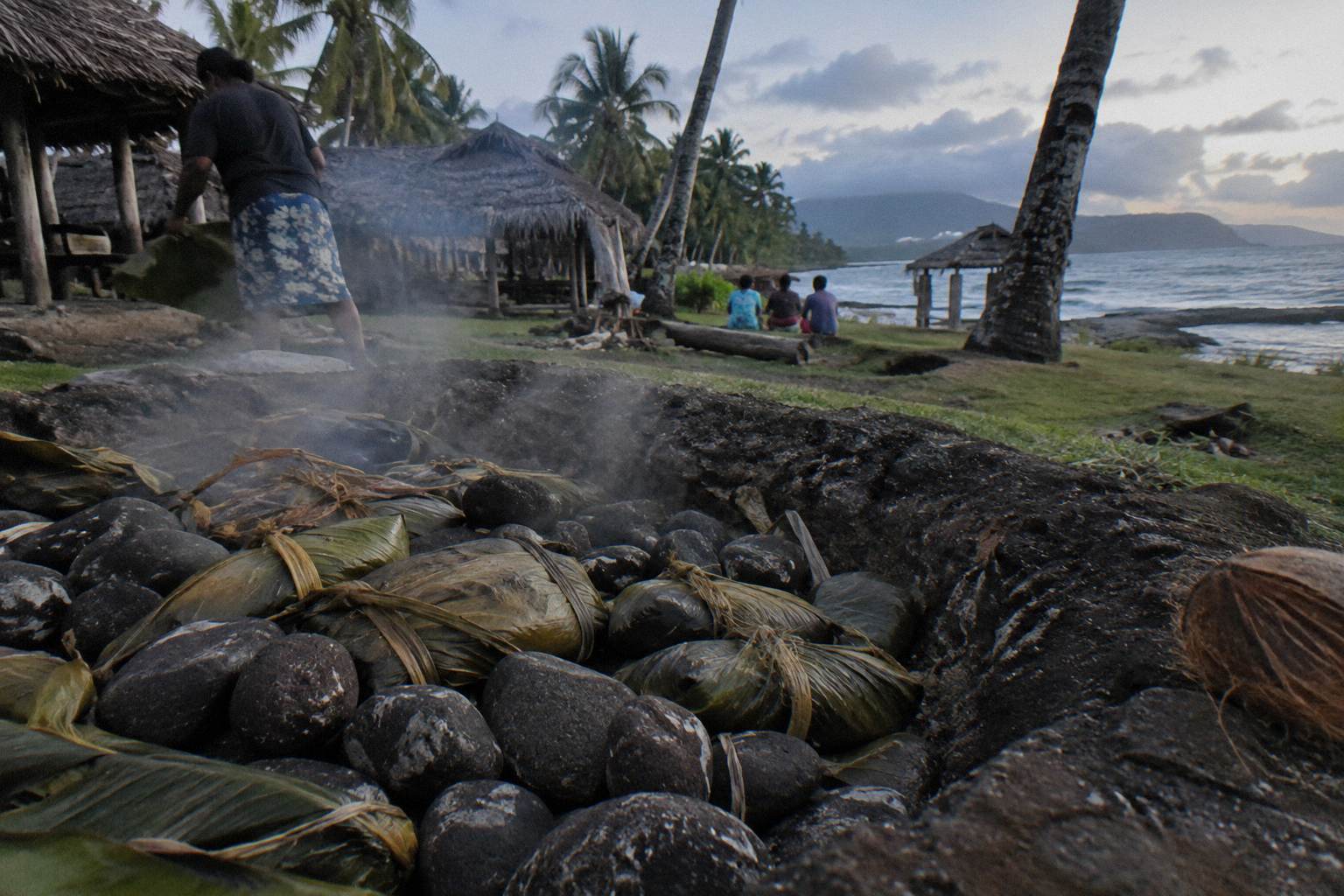
Putting the two published timelines side by side shows the shape. Both evenings unearth a lovo, per Tourism Fiji a communal earth oven in which meat, fish and root crops such as taro cook on white-hot stones in a covered pit for a few hours. Both serve a buffet. Both end with fire: the village closes on a meke show and fire dance at 7:50pm, the island closes on the "Legends of the Pacific" show with fire and knife dancing after the 7:00pm dinner. The firewalking demonstration on the island evening is a separate thing from the knife dancing; Fiji's own firewalking tradition belongs to Beqa (pronounced Benga), where Tourism Fiji says the power flows through Tuinaiviqalita's bloodline to members of the Sawau tribe, told in Tourism Fiji's own terms on its firewalkers page. The two traditions are never merged here.
| Time | Fiji Culture Village | Robinson Crusoe Sunset Dinner Show |
|---|---|---|
| Late afternoon | 4:20pm hotel pick-up | 5:00pm boat leaves the mainland jetty |
| Arrival | 5:15pm warrior welcome | 5:45pm arrival and costumed island welcome |
| Early evening | 6:45pm lovo unearthing | 6:00pm sunset bonfire, 6:30pm lovo unearthing with fire walking demonstration |
| Dinner and ceremony | 7:00pm kava ceremony, 7:20pm buffet dinner | 7:00pm lovo buffet dinner |
| Show and farewell | 7:50pm meke show and fire dance, 8:30pm farewell | "Legends of the Pacific" fire and knife dancing, 9:00pm Isa Lei farewell |
The transfer picture explains the rest of the clock. The island evening includes return coach transfers from Nadi, Denarau and Coral Coast hotels as far as the Warwick, plus launch transfers, with the operator asking guests to be at the pick-up point 15 minutes early; approximate times to the jetty run from 5 minutes for the InterContinental to 45 minutes for Denarau, Nadi and the Warwick. Cancellation for Robinson Crusoe tours is a full refund at 24 hours or more before pick-up and a 100 percent forfeit inside that, per the operator's terms.
Dress is the quiet variable. Robinson Crusoe asks visitors to cover shoulders and bring a sulu or sarong for the village visit on its Combo tour, with spare sulus available, and suggests resort wear, insect repellent and Fijian dollars for drinks on night tours. Fiji Culture Village's dress guidance is not stated; ask the operator. Tourism Fiji's etiquette page is the baseline for any village setting: cover bare shoulders and legs, wrap a sulu at the waist, remove hat and sunglasses, remove shoes before entering any building, and do not touch someone's head, which is sacred in many villages.
Which Night To Pick If The Greeting Moment Matters
For a real, participatory greeting, pick the Culture Village Evening Tour: it is the only one of the five with a published kava ceremony time, 7:00pm, and the "Bula!" that comes with the accepted-cup sequence. If you prefer a staged island welcome instead, the Robinson Crusoe Sunset Dinner Show delivers one at 5:45pm after a river cruise.
That decision logic uses only what the operators publish. The village evening is about 4 to 4.5 hours door to door, the island evening about 4 hours on the island plus coach transfer, the Nadi meke night about 3 hours. The island evening carries a 4.6 rating. Two formats, one rating each, no comparison implied. A reader pairing this article with the deeper comparisons, such as whether a Fiji cultural night is worth it, gets the full decision picture across price, format and family fit.
For a first evening in the country, the honest summary is small: the sources place "Bula!" at a kava cup and at a staged welcome, give the visitor a four-step sequence for the cup, and leave the word's wider story to the people who live it. Book the evening whose published itinerary actually contains the moment being sought, say the word when the bilo arrives, and say "vinaka" when the cup goes back.
Whether the choice lands on the village, the island or the meke night, availability and the operator decide what runs on the night; the Lovo Buffet, 4 To 4.5 Hours link beside the Culture Village evening tour page is the live answer. Robinson Crusoe takes questions on +679 776 0999, and its FAQ notes dietary needs are advised at the time of booking.
Common Questions About Bula On A Fijian Cultural Evening
Why Do Fijians Say Bula So Much?
The sources on this page do not explain the word's frequency or etymology. What they record is placement: Tourism Fiji's kava guide instructs a visitor accepting a bilo to say "Bula!", and Robinson Crusoe stages a costumed island welcome it bills as a Bula welcome. Anything beyond that belongs to Fijian speakers, not to a booking page.
Do You Have To Say Bula At The Kava Ceremony?
Tourism Fiji's kava guide gives the sequence: clap once, say "Bula!", drink in one gulp, return the cup, clap three times and say "vinaka". No source here states a consequence for skipping it, and no operator page says the ceremony is compulsory.
What Comes After Bula When You Accept The Cup?
Per Tourism Fiji's guide: drink in one gulp, return the cup, clap three times and say "vinaka". The cup is a "bilo", the bowl is a "tanoa", and a full cup is "high tide" while a half cup is "low tide".
Which Tours Include A Kava Ceremony?
Fiji Culture Village lists a kava ceremony at 7:00pm on its Cultural Night Tour. Robinson Crusoe lists a sevusevu welcome ceremony with kava tasting among its evening highlights. Valentine Tours Fiji and VOU state no ceremony details.
Is Bula Part Of The Fire Show Too?
No source connects the word to the fire performances. The sources place it at the kava cup and the island welcome. Fire shows are listed separately: a meke show and fire dance at the village at 7:50pm, and fire walking with fire and knife dancing on the island evening.