What Is A Meke In Fiji?
A meke is Fiji's traditional story told through song and dance. Here is what Tourism Fiji and the operators say, plus where to watch one on a Nadi evening.
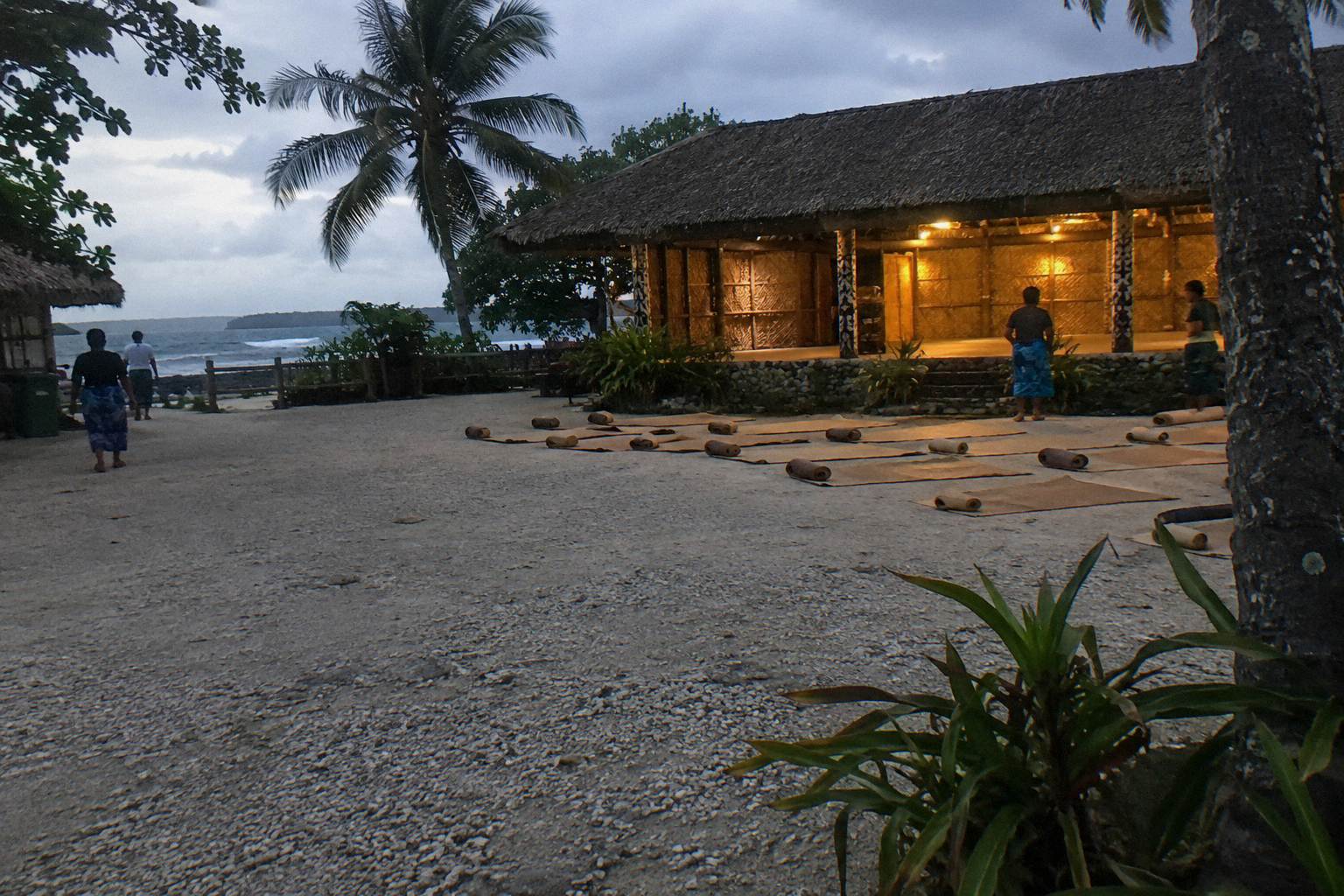
A meke is Fiji's own form of storytelling in motion, and Tourism Fiji describes it plainly: a traditional dance performed by men and women together, carrying stories through song and movement. Two evening tours near Nadi stage one as the centrepiece of a village night, and the word gets tangled with fire dancing and the haka far more often than it should.
A meke, in Tourism Fiji's definition, is a traditional dance performed by men and women of Fiji to tell stories through song and dance. The same page describes the movement split: men's movements are strong, women's are graceful, and the props include clubs, spears and fans. It is a staged, structured performance form with named roles, not a casual or improvised dance, and it sits at the heart of most Fijian cultural evenings.
That definition comes from Tourism Fiji's cultural must-dos page, which is the national tourism body's own guide to the practice. The page treats the meke as one of the country's defining cultural experiences, alongside the lovo earth oven and the kava ceremony. Tourism Fiji also names the Fiji Culture Village, just outside Nadi town, as a place to see meke performed.
What the definition gives you, as a visitor, is a way to read an evening programme. When a tour lists a meke show, it is listing a story told through choreographed dance and chant, performed by a group, with the men's and women's movements carrying different weight inside the same piece. It is not a fire display and it is not a war chant, even though those often share the same stage later in the night.
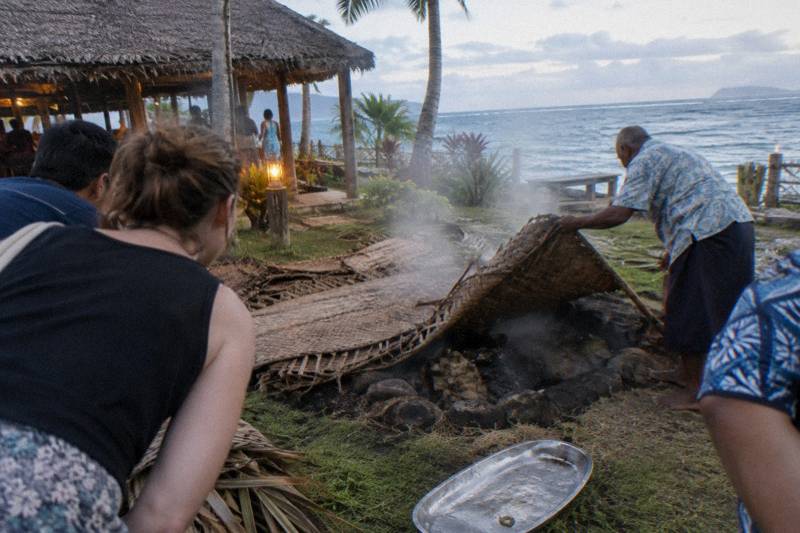
Two of the evening tours covered here stage a meke. Fiji Culture Village lists a meke show at 7:50pm, followed by a fire dance, near the end of its cultural night. Valentine Tours Fiji bills its whole Nadi evening around dinner and a meke show. Robinson Crusoe's island night takes a different path, with fire walking and a fire and knife dance show after dinner, which is a separate tradition explained further down this page.
How The Men's And Women's Movements Work Together
Tourism Fiji's description splits the performance along gendered lines: the men's movements are strong and the women's are graceful, within the same piece. The props listed are clubs, spears and fans. The definition describes the form only, and the specific meaning of any individual meke, its costume details and its chant texts are not covered in the material here, so this page describes the performances the operators list and nothing invented beyond them.
That is worth pausing on, because it shapes what you actually watch. A meke is not a solo. It is a group performance in which the contrast between the strong and the graceful is part of the storytelling itself, and the props are not decoration but part of the narrative vocabulary Tourism Fiji describes. The songs carry the story; the dance embodies it.
Where the research stops, honesty has to stop too. The meaning of a particular meke, the details of the cibi or the meke wesi war dance, costume specifics, lali drum details and chant texts are not covered in the sources here. A visitor who wants the story behind a specific performance should ask the performers or the operator on the night, because inventing a meaning here would be exactly the kind of fabricated cultural claim that gives travel writing a bad name.
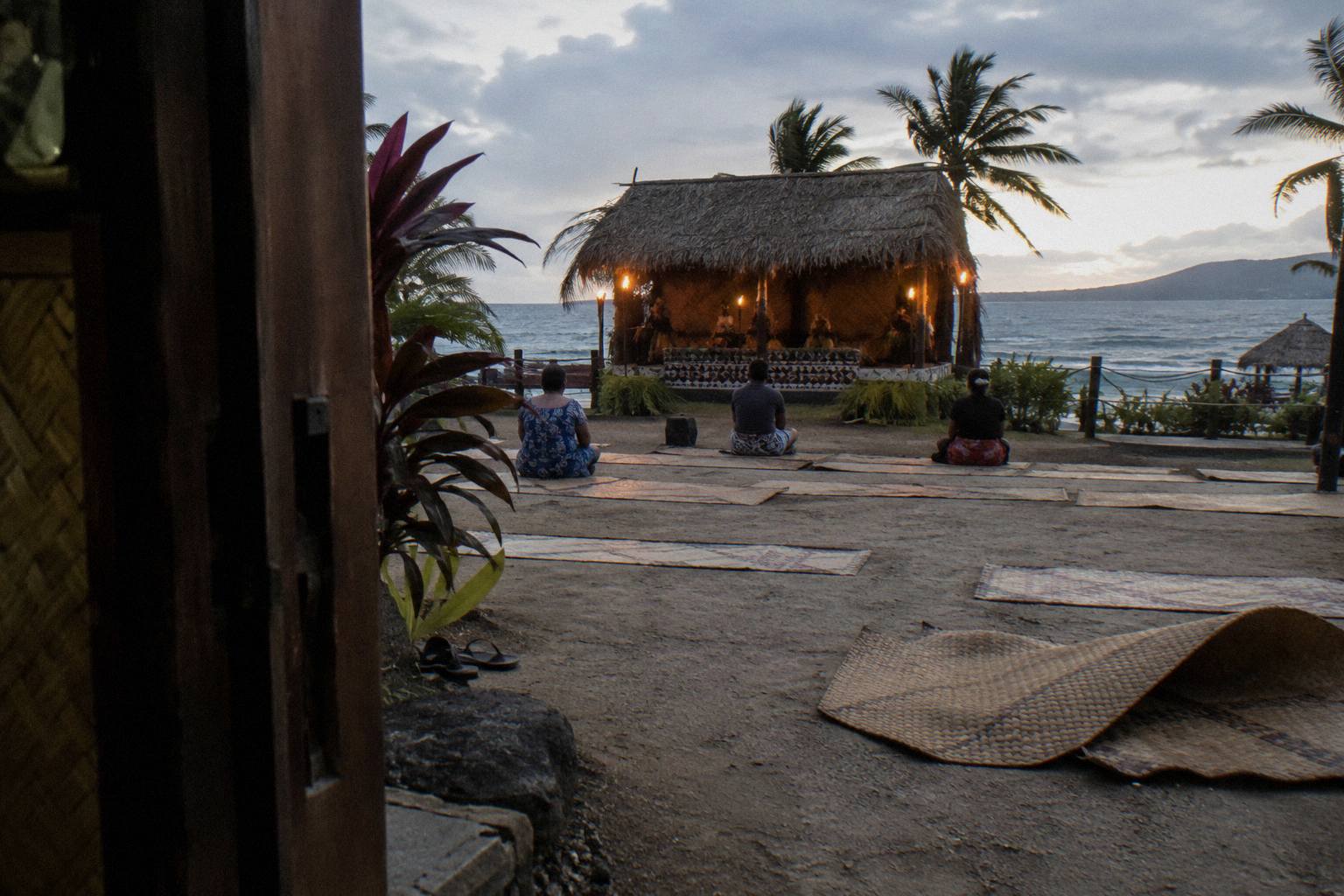
What the operators publish is concrete enough to plan around. Fiji Culture Village's published timeline puts the meke show at 7:50pm, after dinner, with a fire dance following it and farewell at 8:30pm. Valentine Tours Fiji's evening is billed with a meke show and dinner over about three hours, with hotel pick-up from the Nadi and Denarau area; beyond that, the operator's inclusions, start time and price are not stated, so check the booking page for those.
The Evening That Puts A Meke At The Centre
Fiji Culture Village's Cultural Night Tour, Monday to Saturday, places a meke show and fire dance at 7:50pm, after a village walk, a lovo unearthing, a kava ceremony and a buffet dinner, ending with farewell at 8:30pm. The operator's rate is F$175 per adult, F$105 per child aged 5 to 12 and F$500 for a family of 2 adults and 2 children, valid to 31 December 2026.
The full published timeline runs like this: hotel pick-up from Denarau, Nadi and Wailoaloa hotels from 4:20pm; a warrior welcome at 5:15pm; a guided village walking tour at 5:30pm; the unearthing of the lovo at 6:45pm; a kava ceremony at 7:00pm; buffet dinner of lovo food at 7:20pm; the meke show and fire dance at 7:50pm; farewell and departure at 8:30pm. Door to door that is about 4 to 4.5 hours, and the return transfer from Nadi and Denarau hotels is included. The tour is rated 4.6.
| Time | What The Operator Lists |
|---|---|
| 4:20pm | Hotel pick-up from Denarau, Nadi and Wailoaloa hotels |
| 5:15pm | Warrior welcome |
| 5:30pm | Guided village walking tour |
| 6:45pm | Unearthing of the lovo |
| 7:00pm | Kava ceremony |
| 7:20pm | Buffet dinner, lovo food |
| 7:50pm | Meke show and fire dance |
| 8:30pm | Farewell and departure |
Two planning notes come straight from the operator. The village closes for annual maintenance from Monday 22 February 2027, reopening Wednesday 10 March 2027, though online orders after 21 February 2027 are still processed. For 2027 dates the operator's rate rises to F$189 per adult, F$115 per child and F$550 for the family rate, valid to 31 December 2027.
The evening is bookable as the Culture Village Evening Tour With Dinner And Show, and check availability on the operator's booking page before locking in a night, because the Monday to Saturday schedule, not demand, is the real constraint.
Meke Versus Siva Afi Versus Firewalking: Three Different Traditions
Siva afi, the fire-knife dance, is Samoan in origin and is staged in Fiji shows; it is not a Fijian tradition and should never be presented as one. Fiji's own firewalking is the Beqa tradition Tourism Fiji describes, tied to the Sawau tribe. The meke is a third, separate thing: a story told through song and dance. An evening programme can contain all three, which is exactly why the confusion exists.
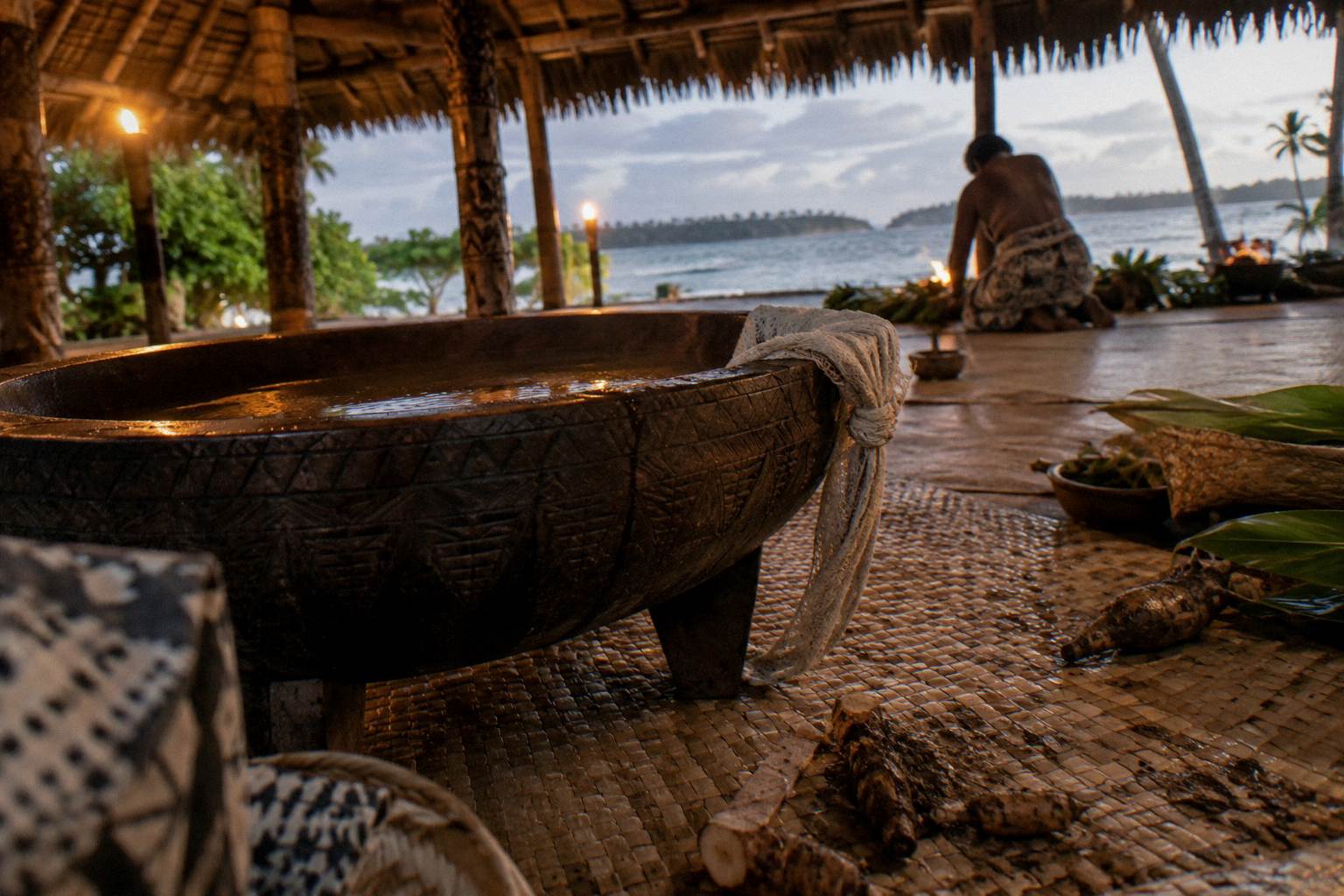
Robinson Crusoe's island night is a good illustration. After the lovo buffet dinner at 7:00pm comes the operator's show, listed as 'Legends of the Pacific' with fire and knife dancing, and earlier in the evening a fire walking demonstration accompanies the lovo unearthing at 6:30pm. Neither of those is a meke, and the operator does not list one for that evening; the sevusevu welcome ceremony with kava tasting and the string band at the sunset bonfire fill the cultural portion instead. You can read the programme on the operator's Sunset Dinner Show page.
Fiji Culture Village pairs the two forms deliberately: a meke show at 7:50pm, then a fire dance, and the operator does not say the fire dance is fire-knife. For the origin of the fire-knife form itself, the Wikipedia page on fire knife dance records its Samoan roots. The history of siva afi beyond its Samoan origin, who performs it in Fiji, training and safety details are not covered in the sources here.
Firewalking is the one to handle most carefully, because Tourism Fiji ties it to a specific legend and a specific place. In Tourism Fiji's own telling, Tuinaiviqalita, seeking an eel as a gift, caught a spirit god known as a veli; the veli offered power over fire to him and his descendants and showed him by stepping on white-hot stones, and that power flows only through Tuinaiviqalita's bloodline to members of Beqa's Sawau tribe. No operator's firewalkers should be claimed as Beqa or Sawau unless the operator says so; Robinson Crusoe lists a fire walking demonstration and says nothing about who performs it. A fuller treatment of that tradition sits in the guide to where fire walking comes from in Fiji.
Is The Meke The Same As The Haka?
No. The haka is a Māori practice from Aotearoa New Zealand, not a Fijian one. Where the question of Fiji's equivalent comes up, the answer is the meke, in Tourism Fiji's definition: a traditional dance performed by men and women of Fiji to tell stories through song and dance. Nothing more needs saying about the haka, beyond the plain fact that it belongs to a different people and a different country.
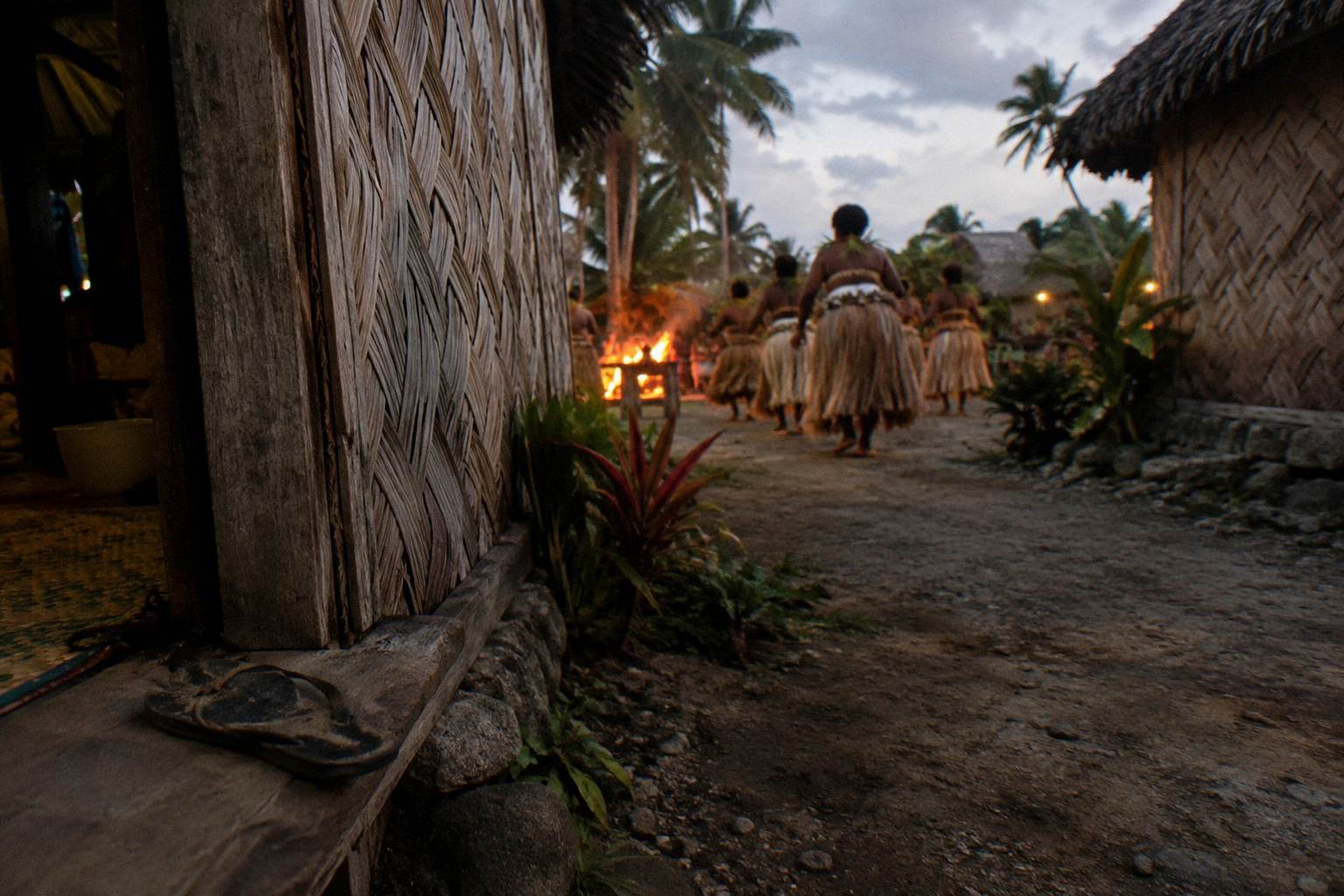
The confusion is understandable. The strong men's movements and the clubs and spears Tourism Fiji lists among the meke's props look, to an unfamiliar eye, like the posture and challenge of a haka. But resemblance is not lineage. A visitor who calls a meke a haka on the night is making the same mistake as calling a Fijian island Samoan, and it lands about as well.
For readers who want the fuller treatment of the dance forms and how evenings programme them, the guide to Fiji's traditional dance shows works through the same distinctions at more length. The short version for planning purposes: a meke evening gives you the story-dance form Tourism Fiji defines; a fire-show evening gives you fire walking and, on Robinson Crusoe, fire and knife dancing in the Samoan-origin siva afi tradition, staged in Fiji.
Which Nights And What It Costs
Cultural Night Tours at Fiji Culture Village run Monday to Saturday (closed Sunday) with the meke show at 7:50pm, and cost F$175 per adult, F$105 per child aged 5 to 12, or F$500 for a family of 2 adults and 2 children through 31 December 2026, rising to F$189, F$115 and F$550 from 2027. Robinson Crusoe's island night runs Monday, Wednesday and Saturday only, with no price printed.
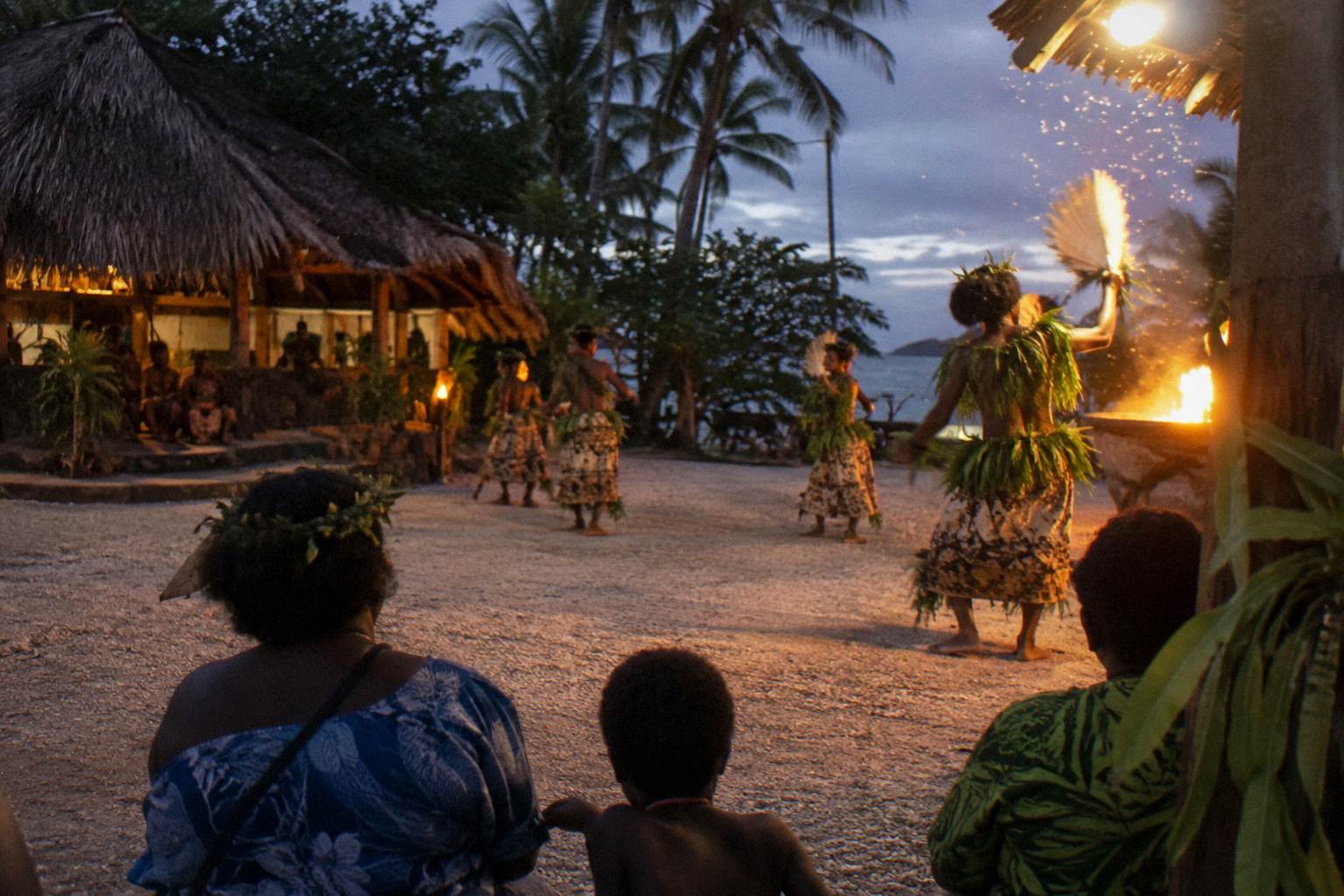
The nights matter more than anything else in this comparison. Robinson Crusoe's Sunset Dinner Show and its Day And Night Combo both run Monday, Wednesday and Saturday, and its separate daytime Culture Day Tour runs Tuesday, Thursday and Sunday, so a visitor staying a full week can piece together coverage but a two-night stay cannot. Fiji Culture Village's six nights a week make it the flexible option. Valentine Tours Fiji's and VOU's running days are not stated; check the booking page.
| Evening | Meke Listed | Nights | Price |
|---|---|---|---|
| Culture Village Evening Tour | Yes, 7:50pm, with fire dance | Monday to Saturday | F$175 adult, F$105 child 5 to 12, F$500 family, valid to 31 Dec 2026 |
| Valentine Tours Fijian Culture Night | Yes, billed in the tour name | Not stated | See the booking page |
| Robinson Crusoe Sunset Dinner And Fire Show | Not listed; fire walking and fire and knife dancing instead | Monday, Wednesday and Saturday | See the booking page |
Robinson Crusoe's terms say its rates are in Fijian dollars with 15% VAT included and a 3% credit card fee on cards, but its tour pages print no prices, so none appear here. Its cancellation rule is published and strict: 24 hours or more before pick-up earns a full refund, inside 24 hours a 100% forfeit, and management may cancel for weather or if fewer than 15 adults book. That asymmetry alone is a reason to read the small print on whichever night you choose.
Where To Watch A Meke On A Nadi Evening
The two meke evenings suit different travellers. The Culture Village night is the longer, more structured one: about 4 to 4.5 hours door to door, a full village walk, kava ceremony, lovo buffet, then the meke and fire dance, with transfers included from Nadi and Denarau hotels. The Valentine Tours evening is the shorter one: about 3 hours, pick-up from the Nadi and Denarau area, dinner and a meke show, with its inclusions, price and start time not stated anywhere in the operator's published material, so the booking page is the only source for those.
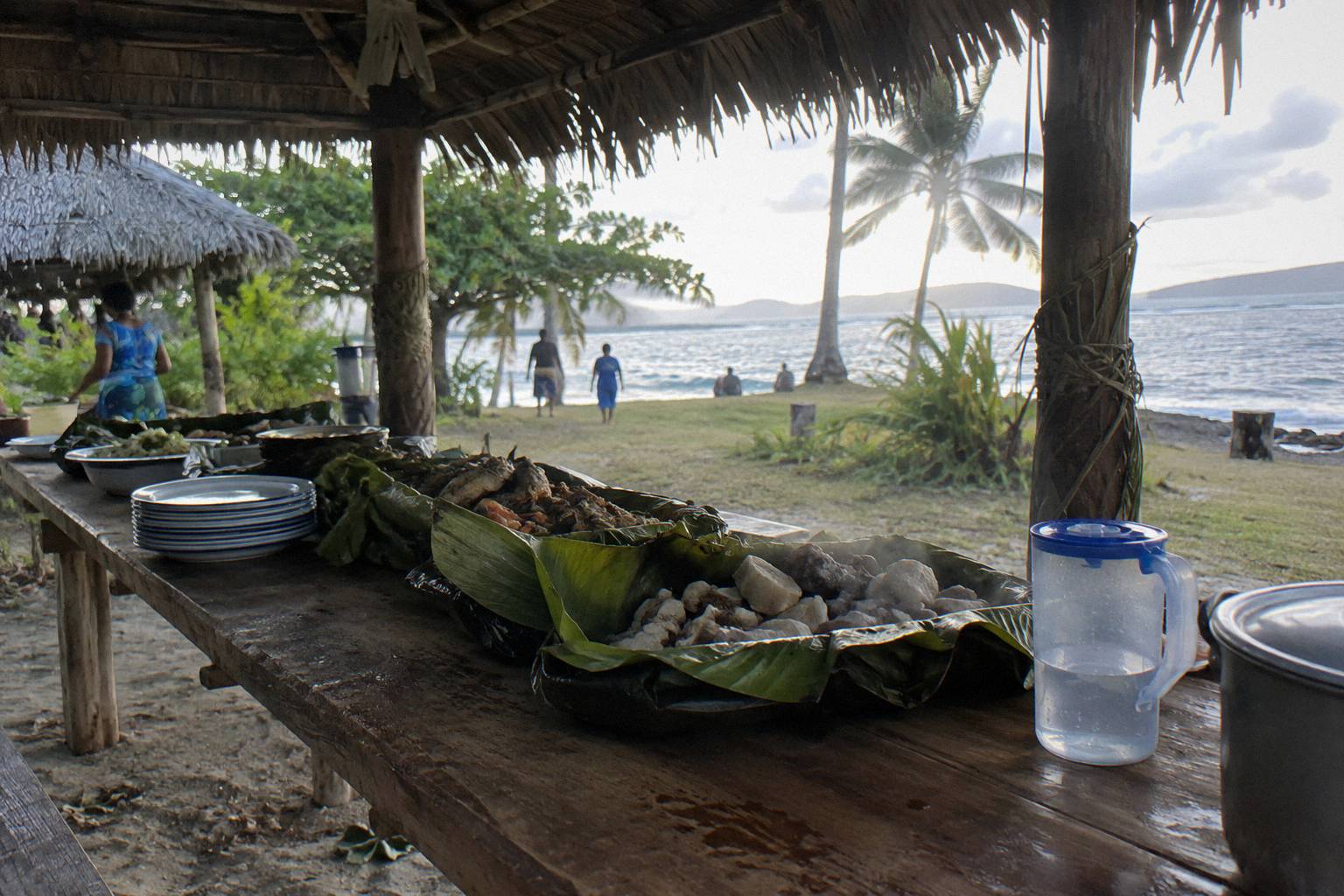
Visitors who want the meke inside a bigger production can also consider the theatrical alternative in Nadi: VOU Hub Fiji's evening dinner and show, described as theatre and drumming with dinner rather than a village meke-and-lovo night, with no further facts captured for it here. And outside the bookable tours entirely, Damodar Arts Village in Pacific Harbour has announced meke performances from an open-air pavilion and a daytime firewalking ceremony at 11am; that is a daytime show, not an evening dinner, and no schedule or price is listed for it.
For etiquette on the night itself, what to wear and how to handle the kava ceremony that usually precedes the meke, the guide to Fiji cultural night etiquette covers the village-visit protocols Tourism Fiji publishes. The site's full set of evening options is gathered by Fiji Cultural Night Tours, from village nights to island fire shows.
Common Mistakes When Choosing A Meke Evening
The four recurring mistakes are calling fire dancing a meke, expecting a meke at Robinson Crusoe's island night, assuming every evening runs nightly, and pricing the night from the wrong figure. Robinson Crusoe lists fire walking and fire and knife dancing rather than a meke and runs three nights a week, while Fiji Culture Village runs six nights, and its only printable prices are the operator's F$ rates.
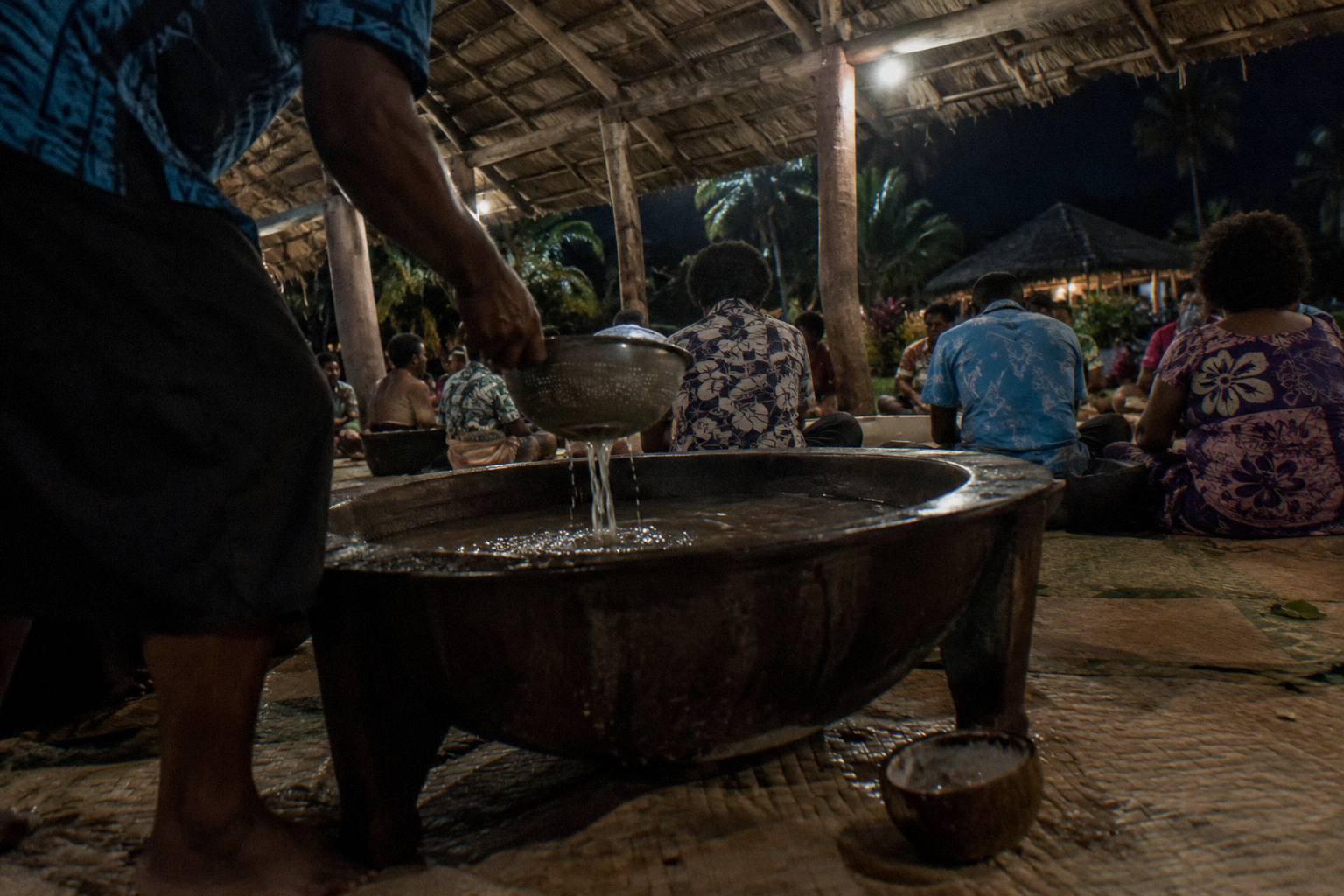
The first mistake is treating the whole evening's performance as one thing. On the Culture Village night the meke and the fire dance are separate items on a published timeline; on the island night there is no meke at all, and the fire and knife dancing belongs to the Samoan-origin siva afi tradition staged in Fiji. Booking the island night expecting a story-dance is the single most avoidable disappointment here.
The second is ignoring the calendar. Monday, Wednesday and Saturday for the island night; Monday to Saturday for the village night; not stated for the other two. A traveller with fixed dates should match the night to the itinerary before comparing anything else, because no amount of preference overcomes a closed evening.
The third is reading prices into the wrong place. Only Fiji Culture Village's operator rates are printable in F$, with their validity periods; everything else is a booking-page question. Ask before you book, on +679 804 4800 for the village or +679 776 0999 for the island.
Common Questions About The Fijian Meke
What Is A Meke In Fiji?
Tourism Fiji defines a meke as a traditional dance performed by men and women of Fiji to tell stories through song and dance, with strong movements from the men, graceful movements from the women, and props that include clubs, spears and fans.
Is A Meke The Same As A Haka?
No. The haka is a Māori practice from New Zealand. Fiji's story-dance form is the meke, per Tourism Fiji's definition, and the two belong to different countries and traditions.
Is Fire Dancing Part Of The Meke?
No. The meke is a choreographed story told through song and dance. Fire and knife dancing is siva afi, Samoan in origin and staged in Fiji shows, and firewalking is Fiji's own Beqa tradition. Evenings often programme them separately; Fiji Culture Village lists a meke show at 7:50pm followed by a fire dance.
Which Nadi Evenings Stage A Meke?
The Culture Village Evening Tour With Dinner And Show lists a meke show at 7:50pm, and Valentine Tours Fiji bills its roughly 3-hour Nadi evening as dinner and a meke show. Robinson Crusoe's island night does not list a meke; its show features fire walking and fire and knife dancing.
How Much Does A Meke Evening Cost?
For the Culture Village evening, the operator's rate is F$175 per adult, F$105 per child aged 5 to 12 and F$500 for a family of 2 adults and 2 children, valid to 31 December 2026, rising to F$189, F$115 and F$550 for 2027. Other operators' prices are on their booking pages.
What Nights Do Meke Evenings Run?
Fiji Culture Village runs Monday to Saturday, closed Sunday, and closes for annual maintenance from 22 February 2027 to 10 March 2027. Robinson Crusoe's evening runs Monday, Wednesday and Saturday. Valentine Tours Fiji's nights are not stated; check the booking page.