Etiquette At A Fiji Cultural Night: Bula, Kava And Respect
Fijian village etiquette is specific: covered shoulders, a sulu at the waist, a clap before the kava cup and a word of thanks after it. Tourism Fiji publishes the rules, and the evening operators each apply a slice of them.
Short answer
Tourism Fiji's etiquette guidance for village visits asks guests to cover shoulders and legs, wrap a sulu at the waist, remove hats, sunglasses and shoes where required, ask before photographing people, and speak softly. The evening tours stage kava, lovo and meke, so those same habits apply, with the operator adding its own requests.
Fiji village etiquette is not a costume rule or a test. It is a short set of habits that Tourism Fiji publishes for village visits, and the cultural evenings around Nadi stage enough of a village setting, a walking tour, a kava ceremony, a lovo dinner and a meke show, that the same habits carry over. This page sets out exactly what Tourism Fiji says, what each operator asks, and where the guidance stops, so you can walk in knowing what is covered and what to ask about on the spot. The full evening sequence is laid out in the guide to a Nadi cultural night, and the practical side of dressing for it is covered in what to wear to a Fijian village night.
What Etiquette Actually Matters At A Fiji Cultural Night
The etiquette that matters is that of a village guest: dress modestly with shoulders and legs covered, wrap a sulu at your waist, remove your hat and sunglasses, and carry bags in your hand rather than on your shoulder. Ask permission before photographing anyone or entering a building, remove your shoes indoors, speak softly, and never touch anyone's head; Tourism Fiji lists these rules for village visits, and operators fold the relevant ones into their evening instructions.
None of this is complicated, and none of it is secret knowledge. Tourism Fiji's etiquette guide states each point plainly, and it is the source for every line in this section. The reason the list matters on a tour evening is that the settings are real even when the event is staged. Fiji Culture Village runs a guided walking tour of its village at 5:30pm before dinner, and Robinson Crusoe's Day and Night Combo includes a guided visit to Vusama Village. A village walk is a village walk, whoever sold the ticket.
The tone matters as much as the checklist. Tourism Fiji says to speak softly and to treat the head as sacred in many villages, which means an accidental pat on a child's head, a common friendly gesture elsewhere, is worth avoiding here. Asking before a photograph applies to people first and buildings second; the guidance is about entering a home or communal area and about taking photos of residents, not about the stage show the operator has sold you.
A good way to hold all of this in your head is a simple table. Each row below is Tourism Fiji's guidance or a stated operator request, nothing added.
| Situation | What Tourism Fiji Or The Operator Says | Source |
|---|---|---|
| Entering a Fijian village | Cover bare shoulders and legs; wrap a sulu around the waist | Tourism Fiji etiquette page |
| Headwear and eyewear | Remove hat and sunglasses | Tourism Fiji etiquette page |
| Bags | Carry in hand, not on the shoulders | Tourism Fiji etiquette page |
| Photographs and buildings | Ask permission before photos of people or entering a home or communal area | Tourism Fiji etiquette page |
| Inside any village building | Remove shoes | Tourism Fiji etiquette page |
| Voices and heads | Speak softly; do not touch someone's head, sacred in many villages | Tourism Fiji etiquette page |
| Combo village visit | Cover shoulders and bring a sulu or sarong; spare sulus available | Robinson Crusoe |
| Night tours generally | Resort wear, insect repellent, Fijian dollars for drinks | Robinson Crusoe FAQ |
What To Wear: Shoulders, Legs And The Sulu
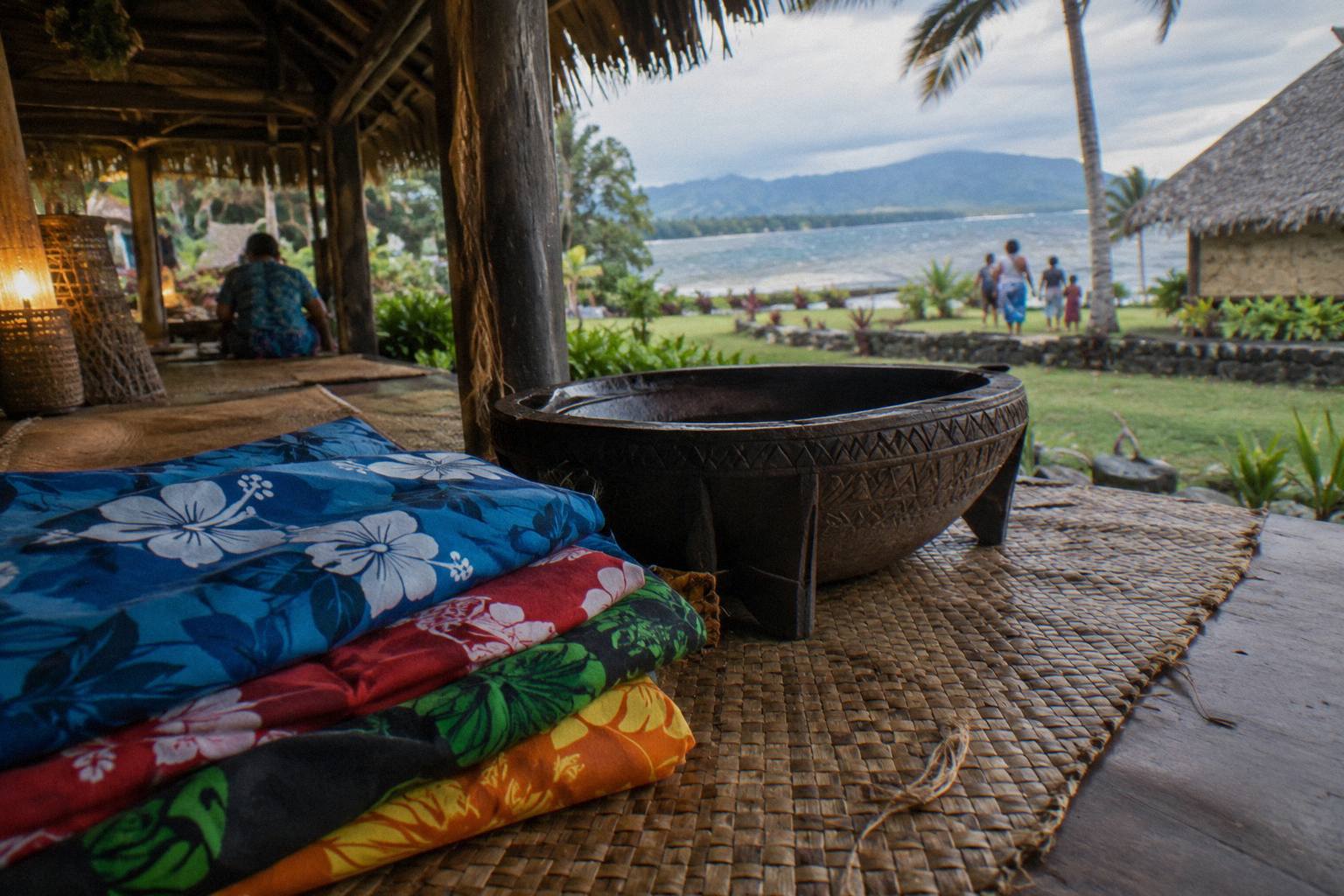
Cover your shoulders and legs, and bring a sulu, the rectangular waist-wrapped cloth Tourism Fiji names for village visits; Robinson Crusoe requests the same for its Vusama Village stop on the Day and Night Combo and says spare sulus are available if you arrive without one. For evening shows it suggests resort wear, insect repellent and Fijian dollars for drinks, while Fiji Culture Village does not state its own dress guidance, so ask the operator.
The sulu is the single most useful item on the list because it solves the shoulder-and-leg problem in one move. It wraps at the waist over shorts or a dress, it folds to nothing in a day bag, and Tourism Fiji's guidance treats it as standard village dress rather than a costume. If your evening includes a village walk, the etiquette of the kava ceremony will matter more than your outfit anyway, but the wrap is what stops an outfit being a problem in the first place.
Each of those three evenings puts you in a slightly different dress situation. The Culture Village Evening Tour With Dinner And Show includes a guided village walking tour at 5:30pm, so village dress habits apply from the walk onward, and you can check availability for a Monday to Saturday night. The Robinson Crusoe Sunset Dinner Show is an island evening rather than a village walk, and the Valentine Tours Fiji evening is a dinner and meke show in the Nadi area with hotel pick-up, about three hours door to door; for both, resort wear with a sulu in the bag is a sensible default. Robinson Crusoe's own FAQ is the reference for its island evenings: the operator's FAQ page lists the resort wear, repellent and cash advice verbatim.
One point worth separating: the operator's requests and Tourism Fiji's village guidance overlap but are not identical. Robinson Crusoe asks for covered shoulders for the village visit on the Combo because that evening enters a real village, Vusama, on the mainland before the boat. Its Sunset Dinner Show stays on the island, so its stated advice for that night is the softer resort-wear line. Matching the request to the evening you actually booked is the whole trick.
The Sevusevu Welcome: Why Kava Is Offered First
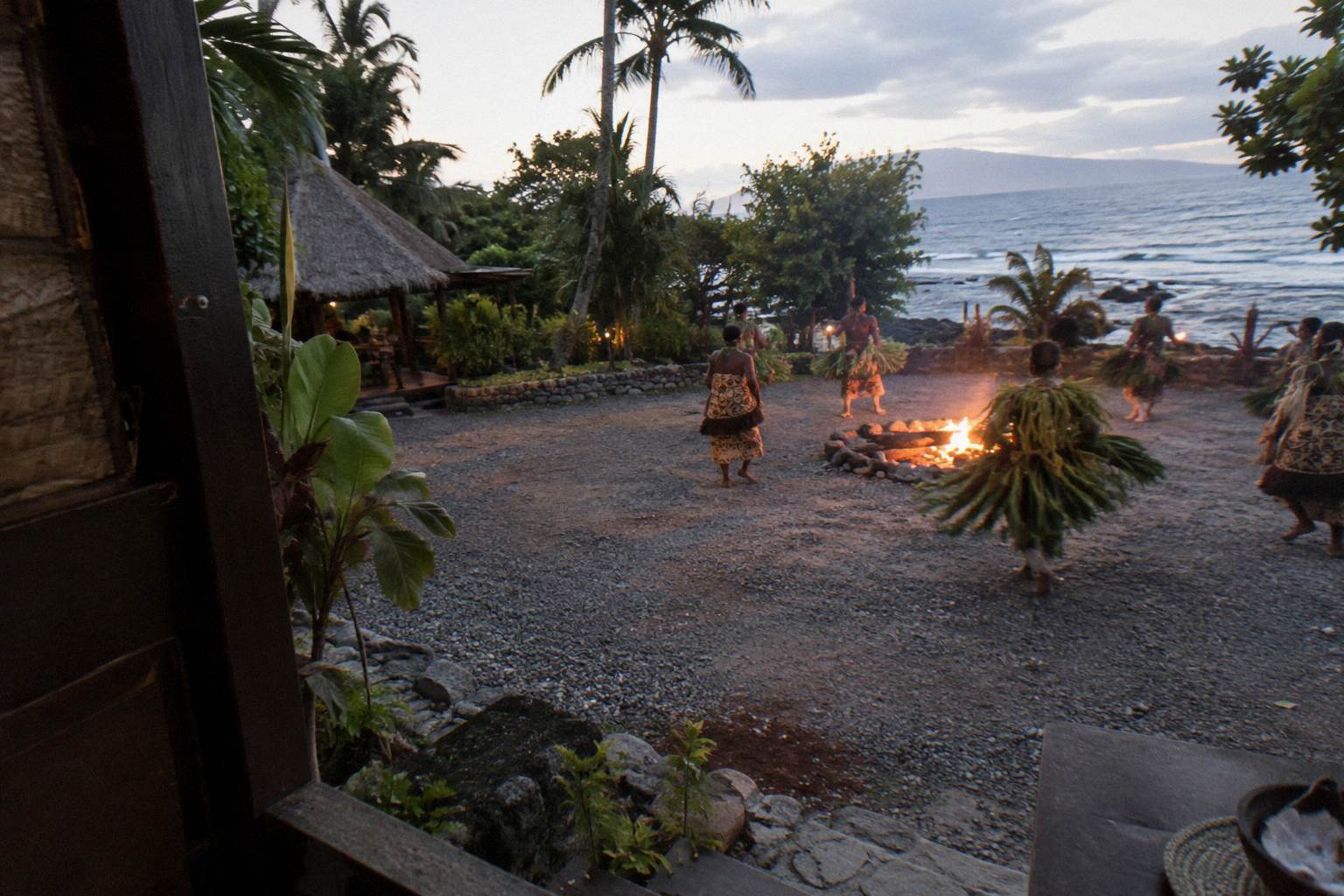
Kava is offered first because sevusevu is the custom Tourism Fiji describes as presenting a small bundle or packet of powdered kava to the village chief to seek permission to enter communal lands as a guest, so the kava gift comes before anything else. Staged evenings follow the same order: Robinson Crusoe lists a sevusevu welcome ceremony with kava tasting among its highlights, and Fiji Culture Village lists a kava ceremony at 7:00pm in its published timeline.
That is the entire protocol the sources state, and it is worth resisting the urge to pad it. The word yaqona is the Fijian name for the plant, Piper methysticum, and Tourism Fiji says kava comes from its dried roots. The ceremony on a tour evening is a staged version of the village custom, performed so guests can see and taste it, which is exactly why the etiquette around it is relaxed but still real. You are not bringing the gift; you are the guest it is being extended to.
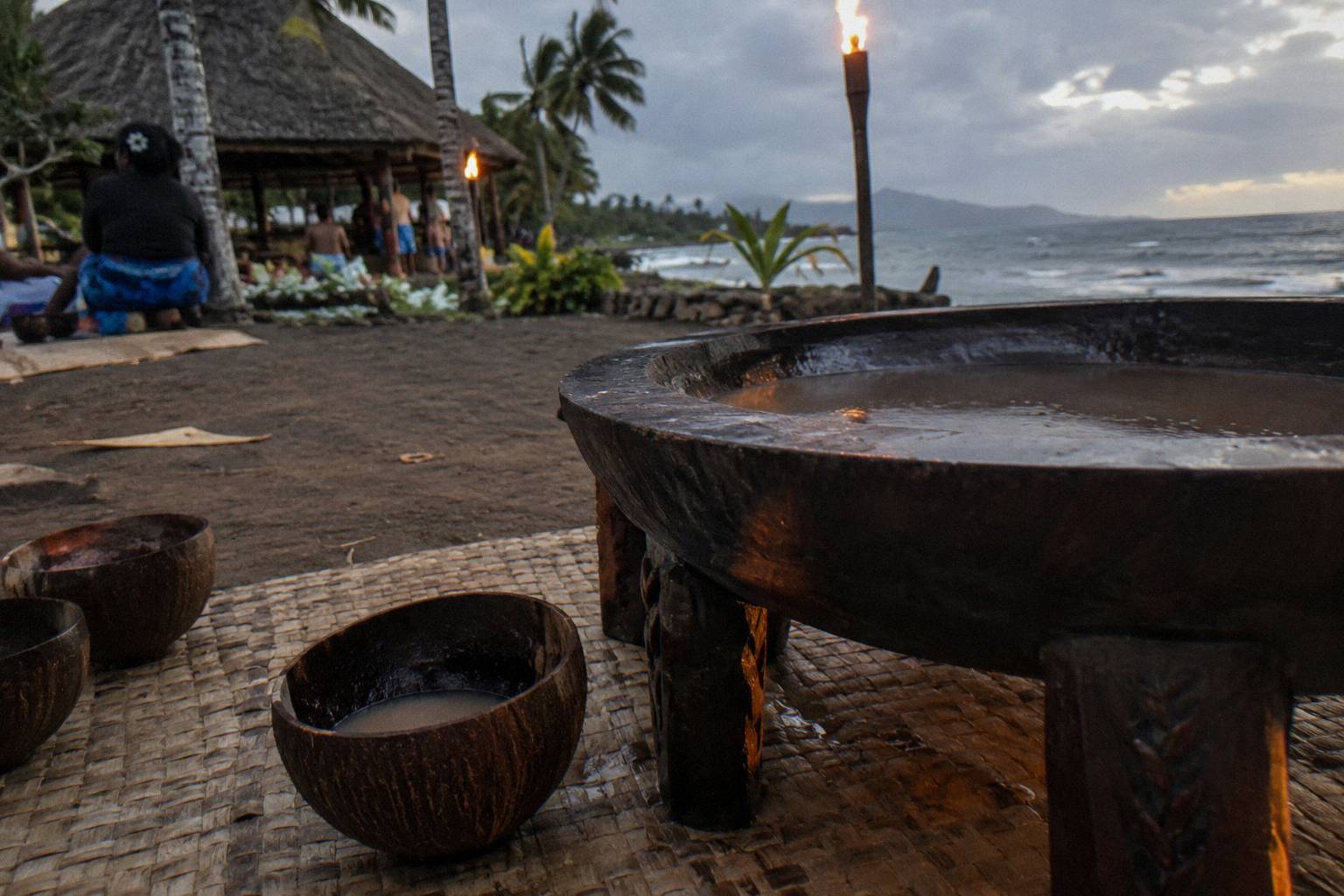
The vocabulary is small and knowing it makes the evening easier to follow. Tourism Fiji's kava guide names the cup a bilo, the bowl a tanoa, and the two serving sizes high tide for a full cup and low tide for a half. None of that is trivia; the server will likely use those words. The full guide to the sevusevu ceremony covers the custom in more depth if you want the background before you go.
The Culture Village evening is the one that publishes a full ceremony timeline, with the kava ceremony at 7:00pm, the lovo unearthing before it at 6:45pm and the meke show and fire dance after dinner at 7:50pm. The operator's rates are F$175 adult, F$105 child aged 5 to 12 and F$500 for a family of two adults and two children, valid to 31 December 2026, and its evening runs Monday to Saturday with hotel pick-up from 4:20pm in Denarau, Nadi and Wailoaloa. It holds a 4.6 rating. The operator's own night tour page publishes that timeline.
How To Accept A Bilo Of Kava
To accept a bilo of kava, follow Tourism Fiji's four-step sequence: clap once, cupped and loud, say "Bula!", drink the serving in one gulp, then return the cup, clap three times and say "vinaka". Declining a bilo is not addressed by these sources, so ask your operator or host on the night rather than assuming either way.
The claps are the part visitors worry about, and they are the easiest. One clap receives the cup, three claps and vinaka, the Fijian word of thanks, close it. Tourism Fiji's guide is the authority for the sequence, and it says nothing about doing it perfectly, only about doing it. A fuller walk-through of the evening's ceremony, including what the kava bowl, the tanoa, means in the setting, is on its own page.
Two honest limits belong here, stated once. First, the effects of kava on the body, its legal status and any health questions are outside what the sources cover: for those, ask a health professional before the evening. Second, what "strong" or "mild" means for a given night's batch is not something any operator publishes, so treat any answer you hear on the night as the host's, not a guarantee. Tourism Fiji's kava guide is the page to read beforehand; it covers the plant, the vocabulary and the accepting sequence.
The evenings that include a kava moment are easy to identify from the operators' own lists.
| Evening | What The Operator Lists | Where It Sits In The Night |
|---|---|---|
| Culture Village Evening Tour | Kava ceremony | 7:00pm, between the lovo unearthing and dinner |
| Robinson Crusoe Sunset Dinner Show | Sevusevu welcome ceremony with kava tasting | Listed among the highlights, before the island itinerary |
| Valentine Tours Fijian Culture Night | Dinner and meke show | Kava not stated; check the booking page |
| VOU Evening Dinner And Show | Drumming, dinner and theatre | Kava not stated; it is billed as theatre, not a village night |
The Robinson Crusoe evening is the one that frames the kava moment as part of a sevusevu welcome before the night proper begins, with the boat leaving the mainland jetty at 5:00pm and the island welcome at 5:45pm.
The Sunset Dinner Show runs Monday, Wednesday and Saturday, about four hours on the island from 5pm to 9pm, with return coach transfers from Nadi, Denarau and Coral Coast hotels as far as the Warwick plus the launch transfers included. Its price is on the booking page rather than the operator's tour page; its terms state rates are in Fijian dollars with 15% VAT included and a 3% card fee. Cancellation is full refund at 24 hours or more before pick-up, 100% forfeit inside that window, and management may cancel for weather or if fewer than 15 adults book, so a sulu in the bag and a flexible night either side is sensible planning.
Photos, Shoes And Personal Space
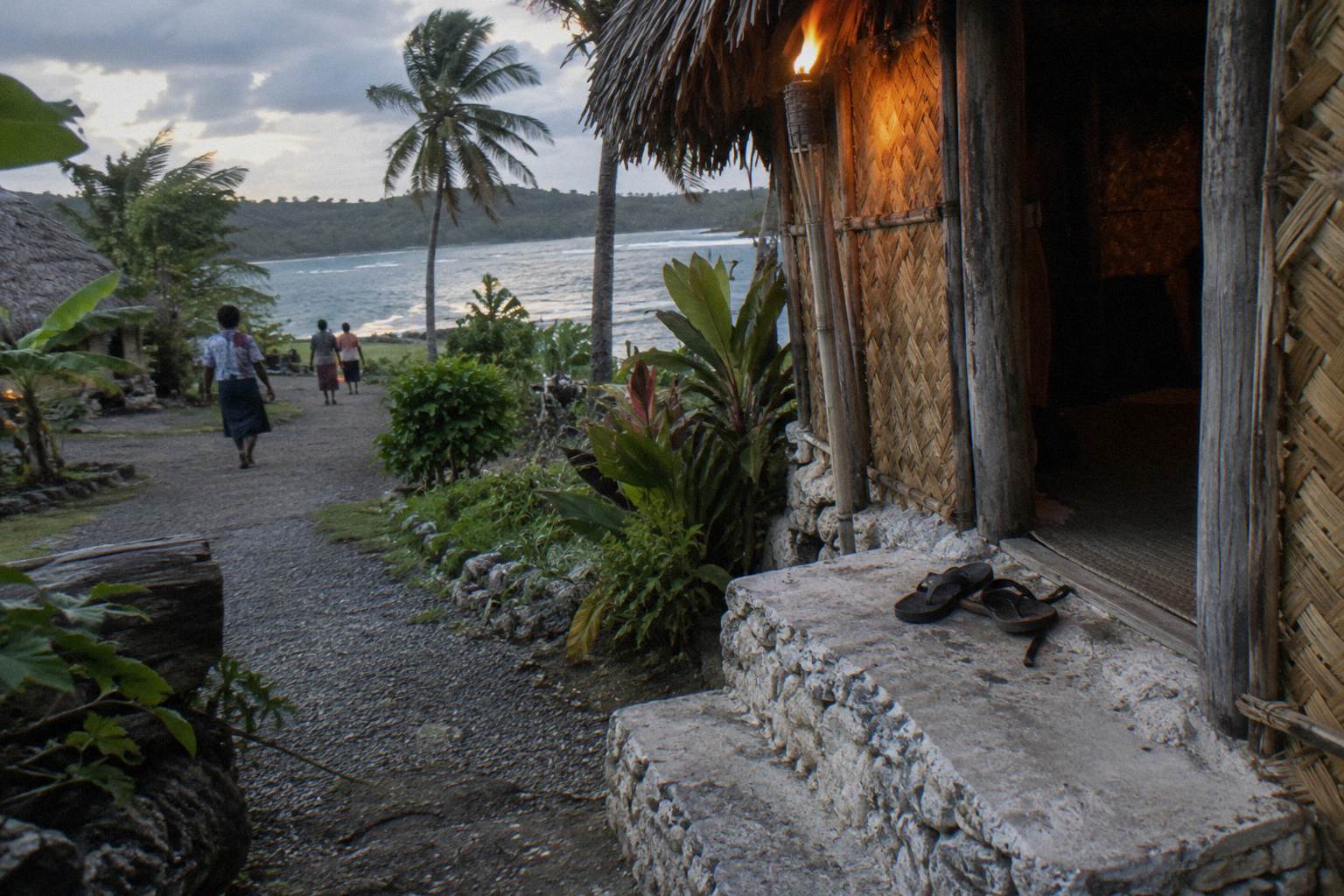
Ask permission before photographing people or entering a home or communal area, remove your shoes before entering any village building, carry your bag in your hand rather than on your shoulder, and keep your voice soft. Those four habits, all from Tourism Fiji's etiquette page, cover nearly every awkward moment a village evening can produce. During the staged show itself the operator is running a performance for you, which is a different setting from the village walk before it.
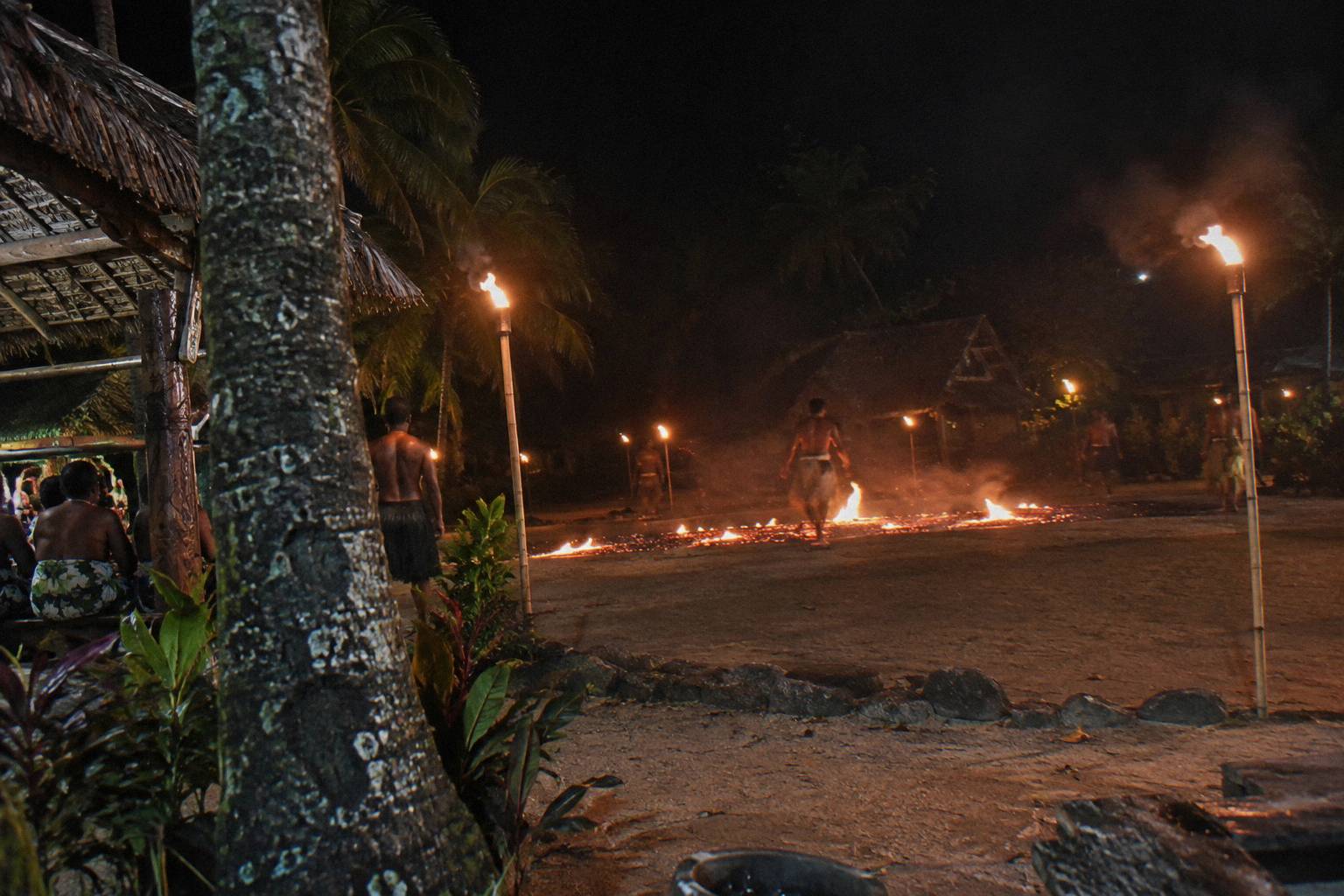
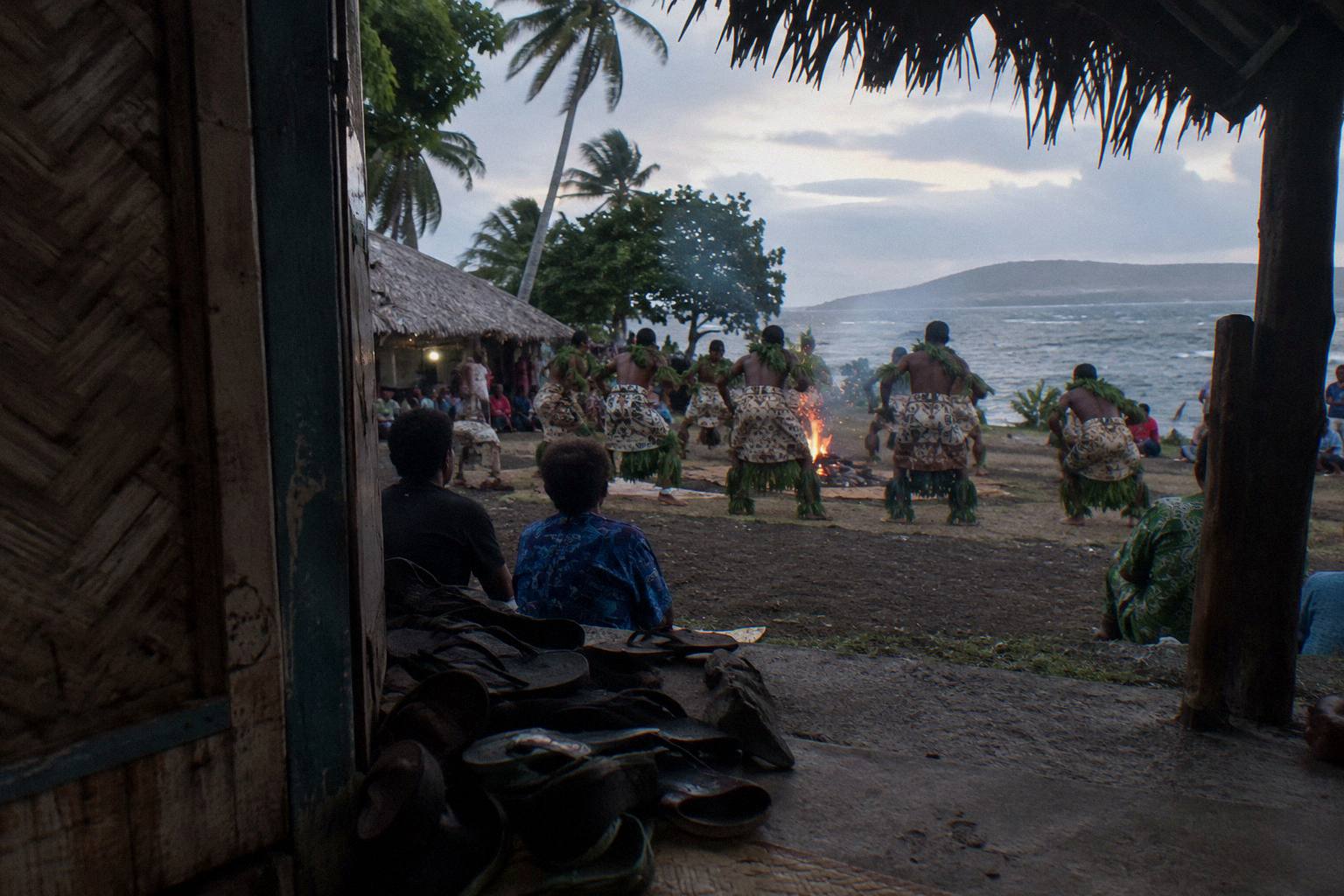
The distinction is worth making clearly. On the Fiji Culture Village timeline, the guided village walking tour at 5:30pm is the moment the village rules fully apply: shoes off at doorways, photographs asked for, voice down. By 7:50pm, when the meke show and fire dance begin, you are an audience at a performance the operator has staged, and photographing the show is what the show is for. If you are unsure on the night, the host will tell you; asking is itself the etiquette.
The head rule deserves a second mention because it is the one that catches people by accident rather than ignorance. Tourism Fiji says the head is sacred in many villages, and the instinct to pat a child's head or touch a performer's shoulder for a photo is exactly the reflex to hold back. The same page's smaller habits, no hats, no sunglasses, bags in hand, take ten seconds to adopt and signal the rest of your intent better than anything you say. For the fuller context of the performance you will be watching, the guide to the Fijian meke explains what the dance form is, in Tourism Fiji's own definition.
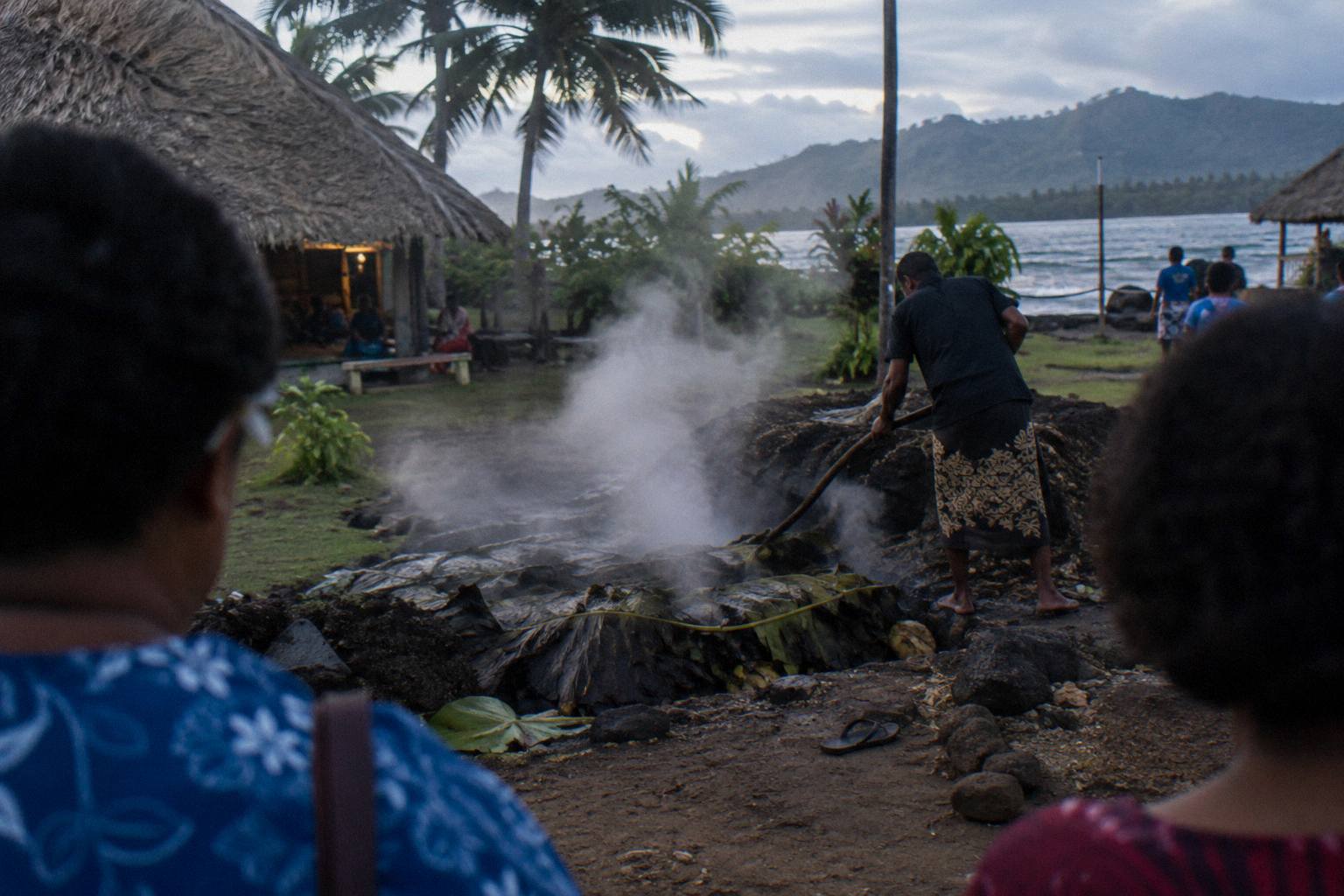
The Lovo Dinner And The Masu
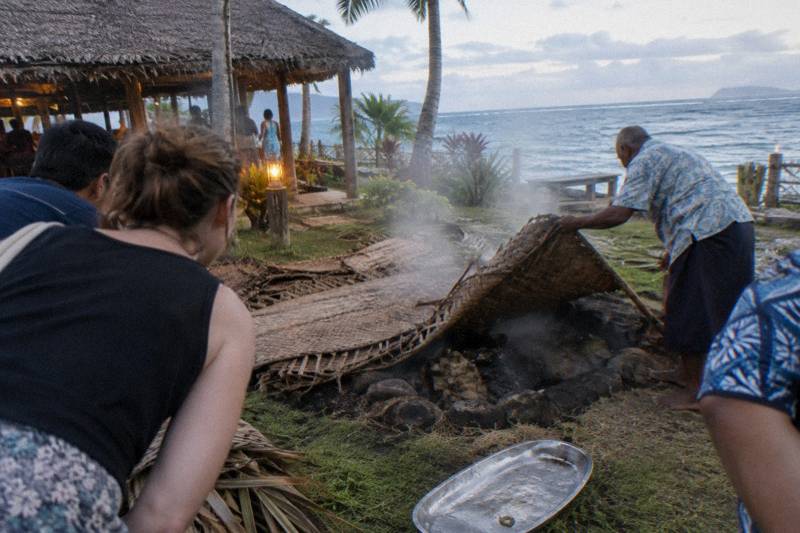
The lovo is a communal earth oven where women prepare the food and men tend the fire, with meat, fish and root crops such as taro cooking on white-hot stones in a covered pit for a few hours; the masu is the prayer said before eating, and meals in a village setting are taken cross-legged on a mat.
The unearthing is a moment worth watching closely, because it is the one part of the evening where the mechanics of the tradition are visible rather than performed. The stones, the covered pit and the few hours of cooking are all Tourism Fiji's description of the method, and seeing the pit opened shows you exactly what the words mean. What the lovo feast actually serves is covered separately; no operator publishes a full menu, and dietary needs, for either operator, are something to advise at the time of booking rather than assume.
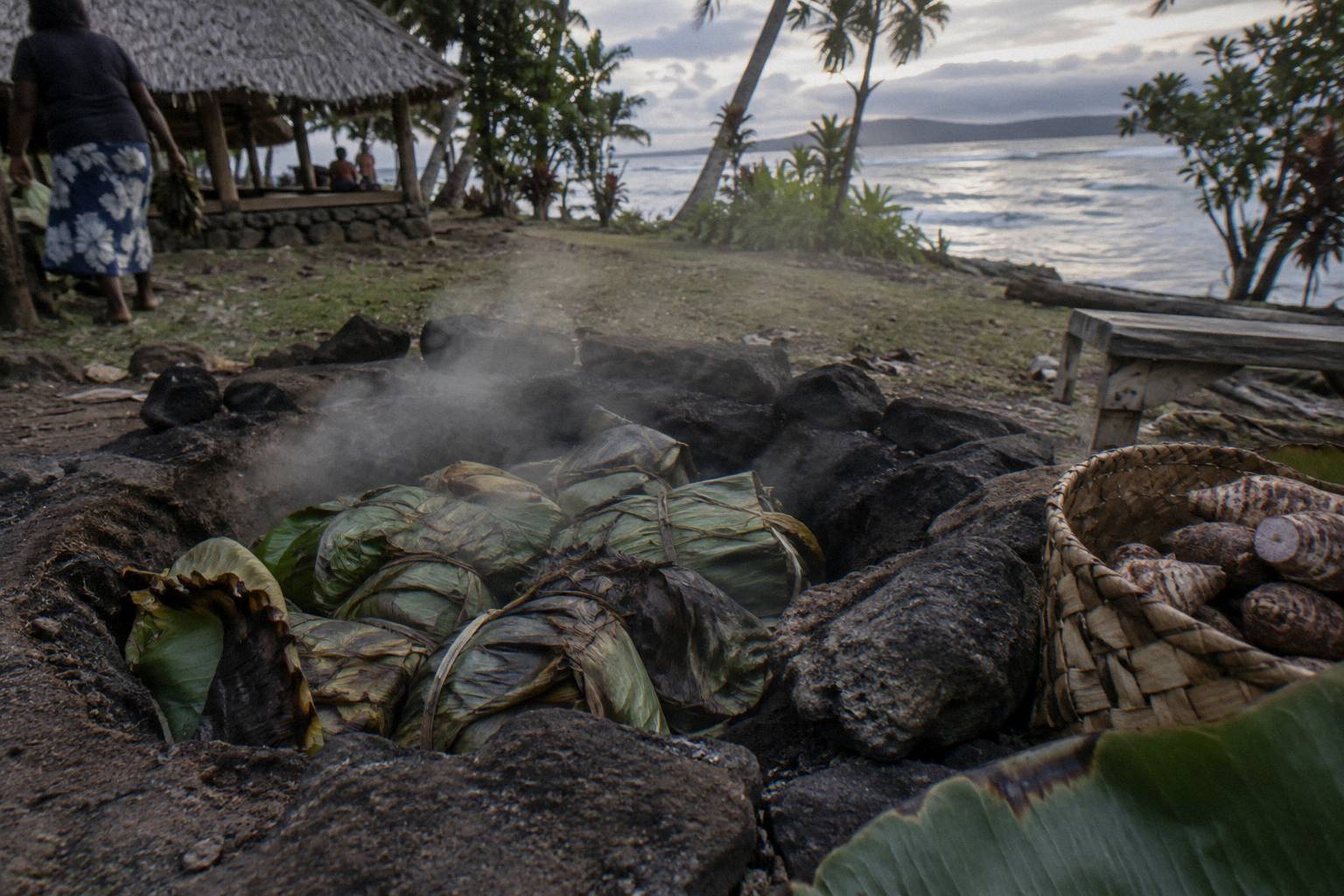
Two table manners from the etiquette page apply directly to this stretch of the night: wait for the masu before eating, and, in a traditional setting, sit cross-legged on the mat. A staged buffet on a tour evening may give you a table and chair instead, in which case the host sets the terms; the masu, if it is said, is the cue regardless of the seating. Robinson Crusoe's terms add one food-related note of its own: the lovo may be replaced by a BBQ if numbers are low, and dietary needs are advised at booking. Vegan and halal options are not stated by any operator, so ask rather than infer.
The dinner hour is also where a shorter Nadi evening earns its place. The Valentine Tours Fijian Culture Night, Dinner And Meke Show runs about three hours with hotel pick-up from the Nadi and Denarau area, pairing dinner with a meke show.
Its start time and inclusions beyond dinner and the meke show are on the booking page, and its price is quoted there too. For a first cultural evening, or a night when the Culture Village timeline of about 4 to 4.5 hours door to door is more than the schedule allows, a three-hour dinner and meke format keeps the courtesy moments, the kava if offered, the dinner, the show, in a shorter window.
Sundays, Quiet Hours And Timing Your Visit
Sundays are sacred in Fiji and most village tours do not run, Tourism Fiji says, so expect quiet Sunday hours. Fiji Culture Village operates Monday to Saturday, while Robinson Crusoe runs its evening show and Combo on Monday, Wednesday and Saturday and its Culture Day Tour on Sunday, Tuesday and Thursday; note also that Fiji Culture Village closes for annual maintenance from Monday 22 February 2027 until Wednesday 10 March 2027.
The practical consequence for etiquette is that the choice of night is not fully yours. If your week in Fiji spans a Sunday, that day is out for the village evening, and the Robinson Crusoe nights land on three fixed days of the week, so a Monday visitor and a Sunday visitor face genuinely different options. Planning the evening around the fixed nights matters more than any booking-lead question; nothing in the operator guidance speaks to how far ahead you must book.
| Evening | Nights It Runs | Length | Dress Request Stated |
|---|---|---|---|
| Culture Village Evening Tour | Monday to Saturday | About 4 to 4.5 hours | Not stated; ask the operator |
| Robinson Crusoe Sunset Dinner Show | Monday, Wednesday, Saturday | About 4 hours on the island | Resort wear, repellent, Fijian dollars for drinks |
| Robinson Crusoe Day And Night Combo | Monday, Wednesday, Saturday | About 11 hours, 10am to 9pm | Covered shoulders, sulu or sarong for the village visit |
| Valentine Tours Fijian Culture Night | Not stated | About 3 hours | Not stated; check the booking page |
| VOU Evening Dinner And Show | Not stated | About 3 hours | Not stated; check the booking page |
The evening ends carry their own courtesy. Robinson Crusoe's night closes with the Isa Lei farewell at 9:00pm, a sung farewell rather than a quick exit, and the boat departs at 9:15pm; Fiji Culture Village's farewell and departure come at 8:30pm. Staying through the farewell rather than heading for the coach early is a small thing, and it is the note the evening is designed to end on. The details of how long a Fiji cultural night lasts are broken out in their own piece.
Common Mistakes When Preparing For A Fiji Cultural Night
The mistakes that matter are dressing for a beach dinner instead of a village visit, touching a head, photographing a person without asking, skipping the claps around the bilo, eating before the masu, and assuming a Sunday or an off-night is available. Each one comes from treating the evening as a show rather than a guest's visit, and each is avoided by asking first, waiting for cues, and following Tourism Fiji's list.
The first mistake is the wardrobe one. Shoulders and legs covered, a sulu available, shoes that slip off easily for any building entry. The second is the camera one: permission before people, and no assumption that a village walk is a photo walk. The third is rushing the kava moment; the four-step sequence is short, and the claps are part of it, not decoration around it. The fourth is the dinner cue, the masu before the first plate. The fifth is scheduling: checking the fixed nights before promising the family a Monday show.
One contrast worth naming is the VOU Evening Dinner And Show in Nadi, about three hours, billed as a theatrical dinner show with drumming, dinner and theatre rather than a meke-and-lovo village night. For a traveller whose interest is performance rather than ceremony, it changes which etiquette habits apply at all; its transfer details and dress guidance are not stated, so check with the operator before assuming the village checklist is needed there.
| Mistake | Why It Lands Badly | The Fix |
|---|---|---|
| Beach dinner outfit at a village walk | Bare shoulders and legs in a village setting | Cover up, wrap a sulu, carry it in your day bag |
| Photographing residents without asking | Permission is asked for before photos of people | Ask, and accept a no |
| Touching a head, adult or child | The head is sacred in many villages | Keep hands off; a smile and vinaka do the work |
| Skipping the claps at the bilo | The claps and vinaka are the guest's part of the exchange | Learn the four steps before the night |
| Eating before the masu | The prayer precedes the meal | Watch the host; follow the room |
| Booking a Sunday village evening | Sundays are sacred; most village tours do not run | Match your night to the operator's fixed days |
None of these need rehearsing to perfection. The operators run these evenings for visitors, the hosts guide the night, and the etiquette is a courtesy you bring, not an exam you sit. Bring the sulu, learn the four kava steps, ask before the camera, and the rest of the evening takes care of itself, whether your night is a full village timeline in Nadi or an island bonfire on the Coral Coast.
Choosing between them is mostly choosing a format: the Culture Village night for the full ceremony sequence close to Nadi, the three-hour Valentine Tours dinner and meke for a shorter evening, or the Robinson Crusoe island night for the bonfire, the lovo on the beach and the fire walking demonstration. Whatever the choice, the etiquette on this page travels with you, and Fiji Cultural Night Tours keeps the evening-by-evening details for each one.
Common Questions About Fiji Cultural Night Etiquette
Do You Have To Cover Your Shoulders At A Fiji Cultural Night?
Tourism Fiji says to cover bare shoulders and legs when visiting a Fijian village, and Robinson Crusoe asks visitors on its Day And Night Combo to cover shoulders and bring a sulu or sarong for the Vusama Village visit, with spare sulus available. Fiji Culture Village's dress guidance is not stated; ask the operator at +679 804 4800.
Do You Have To Drink Kava At A Fijian Ceremony?
Tourism Fiji's kava guide describes how to accept a bilo but does not state whether declining is acceptable, and neither operator publishes a rule. Ask the host on the night; the ceremony is staged for guests, and the hosts guide it.
How Do You Accept A Bilo Of Kava Correctly?
Per Tourism Fiji's kava guide: clap once, cupped and loud; say "Bula!"; drink in one gulp; return the cup, clap three times and say "vinaka". A full cup is called high tide and a half cup low tide on the same page.
Can You Take Photos During The Village Walk?
Tourism Fiji's etiquette page says to ask permission before taking photos or entering a home or communal area. During the staged show, the performance is put on for the audience; during the village walk, ask first.
Should You Take Your Shoes Off At A Fiji Cultural Night?
Tourism Fiji says to remove shoes before entering any village building. On a tour evening, follow the host's cue at each doorway; if the evening includes a village walking tour, assume building entry means shoes off.
What Does Vinaka Mean?
Vinaka is the Fijian word of thanks, used in Tourism Fiji's kava guide at the close of accepting a bilo: clap three times and say "vinaka". Bula is the greeting, used when receiving the cup.