What Should You Wear To A Fijian Village Evening?
Dress guidance for a Fijian village evening: Tourism Fiji's village rules, the sulu, footwear, what each tour operator asks for, and a packing checklist.
A Fijian village evening comes with a dress code that is older than any tour company. Tourism Fiji's etiquette guidance is direct: cover bare shoulders and legs when visiting a Fijian village, and wrap a sulu around the waist. The operators build on that baseline in different ways, so the outfit that works for one evening can fall short at another.
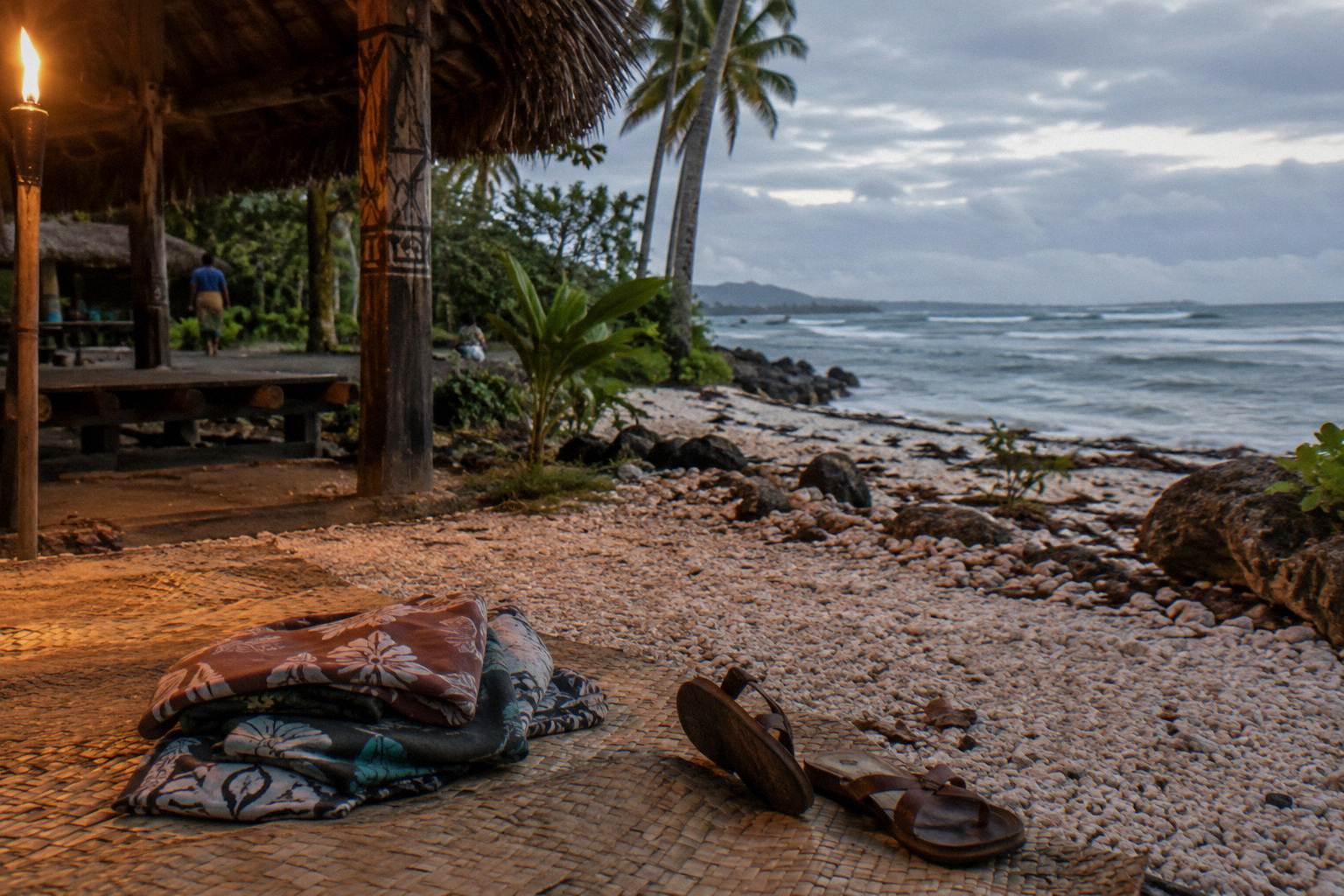
Cover your shoulders and knees, wrap a sulu around your waist, and choose sandals or flat shoes you can slip off quickly. Tourism Fiji's etiquette page sets the village baseline: cover bare shoulders and legs, remove hats and sunglasses before entering, and take shoes off inside any village building. Robinson Crusoe asks the same of its village visitors and keeps spare sulus on hand, so a forgotten sarong does not end the evening.
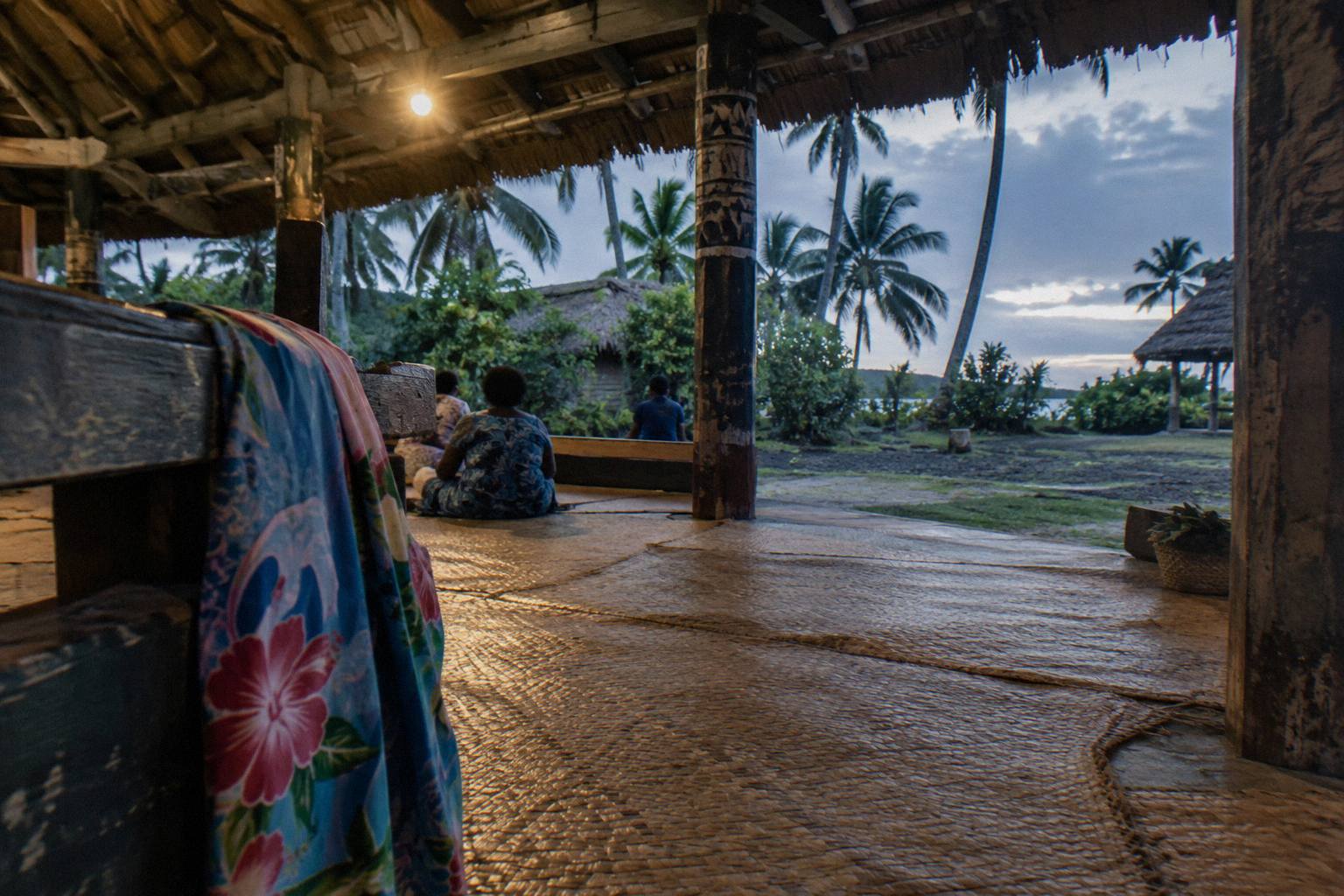
The starting point is respect rather than formality. A village evening in Fiji is a hosted event: the community opens its communal land, its ceremonial space and its food to visitors, and dress is one of the visible signals that a guest understands that. Nothing in the guidance calls for anything expensive. Cotton that breathes, a sarong that wraps, and shoes that come off without a struggle cover almost everything the etiquette page asks for.
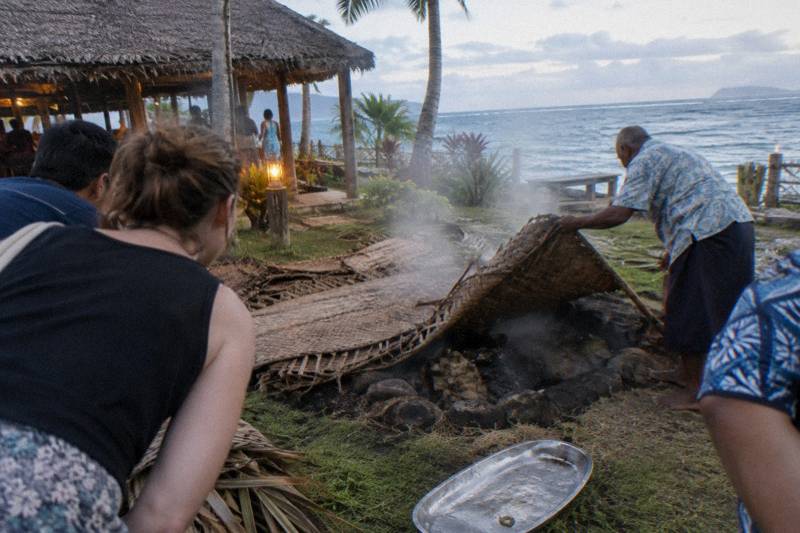
The evening tours covered here differ in how much of a real village setting they include. The Culture Village Evening Tour With Dinner And Show has a guided village walking tour at 5:30pm before the lovo is unearthed at 6:45pm. Robinson Crusoe's Day And Night Combo includes a guided Vusama Village visit in the daytime portion. Both put you on village ground, which is exactly where the dress guidance bites. A reader asking this question usually has an evening in mind already, so the practical answer is to dress for the village rules first and the show second.
What Tourism Fiji's Etiquette Page Actually Says
Tourism Fiji lists concrete rules, not vague advice: cover bare shoulders and legs in a village, wrap a sulu around the waist, remove hat and sunglasses, carry bags in hand rather than on the shoulders, and remove shoes before entering any village building. It also asks visitors not to touch anyone's head, to speak softly, and to ask permission before taking photos or entering a home or communal area.
Each of those rules changes something about an outfit. Shoulders and knees covered rules out singlets and short shorts. A sulu, the wrapped rectangle of cloth worn at the waist, is the piece that satisfies the leg rule for men and women alike and doubles as a modest layer when sitting on the floor. Hats and sunglasses come off, so a hat that flattens hair or sunglasses perched on the head all evening are small frictions worth avoiding. Bags carried by hand rather than on shoulders mean a crossbody strap is not the automatic choice it would be on a city street.
The shoe rule deserves more attention than it usually gets. Village buildings are entered barefoot, and an evening tour moves between outdoor and indoor spaces repeatedly. The Culture Village timeline, for instance, runs from a 5:30pm village walking tour to a 7:20pm buffet dinner and a 7:50pm meke show, with shoes likely coming on and off more than once. Buckled sandals, tall boots or tight laces turn each threshold into a production; a simple slide or flip-flop does not.
Tourism Fiji's etiquette guidance also notes that meals are eaten cross-legged on a mat and that guests wait for the masu, the prayer, before eating. That single line affects clothing more than it first appears: tight trousers, short skirts and restrictive dresses all make floor seating harder than it needs to be. Loose, soft clothing is not just a modesty choice, it is a practical one. The full set of village rules is worth a read before any first visit, and Tourism Fiji's etiquette guide states each one plainly.
| Tourism Fiji village rule | What it means for your outfit |
|---|---|
| Cover bare shoulders and legs | No singlets, strapless tops or short shorts; knees covered |
| Wrap a sulu around the waist | Bring a sarong; it satisfies the leg rule for anyone |
| Remove hat and sunglasses | Choose a hat you can stow easily, not one you fiddle with |
| Carry bags in hand, not on shoulders | A small handheld bag beats a crossbody on village ground |
| Remove shoes before entering any building | Slip-on sandals or flip-flops; nothing with buckles or laces |
| Speak softly and ask before photos | Nothing to wear, everything to do |
The Sulu: The One Item That Solves Most Of It
A sulu is a length of cloth wrapped around the waist, and it is the single most useful item for a Fijian village evening because it covers the legs instantly, works for men and women, and satisfies the dress rule that matters most in a village setting. Robinson Crusoe asks visitors to bring one for its village visit and keeps spare sulus available, so a forgotten sarong has a fallback.
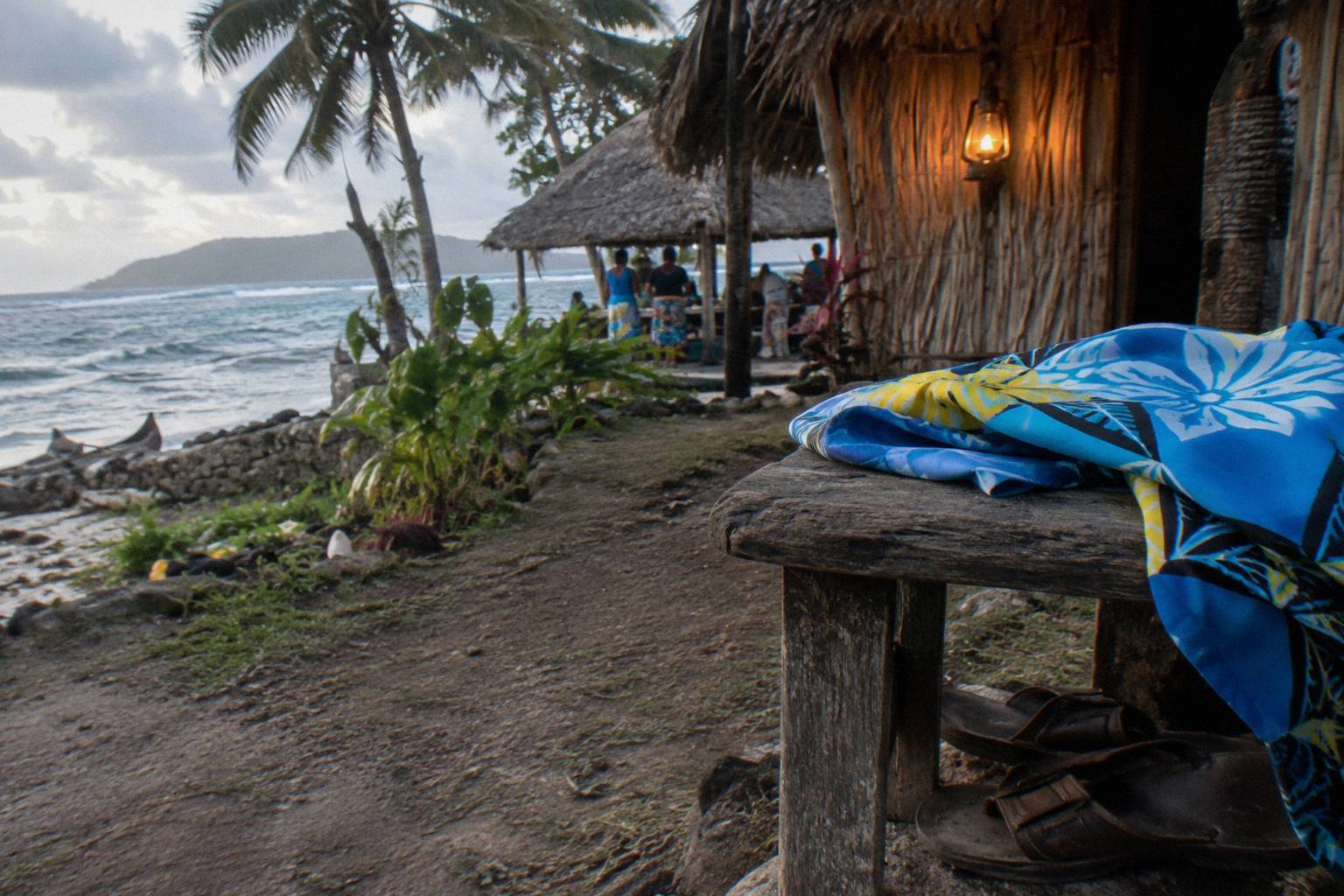
The sulu is ordinary clothing in Fiji, not a costume. It is the same rectangle of fabric whether it comes from a resort shop, a market stall or the spare pile beside a village visit, and wrapping it takes seconds. Worn over shorts on the boat, it converts beach clothing into village-appropriate clothing the moment the group walks toward Vusama Village on the Day And Night Combo. Worn over a dress or trousers at a mainland village evening, it is a comfortable floor-seating layer that happens to be the locally correct thing to wear.
Robinson Crusoe's own Day And Night Combo page makes the request explicit: visitors are asked to cover shoulders and bring a sulu or sarong to wear during the village visit, and spare sulus are available. That second half of the sentence is the reassuring part. An operator that keeps spares is an operator that expects newcomers, and nobody is turned away for showing up with the wrong bag. Still, a sarong bought before the evening is cheaper than relying on a shared pile, and it becomes a souvenir afterwards.
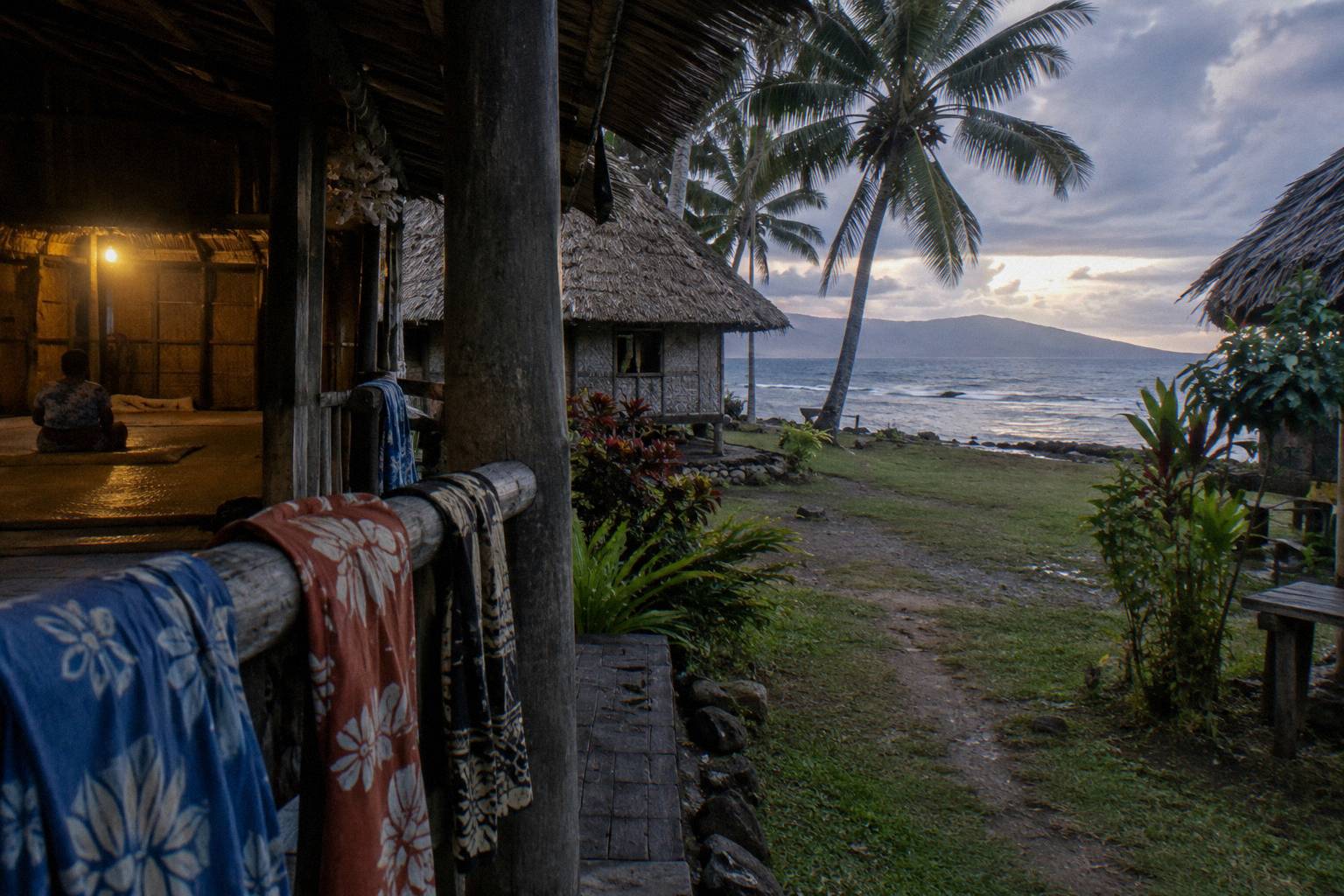
For travellers packing light, one sulu per person plus one spare in a shared bag covers the whole family. The fabric weighs almost nothing, dries fast and folds to the size of a paperback. Men sometimes hesitate over the wrap; on a village evening in Fiji there is no reason to, since it is standard local dress for men, and Tourism Fiji's guidance treats it as the default solution to the covered-legs rule rather than an optional extra.
What Each Evening Tour Actually Asks For
The honest comparison is short because the published facts are short. Robinson Crusoe is the one operator with a full, public set of guidance covering both the village visit and the island evening. Its FAQ for night tours suggests resort wear, insect repellent and Fijian dollars for the licensed bar, and the operator's FAQ page lists those alongside its transfer and cancellation rules. Fiji Culture Village's evening includes a village walking tour and a lovo unearthing, both settings where the Tourism Fiji baseline applies, but the operator's own page does not publish dress guidance; the gap is real and the answer is a phone call, not a guess.
| Tour | Setting | Operator dress guidance |
|---|---|---|
| Culture Village Evening Tour With Dinner And Show | Village walking tour and lovo unearthing, Nadi | Not stated; ask the operator on +679 804 4800 |
| Robinson Crusoe Sunset Dinner And Fire Show | Island evening, Likuri Island | Night tour guidance: resort wear, insect repellent, Fijian dollars for drinks |
| Robinson Crusoe Day And Night Combo | Village visit in the day, island evening after | Cover shoulders, bring a sulu or sarong; spares available |
| Valentine Tours Fijian Culture Night, Dinner And Meke Show | Nadi evening, about 3 hours | Not stated; check the booking page |
| VOU Evening Dinner And Show | Theatrical dinner show, Nadi | Not stated; check the booking page |
The table's shape tells its own story. Where a tour enters a living village, the operator tends to publish a rule; where it is a staged show, the guidance thins out. That pattern is a planning tool in itself. Anyone booked on an evening that names a village in its itinerary should pack as though the Tourism Fiji rules apply in full, because the ground itself imposes them. Anyone booked on a theatrical dinner evening can lean toward smart resort wear, which the one operator that publishes night guidance asks for anyway.
For the Culture Village evening, the operator's timeline is a useful dressing aid even without published guidance. Pick-up is from 4:20pm at Denarau, Nadi and Wailoaloa hotels, the warrior welcome is at 5:15pm, the village walk at 5:30pm, and the night closes with farewell at 8:30pm. That is roughly four to four and a half hours door to door on foot, on mats and around an earth oven, in the cooling air after sunset. The Culture Village evening tour page has the full timeline, and availability for a chosen night can be checked with Check availability.
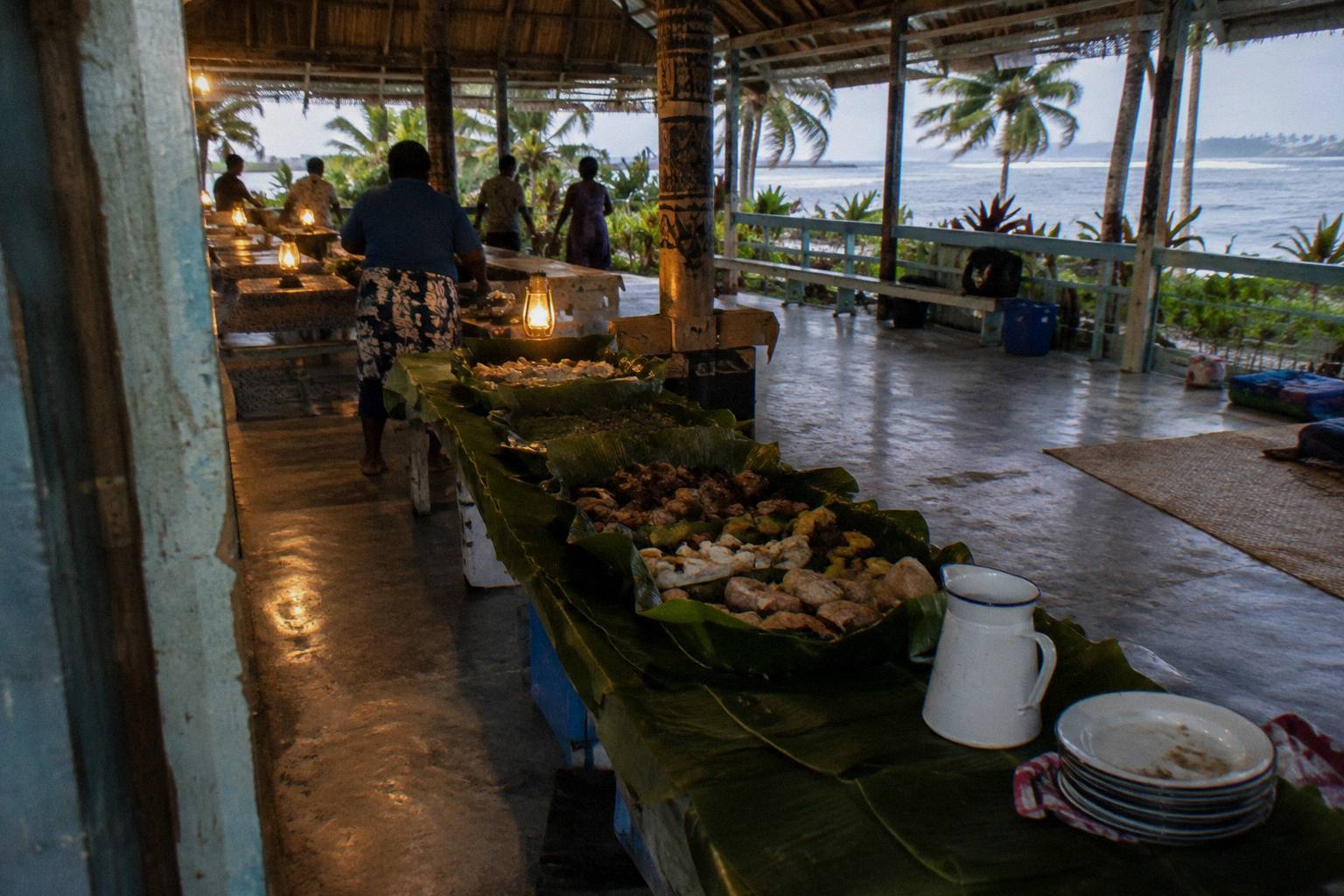
Footwear, Hats And Bags: The Small Rules That Trip People Up
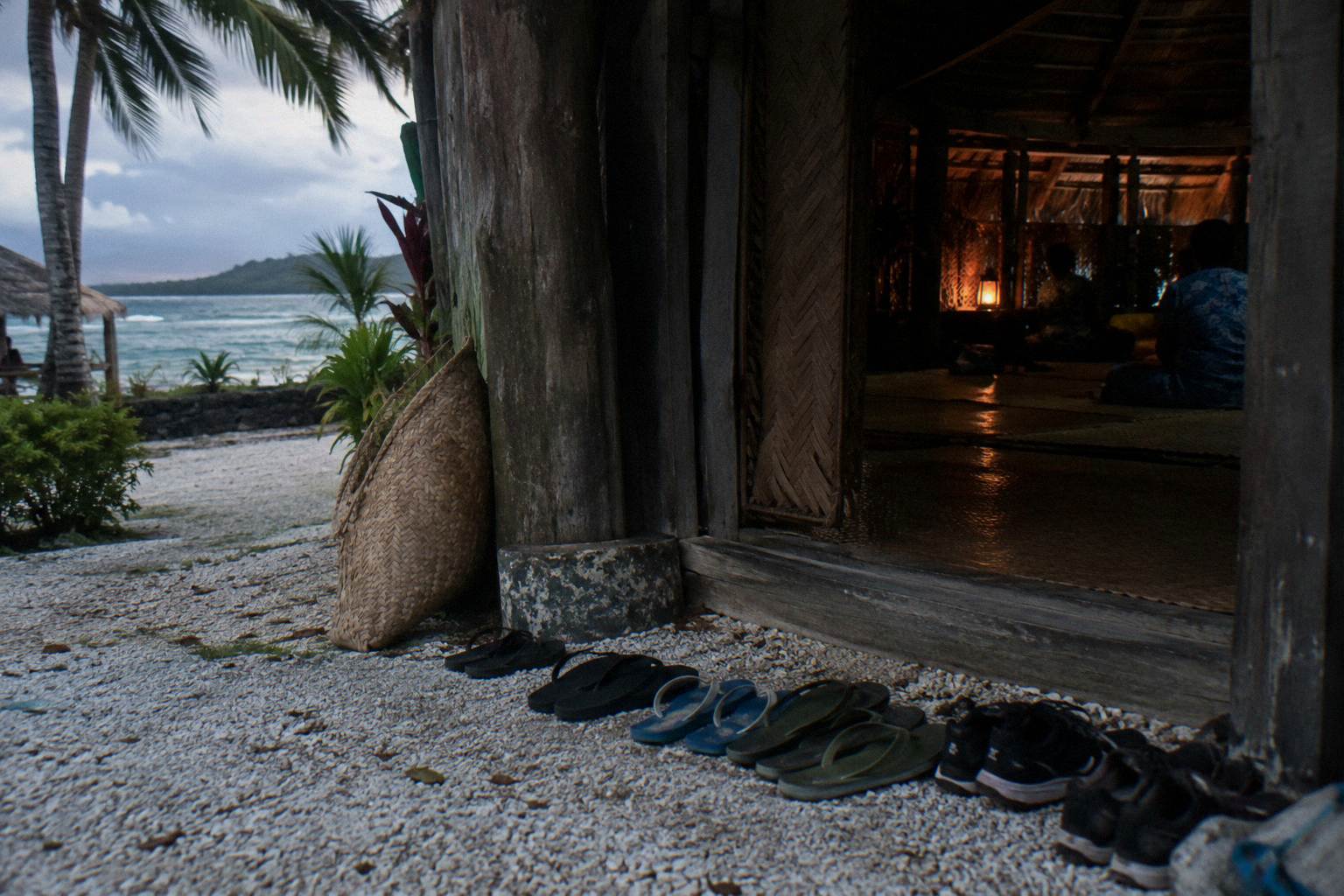
Shoes come off at the door of any village building, hats and sunglasses come off inside, and bags are carried in the hand rather than on the shoulder. Those three small rules decide the accessories more than any style question does: slip-on footwear, a hat that packs flat, and a small handheld bag beat buckles, laces and crossbody straps every time on a village evening.
Footwear is the biggest practical decision of the night. The evening tours move between open ground, mats and possibly sand. Robinson Crusoe's itinerary alone crosses a boat, a beach bonfire, a dining area and show seating between 5:00pm and 9:15pm. Thongs, slides or soft sandals handle every one of those surfaces and slip off at a threshold without breaking stride. Anything that needs two hands to remove will be noticed by the second or third building of the night.
Bags matter more than they seem. Tourism Fiji's rule about carrying bags in hand rather than on the shoulders connects to village protocol rather than comfort, and honouring it costs nothing if the bag is small. A clutch, a soft tote or a small handheld daypack all work. What goes in it is covered by the operators' own suggestions: Robinson Crusoe's night tour guidance names insect repellent and Fijian dollars for drinks, and its FAQ notes there is no outside alcohol on the island because a licensed bar runs instead. Reef-safe common sense applies to anything worn or carried near the water, but the published guidance stops at repellent, cash and resort wear, and this page stops there too.
Hats and sunglasses are the quiet ones. Both come off inside village buildings, and the etiquette page places that rule alongside the shoe rule rather than as a style suggestion. A traveller whose sunglasses live on their head can simply leave them in the bag for the evening. The same page asks visitors to ask permission before taking photos or entering a home or communal area, which is the moment a handheld bag helps again: hands stay free for greetings, and cameras stay put away until invited.
Dressing For Fire Shows, Beaches And Insects
For an island evening, the operator's own guidance is the ceiling: resort wear, insect repellent and Fijian dollars for drinks. Robinson Crusoe's night runs from a 5:00pm boat departure to a 9:15pm boat back across sand, bonfire smoke and show seating, so lightweight long sleeves and long trousers serve both the covered-legs instinct and the insects.
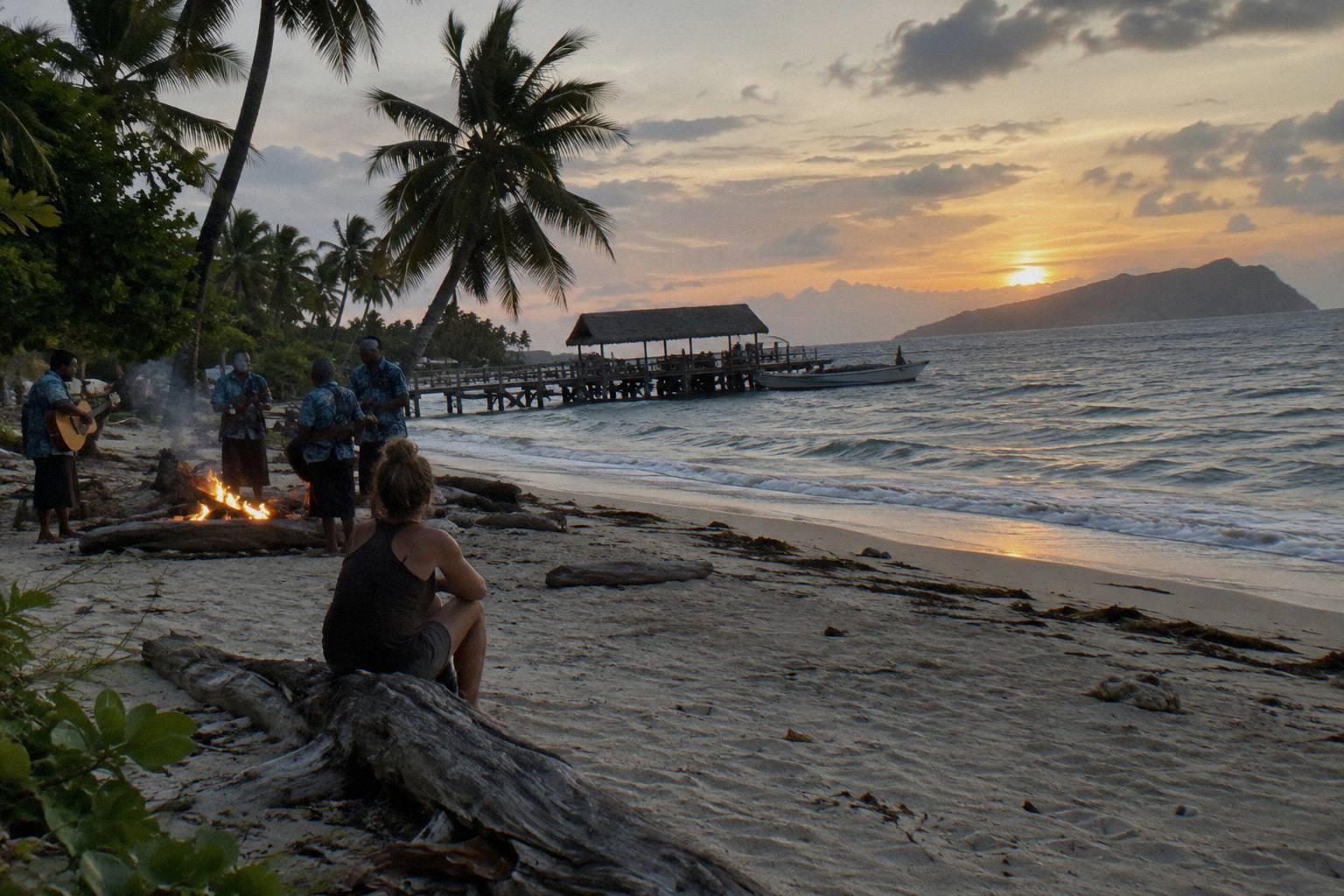
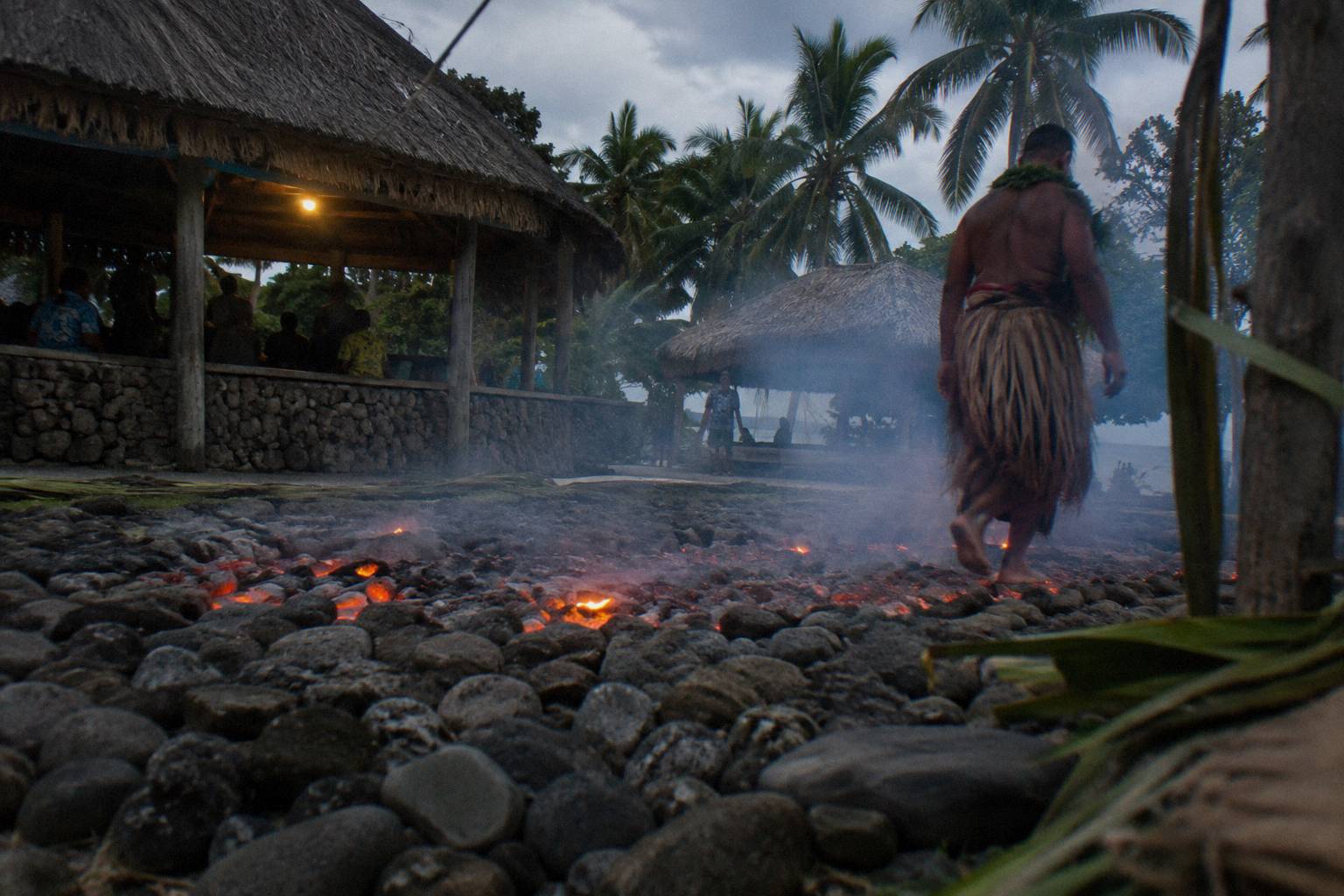
The sunset show on Likuri Island is the evening where clothing does the most jobs at once. The itinerary moves from the jetty near Natadola Beach, 45 minutes from Nadi, down a 30-minute calm-water cruise on the Tuva River, onto the island at 5:45pm, to a sunset beach bonfire at 6:00pm, then the lovo unearthing with a fire walking demonstration at 6:30pm and the 'Legends of the Pacific' show after the 7:00pm dinner. Sand, river air, bonfire smoke and an evening on the water add up to one clear brief: light layers that cover arms and legs.
Insect repellent is named by the operator, not guessed at here. An island evening near a river at dusk is exactly the environment where repellent earns its place in the bag, and putting it there costs nothing. Lightweight long sleeves do double duty in the same setting, covering shoulders for the communal parts of the night and reducing the skin available to insects between the bonfire and the boat home. A light layer also bridges the temperature drop after sunset, which any evening on the water shares.
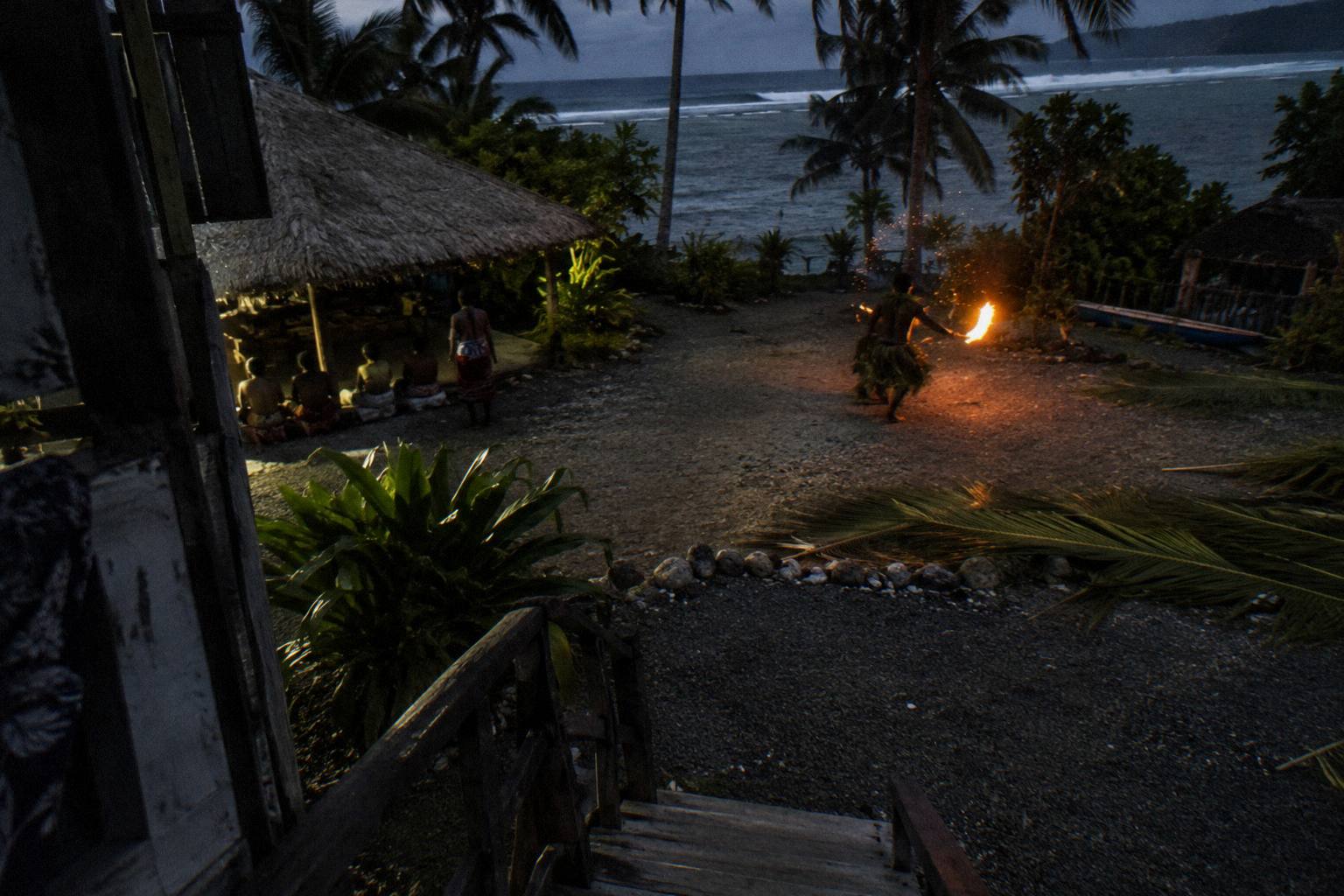
The fire elements deserve a plain note. Robinson Crusoe lists a fire walking demonstration before dinner and fire and knife dancing in the show afterwards; the fire-knife dance, siva afi, is Samoan in origin and is staged in Fiji shows, a distinction worth knowing but not a dress question. Nothing in the operator's guidance asks for flame-resistant clothing or special gear, and inventing such a requirement would go beyond what is published. The operator asks for resort wear, and the show sits at a spectator distance. More on the performances themselves is in the guide to fire dance shows in Fiji, and the broader village-evening rules are collected in the Fiji cultural night etiquette guide.
What Children Should Wear To A Village Evening
Children follow the same village rules as adults: covered shoulders and legs, shoes that slip off, and a sulu that can be wrapped small. Fiji Culture Village prices children from 5 to 12 years and publishes no minimum age; Robinson Crusoe states no minimum age for its evening show and tags its daytime culture tour as the family-friendly one. Dress is the same question at any age.
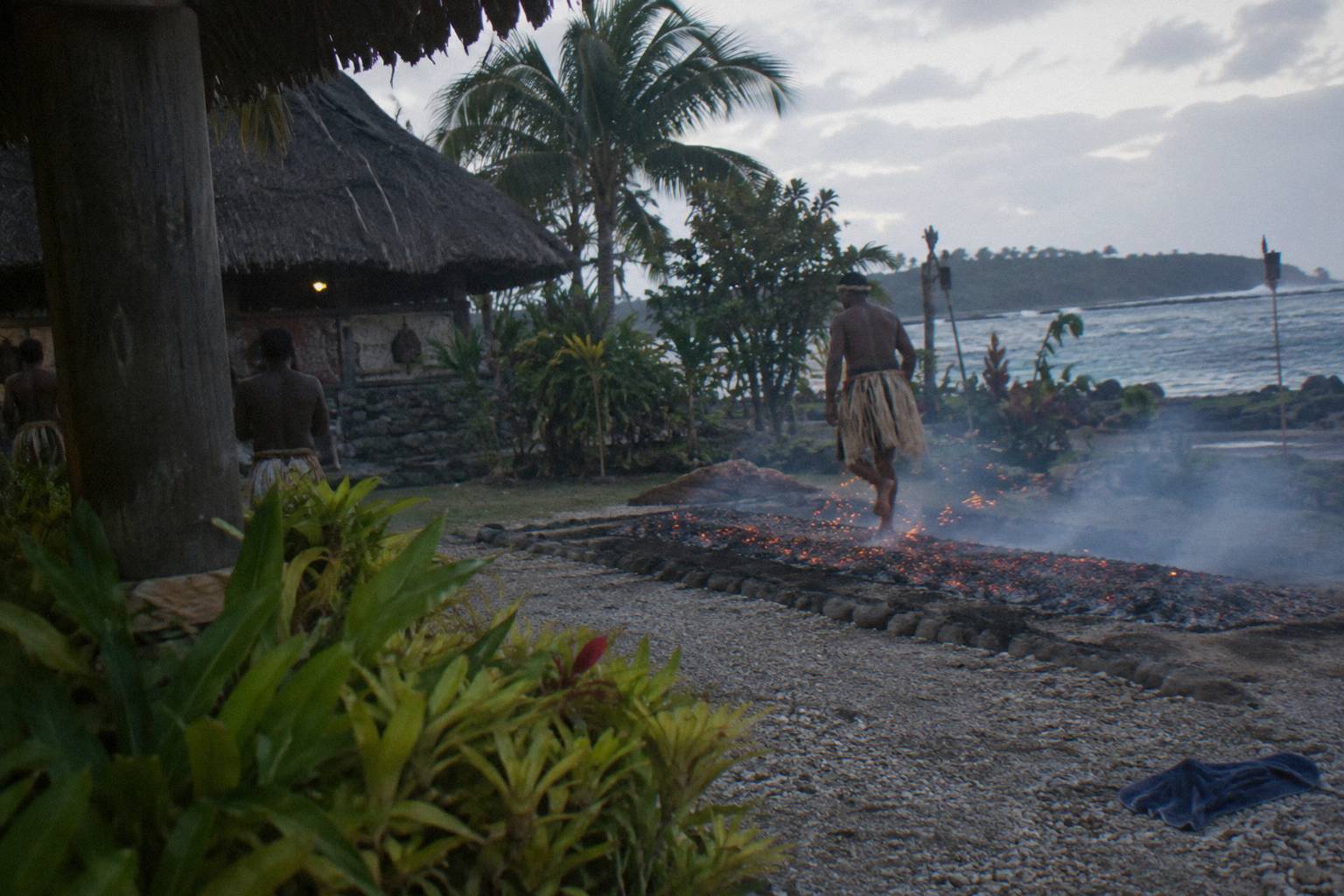
The practical differences for children are about comfort across a long evening rather than protocol. The Culture Village night runs about four to four and a half hours from pick-up to farewell, and the Robinson Crusoe evening is four hours on the island plus coach transfers each way. A child who is comfortable on a mat, in breathable cotton and in shoes they can manage alone will have an easier night than one in stiff new clothes. The same reasoning applies to whether an evening suits a family at all, a question handled in full in whether kids can go to a Fiji cultural night.
A child's sulu can be any light sarong, wrapped lower and tighter than an adult's. The spare pile at Robinson Crusoe's village visit covers children too, since the operator simply keeps sulus available for visitors who arrive without one. For the Culture Village evening, dress guidance is not published, so the Tourism Fiji baseline plus a phone call to the operator on +679 804 4800 settles it. That single question, asked when booking, avoids guessing on the night.
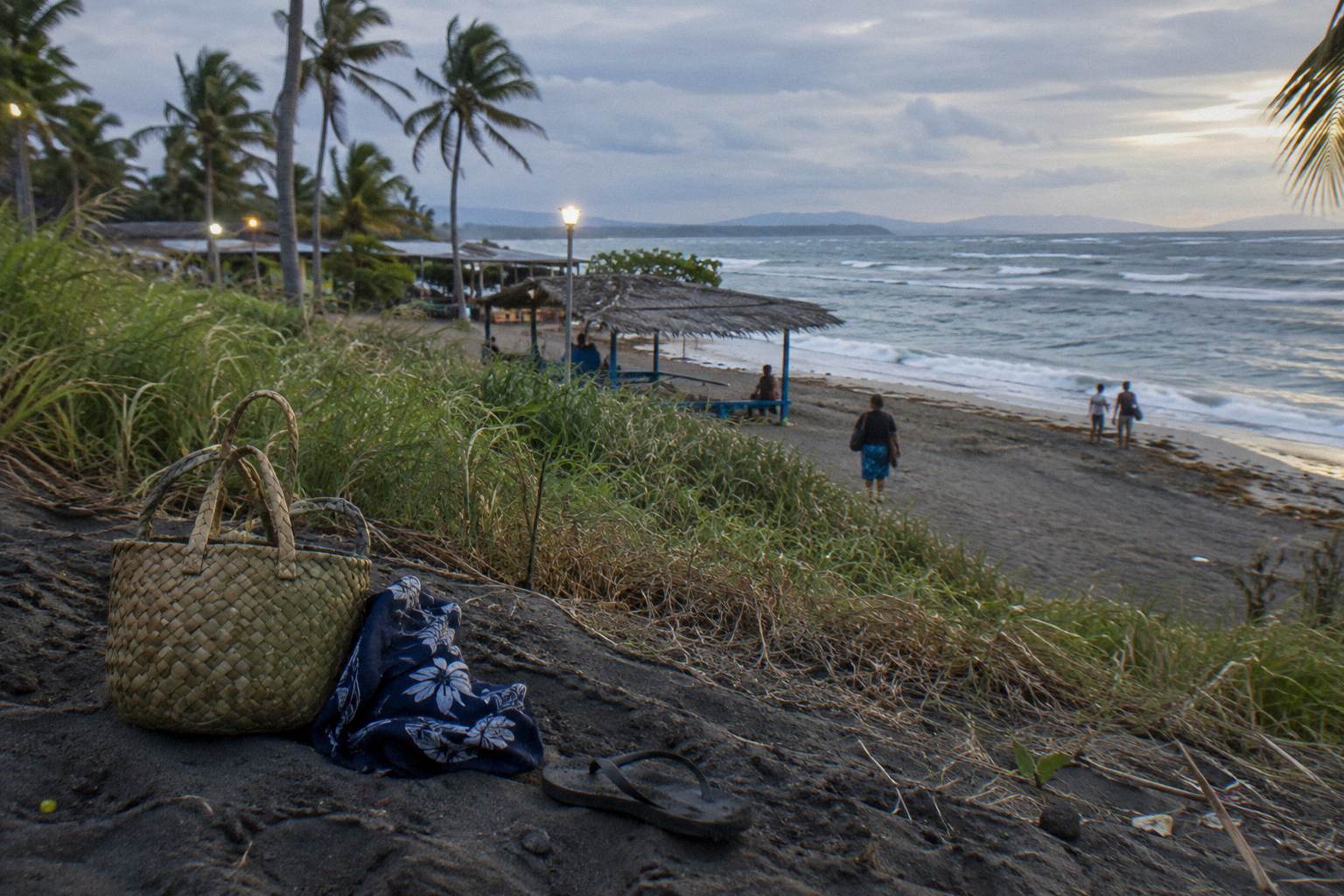
One clothing-adjacent point the etiquette page adds for families: meals are eaten cross-legged on a mat, and the masu, the prayer, comes before eating. Children who have not sat on the floor for a meal before may find it novel, and clothing that lets them sit that way comfortably, loose rather than tailored, is the part of the rule a wardrobe can actually solve.
A Packing Checklist For The Evening
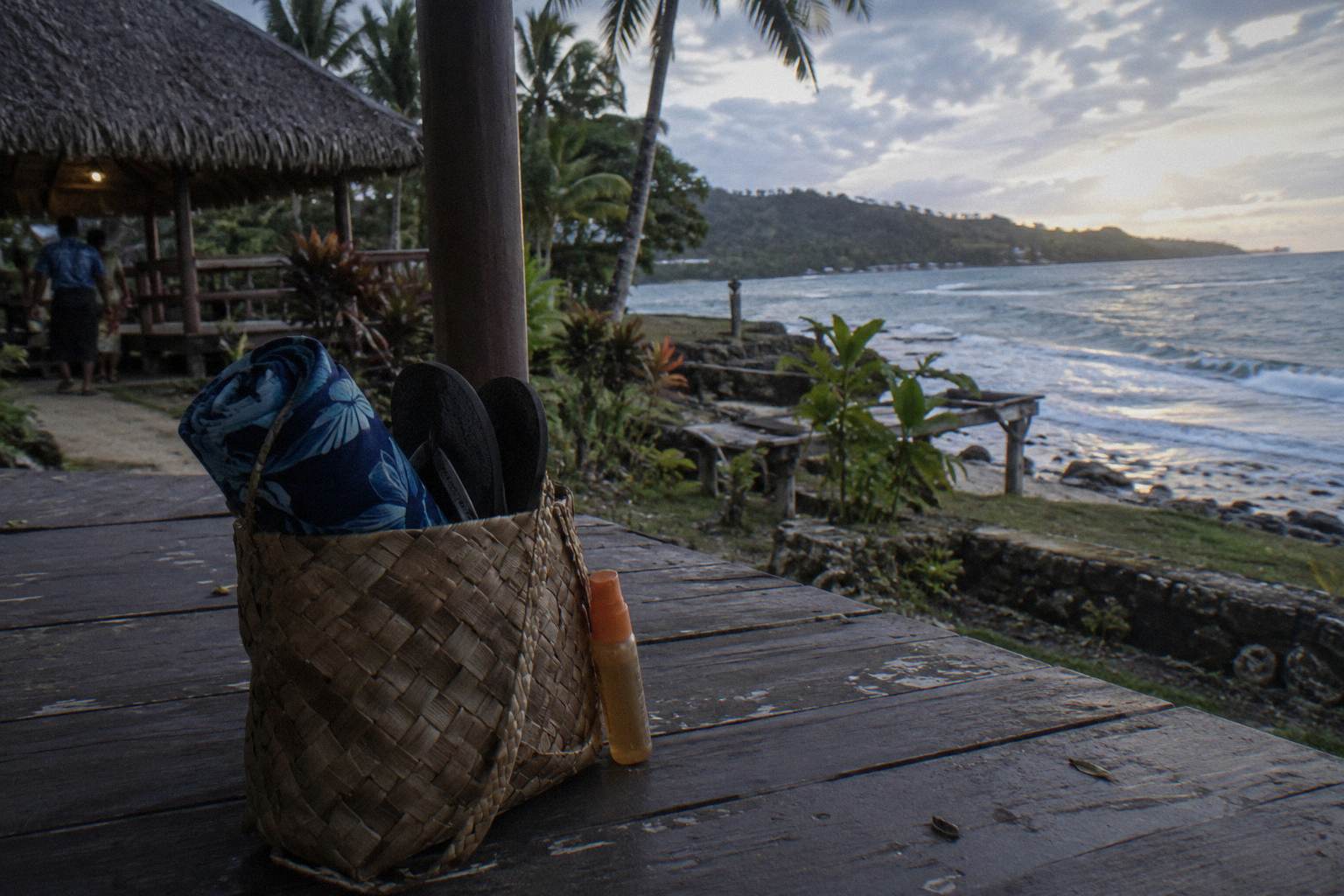
Pack light and specific: a sulu per person, slip-on sandals, a small handheld bag, insect repellent, Fijian dollars for drinks, and a light layer for after sunset. Every item on that list traces to a published line, either Tourism Fiji's village rules or Robinson Crusoe's night tour guidance, and the whole set fits in one small bag carried in the hand.
| Item | Why it earns its place | Source of the rule |
|---|---|---|
| Sulu or sarong | Covers legs instantly, worn at the waist, spares at the village | Tourism Fiji etiquette; Robinson Crusoe |
| Slip-on sandals | Shoes come off inside any village building | Tourism Fiji etiquette |
| Handheld small bag | Bags carried in hand, not on shoulders | Tourism Fiji etiquette |
| Insect repellent | Named for island night tours | Robinson Crusoe FAQ |
| Fijian dollars | Licensed bar, no outside alcohol on the island | Robinson Crusoe FAQ |
| Light long-sleeve layer | Covers shoulders and bridges the post-sunset cool | Resort wear guidance, Robinson Crusoe |
| Hat that packs flat | Removed inside village buildings | Tourism Fiji etiquette |
The list is deliberately short. An evening tour with hotel pick-up, like the Culture Village night collecting from Denarau, Nadi and Wailoaloa hotels at 4:20pm, or the Robinson Crusoe coach collecting from Nadi, Denarau and Coral Coast hotels, does not leave anyone carrying their own bag far. Still, the lighter the bag, the easier the hand-carried rule is to keep all night. A sarong, sandals and a rolled layer can simply stay in hand or on a lap.
Two items on the list are money questions rather than clothing questions, and they are on the list because the operator puts them there. Robinson Crusoe's FAQ says to bring Fijian dollars for drinks and notes that no outside alcohol is brought onto the island because a licensed bar operates. Fiji Culture Village's evening does not publish a comparable line, so the honest answer for that night is to ask the operator what, if anything, to bring beyond the clothing basics. One phone call, one question, and the packing is settled.
Common Mistakes When Choosing Your Outfit
The mistakes that recur are dressing for the show instead of the village, wearing shoes that fight back at every threshold, skipping the sulu on the assumption it can be rented anywhere, and leaving insect repellent behind on an island night. Each one is avoidable with a published rule rather than a guess, because Tourism Fiji and the operators state what they ask for plainly.
The first mistake is treating the evening as a dinner show only. Several of these nights include real village ground, a walking tour at the Culture Village or a full village visit on the Day And Night Combo, and the covered-shoulders rule applies there as etiquette rather than as a door policy. A traveller who dresses for a resort dinner and then joins a village walk in a strapless top has missed the one line of guidance that matters. The fix costs nothing: a light layer or a sulu in the bag.
The second is footwear. Buckles, laces and tall boots each add friction at every building entrance on a night with several of them. The third is assuming the sulu is optional everywhere; it is available as a spare at Robinson Crusoe's village visit, but that is one operator's arrangement, not a general rule, and the Culture Village evening publishes no such line. The fourth, repellent, is the one with the clearest published source: the operator names it for island nights, and a river dusk is exactly where it is missed most.
The quietest mistake is overpacking. A village evening rewards a small bag carried in the hand, and every extra strap and gadget works against the one accessory rule the etiquette page states. Travellers comparing evenings side by side can start from how long a Fiji cultural night lasts to judge how much bag the evening actually needs; the honest answer is usually less than the first instinct suggests. Fiji Cultural Night Tours covers each evening in detail, and the outfit, once the rules are met, is the easy part.
Whether the night ends up being the village walk in Nadi or the boat to Likuri Island, the same three tours cover the realistic choices, and the outfit advice above applies to all of them.
Common Questions About Village Evening Dress
What Should You Wear To A Fijian Village Evening?
Covered shoulders and legs, a sulu wrapped at the waist, slip-on sandals and a small bag carried in the hand. Tourism Fiji's etiquette page sets those rules for village visits, and Robinson Crusoe asks the same for its village visit, with spare sulus available.
Do You Have To Wear A Sulu?
For a village visit, Tourism Fiji names wrapping a sulu around the waist as part of the dress guidance, and Robinson Crusoe asks visitors to bring a sulu or sarong for its village visit. Spares are available there; other operators have not published a comparable line, so ask when booking.
Can You Wear Shorts And Sandals?
Sandals, yes, ideally ones that slip off, since shoes come off inside any village building. Short shorts do not meet the covered-legs guidance for a village setting; longer shorts under a wrapped sulu do.
What Shoes Are Best?
Slide sandals, thongs or any soft shoe that comes off without using both hands. The evening moves across outdoor ground, mats and possibly sand, and village buildings are entered barefoot.
What Should Men Wear?
The same as women in substance: covered shoulders and legs, with a sulu at the waist for the village setting. The sulu is standard dress for men in Fiji, and Robinson Crusoe's spare pile is not divided by gender.
Should You Bring Insect Repellent?
For island nights, yes: Robinson Crusoe's own night tour guidance names insect repellent alongside resort wear and Fijian dollars for drinks. For mainland village evenings, no operator line requires it, though a river or garden dusk makes it a reasonable addition.