What Is Kava, The Drink At Fijian Ceremonies?
Kava, or yaqona, is the ceremonial drink of Fiji, made from dried Piper methysticum roots and served in a bilo cup from a tanoa bowl. Here is what Tourism Fiji and the operators say, and where an evening serves it.
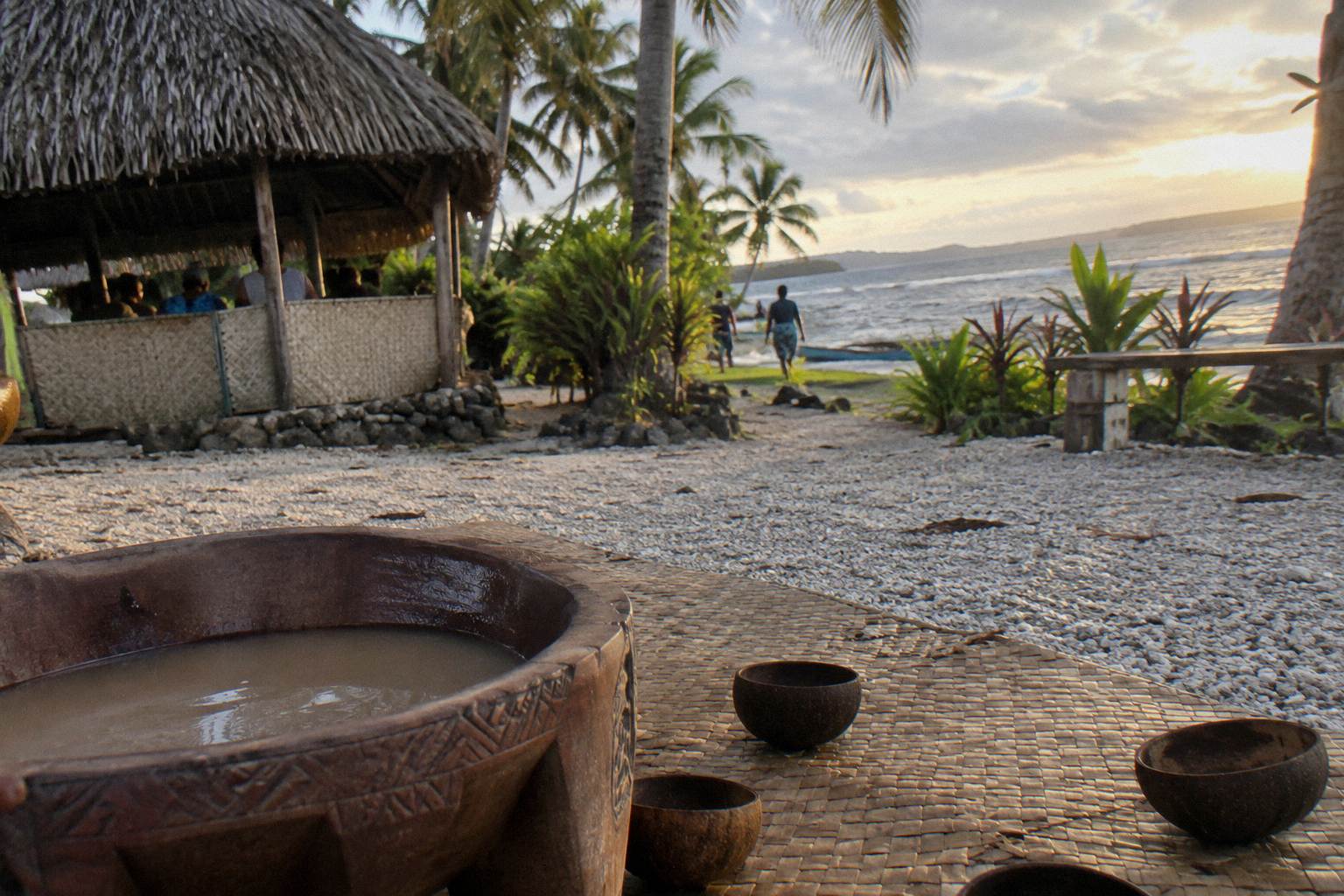
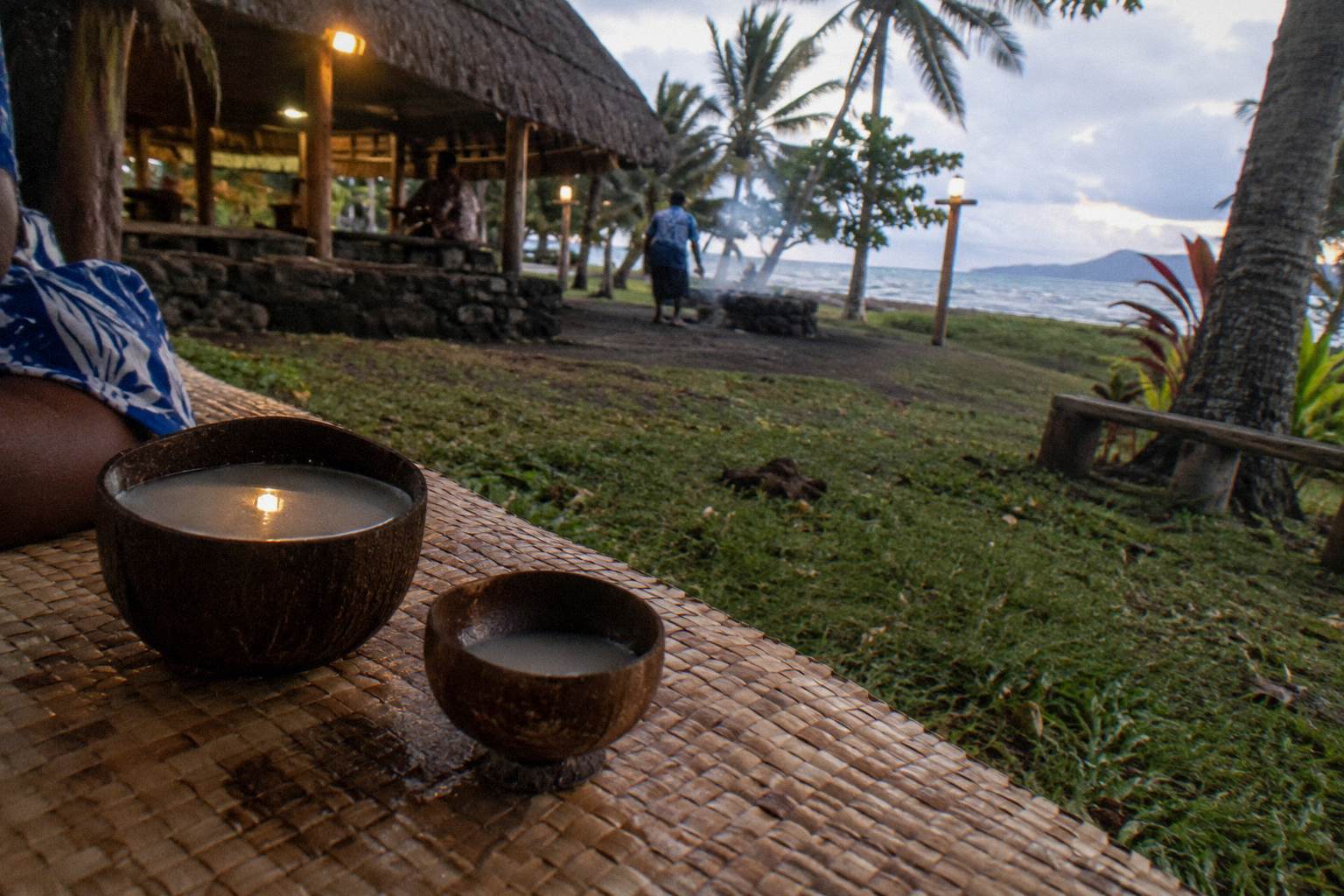
Kava, known as yaqona in Fiji, is a drink prepared from the dried roots of the Piper methysticum plant, served in a coconut shell cup called a bilo from a communal wooden bowl called a tanoa. Tourism Fiji's kava guide sets out the customs that surround a round: the clap, the word bula, the single gulp, and the closing vinaka.
That one sentence answers the question, but the words around a kava round carry most of the meaning for a visitor. The drink is older than any tour, and the ceremony that comes with it follows lines that Tourism Fiji documents on its own pages, not inventions of the tourist trade. The sevusevu, the gift of yaqona presented to a village chief to ask permission to enter communal lands as a guest, is the doorway into the whole practice, and a staged evening borrows its shape from that doorway.
For most visitors, the first bilo arrives at a cultural evening rather than in a village, which is why this page also covers where the drink appears on the bookable nights around Nadi: the Culture Village Evening Tour on Queens Road, the Robinson Crusoe Sunset Dinner Show on Likuri Island, and the shorter Nadi evenings run by Valentine Tours Fiji and VOU. Each of those frames the kava moment differently, and knowing which frame suits you is half the decision.
One boundary sits at the centre of this page: what kava is, in the vessels, words and customs Tourism Fiji documents, plus where an evening offers it. The effects of kava on the body, its legal status in any country, health and safety claims, and how it is prepared beyond "from dried roots" are not covered here; a health professional is the right source for those questions. That statement appears once and the rest of the page stays on the cultural and practical ground.
What The Plant And The Drink Actually Are
Yaqona is the Fijian name for both the plant and the drink, and the drink itself is made from the dried roots of Piper methysticum, a pepper relative. Tourism Fiji's kava guide skips botany in favor of practical vocabulary a guest can actually use: the root, the powder, the bowl, the cup, and the two serving sizes, high tide and low tide.
The plant is a shrub of the western Pacific, and Fiji is one of the countries where its root carries ceremonial weight. Tourism Fiji frames kava as part of the sevusevu custom: the etiquette page says it is "customary to present a small bundle or packet of powdered kava to the village chief to seek permission to enter their communal lands as a guest". That sentence, quoted from Tourism Fiji's etiquette guide, is the clearest short statement of why kava and respect travel together in Fiji. The drink is not merely a beverage on a menu; it is the substance through which a guest relationship is opened.
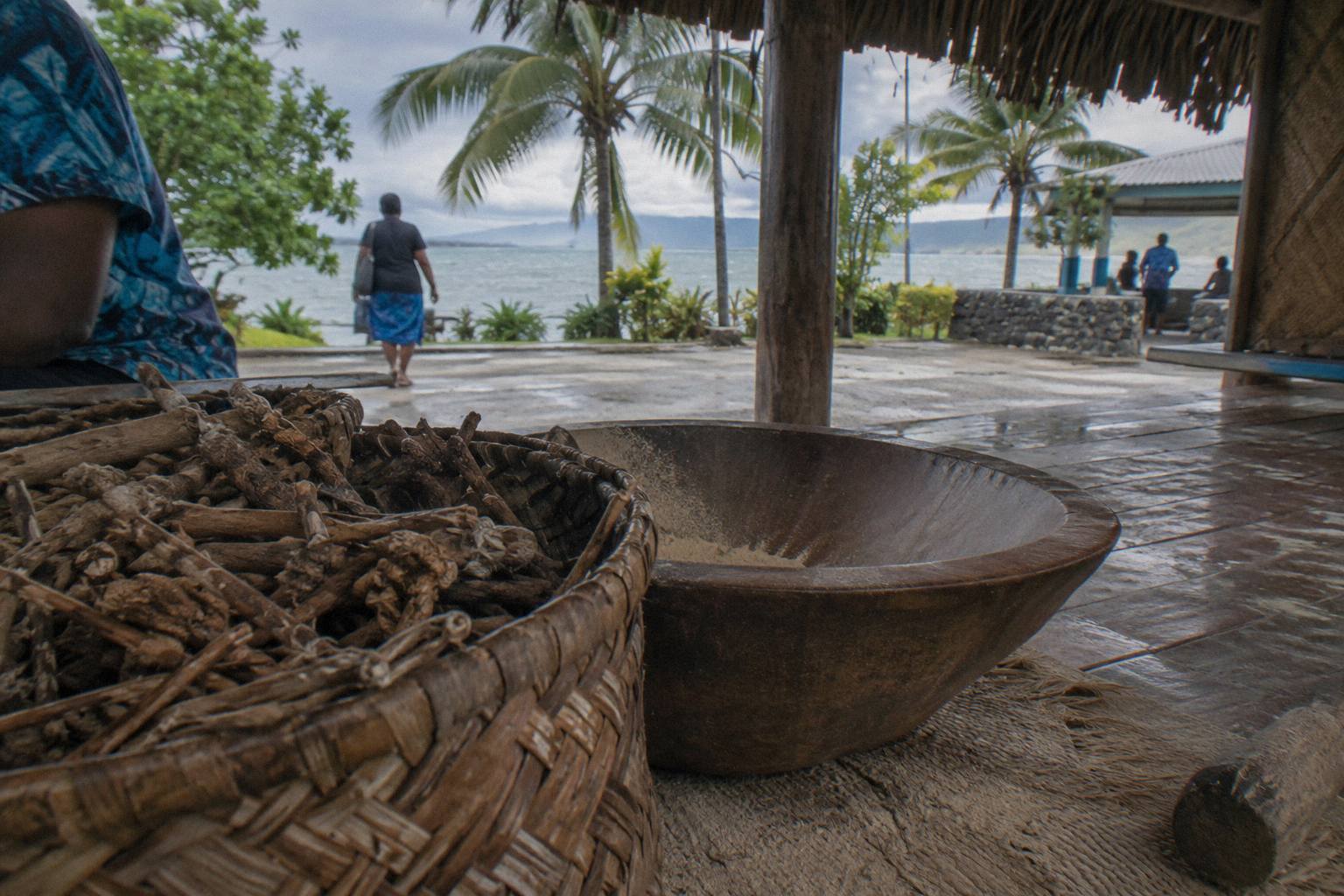
The guide's own kava page adds the two details visitors ask about most: the gift of half a kilogram of yaqona root runs at around FJD 30 to 40, in Tourism Fiji's figure, and a round has its own small language. A full cup is called high tide and a half cup low tide. That vocabulary is worth learning before the first bilo arrives, because it is the only choice a guest is typically asked to make.
What the sources do not say matters just as much. How the powder becomes liquid, beyond the phrase "from dried roots", is not described in the material gathered here, and no operator page fills that gap. Rather than guess at straining cloth, water quantities or steeping times, this page stops where the sources stop. Ask the host at a ceremony if the process interests you; it is a reasonable question and the answer belongs to the person doing the mixing.
The one practical takeaway from the plant itself: yaqona is a root, the drink is an infusion of that root, and the dried form is what circulates as a gift in the sevusevu custom. Hold that and the rest of the evening makes sense.
The Bilo And The Tanoa: The Vessels Of A Kava Round
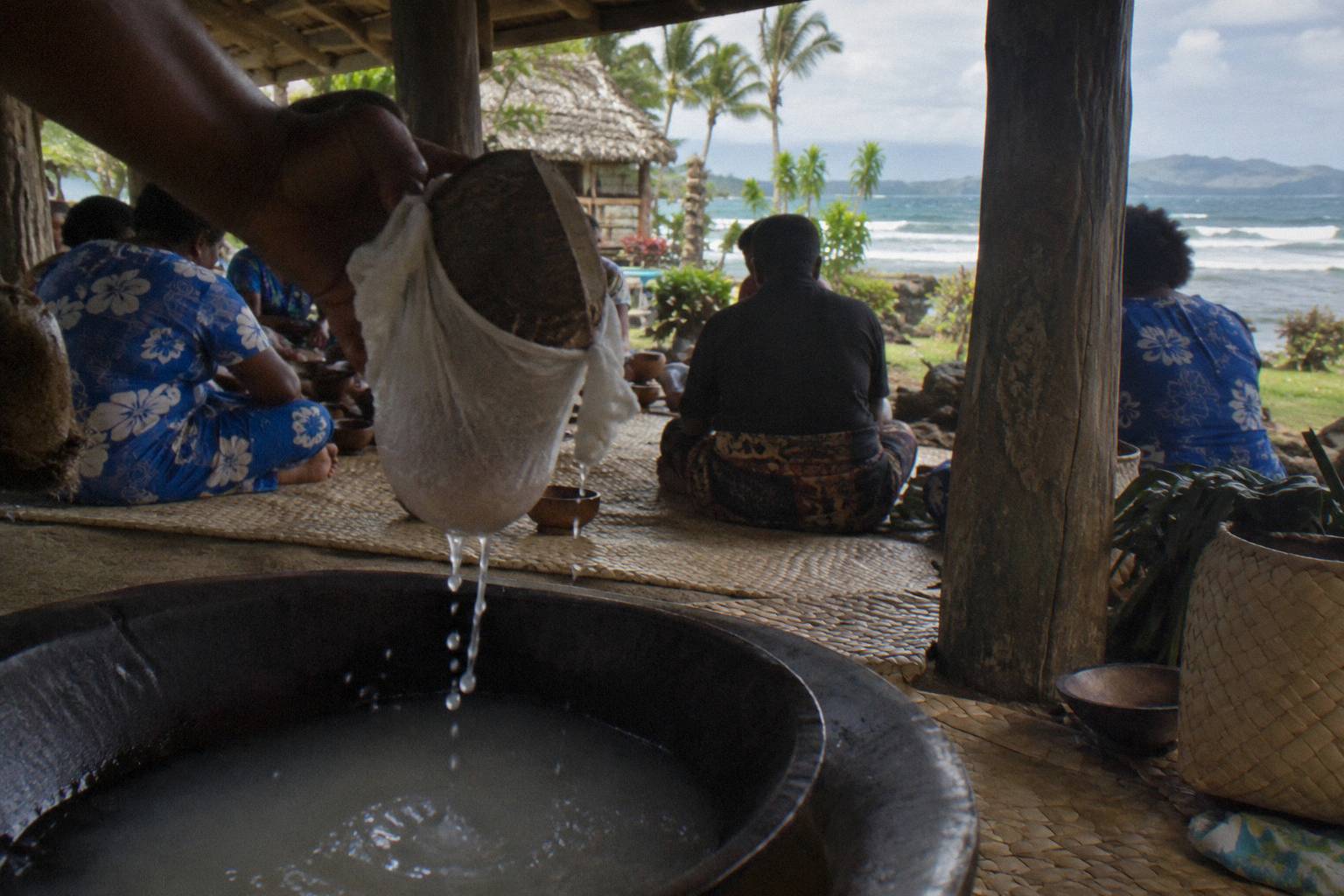
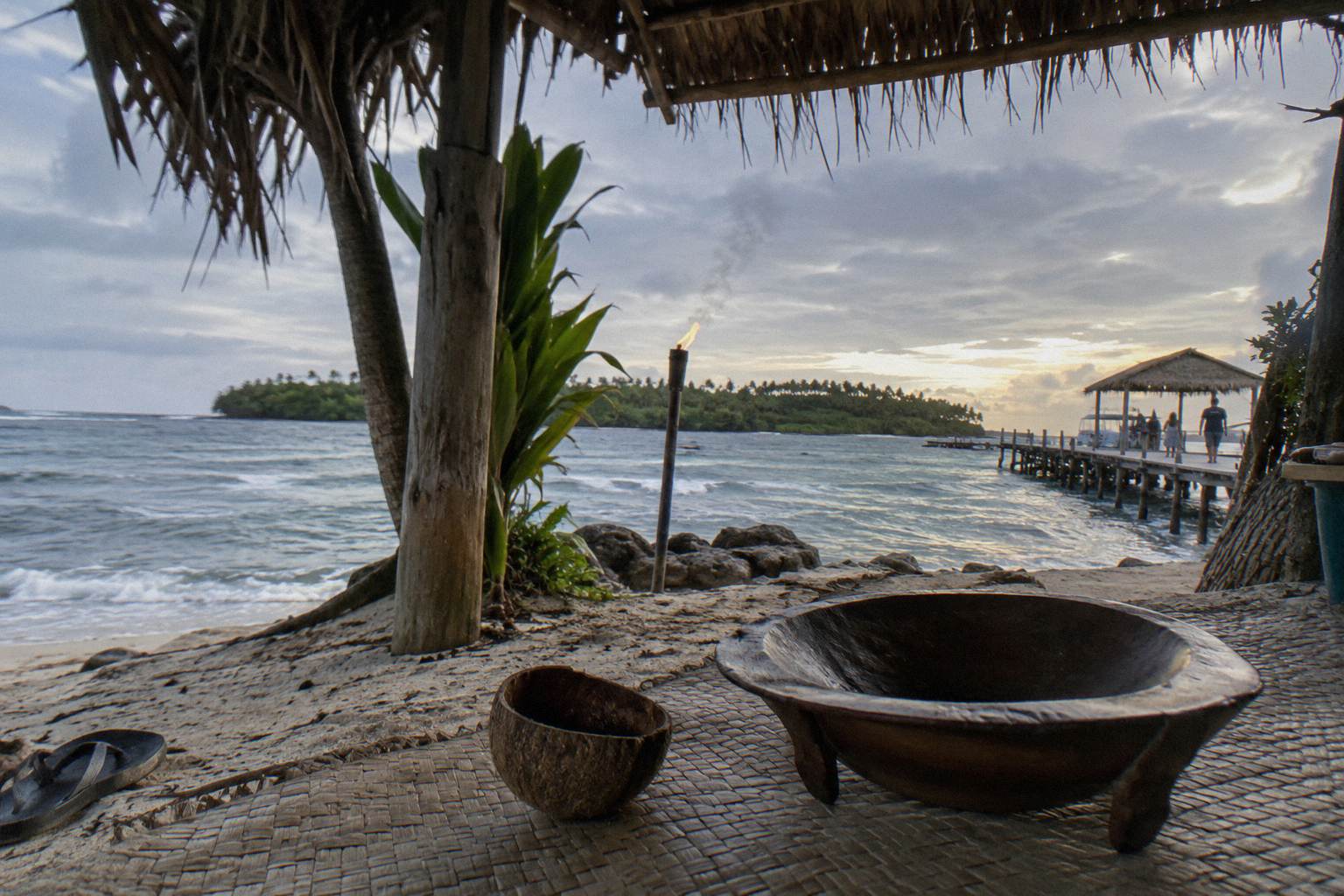
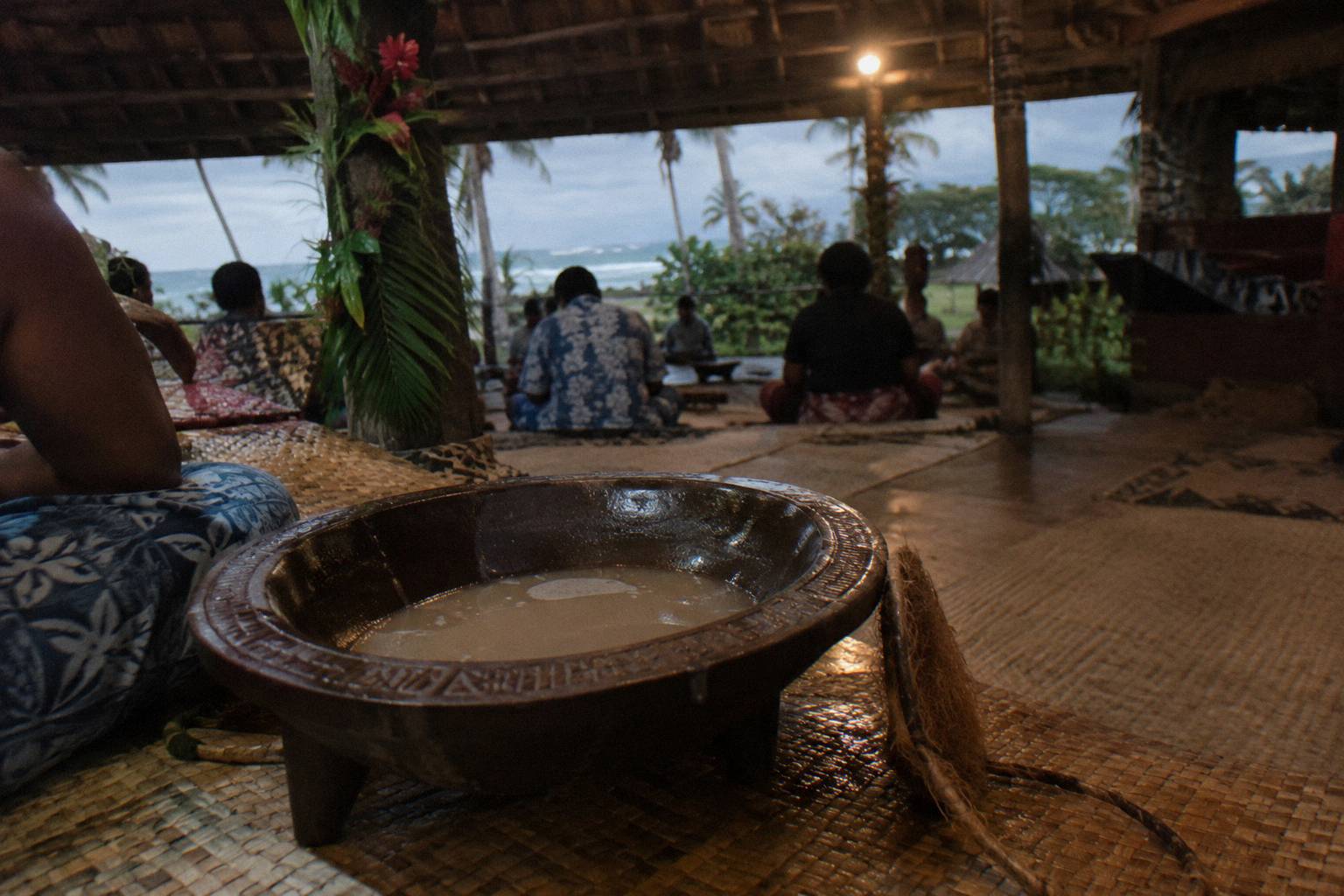
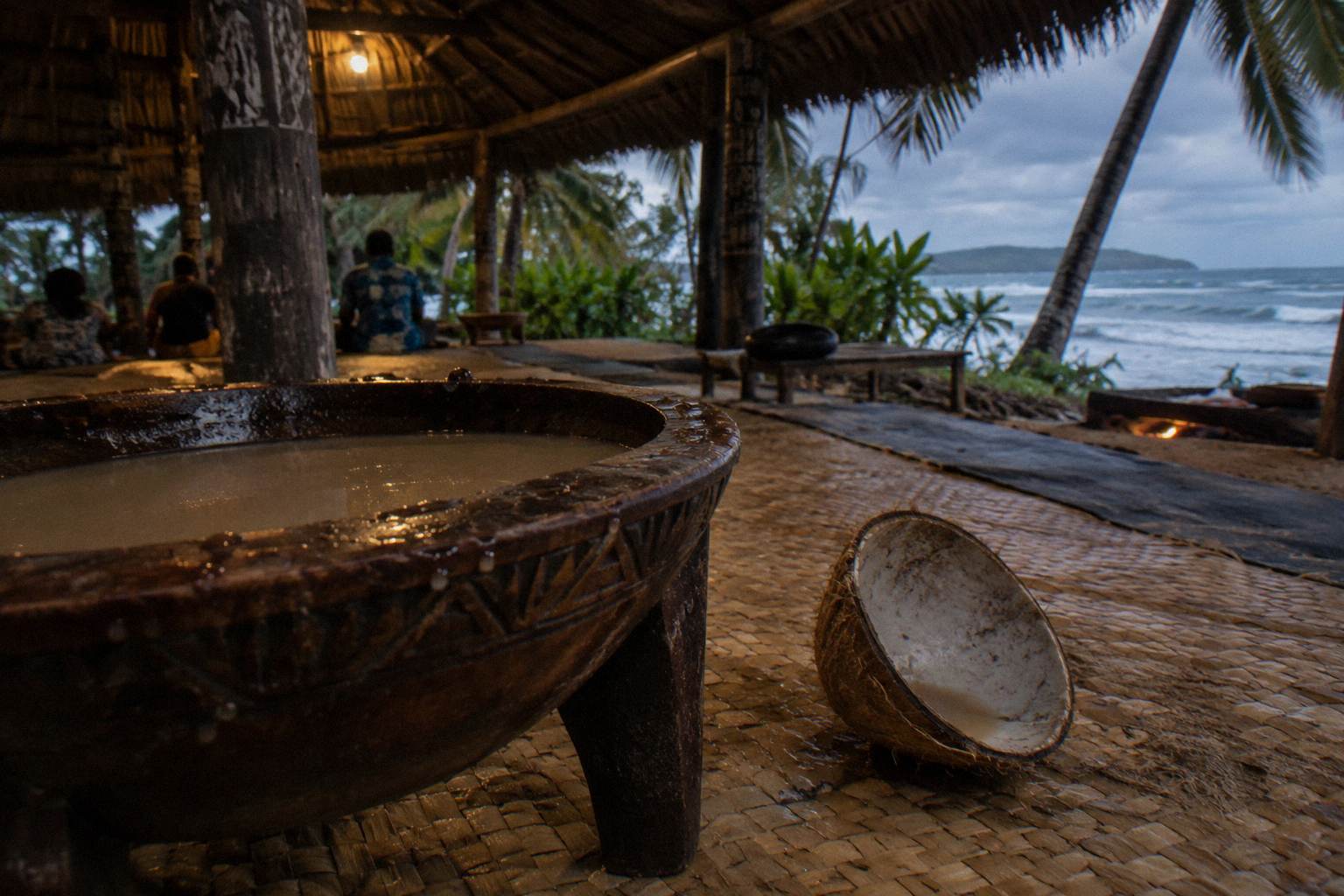
The bilo is the cup, a half shell of coconut, and the tanoa is the bowl, a wide wooden vessel from which the round is served; Tourism Fiji's kava guide names both and uses them as the fixed vocabulary of the ceremony. A visitor who knows these two words can follow every stage of a round without translation, because the action moves between them: mixed in the tanoa, served in the bilo, returned to the server, repeated around the circle.
The tanoa sits at the centre of the gathering, usually on a mat, and the server works from it. The bilo passes hand to hand in order, and each guest finishes the cup in a single motion before handing it back. That rhythm, vessel to cup and back, is the structure of the ceremony, and it is why the vessels have names worth learning rather than descriptions. "Pass the cup" works; "bilo" belongs to the room.
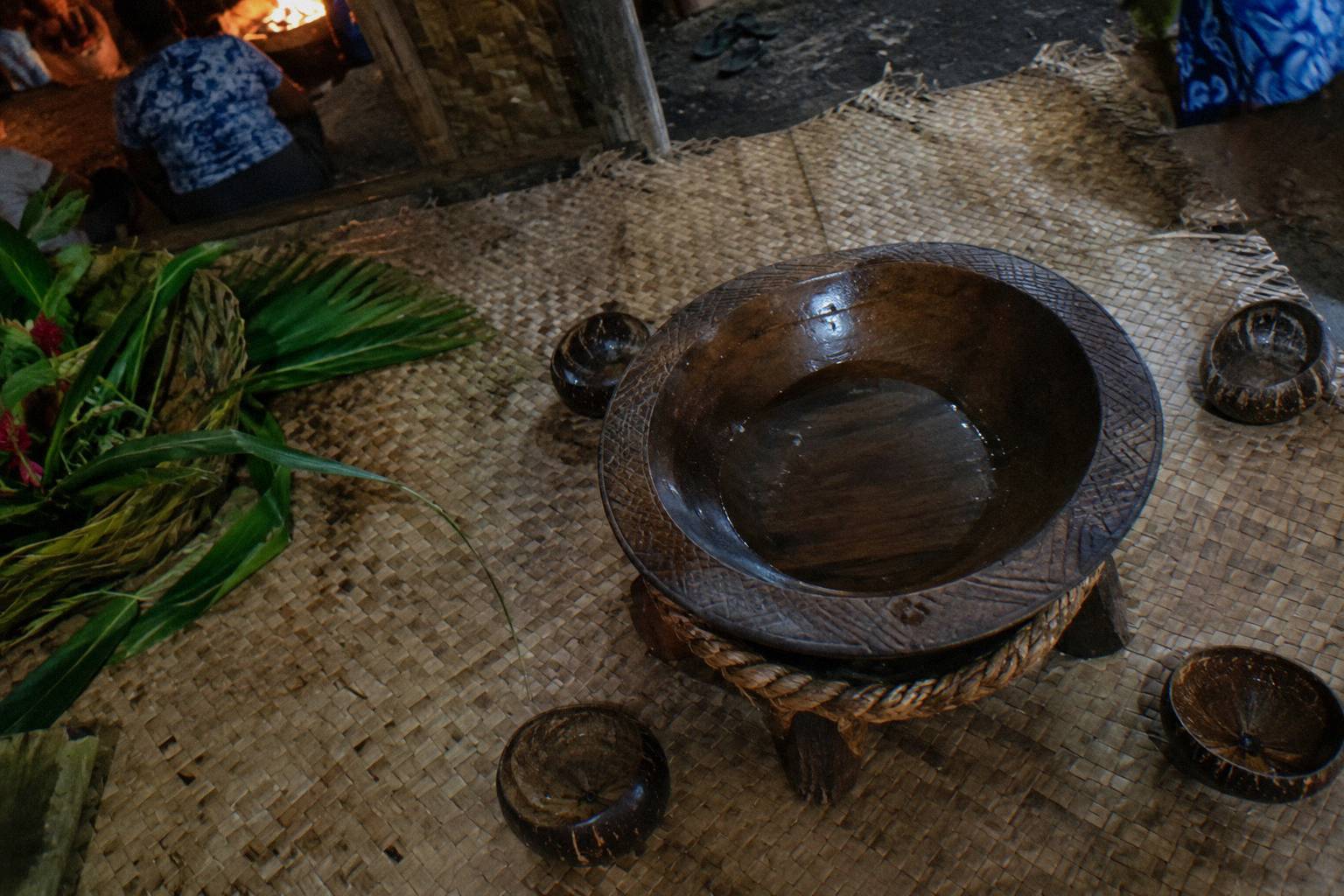
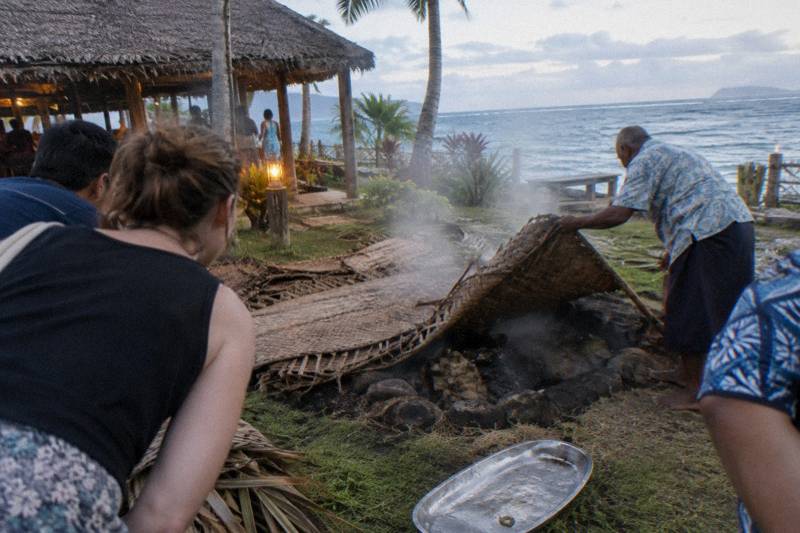
For a reader planning an evening, the vessels also mark the difference between a ceremony and a bar. Nothing on the operator pages suggests the bilo is optional garnish at the events covered here: Fiji Culture Village places its kava ceremony on the timeline at 7:00pm, between the unearthing of the lovo at 6:45pm and the buffet dinner at 7:20pm, which is to say the kava round is a scheduled act of the evening, not a side station. Robinson Crusoe lists its sevusevu welcome ceremony with kava tasting among the highlights of the Sunset Dinner Show, at the arrival end of the night rather than at dinner.
| Term | What It Is | Who Uses The Word |
|---|---|---|
| Yaqona | The plant and the drink, from dried Piper methysticum roots | Tourism Fiji kava guide |
| Bilo | The coconut shell cup the drink is served in | Tourism Fiji kava guide |
| Tanoa | The communal wooden bowl the round is served from | Tourism Fiji kava guide |
| High tide | A full cup | Tourism Fiji kava guide |
| Low tide | A half cup | Tourism Fiji kava guide |
| Sevusevu | The gift of powdered kava presented to a chief to ask permission to enter | Tourism Fiji etiquette page |
| Bula | The greeting said before drinking | Tourism Fiji kava guide |
| Vinaka | The word of thanks said after | Tourism Fiji kava guide |
If a reader takes one thing from this section, let it be the pairing of bilo and tanoa. Everything else in the ceremony's vocabulary hangs off those two objects.
How To Accept A Bilo: The Clap, The Bula, The Vinaka
Tourism Fiji's kava guide gives the sequence in four moves: clap once, cupped and loud; say "Bula!"; drink in one gulp; return the cup, clap three times and say "vinaka". That is the whole public script for a guest, and it fits into less than half a minute. The claps are with cupped hands, the drink is finished rather than sipped, and the thanks close the exchange before the bilo moves on.
Learning the order matters more than learning any Fijian beyond the two words involved. The single clap before drinking and the three claps after are the punctuation of the round, and the guide presents them as part of accepting the cup, not as ornament. A guest who claps, drinks and thanks has participated fully on the terms the guide describes.
What the guide does not say is equally plain: whether a guest may decline a bilo is not covered in the material gathered here, and neither Tourism Fiji page quoted above addresses it. That gap is stated once and not papered over. The practical advice that follows from an honest gap is simple: ask the operator before the evening, or ask the host at the moment, and treat the answer as the answer. The operator's phone numbers are published: Fiji Culture Village on +679 804 4800, Robinson Crusoe on +679 776 0999.
| Moment | Action | Words |
|---|---|---|
| Cup offered | Receive the bilo | None required |
| Before drinking | One clap, cupped and loud | "Bula!" |
| Drinking | Drink in one gulp | None |
| Cup returned | Return the bilo to the server | None |
| After | Three claps | "Vinaka" |
For readers who want the wider etiquette of a Fijian village evening, from dress to the removal of shoes, the companion page on what happens at a Fiji kava ceremony walks the full sequence, and the deeper background on the gift custom sits in the guide to the sevusevu ceremony in Fiji.
What Sevusevu Has To Do With Kava
Sevusevu is the custom of presenting a small bundle or packet of powdered kava to the village chief to ask permission to enter communal lands as a guest, in Tourism Fiji's wording, so kava is not merely a drink served at ceremonies but the substance of the request itself. The staged evenings borrow the shape of this exchange, which is why a kava moment sits near the start of both island and village nights.
The connection is easiest to see in the price Tourism Fiji's kava guide attaches to the raw material: around FJD 30 to 40 for half a kilogram of yaqona root, in the guide's own figure. That is a real, deliberate gift, not a token, and it explains the weight the custom carries. When a visitor is welcomed with kava on a staged evening, the gesture quotes a genuine exchange between guest and host community. More of these guides are collected on Fiji Cultural Night Tours.
Tourism Fiji's kava page spells the custom i-sevusevu on that page; the etiquette page uses sevusevu. Both spellings point to the same custom, and neither page describes a protocol beyond the presentation of the gift. This page follows the same line and adds nothing: no invented steps, no hierarchy of who drinks first, no details of what is said. Those specifics belong to the hosts, and a guest learns them by being present, not by reading a summary.
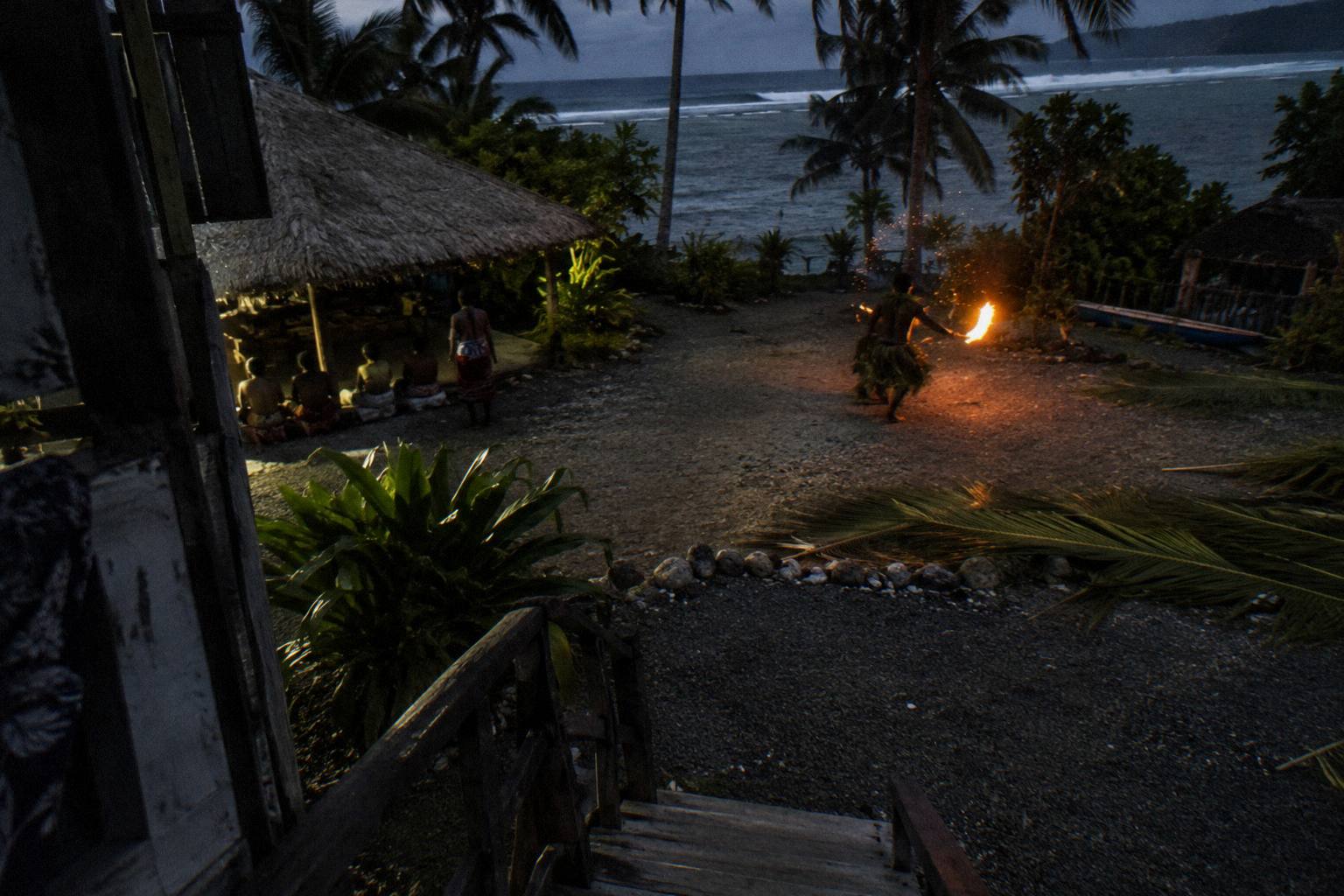
The practical carry-over to an evening out is small but real. Robinson Crusoe lists a sevusevu welcome ceremony with kava tasting among the highlights of the Sunset Dinner Show, and Fiji Culture Village lists a kava ceremony on its Monday to Saturday timeline. In both cases the operator names the moment; the deeper custom behind it is Tourism Fiji's to explain, and the two paragraphs above are what its pages support.
Where An Evening Around Nadi Serves A Kava Ceremony
Two of the bookable evenings covered here name a kava moment on their published itineraries: the Culture Village Evening Tour With Dinner And Show lists a kava ceremony at 7:00pm, and the Robinson Crusoe Sunset Dinner Show lists a sevusevu welcome ceremony with kava tasting among its highlights. Valentine Tours Fiji and VOU run Nadi dinner shows of about 3 hours each; neither operator publishes a kava detail, so the honest line for those two is not stated.
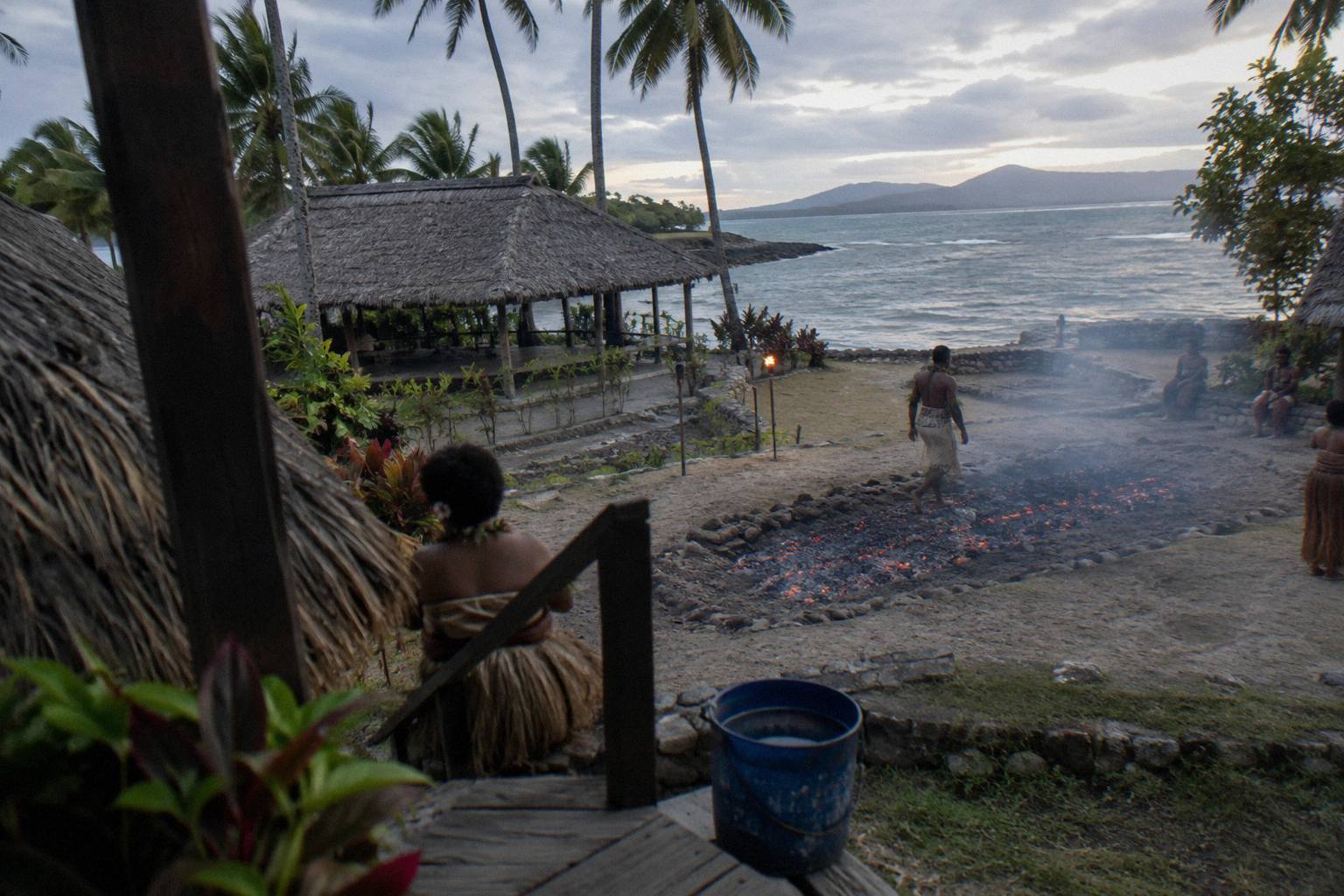
The Culture Village evening is the one that places kava at the centre of a village setting. The operator's timeline runs 4:20pm pick-up from Denarau, Nadi and Wailoaloa hotels, 5:15pm warrior welcome, 5:30pm guided village walking tour, 6:45pm unearthing of the lovo, 7:00pm kava ceremony, 7:20pm buffet dinner of lovo food, 7:50pm meke show and fire dance, 8:30pm farewell, about 4 to 4.5 hours door to door. The operator's own night tour page carries that timeline, the inclusion list and the rates: the operator's rate is F$175 per adult, F$105 per child aged 5 to 12, and F$500 for a family of 2 adults and 2 children, valid to 31 December 2026, then F$189, F$115 and F$550 for 2027. The tour carries a 4.6 rating. The full decision picture is in the companion guide to the Fiji Culture Village evening in Nadi, and the tour page here carries current availability.
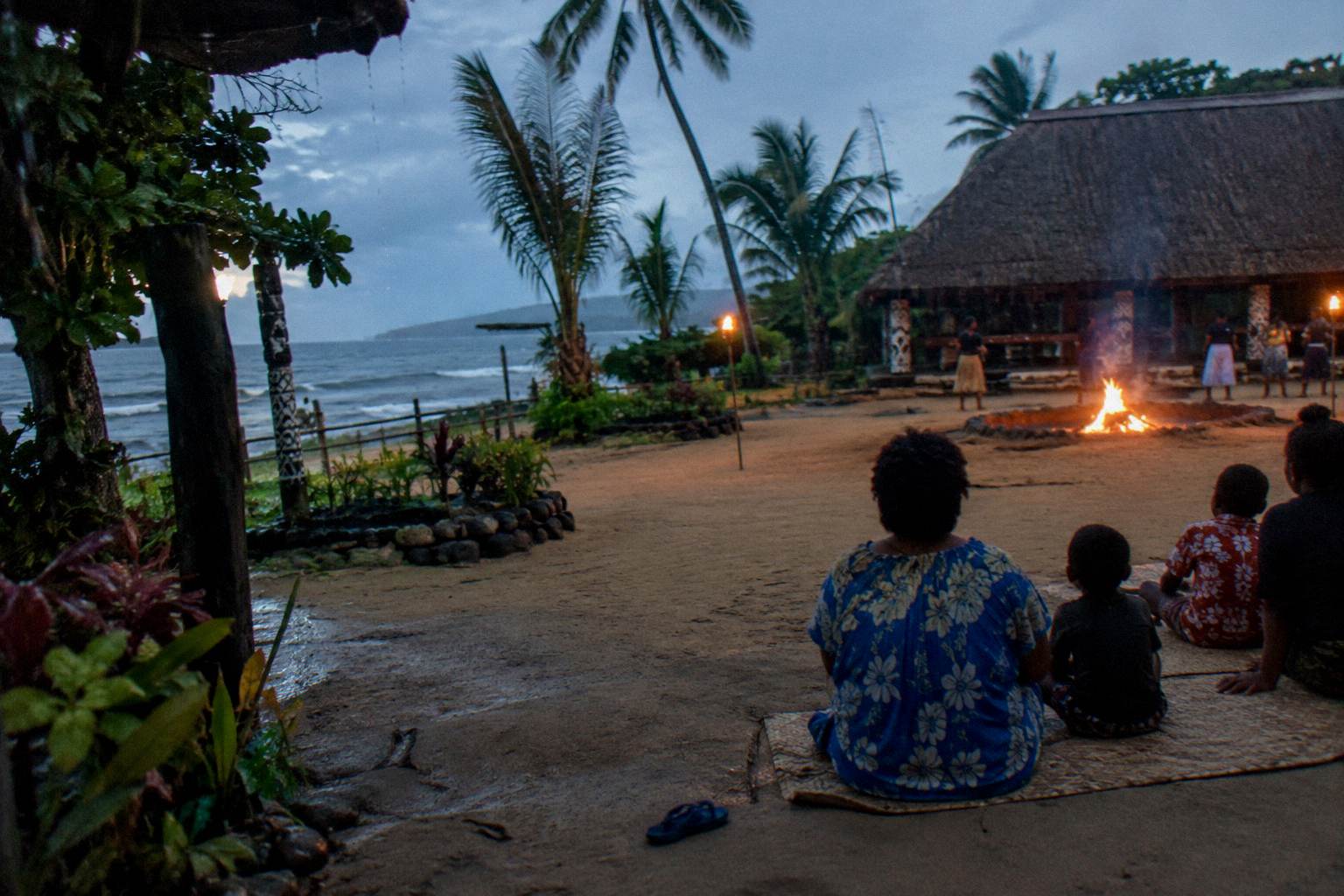
Robinson Crusoe stages its kava moment at the arrival end of a longer night. The operator's Sunset Dinner Show page lists the sevusevu welcome ceremony with kava tasting among the highlights, alongside a 30-minute river cruise, a sunset beach bonfire with a string band, a lovo dinner and a fire walking demonstration. The show runs Monday, Wednesday and Saturday, 5pm to 9pm on the island, with return coach transfers from Nadi, Denarau and Coral Coast hotels and launch transfers included; the jetty is near Natadola Beach, 45 minutes from Nadi, followed by a 30-minute cruise down the Tuva River. The tour pages print no price, so the honest line is: see the booking page.
The two Nadi dinner shows complete the set. Valentine Tours Fiji runs a Fijian culture night with dinner and a meke show, about 3 hours, with hotel pick-up from the Nadi and Denarau area; its start time and inclusions are not stated. VOU runs an evening of dinner and theatre with drumming, a different animal from a village night, and no kava detail is published for it either. Neither has a printable rating.
| Evening | Kava Detail Stated | Setting | Nights |
|---|---|---|---|
| Culture Village Evening Tour | Kava ceremony, 7:00pm on the timeline | Reconstructed village, Queens Road, Nadi | Monday to Saturday |
| Robinson Crusoe Sunset Dinner Show | Sevusevu welcome ceremony with kava tasting | Likuri Island, reached by boat | Monday, Wednesday, Saturday |
| Valentine Tours Fijian Culture Night | Not stated | Nadi evening, dinner and meke show | Not stated |
| VOU Evening Dinner And Show | Not stated | Theatrical dinner show, Nadi | Not stated |
For readers weighing the two evenings that do name their kava moment, the choice is between a village walk that builds to the ceremony and an island arrival that opens with it. Culture Village reaches kava two and a half hours into its evening, after the village tour and the lovo unearthing; Robinson Crusoe reaches it within the welcome, before the bonfire and dinner.
High Tide Or Low Tide: The One Choice A Guest Makes
High tide is a full cup and low tide is a half cup, in Tourism Fiji's kava guide vocabulary, and that is the only serving choice the sources describe a guest making. The guide does not rank the two, does not recommend one for newcomers and does not attach any meaning to the choice beyond the quantity. A guest can ask for low tide in good conscience; the sources simply do not say more than the names and the measures.
That restraint is worth copying. Plenty of travel copy invents a ladder of participation, from first-timer to local, and attaches the two tide words to it. Nothing in Tourism Fiji's pages supports such a ladder, and this page will not build one. The words exist, they refer to quantity, and the server will understand either.
What the tide choice connects to is the question this page has already fenced off: effects, strength and how the drink sits with any individual are outside what the gathered sources cover. The pointer stands: a health professional is the right source for questions about kava and the body, and the operator is the right source for what the evening itself involves. Readers deciding whether the ceremony is for them at all may find the sister piece on whether you have to drink kava at a Fijian ceremony useful, and the wider background sits in the guide to the Fiji kava ceremony.
A practical note that does come from the sources: the kava moment on both named evenings is one act among many, not the whole night. Culture Village surrounds its 7:00pm ceremony with a village walk, a lovo dinner and a meke show with fire dance; Robinson Crusoe surrounds its sevusevu welcome with a river cruise, a bonfire, dinner and the Legends of the Pacific show. A guest whose interest in kava is mild still gets a full evening, and a guest whose interest is strong still gets the ceremony in its scheduled place rather than as a drop-in.
What Trips People Up At A Kava Ceremony
The common stumbles are treating the bilo as a casual drink, missing the clap sequence, assuming every evening includes kava, and expecting a published price where none exists. Tourism Fiji's guide makes the four moves around the cup explicit, and the operator pages make clear that only two of the four evenings covered here name a kava moment at all. Reading both before booking removes most of the friction.
The first stumble is vocabulary drift. Calling the tanoa a bucket or the bilo a shell is harmless in a hotel lobby but flattens the ceremony in the room. The five words, yaqona, bilo, tanoa, bula and vinaka, cover everything a guest needs to say.
The second is the timing assumption. A reader who only wants an evening if kava is in it should note the nights: Culture Village runs Monday to Saturday, closed Sunday, and the operator's notice closes it for annual maintenance from Monday 22 February 2027 to reopening Wednesday 10 March 2027. Robinson Crusoe's evening runs only Monday, Wednesday and Saturday. Arriving on a Tuesday with the island show in mind is the classic mismatch; the operator's daytime Fiji Culture Day Tour runs Tuesday, Thursday and Sunday, which fills the gap but is not an evening product.
The third is the price gap. Only Fiji Culture Village publishes operator rates, in Fijian dollars with their validity periods. The Robinson Crusoe tour pages print no price, and nothing in Valentine Tours Fiji's or VOU's published material carries one either. Asking the operator or reading the booking page is the honest route, not a guessed figure.
The fourth is expectation of the ceremony itself. The guide describes a specific, short script, and the operators describe scheduled moments. Neither promises intensity, transformation or a particular atmosphere, and no such promise is made here.
| Stumble | The Fix |
|---|---|
| Wrong night for the show you want | Check the operator's days before booking the hotel |
| Treating the bilo casually | Follow the clap, bula, gulp, vinaka sequence |
| Expecting a published price | Culture Village prints F$ rates; for the others, ask the operator |
| Assuming all four evenings serve kava | Only Culture Village and Robinson Crusoe name a kava moment |
One honest gap that belongs in this section rather than scattered: whether a guest can decline a bilo is not stated in the sources, and neither operator addresses it on the pages gathered here. Ask when booking; the phone numbers are printed above.
Common Questions About Kava At Fijian Ceremonies
What Is Kava, The Drink At Fijian Ceremonies?
Kava, or yaqona, is a drink made from the dried roots of the Piper methysticum plant, served in a coconut shell cup called a bilo from a wooden bowl called a tanoa. Tourism Fiji's kava guide documents the vessels, the high tide and low tide serving sizes, and the clap and word sequence that surrounds a round.
Is Kava The Same As Yaqona?
Yes. Yaqona is the Fijian name Tourism Fiji uses for both the plant and the drink; kava is the wider Pacific name. The two words refer to the same thing in Fiji.
Do You Have To Drink Kava At A Ceremony?
The sources gathered here do not state whether declining is acceptable. Ask the operator when booking: Fiji Culture Village on +679 804 4800 or Robinson Crusoe on +679 776 0999.
Which Nadi Evenings Include A Kava Ceremony?
Fiji Culture Village lists a kava ceremony at 7:00pm on its evening timeline, and Robinson Crusoe lists a sevusevu welcome ceremony with kava tasting for its Sunset Dinner Show. Valentine Tours Fiji and VOU do not publish a kava detail for their Nadi evenings.
What Does A Bilo Cost Or What Is The Kava Gift Worth?
The cup is part of the ceremony, not sold separately on these evenings. Tourism Fiji's kava guide puts the sevusevu gift of half a kilogram of yaqona root at around FJD 30 to 40, its own figure for the custom, not a tour price.
Are There Health Effects Of Kava To Know Before Going?
Health and safety questions are outside what the sources here cover. A health professional is the right source for questions about kava and the body.