Fijian Culture At A Cultural Night: What The Evening Teaches
A staged cultural evening in Fiji packs sevusevu, kava, lovo, meke and fire arts into a few hours. Here is what each practice is, in the words of Tourism Fiji and the operators.
Short answer
A Fijian cultural night shows five practices: a sevusevu welcome with kava, a lovo earth oven dinner, a meke storytelling dance, and fire performances. Fiji Culture Village runs Monday to Saturday from F$175 adult, Robinson Crusoe runs Monday, Wednesday and Saturday from 5pm to 9pm on Likuri Island.
A Fijian cultural evening compresses several distinct traditions into a single night: a welcome ceremony with kava, an earth oven dinner, a storytelling dance, and fire performances. The evenings covered here are staged by operators, and every cultural statement below is attributed to Tourism Fiji or to the operators themselves, because the meaning of a ceremony belongs to the people who practise it.
What A Cultural Night Actually Shows Of Fijian Culture
A cultural night shows five things: sevusevu and kava, the lovo earth oven, the meke dance, firewalking, and the etiquette of being a guest in a village. Tourism Fiji describes each of these on its own arts and etiquette pages, and the operators stage versions of them in a fixed running order. Understanding what each practice is turns a tourist evening into something you can actually read, rather than simply watch.
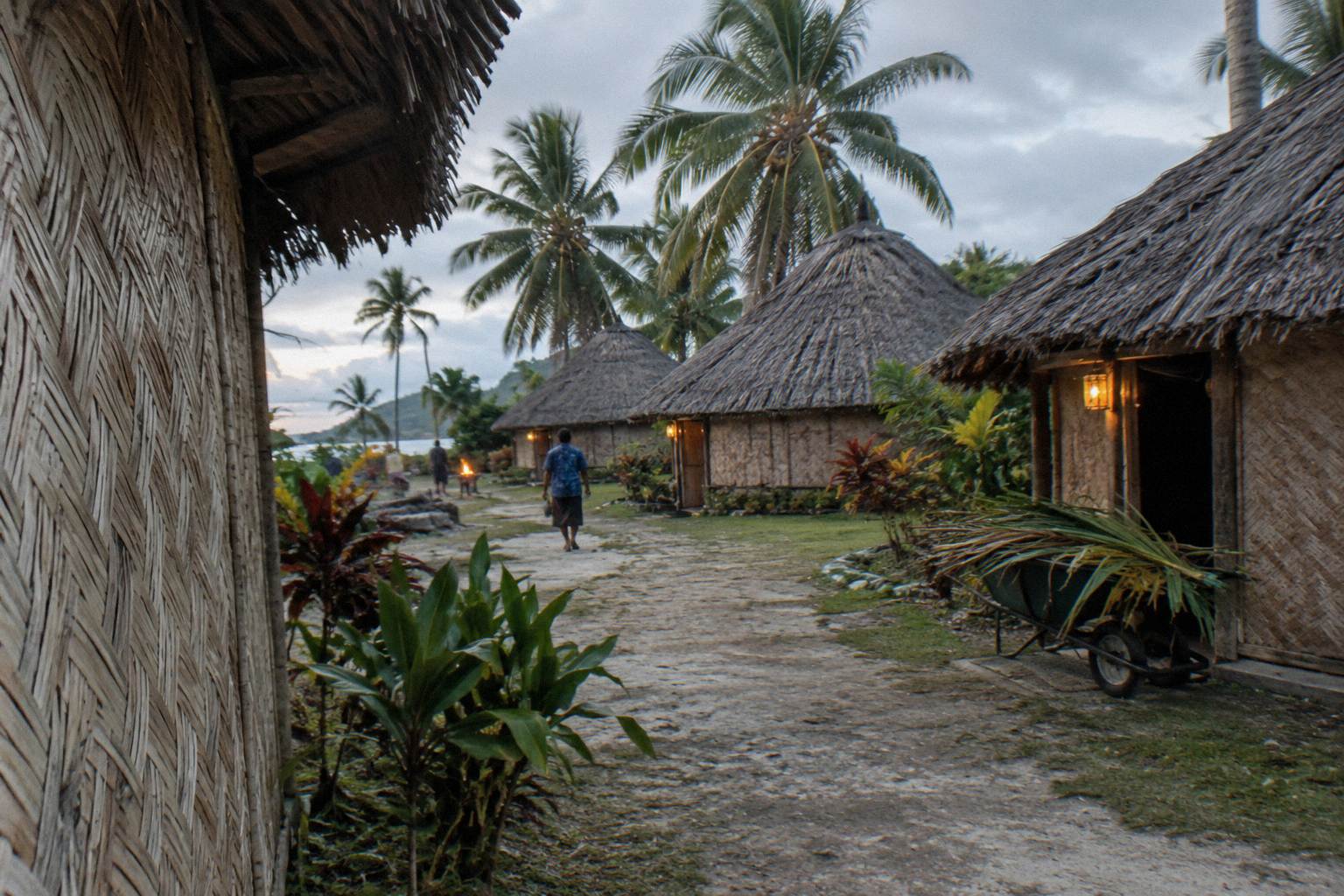
The evenings are built around a sequence. Fiji Culture Village's operator timeline runs 4:20pm hotel pick-up from Denarau, Nadi and Wailoaloa, a 5:15pm warrior welcome, a 5:30pm guided village walking tour, a 6:45pm unearthing of the lovo, a 7:00pm kava ceremony, a 7:20pm buffet dinner of lovo food, a 7:50pm meke show with a fire dance, and an 8:30pm farewell, about 4 to 4.5 hours door to door. Robinson Crusoe's Sunset Dinner Show runs differently: the boat leaves the mainland jetty at 5:00pm, the island welcome is at 5:45pm, a sunset beach bonfire with serenaders at 6:00pm, the lovo unearthing with a fire walking demonstration at 6:30pm, the lovo buffet at 7:00pm followed by the "Legends of the Pacific" show with fire and knife dancing, the Isa Lei farewell at 9:00pm, and the boat out at 9:15pm.
Two things distinguish a staged evening from a village visit. First, the performance is scheduled: the lovo is unearthed on time, the show starts on time. Second, the operator, not the village, decides the format. Robinson Crusoe's terms even allow the lovo to be replaced by a BBQ if numbers are low. What the evening teaches is still real: the kava is real yaqona, the lovo is a real earth oven, and the meke is a real Fijian dance form. The setting is theatre, and that difference matters when you decide what you want from the night. For a fuller comparison of the two main formats, see the Nadi cultural night guide.
Sevusevu And Kava: The Welcome Ceremony Explained
Sevusevu is the gift that asks permission. Tourism Fiji's etiquette page says it is "customary to present a small bundle or packet of powdered kava to the village chief to seek permission to enter their communal lands as a guest". On a staged evening, the guest does not bring the gift: the operator stages the ceremony for you, so you watch and then taste rather than present.
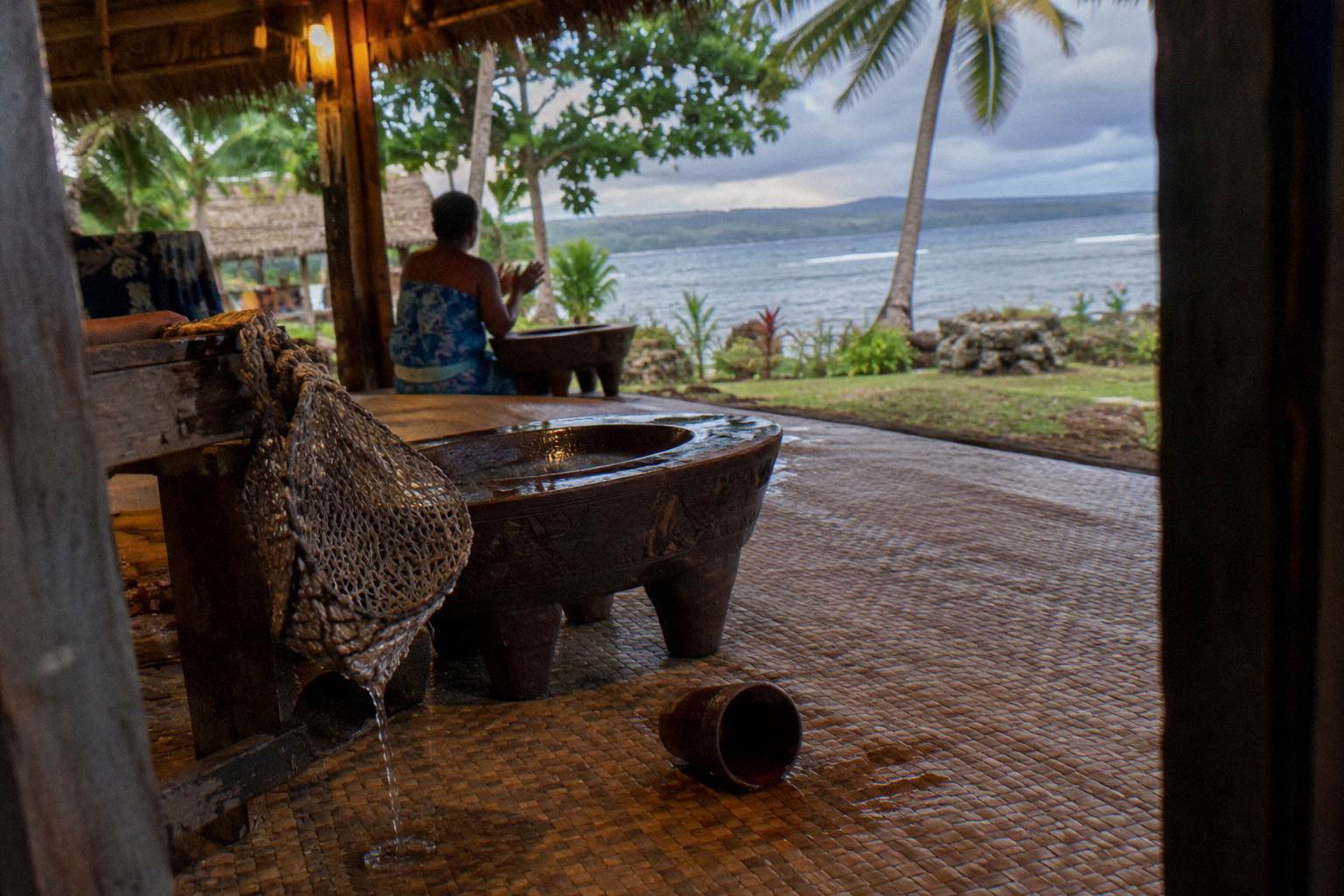
Kava itself, per Tourism Fiji's kava guide, comes from the dried roots of Piper methysticum. The vocabulary is worth knowing before the night. The cup is a bilo, the kava bowl is a tanoa, a full cup is "high tide" and a half cup "low tide". Tourism Fiji's guide gives the receiving sequence for accepting a bilo: clap once, cupped and loud; say "Bula!"; drink in one gulp; return the cup, clap three times and say "vinaka". Those four steps are the whole visible protocol, and knowing them in advance means the ceremony is not a mystery when it reaches you.
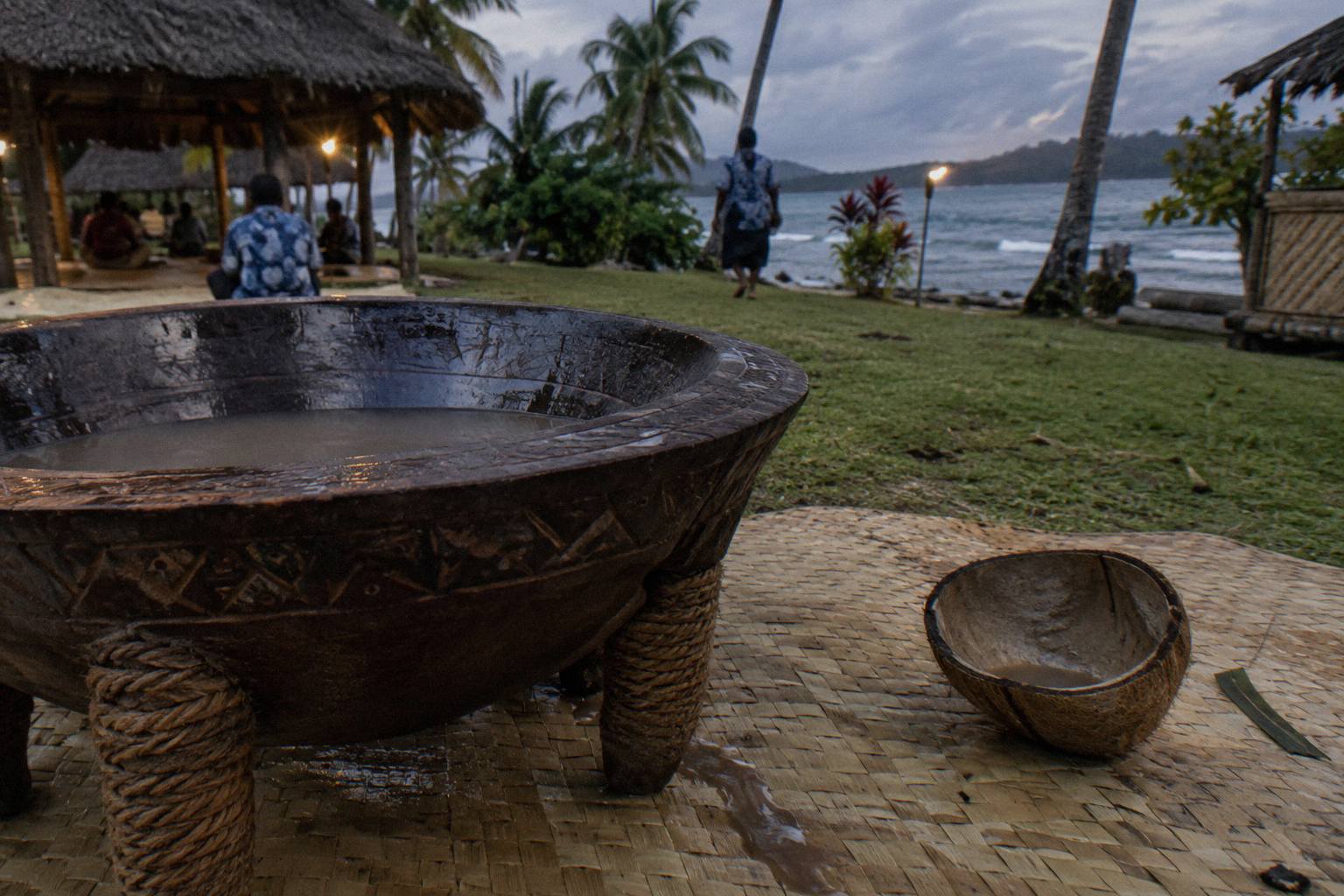
The two operators stage the ceremony differently. Fiji Culture Village lists a kava ceremony at 7:00pm, after the village walk and the lovo unearthing. Robinson Crusoe lists a sevusevu welcome ceremony with kava tasting among the highlights of its Sunset Dinner Show. Neither operator publishes a script beyond that, so the depth of the explanation on the night depends on the host. For the cultural background in full, read what happens at a Fiji kava ceremony, and for the gift custom itself, what sevusevu is. Tourism Fiji's kava guide also notes a sevusevu gift of half a kilogram of yaqona root costs around FJD 30 to 40, which is the going weight and price of a genuine gift, useful context for what the ceremony represents.
A few questions sit outside what the sources cover: whether declining a bilo is acceptable, the effects of kava on the body, its legal status in any country, and how it is prepared beyond "from dried roots". Those are not covered here; ask the operator or a health professional rather than relying on an evening show for health information.
| Kava term | Meaning per Tourism Fiji's kava guide |
|---|---|
| Yaqona | Kava, from the dried roots of Piper methysticum |
| Tanoa | The kava bowl |
| Bilo | The cup |
| High tide | A full cup |
| Low tide | A half cup |
| Sevusevu | The gift of kava presented to seek permission to enter |
The Lovo: What The Earth Oven Actually Is
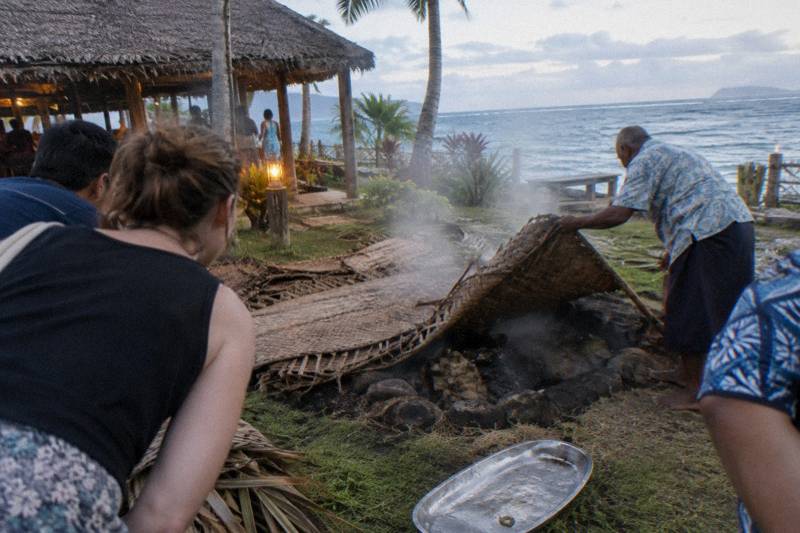
A lovo is a communal earth oven. Tourism Fiji's cultural must-dos page describes it: women prepare the food and men tend the fire, and meat, fish and root crops such as taro are cooked on white-hot stones in a covered pit for a few hours. The unearthing, when the pit is opened and the food lifted out, is the moment most cultural evenings build the dinner around.
Both main operators schedule that moment deliberately. Fiji Culture Village unearths the lovo at 6:45pm and serves a buffet of lovo food at 7:20pm. Robinson Crusoe unearths its lovo at 6:30pm with a fire walking demonstration running alongside it, then serves the lovo buffet at 7:00pm. The unearthing is scheduled before dinner for a reason: the cooking is itself part of the show, and watching the pit opened explains what arrives on the buffet. Robinson Crusoe's terms add one honest caveat: the lovo may be substituted with a BBQ if numbers are low. Fiji Culture Village lists no such substitution.
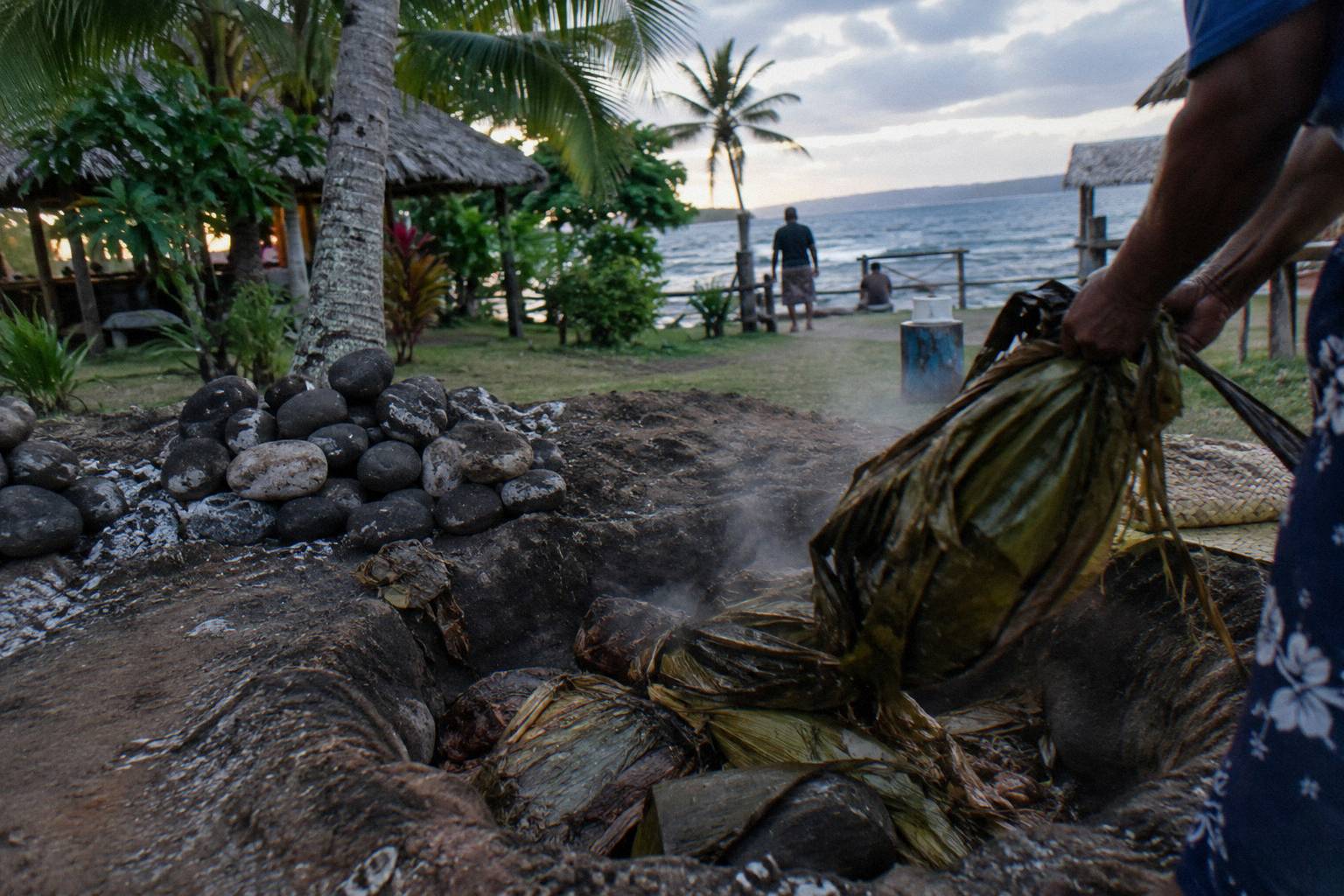
What the sources do not cover: a menu, a recipe, dietary options, the cooking time for a given evening, or the history of the lovo. No operator states vegan or halal options, and Robinson Crusoe's FAQ asks that dietary needs be advised at the time of booking. Say what you need when you book, not on the night. For the food itself in detail, see what food is served at a lovo feast.
Meke: The Storytelling Dance Of Fiji
Meke, per Tourism Fiji, is "a traditional dance performed by men and women of Fiji to tell stories through song and dance". The must-dos page adds that men's movements are strong, women's graceful, and that props include clubs, spears and fans. It is the closest thing Fiji has to the question visitors often ask after seeing a Māori haka, and the short answer to "What is Fiji's haka called?" is simply the meke.
On the evenings covered here, meke appears as a staged show. Fiji Culture Village lists a meke show at 7:50pm, followed by a fire dance. Valentine Tours Fiji's evening is billed with a meke show, though the operator has published no further facts about it: no start time, no programme, and its roughly 3 hour duration and Nadi and Denarau hotel pick-up are all the booking page states. What a meke means, the details of the cibi or "meke wesi" war dance, costume details and chant texts are not covered in the sources here, so they cannot be explained beyond Tourism Fiji's definition. For the dance form in depth, read what a meke in Fiji is.
The distinction matters because visitors sometimes expect one thing and see another. A meke is storytelling through song and dance; a fire dance is a separate performance that follows it. Fiji Culture Village separates the two on its timeline, meke show at 7:50pm and a fire dance after it, which is the clearest way to see they are distinct items on the programme.
Firewalking And Fire Dances: Two Different Traditions
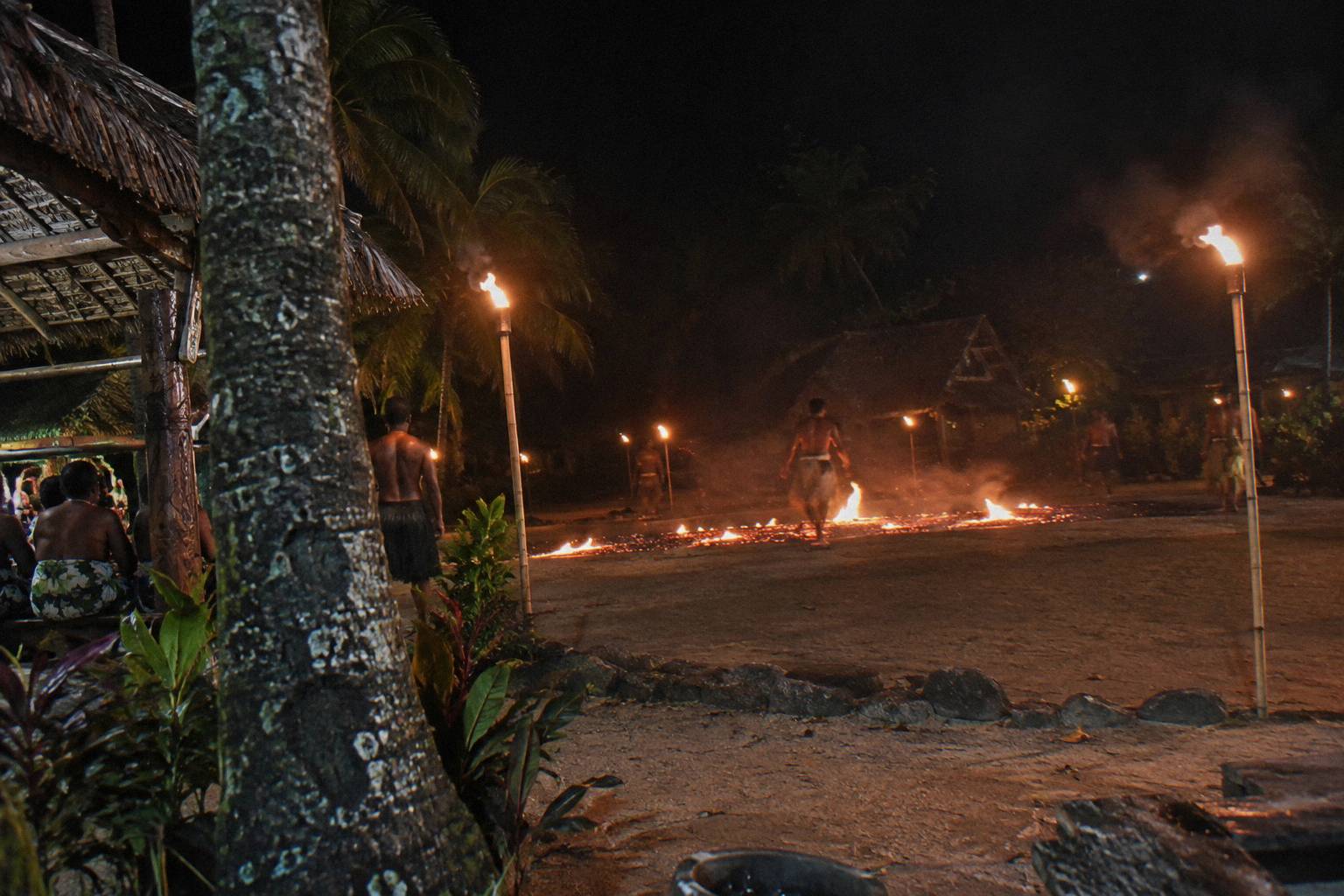
Firewalking and fire dancing are not the same tradition. Firewalking in Fiji is tied to Beqa (pronounced Benga) and the Sawau tribe: Tourism Fiji's firewalkers page says the power "only flows through Tuinaiviqalita's bloodline to members of Beqa's Sawau tribe". The fire-knife dance, siva afi, is Samoan in origin and is staged in Fiji shows; it is not a Fijian tradition and should not be mistaken for one.
The legend, in Tourism Fiji's own terms: Tuinaiviqalita, seeking an eel as a gift, caught a spirit god known as a veli; the veli offered power over fire to him and his descendants and showed him by stepping on white-hot stones. That is the only version told here, because it is the only sourced one. What the operators stage is a demonstration, not the ceremony itself: Robinson Crusoe lists a "fire walking demonstration" at the 6:30pm lovo unearthing and says nothing about who performs it, so no claim is made here that its firewalkers are from Beqa or Sawau. Damodar Arts Village in Pacific Harbour does say its firewalking is performed by "the renowned firewalkers of Beqa", in the venue's wording, but that is an 11am daytime show, not an evening dinner, and it is not bookable on this site.
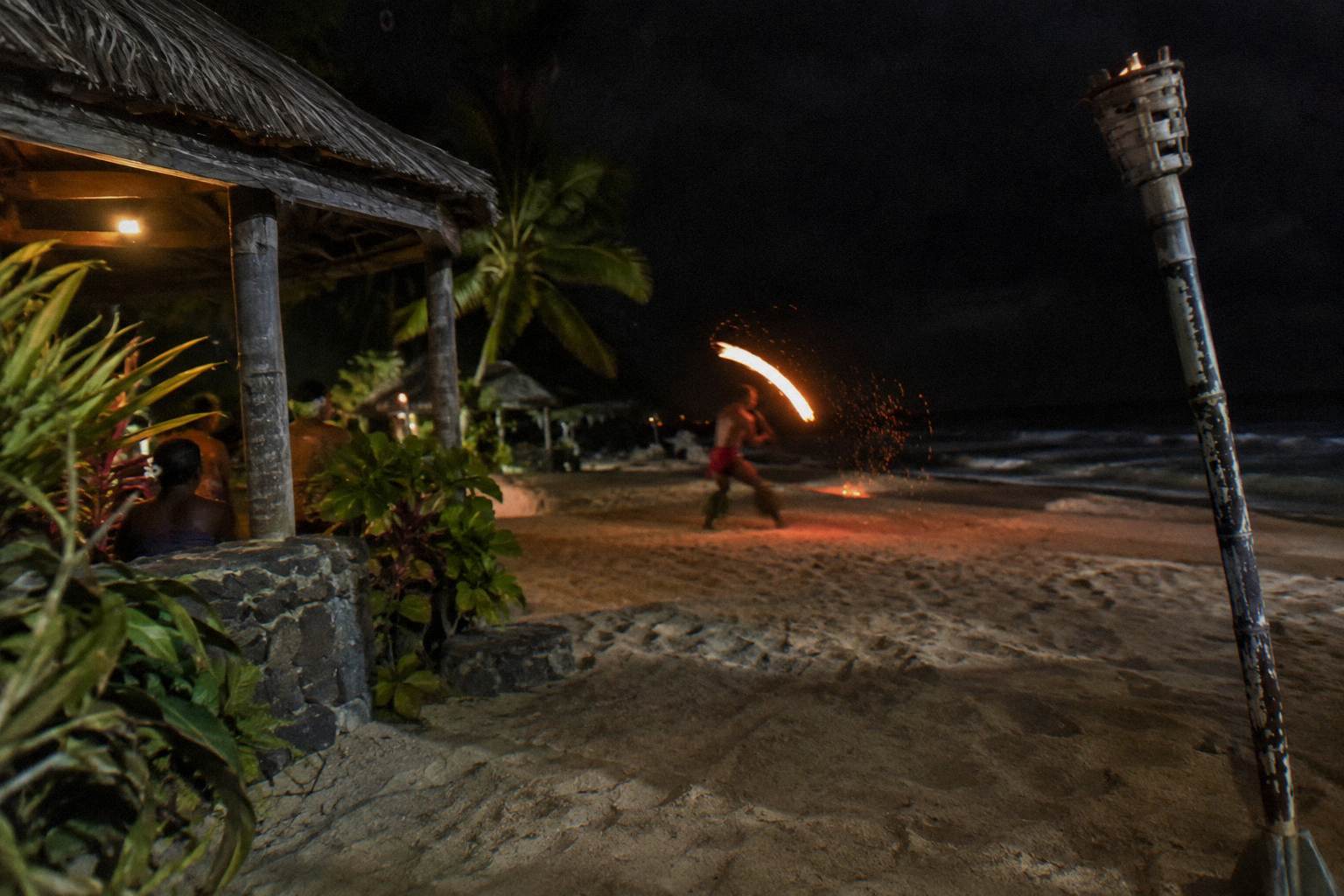
The fire-knife side is different again. Robinson Crusoe's "Legends of the Pacific" show after the 7:00pm dinner includes fire and knife dancing, in the operator's words, and its daytime Culture Day Tour includes a dance show with fire and knife dancing. Fiji Culture Village lists a fire dance at 7:50pm and does not say it is fire-knife. So an evening can hold two fire traditions in one night: Fiji's own firewalking as a demonstration, and Samoan-origin siva afi as staged performance. Tourism Fiji also notes firewalking is performed at major hotels in Pacific Harbour, the Coral Coast and Denarau as resort entertainment, and its advice is to check with those resorts. For the two traditions compared at length, see the Fiji fire dance show guide and where you can see fire walking in Fiji.
Village Etiquette: What Tourism Fiji Asks Of Visitors
Tourism Fiji's etiquette page is specific: "cover your bare shoulders and legs when visiting a Fijian village", wrap a sulu around the waist, remove hat and sunglasses, carry bags in hand rather than on the shoulders, ask permission before taking photos or entering a home or communal area, and remove shoes before entering any village building. It also asks visitors not to touch someone's head, which is sacred in many villages, and to speak softly.
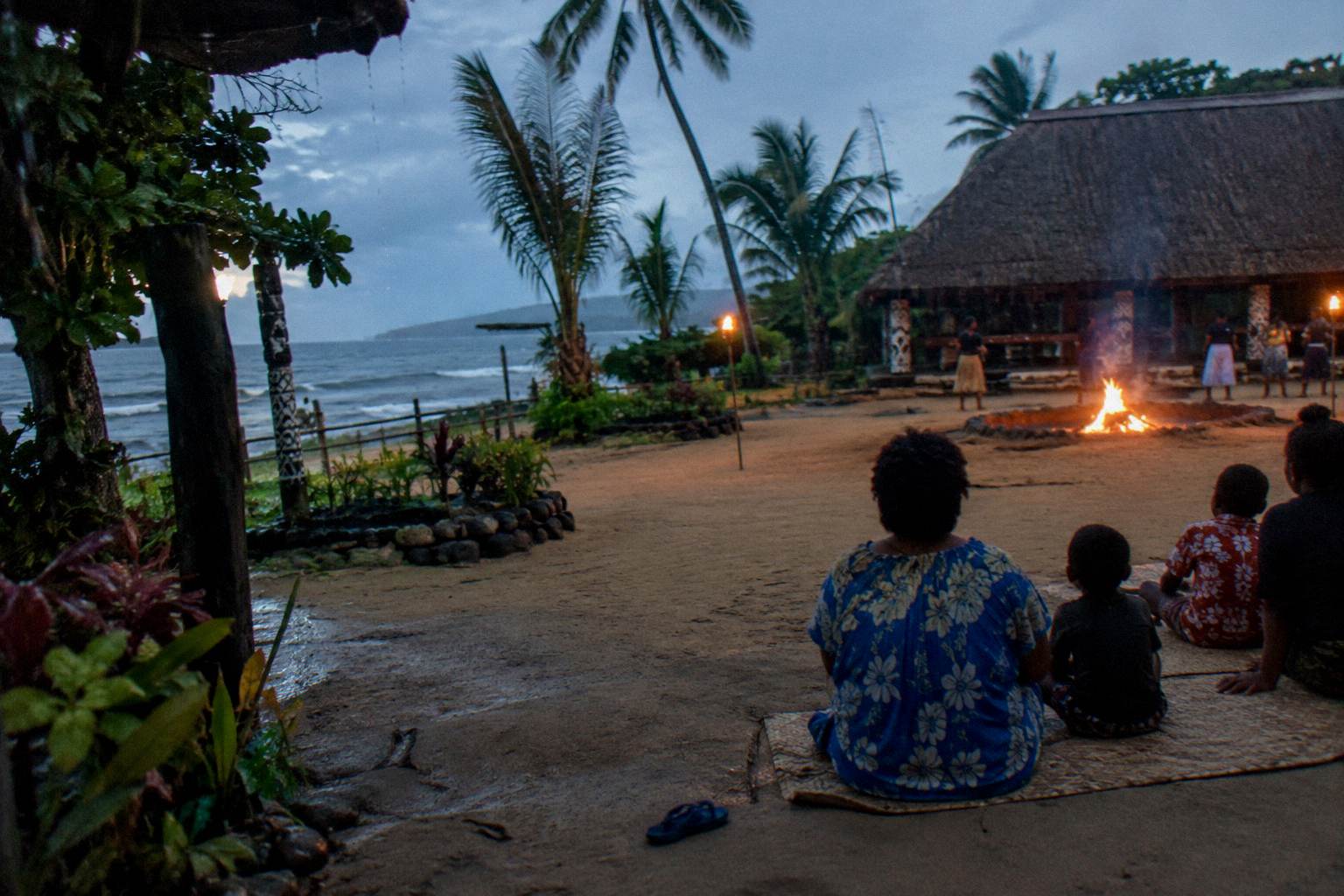
On a staged evening the stakes are lower than in a living village, but the same manners apply wherever a village element is real. Robinson Crusoe's Day and Night Combo includes a guided Vusama Village visit, and the operator requests that visitors cover shoulders and bring a sulu or sarong to wear during the village visit, with spare sulus available. For its night tours the operator suggests resort wear, insect repellent and Fijian dollars for drinks. Fiji Culture Village's dress guidance is not stated; ask the operator at +679 804 4800. Two more items from Tourism Fiji's page shape the schedule of the evenings themselves: Sundays are sacred and most village tours do not run, which is why Fiji Culture Village closes Sunday, and meals are traditionally eaten cross-legged on a mat, waiting for the masu, the prayer, before eating. For clothing in depth, see what to wear to a Fijian village night.
| Etiquette item | Tourism Fiji's guidance | Operator note |
|---|---|---|
| Shoulders and legs | Cover them in a village | Robinson Crusoe asks for the village visit; spare sulus available |
| Hat and sunglasses | Remove in the village | Not stated |
| Shoes | Remove before entering any village building | Not stated |
| Photos | Ask permission first | Not stated |
| Head | Do not touch someone's head | Not stated |
| Sundays | Sacred; most village tours do not run | Fiji Culture Village closed Sunday |
What Each Evening Includes, Side By Side
Fiji Culture Village runs Monday to Saturday and stages a village walk, kava ceremony, lovo buffet, meke show and fire dance for F$175 adult, F$105 child aged 5 to 12, or F$500 for a family of 2 adults and 2 children, valid to 31 December 2026. Robinson Crusoe's Sunset Dinner Show runs Monday, Wednesday and Saturday, 5pm to 9pm on Likuri Island, and prints no price: see the booking page.
The comparison below holds only operator-stated facts. Where a cell is not stated, it says so, because a gap is a fact too when you are choosing a night.
| Culture Village Evening Tour | Robinson Crusoe Sunset Dinner Show | |
|---|---|---|
| Days | Monday to Saturday | Monday, Wednesday and Saturday |
| Duration | About 4 to 4.5 hours door to door | 4 hours on the island, 5pm to 9pm, plus coach transfer |
| Welcome | Warrior welcome at 5:15pm | Island welcome at 5:45pm; sevusevu ceremony with kava tasting |
| Kava | Kava ceremony at 7:00pm | Kava tasting within the sevusevu welcome |
| Lovo | Unearthed 6:45pm, buffet 7:20pm | Unearthed 6:30pm with fire walking demonstration, buffet 7:00pm |
| Dance | Meke show and fire dance at 7:50pm | "Legends of the Pacific" show with fire and knife dancing after dinner |
| Transfers | Return transfer from Nadi and Denarau hotels | Return coach from Nadi, Denarau and Coral Coast hotels plus launch transfers |
| Operator rate | F$175 adult to 31 December 2026 | Not stated; see the booking page |
| Rating | 4.6 | Not stated |
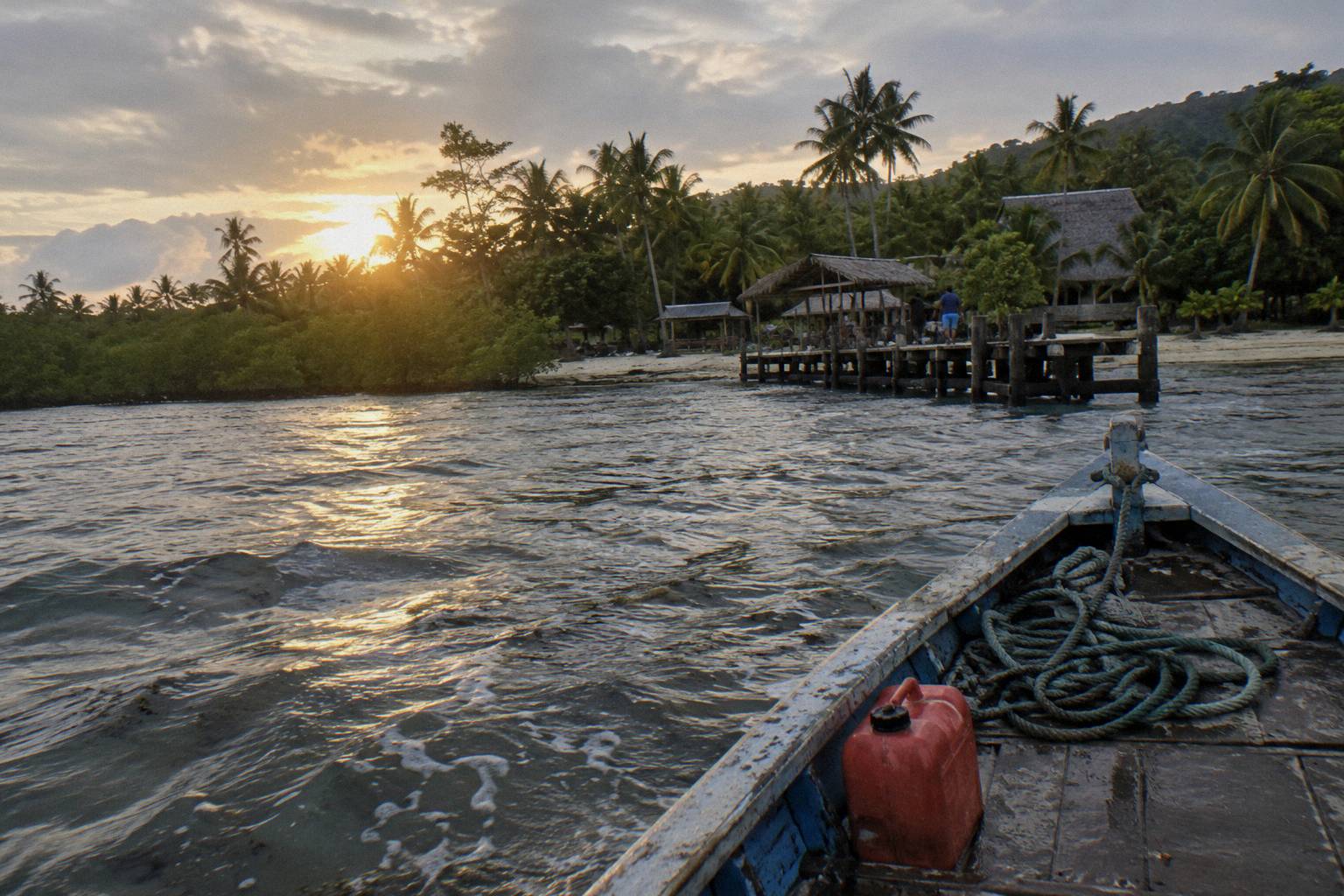
Two structural differences stand out. Culture Village is a land-based village on Queens Road, Nadi, which Tourism Fiji names "just outside Nadi town" as a place to see meke, and its programme includes a guided village walking tour. Robinson Crusoe is an island evening: the jetty is near Natadola Beach, 45 minutes from Nadi, then a 30-minute calm-water cruise down the Tuva River, and the operator's highlights include that river cruise, a sunset bonfire with a string band, and the fire walking demonstration. Neither format is better; they teach the same culture in different settings. The Culture Village evening is the one this site features, and you can check the Culture Village evening tour page for its full details, or go straight to Check availability.
Which Night Suits Which Visitor
Choose by night of the week first, because the evenings run on fixed days and that, not price, is the real constraint. Fiji Culture Village runs Monday to Saturday; Robinson Crusoe's evening show and its Day and Night Combo run Monday, Wednesday and Saturday only, with its daytime Culture Day Tour on Tuesday, Thursday and Sunday. A Sunday or Friday evening in Nadi leaves fewer options.
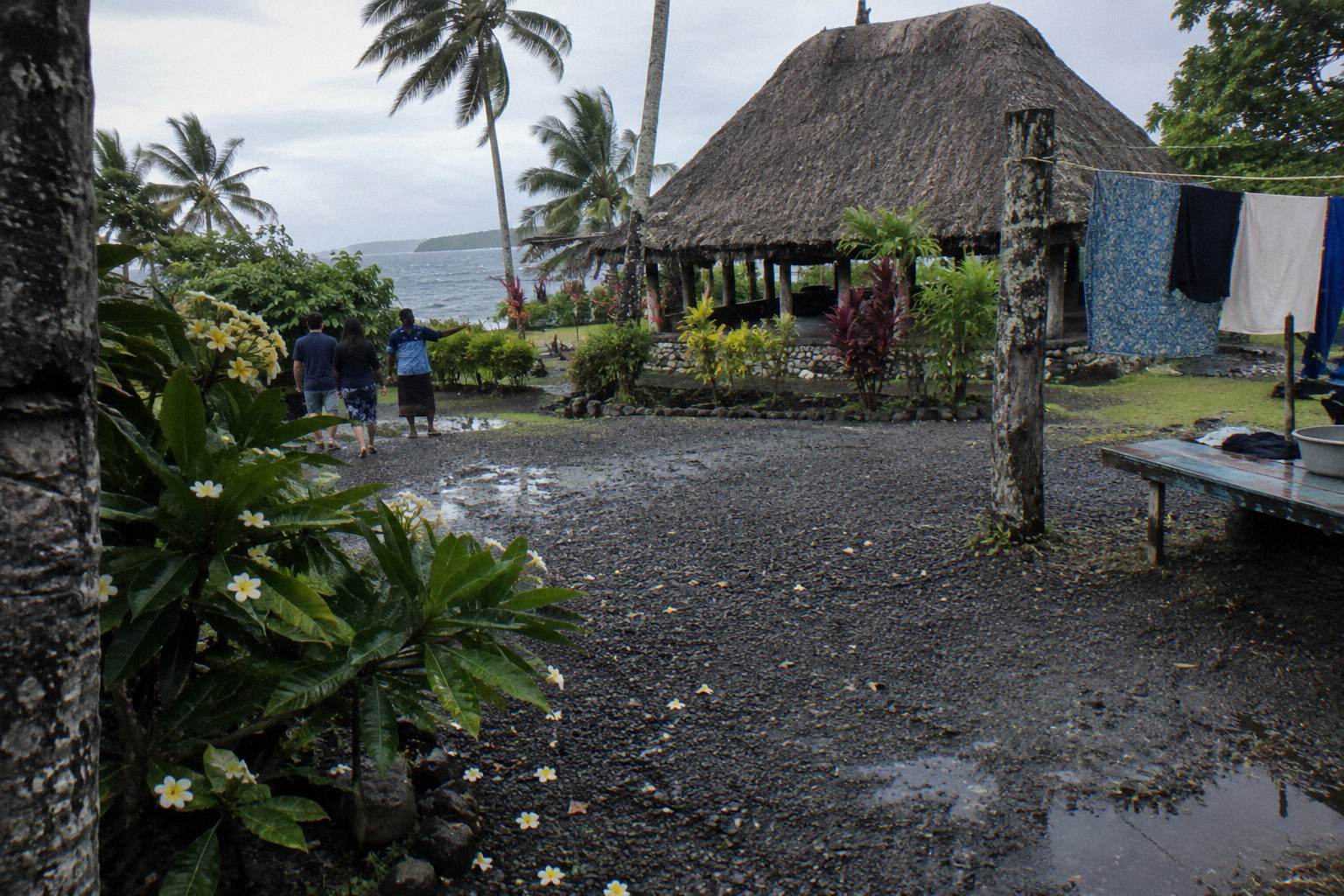
For a short evening near Nadi, Culture Village's 4:20pm pick-up and 8:30pm farewell fits between dinner and a late night, and Valentine Tours Fiji's roughly 3 hour evening with Nadi and Denarau hotel pick-up is shorter still. For a full island experience, the Robinson Crusoe Sunset Dinner Show adds the river cruise, the bonfire and an island setting, at the cost of coach transfer time from Coral Coast or Nadi hotels. For a whole day of it, the Day and Night Combo runs 10am to 9pm, about 11 hours, and includes a guided Vusama Village visit, mud crab catching, snorkelling and sea kayaks, a BBQ buffet lunch, a bush medicine walk and coconut climbing before the full evening show. The operator tags the evening show as suiting adults and the day tour as suiting families, and no minimum age is stated for either; for children in depth, see whether kids can go to a Fiji cultural night.
One honest gap sits inside the operator-stated facts: Robinson Crusoe's FAQ says the island is not suitable for guests with mobility challenges because of its natural terrain. Robinson Crusoe's cancellation rule is strict: a full refund only for cancellations 24 hours or more before pick-up, and a 100 percent forfeit inside that window. Management may also cancel if fewer than 15 adults book, or for cyclones, flooding or other weather. On the other side of the ledger, there are no change fees to move to another operator tour of equal or lesser value within 30 days.
Against that strictness, the Culture Village evening is the simpler commitment: one operator rate in Fijian dollars, six nights a week, return transfer from Nadi and Denarau hotels included, and a fixed published programme from the 5:15pm warrior welcome to the 8:30pm farewell.
| If you want... | The evening that fits | Why |
|---|---|---|
| The shortest night, about 3 hours | Valentine Tours Fiji evening | About 3 hours with Nadi and Denarau pick-up |
| A village walk and a fixed programme | Culture Village Evening Tour | Guided village walking tour at 5:30pm on the operator's timeline |
| An island, a river cruise and a bonfire | Robinson Crusoe Sunset Dinner Show | 30-minute Tuva River cruise and 6:00pm sunset bonfire listed |
| The deepest single immersion | Robinson Crusoe Day And Night Combo | About 11 hours including the Vusama Village visit and the full evening |
| A modern theatre format | VOU Evening Dinner And Show | Described as a theatrical dinner show with drumming and theatre, not a village night |
Common Mistakes When Choosing A Cultural Evening
The mistakes are predictable: booking a Monday-only expectation onto a night the operator does not run, assuming the price includes a platform rate that is not printed, expecting firewalking and fire-knife to be the same tradition, and ignoring the 24 hour cancellation window on the island evening. Each one is avoidable with the operator's own stated facts, checked before booking rather than after.
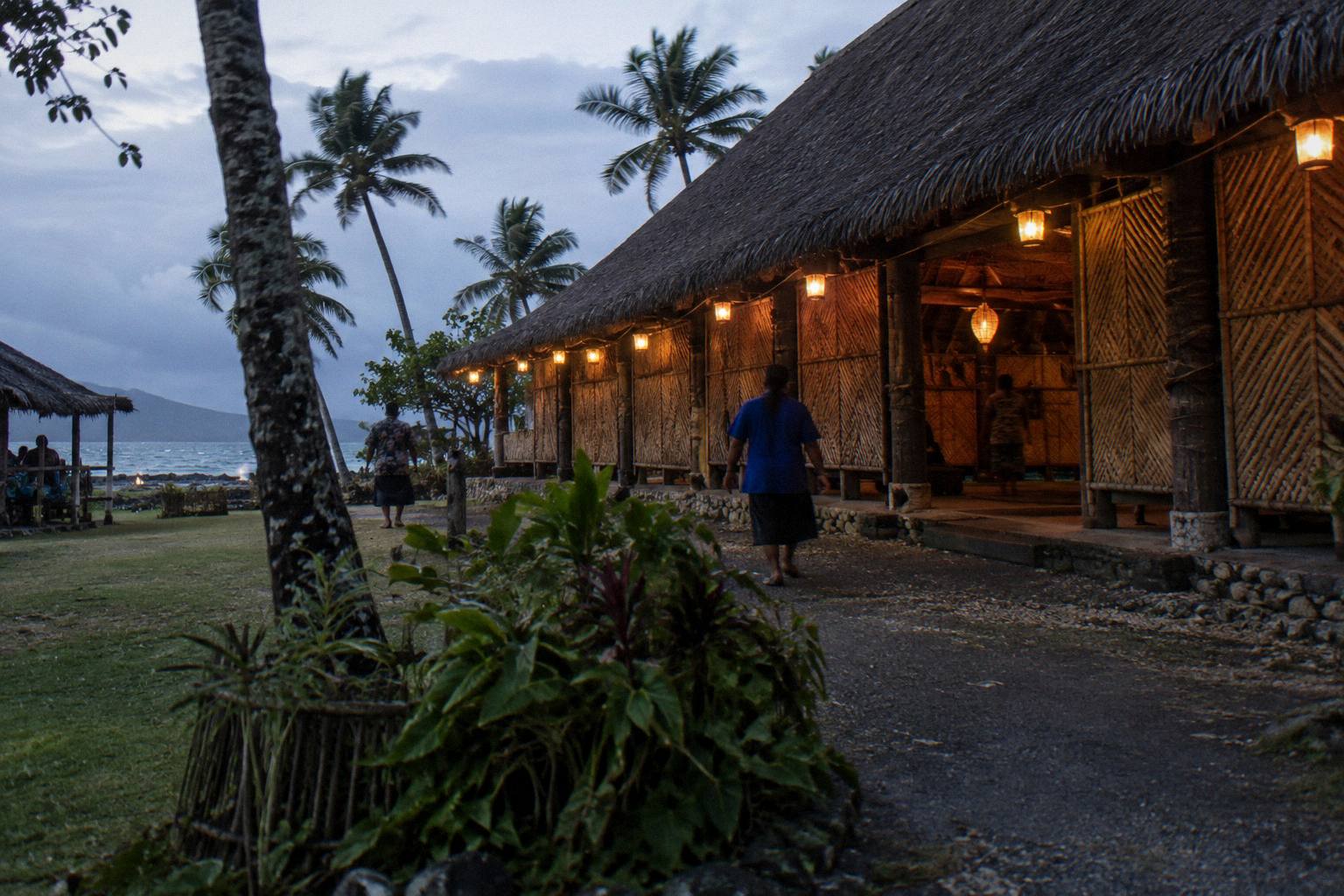
The days mistake is the most common. Robinson Crusoe's evening show runs Monday, Wednesday and Saturday, so a Tuesday evening in Nadi does not work for it; Fiji Culture Village covers Monday to Saturday but not Sunday, and it closes for annual maintenance from Monday 22 February 2027 to reopening Wednesday 10 March 2027 per the operator's notice, with online orders after 21 February 2027 still processed. The price mistake follows: only Culture Village's operator rates in Fijian dollars are printed anywhere on this site, so for the other evenings, see the booking page rather than assuming a figure. The tradition mistake is subtler: expecting Fiji's firewalking, the Beqa Sawau tradition Tourism Fiji describes, and instead seeing siva afi, the Samoan-origin fire-knife dance staged in Fiji shows, or the reverse. Both may appear on the same night, and knowing which is which is the difference between watching a show and understanding one. The cancellation mistake costs money: inside 24 hours before pick-up, Robinson Crusoe forfeits 100 percent. A site like Fiji Cultural Night Tours exists to make exactly these distinctions before money changes hands. For whether the evening justifies its cost at all, read whether a Fiji cultural night is worth it.
Common Questions About Fijian Culture At A Cultural Night
What Parts Of Fijian Culture Does A Cultural Night Show?
Sevusevu and kava, the lovo earth oven dinner, the meke storytelling dance, and fire performances, either firewalking as a demonstration or the Samoan-origin fire-knife dance siva afi staged in Fiji shows. The exact programme depends on the operator: Fiji Culture Village lists a village walk, kava ceremony, lovo buffet, meke show and fire dance; Robinson Crusoe adds a sevusevu welcome with kava tasting and a river cruise.
Is The Kava Ceremony Real?
The kava is real yaqona, from the dried roots of Piper methysticum per Tourism Fiji's kava guide, and the ceremony follows the real receiving sequence: clap once, say "Bula!", drink in one gulp, return the cup, clap three times and say "vinaka". What is staged is the setting: on a booked evening the operator presents the ceremony rather than the guest bringing the sevusevu gift.
Do You Have To Drink Kava?
Whether declining a bilo is acceptable is not stated in the sources here, and no health or effects claims are made. Ask the operator before the ceremony, or a health professional if you have any health concern. The evening's other elements, the lovo dinner, the meke show and the fire performances, stand on their own.
Is Fire Walking A Fijian Tradition?
Yes. Tourism Fiji's firewalkers page tells the legend of Tuinaiviqalita and the veli, and says the power flows only through his bloodline to members of Beqa's Sawau tribe. The fire-knife dance, siva afi, is Samoan in origin and is staged in Fiji shows; the two are separate traditions and are kept separate here.
What Should You Wear To A Cultural Night?
Tourism Fiji asks visitors to cover bare shoulders and legs in a village and wrap a sulu around the waist. Robinson Crusoe requests covered shoulders and a sulu or sarong for its village visit, with spares available, and suggests resort wear, insect repellent and Fijian dollars for drinks on night tours. Fiji Culture Village's dress guidance is not stated; ask the operator.
How Much Does A Fijian Cultural Night Cost?
Fiji Culture Village's operator rate is F$175 per adult, F$105 per child aged 5 to 12, or F$500 for a family of 2 adults and 2 children, valid to 31 December 2026, rising to F$189, F$115 and F$550 for 2027. Robinson Crusoe, Valentine Tours Fiji and VOU print no operator price: see the booking page for each.